
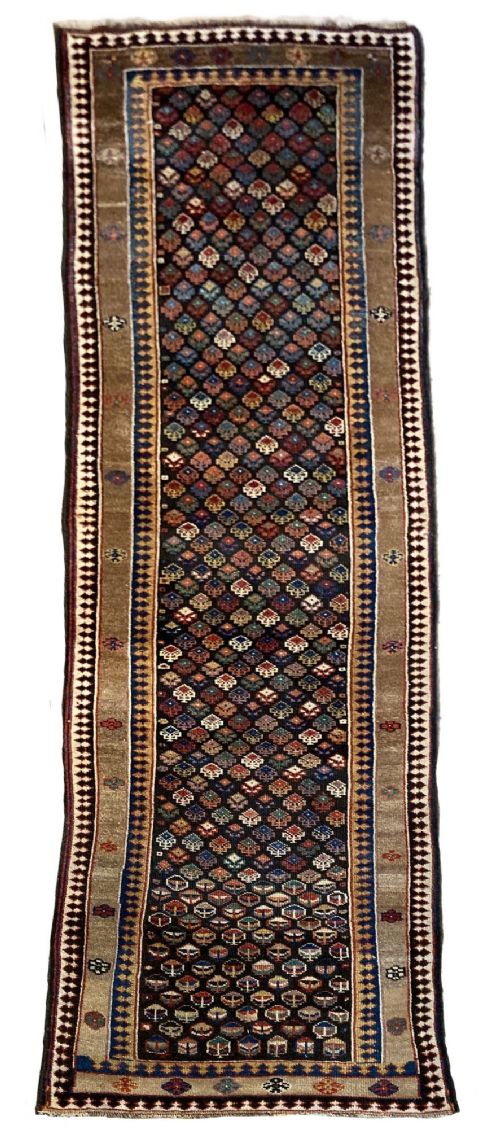


Passage Carpet Runner
A passage carpet runner brings warmth and pattern to long hallways, narrow corridors and staircases.
Passage Carpet Runner
A passage carpet runner is a long, narrow floor covering specifically designed for corridors, halls and staircases. These pieces provide both practical foot traffic management and significant decorative character to transitional spaces within a home.
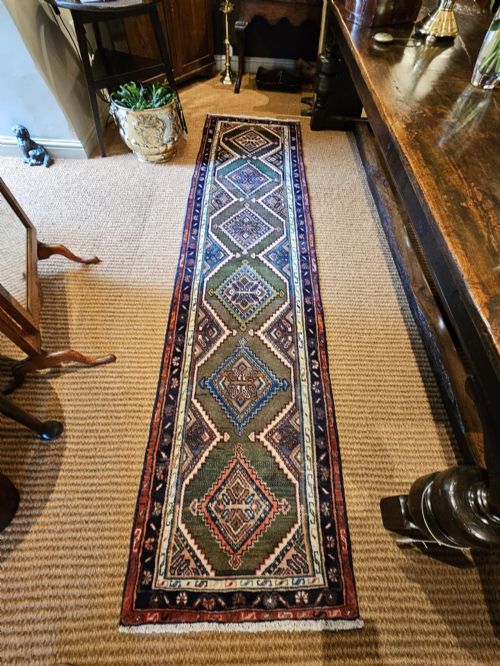
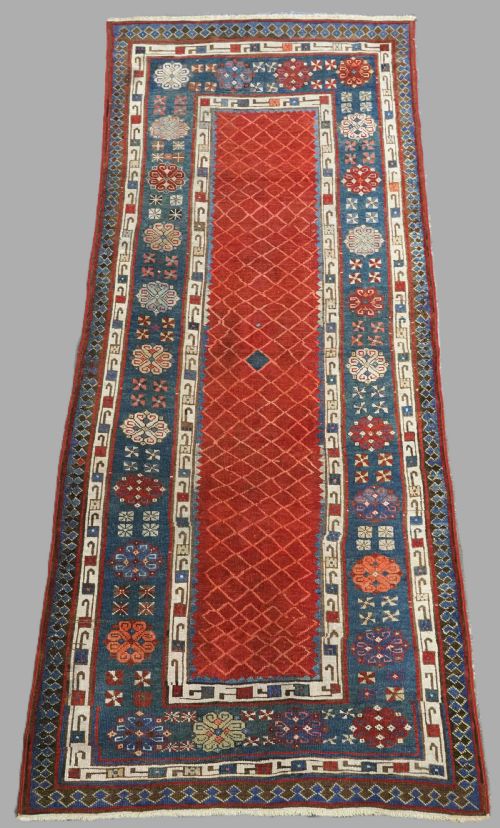
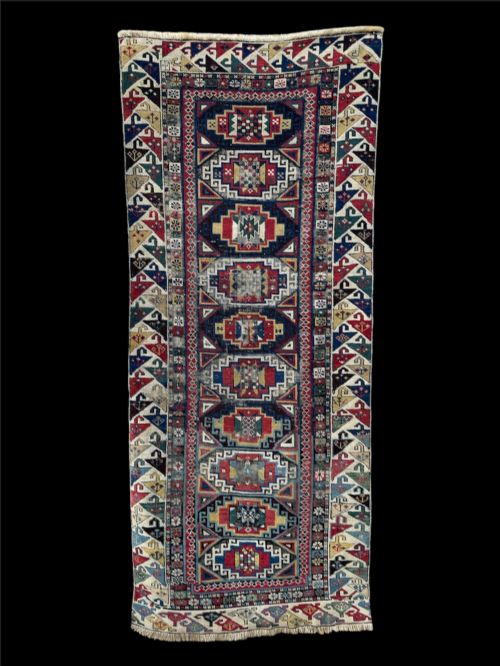
The selection here draws primarily from nineteenth-century and early twentieth-century origins, spanning Persian and Caucasian weaving traditions. Buyers encounter regional village and tribal examples, including Heriz, Kurdish, Shirvan and Talish pieces.
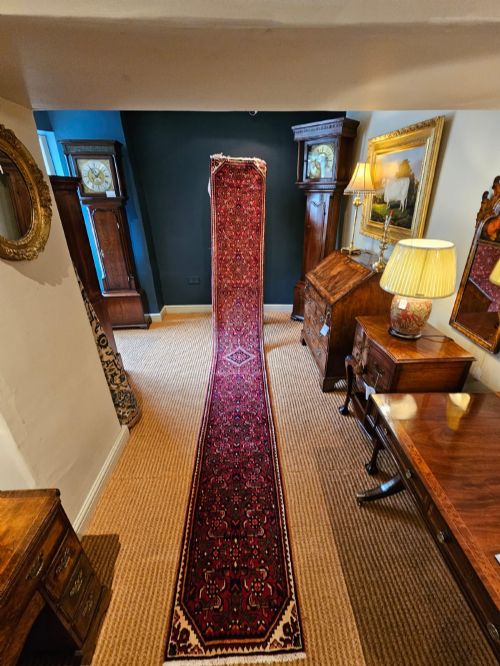
Proportions vary from moderately long hallways lengths to exceptionally extended formats suited for grander corridors. Narrow widths predominate, ensuring the rugs sit comfortably within typical passage boundaries.
Judging quality
Quality rests upon the tightness of the knotting, the fineness of the wool and the clarity of the design geometry. Tighter construction delivers greater longevity under foot while preserving intricate motifs.
Colour retention and the subtlety of dye variations separate standard utility runners from finer decorative examples. Well-preserved pile depth alongside balanced proportions marks out the superior end of the range.
One exceptional pair of antique runners stretches to nearly thirteen metres in length, ready for the most ambitious stately hallway.
The Passage Carpet Runner Glossary
- Runner
- A long, narrow carpet format intended for corridors, hallways and stairs. These pieces balance restricted widths with extended lengths.
- Pile
- The upright yarn loops or tufts that form the usable surface of a rug. Pile density contributes directly to wear resistance.
- Heriz
- A style of Persian carpet originating from the Northwest region, known for bold geometric medallions and robust structures. These rugs often feature strong architectural motifs.
- Caucasian
- A descriptor for rugs woven in the Caucasus region, typically distinguished by geometric designs and saturated palettes. Common sub-types include Shirvan and Talish.
- Boteh
- A traditional teardrop or paisley motif representing a floral spray or cypress tree. This ancient design appears frequently in Persian and Kurdish weaving.
Passage Carpet Runner: Frequently Asked Questions
Where should I place a runner?
A passage carpet runner fits naturally in entrance halls, long corridors and narrow staircases where floor protection and visual warmth are required.
Their elongated proportions guide movement through a home while softening hard wooden or tiled surfaces.
How do I measure for a hallway runner?
Measure the clear length of your hallway while leaving equal margins of exposed flooring around the perimeter of the rug. Ensure doors can still swing freely over the pile thickness.
Account for any radiators, skirting boards or architectural quirks that might restrict the maximum usable width.
Are these runners durable enough for daily use?
Traditional village and tribal runners utilise dense wool construction designed specifically to endure heavy foot traffic. Regular maintenance helps preserve the pile integrity over decades of domestic life.
Underlays provide additional grip and cushioning, reducing friction between the rug backing and the floor.
How do I distinguish Persian from Caucasian runners?
Persian runners often display curved floral elements or bold geometric medallion schemes associated with regions like Heriz, Ferahan or Hamadan. Their palettes tend towards deep madder reds and rich indigos.
Caucasian pieces from areas like Shirvan or Talish favour strict rectilinear geometry, sharp lattice layouts and crisp contrasting borders.