



Long Narrow Carpet
A long narrow carpet brings functional length and patterned warmth to hallways and landings, drawing the eye across extended expanses of floorboards.
Long Narrow Carpet
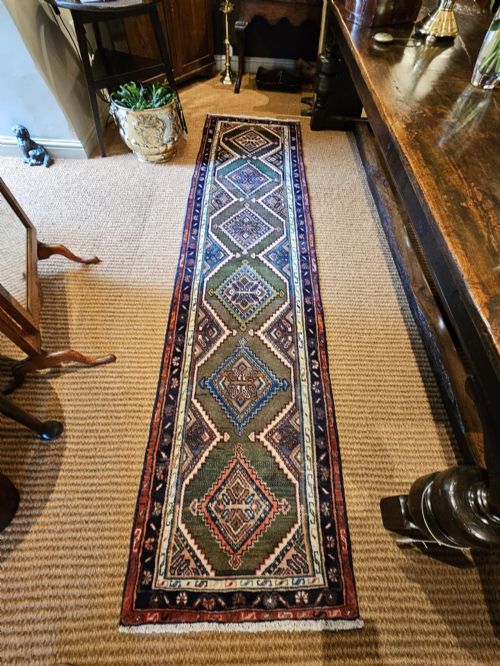
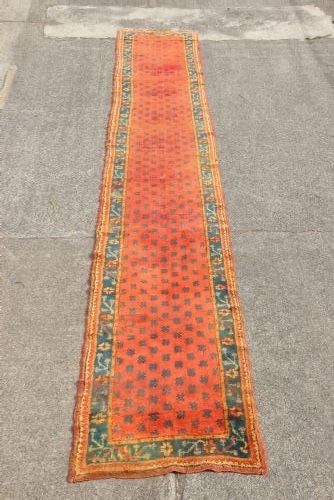
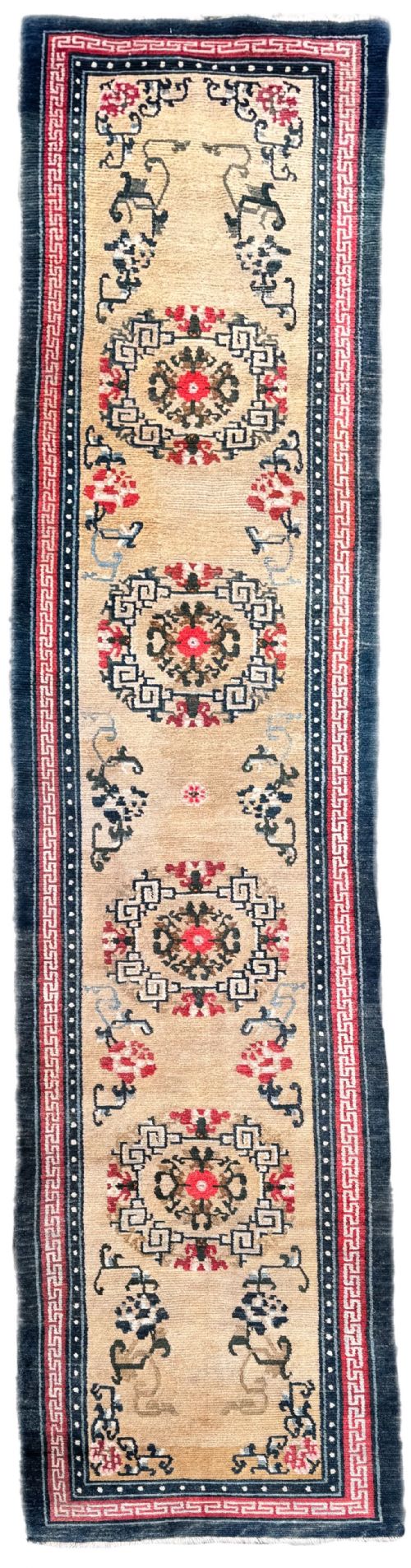
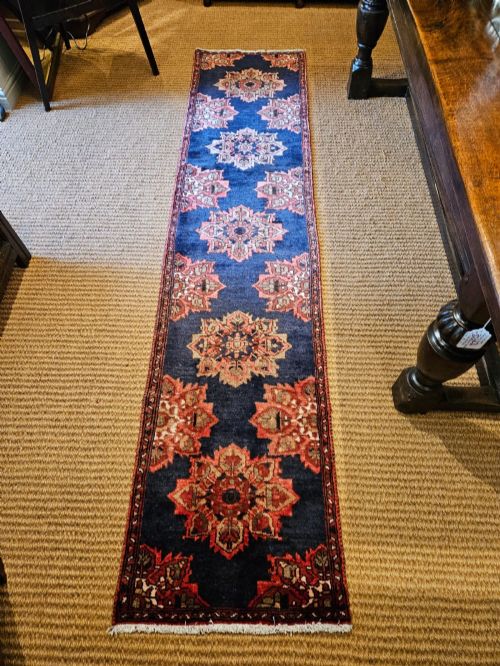
A long narrow carpet functions primarily as a runner designed for corridors, stairs, and halls, spanning significant lengths while maintaining a restricted width. These textiles guide movement through a building, protecting high-traffic flooring beneath a dense pile or flat weave.
The selections encountered here originate from diverse regional traditions, including Persian, Turkish, Kurdish, and Moroccan workshops. Many date from the late nineteenth and early twentieth centuries, spanning periods from the 1880s through to the 1960s.
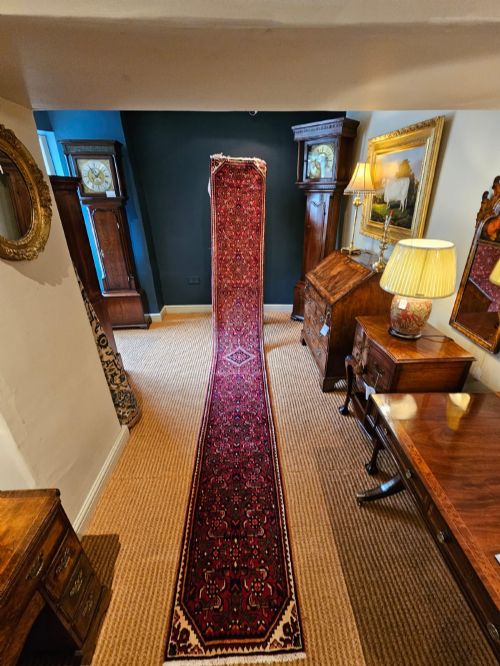
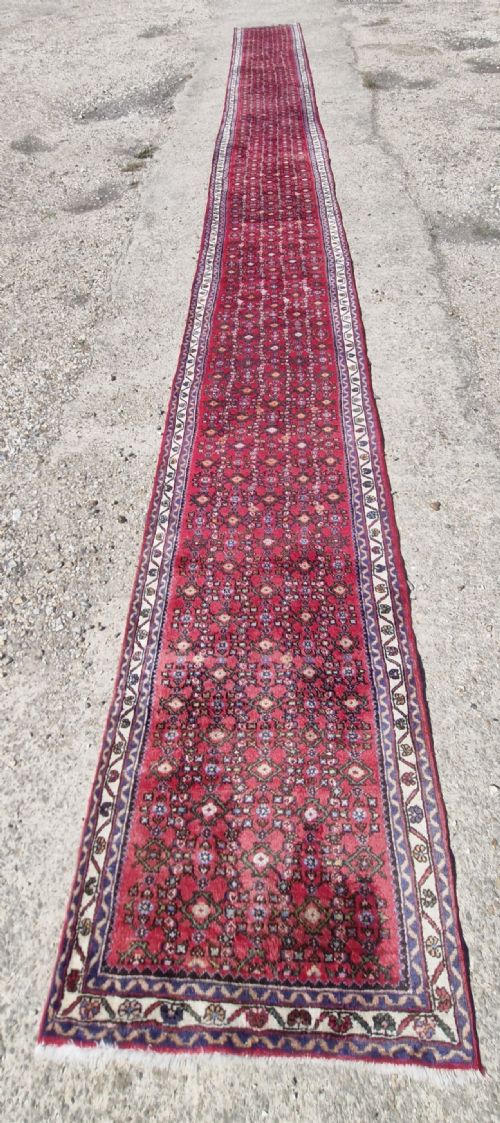
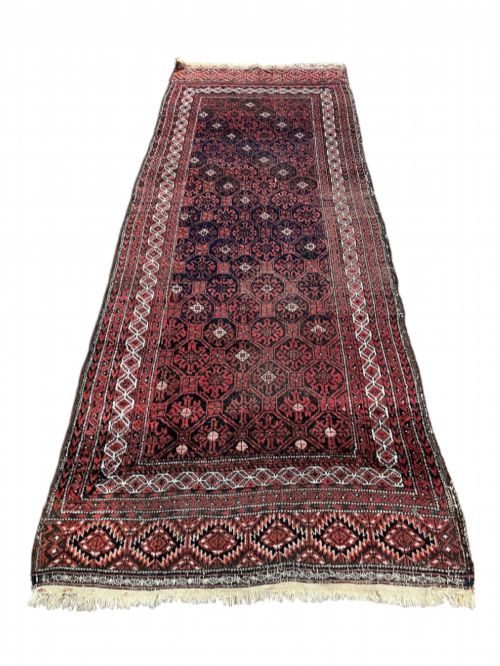
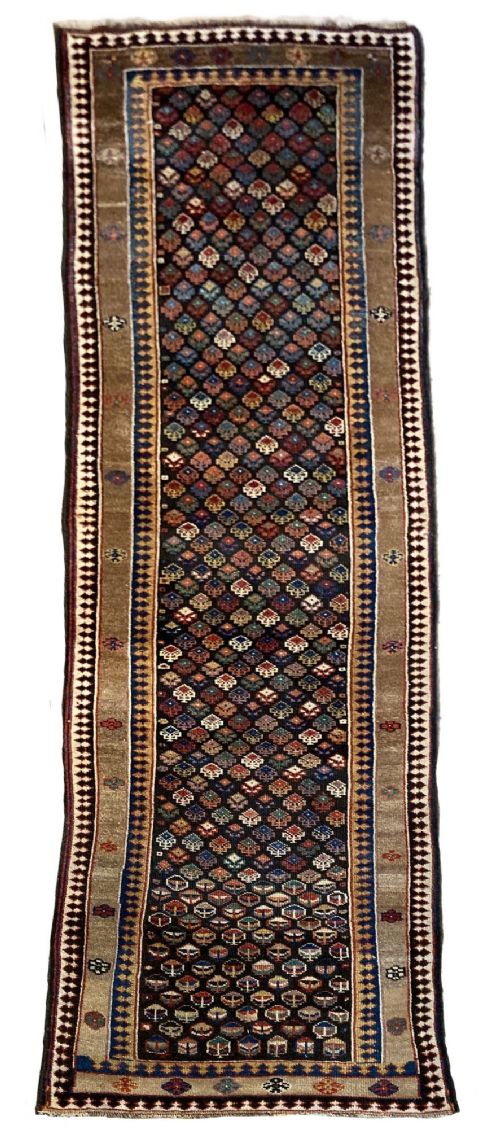
Forms vary from classic Heriz and Hamadan room-length runners to tribal Kurdish and Baluch floor coverings, alongside Moroccan Berber creations. Buyers meet pieces measuring anywhere from six feet up to impressive thirty-two-foot installations suited for extensive hallways.
What varies in quality
Knot density and structural tightness dictate the integrity of the weave, determining how well the floor covering resists compression over decades of use. Tighter knots allow intricate geometric and floral motifs to remain sharp and legible along the length of the runner.
The choice of materials influences the handle and resilience, with hand-spun wool and camel hair yielding a softer touch and greater longevity than standard industrial yarns. Consistency in width and straightness along extended spans also separates standard village pieces from master-woven examples.
Long Narrow Carpet Retail Price Guide 2026
Typical asking prices for long narrow carpet among the pieces listed under this phrase on Sellingantiques today, from the lower quarter to the upper quarter. They describe what is for sale here now, not the wider market.
Some hallways apparently measure over thirty-one feet long, demanding exceptional runners to span the entire distance.
Heriz·Hamadan·Oushak·Bidjar·Sarouk
The Long Narrow Carpet Glossary
- Runner
- A long, narrow carpet designed specifically for hallways, corridors, and staircases. It typically measures significantly longer than it is wide.
- Kelim
- A flat-woven carpet or runner produced without a pile. These pieces offer a lighter weight and distinct texture compared to knotted rugs.
- Warp
- The vertical threads stretched across a loom that form the structural foundation of a carpet. Wefts are then interwoven across these stationary threads.
- Pile
- The raised, soft surface of a carpet formed by the cut ends of knotted yarn. Higher density in the pile generally corresponds to greater durability.
- Heriz
- A style of Persian carpet originating from the Azerbaijan region, known for bold geometric medallions and robust structural qualities.
Long Narrow Carpet: Frequently Asked Questions
Where should I place a long narrow carpet?
These pieces suit long corridors, narrow hallways, grand staircases, and extended landing spaces where standard rectangular rugs fail to fit. They guide foot traffic while adding warmth and pattern to transitional areas of a home.
Measuring the exact clearance needed for doors to swing freely over the pile ensures the chosen runner functions practically in daily use.
How do I care for an antique wool runner?
Regular gentle vacuuming without a rotating brush roll prevents dust and grit from settling deep into the wool pile. Professional cleaning suited for antique textiles preserves the natural lanolin and dyed fibres.
Rotating the runner every few months distributes wear evenly across the length, especially if positioned in a high-traffic hallway.
What distinguishes Persian runners from Moroccan ones?
Persian runners from regions like Hamadan, Heriz, or Sarouk typically feature intricate floral or geometric knotted designs with rich indigo and red palettes. Moroccan Berber alternatives often display simpler, starker tribal motifs in softer wools and lighter natural tones.
Both styles serve the same architectural purpose in a long hallway but offer distinct visual textures and regional design histories.