
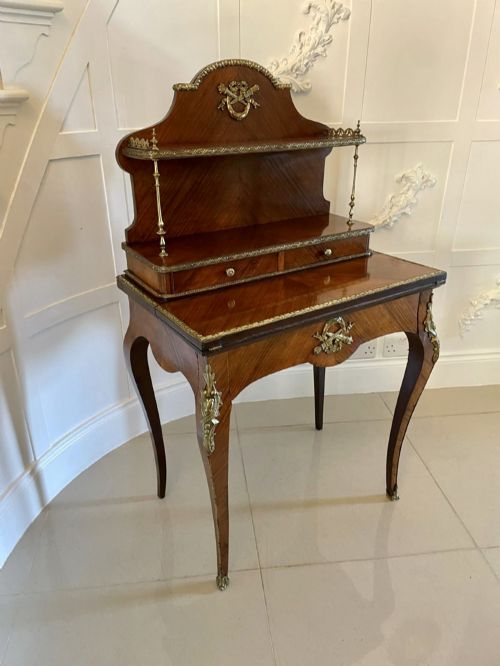
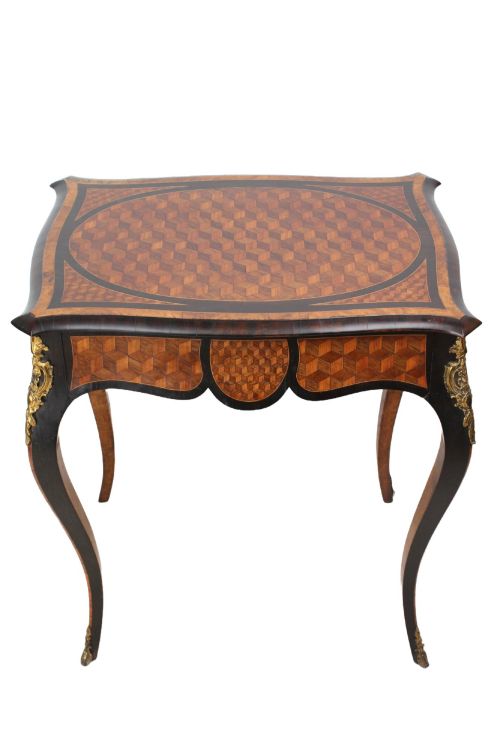
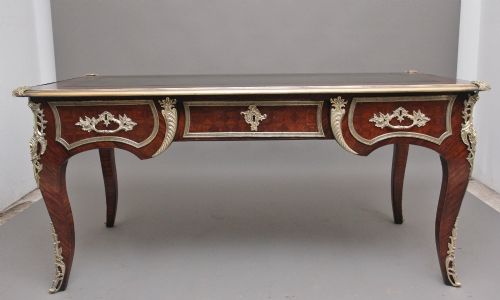
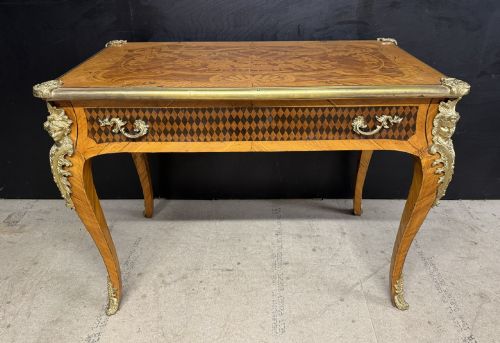
Parquetry Writing Table
When you select a parquetry writing table, you encounter finely patterned wood surfaces designed for correspondence and display.
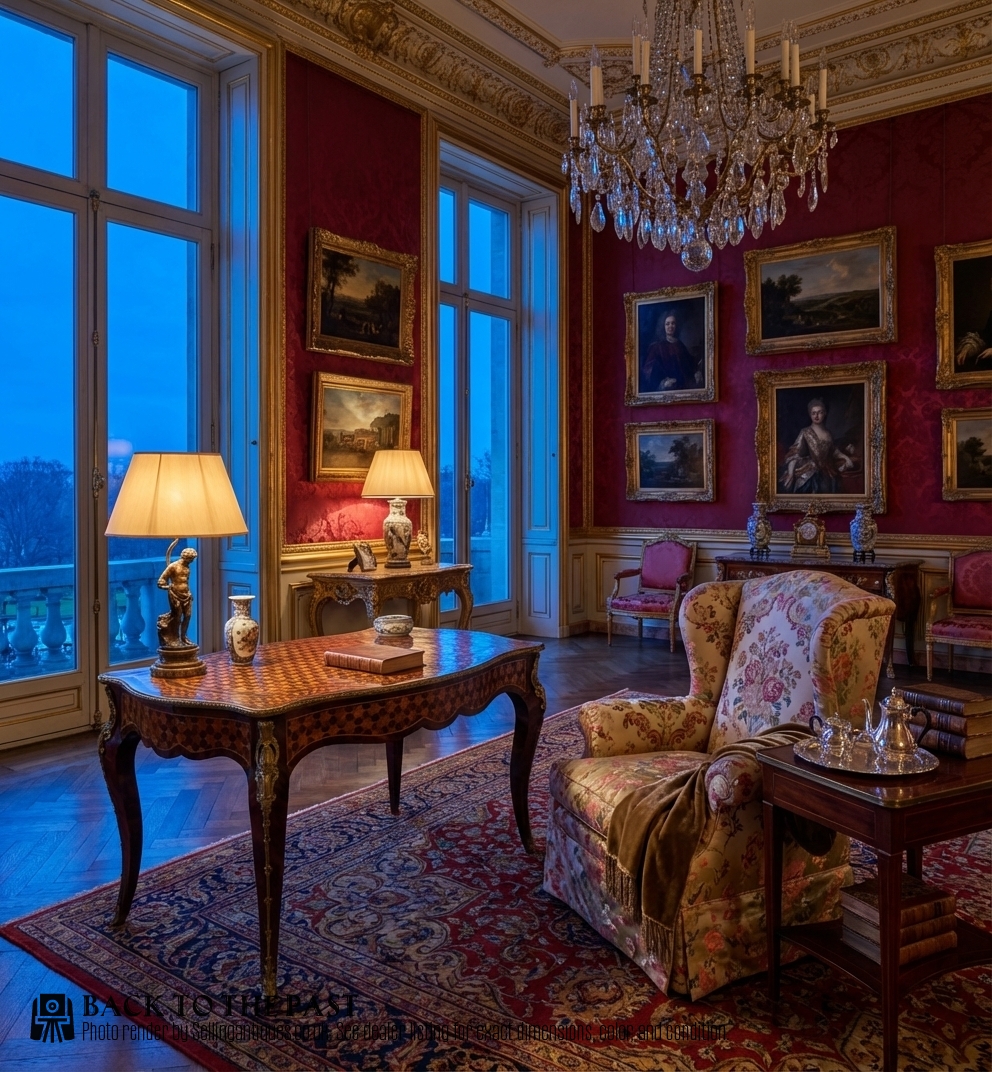
Parquetry Writing Table
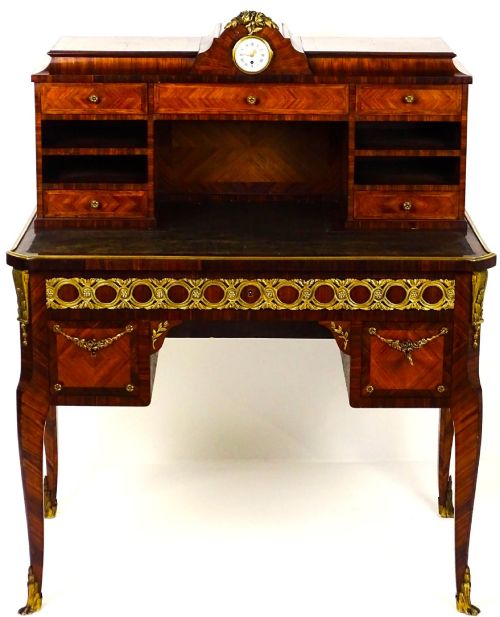
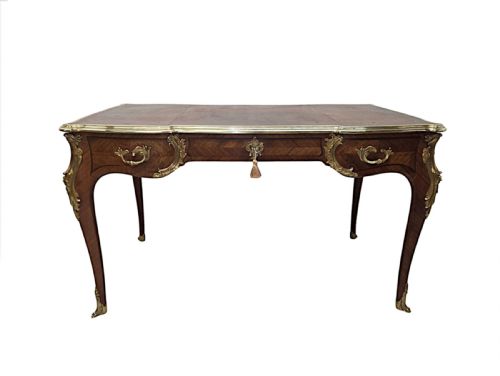
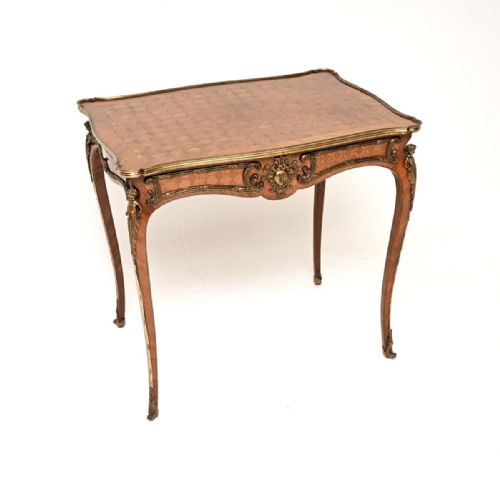
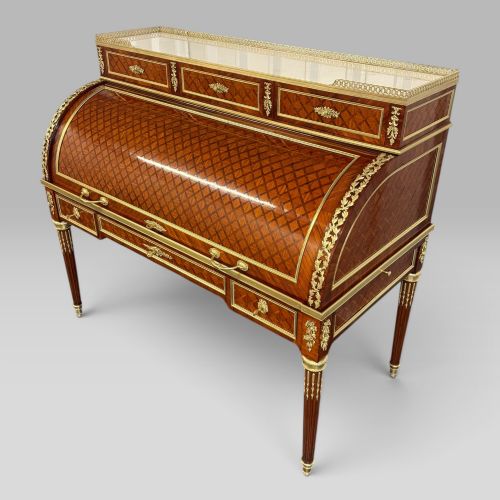
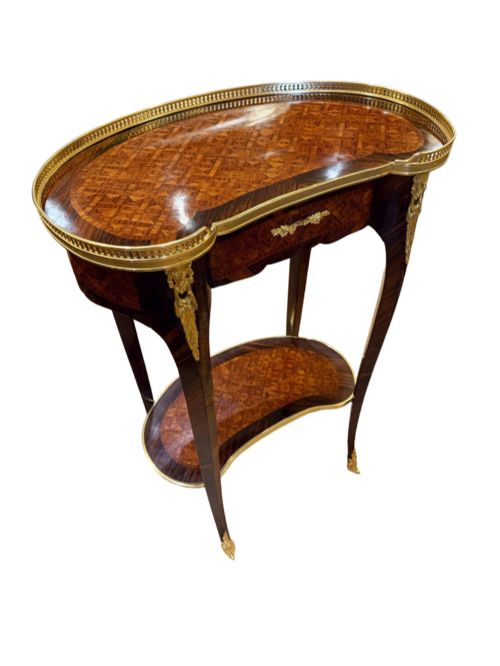
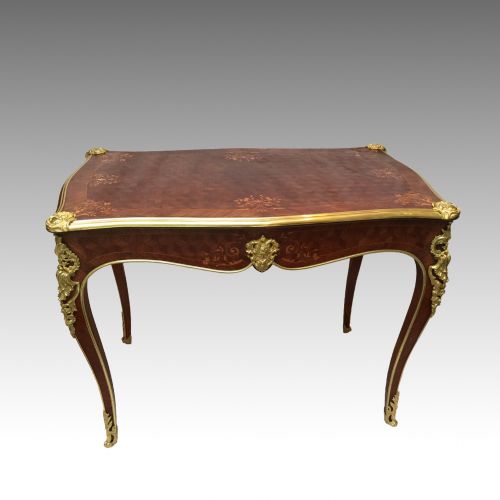
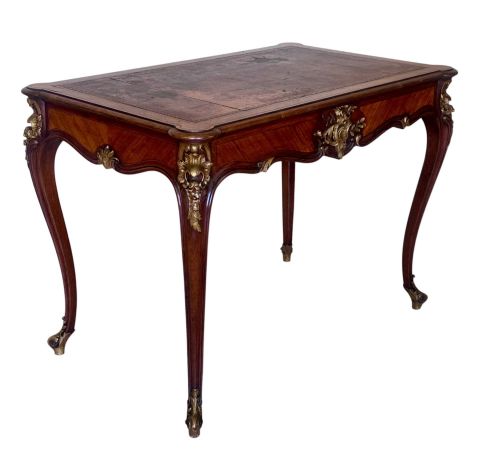
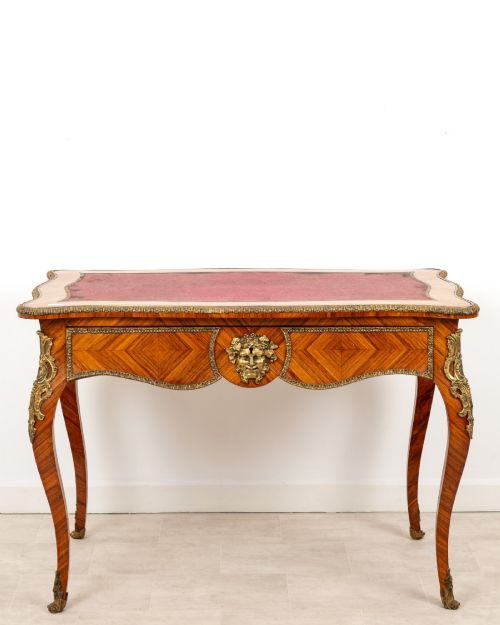
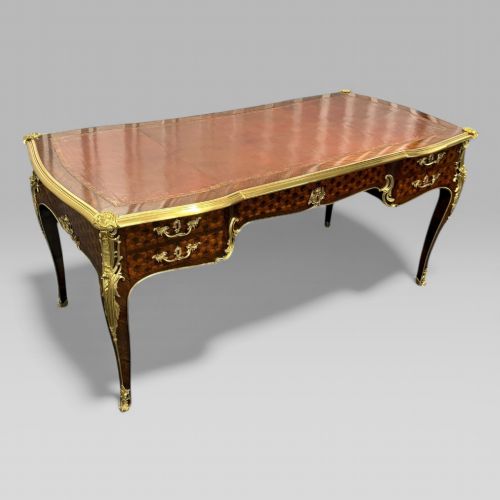
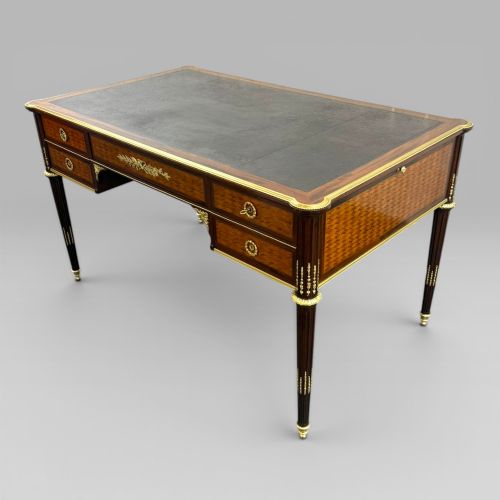
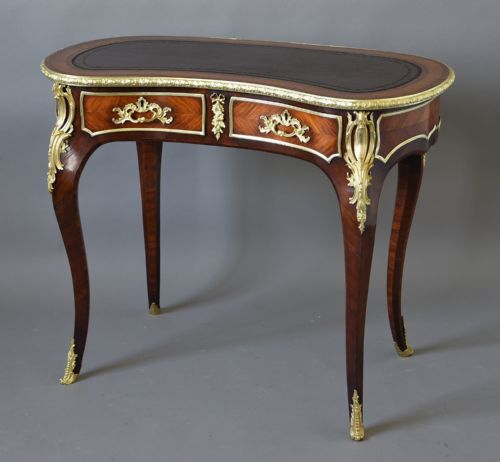
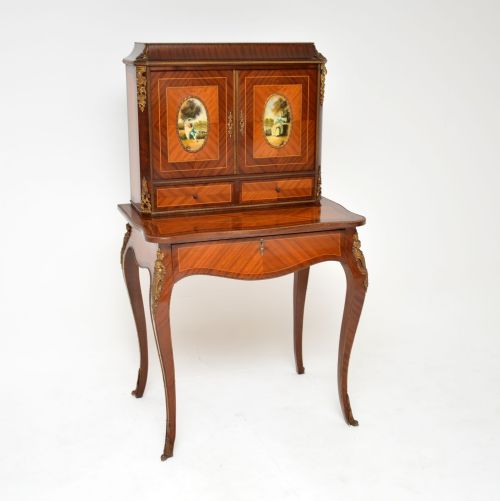
A parquetry writing table combines a flat working surface with geometric wood veneer patterns, taking forms such as the bureau plat, kidney-shaped side table, or freestanding centre table. Most examples date from the nineteenth century and reflect French revival styles including Louis XV and Louis XVI.
Makers working in Britain and France produced these desks for formal reception rooms and private chambers. Pieces range from compact ladies writing desks to large library tables mounted in gilt bronze.

How they were made
Craftsmen laid geometric veneers of kingwood, tulipwood, rosewood, and walnut onto supportive timber carcases to create intricate parquetry designs. These wooden surfaces were enhanced with cast ormolu mounts, brass details, and inset leather writing panels.
Cabinetmakers utilised specialised sawing techniques to slice thin timber veneers, arranging the grain patterns symmetrically across the top and drawer fronts before applying French polish finishes.
Parquetry Writing Table Retail Price Guide 2026
Typical asking prices for parquetry writing table among the pieces listed under this phrase on Sellingantiques today, from the lower quarter to the upper quarter. They describe what is for sale here now, not the wider market.
Listings span the nineteenth and early twentieth centuries, featuring kingwood, rosewood, walnut, and tulipwood veneers combined with ormolu mounts.
What varies in quality
The precision of the geometric parquetry layout and the crispness of the cast ormolu mounts dictate the tier of craftsmanship. Finer examples display seamless veneer alignment across opening drawers and complex curved contours.
Selected pieces bear signatures or stamps from noted makers, while others feature hand-chased gilt bronze mounts rather than standard cast fittings, marking a distinct separation in execution.
JAS Shoolbred·Paul Sormani·CH. Jeanselme and Co·François Linke·Donald Ross·Maurice Dufrêne
The Parquetry Writing Table Glossary
- Parquetry
- Geometric mosaic woodwork formed by small veneer tiles arranged in repeating patterns. This technique creates a tiled decorative surface across desk tops and drawer fronts.
- Ormolu
- Gilded bronze mounts applied to furniture edges, corners, and legs. This cast metalwork provides decorative contrast against dark tropical veneers.
- Bureau plat
- A freestanding double-sided writing desk featuring drawers within the frieze. These tables typically stand on slender cabriole legs.
- Kingwood
- A dense, heavily figured Brazilian timber utilised for high-status eighteenth and nineteenth-century cabinetmaking. Its contrasting dark and golden brown tones suit intricate geometric veneers.
- Bonheur du jour
- A small light ladies writing desk featuring a tiered superstructure with shelves or small drawers above the main writing surface. These pieces emerged during the Louis XV period.
Parquetry Writing Table: Frequently Asked Questions
What is a bureau plat?
A bureau plat is a freestanding writing table with a finished back, designed to sit in the centre of a room rather than against a wall. These desks usually feature leather-inset tops and multiple drawers integrated into the frieze.
Cabinetmakers often decorated these forms with gilt bronze mounts and geometric veneer patterns. They served as primary desks for correspondence in formal studies and salons.
How do I identify French revival styles?
French revival furniture borrows decorative vocabulary from earlier royal reigns, particularly the curved lines of Louis XV and the symmetrical neoclassical restraint of Louis XVI. Look for specific leg shapes, apron contours, and mount designs.
Nineteenth-century makers reinterpreted these historical motifs using exotic woods and modern mechanical precision. Understanding these stylistic cues helps distinguish nineteenth-century interpretations from eighteenth-century originals.
Where should I place a centre table?
A centre table works best as a freestanding focal point in an open space, hallway, or large reception room. Because these pieces feature finished parquetry patterns on all sides, they do not require wall placement.
Ensure adequate clearance around the table for movement and seating if the piece functions as a writing surface. Placing them away from direct heat sources protects the antique veneers from drying out.
What woods were used for parquetry?
Cabinetmakers selected dense, figured tropical hardwoods such as kingwood, tulipwood, rosewood, and walnut for their contrasting natural tones. These timbers allowed craftsmen to saw thin veneers that retained rich coloration.
Lighter woods like satinwood or mahogany often provided contrast within geometric compositions. The natural grain direction created optical depth across flat surfaces.