
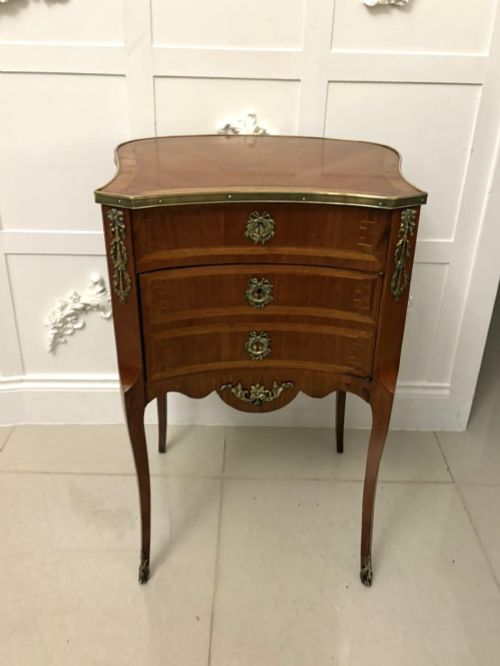
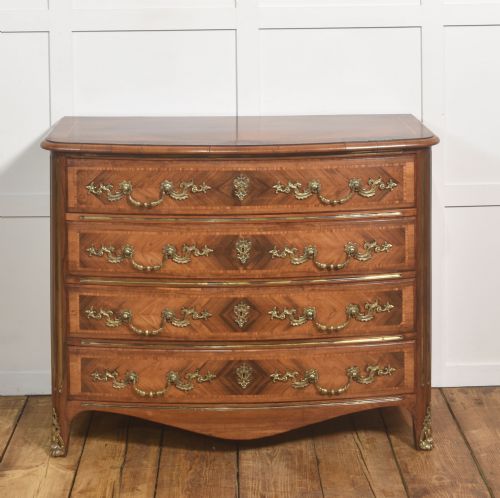
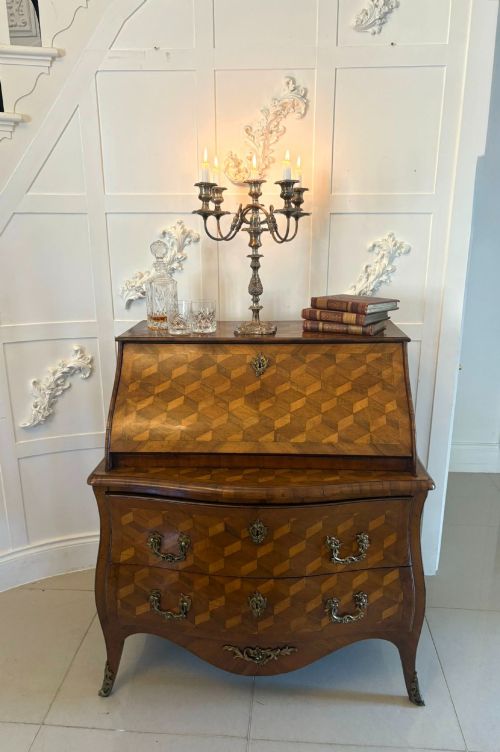
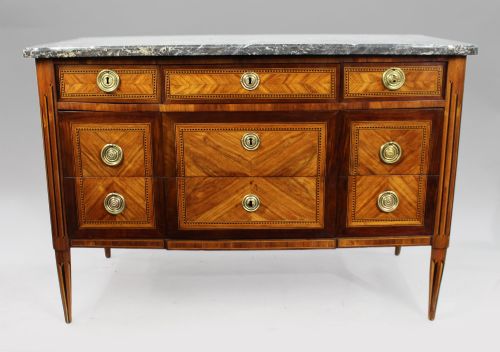


Parquetry Inlaid Chest Drawers
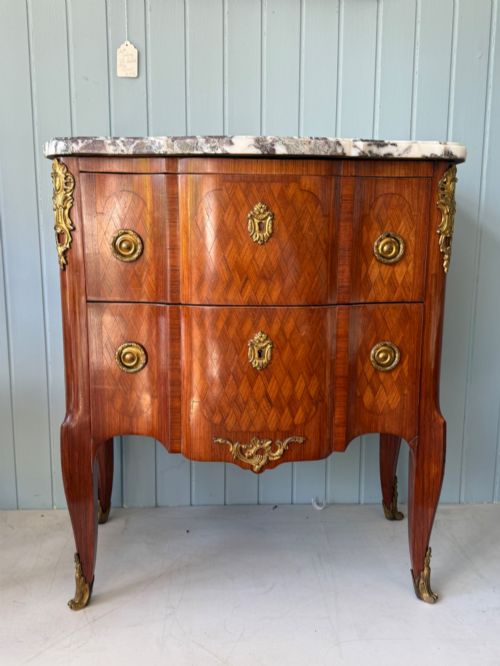
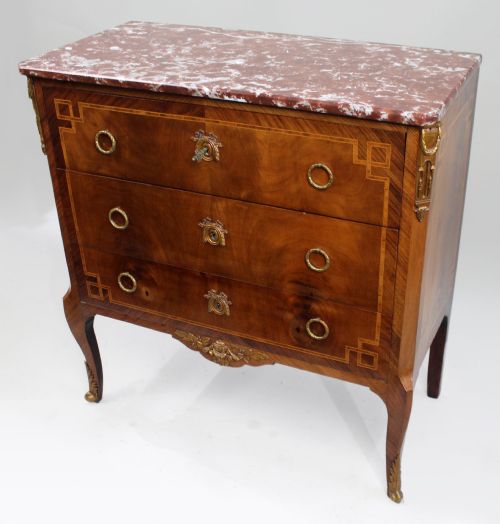
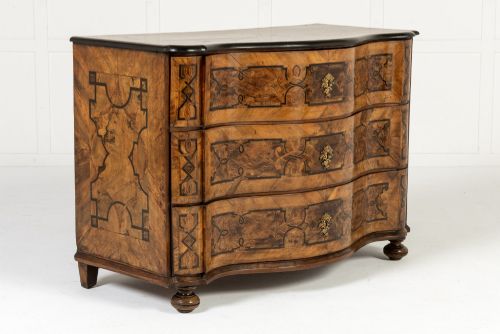
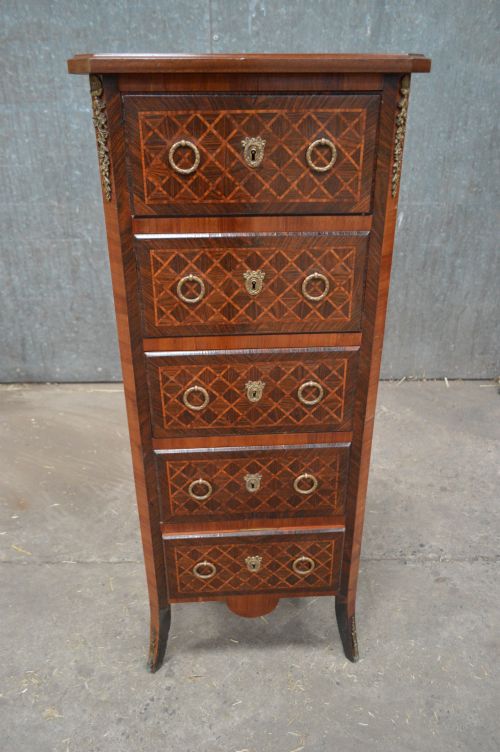
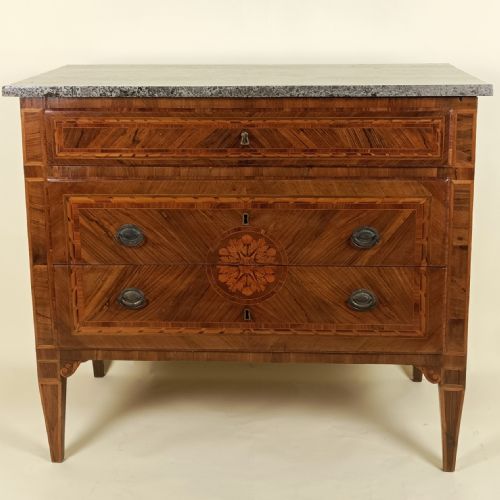
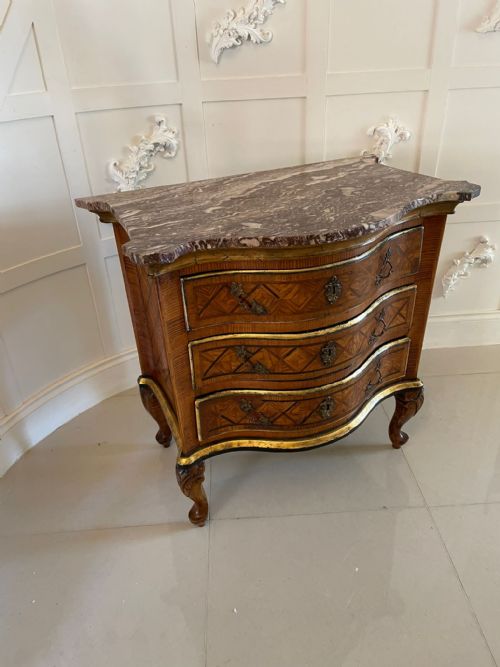
These parquetry inlaid chest drawers combine geometric woodwork and storage, offering a sophisticated focal point for a period interior.
Parquetry Inlaid Chest Drawers
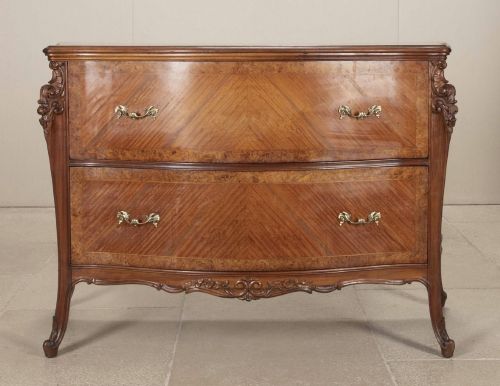
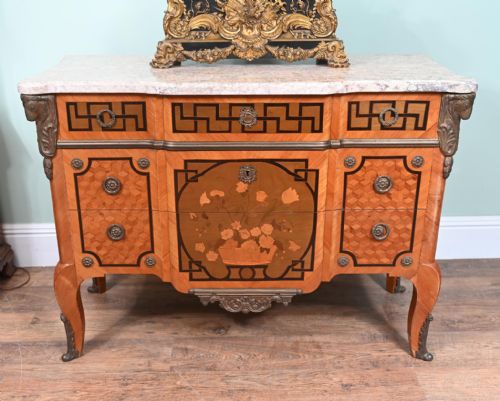
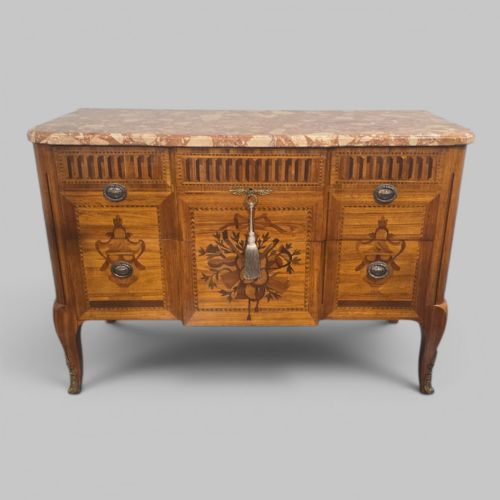
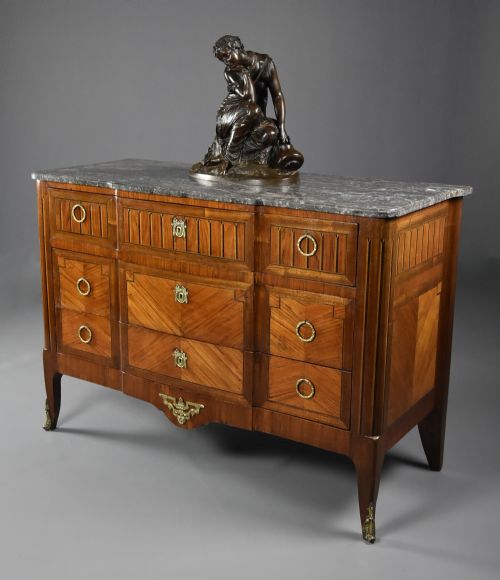
Parquetry inlaid chest drawers encompass sophisticated continental commodes, bedside cabinets, and bombe chests originating primarily from the eighteenth and nineteenth centuries.
The versions most commonly met on this page are French and Italian commodes featuring serpentine or breakfront silhouettes, frequently paired with marble tops.
Originating across stylistic movements such as Louis XV, Louis XVI, and Neoclassical, these pieces balance decorative geometric surfaces with practical drawer storage.
Materials and Technique
Craftsmen utilised fine timber veneers including walnut, kingwood, rosewood, satinwood, tulipwood, and fruitwood, meticulously arranged in geometric parquetry patterns across carcass frames.
Surface ornamentation incorporated contrasting brass mounts, ormolu details, and inset marble tops of scagliola or natural stone to finish the structural form.
Listings span the 18th century, 19th century, and early 20th century, incorporating walnut, marble, ormolu, and rosewood.
Quality and Construction
The standard of a piece depends on the precision of the timber veneer alignment and the complexity of the geometric parquetry layout across curved surfaces.
Superior examples display harmonious timber selection, intact original marble surfaces, and integrated brass or ormolu mounts that complement the underlying carcass structure.
The Parquetry Inlaid Chest Drawers Glossary
- Parquetry
- Geometric mosaic woodwork formed by small pieces of veneer fitted together to create patterns on furniture surfaces.
- Commode
- A decorative chest of drawers developed in eighteenth-century France, typically featuring multiple drawer tiers and an integrated marble top.
- Bombe
- A swelling, convex furniture profile characterised by rounded contour lines that curve outward from top to base.
- Ormolu
- Gilt-bronze decorative mounts applied to furniture edges, handles, and corners during the eighteenth and nineteenth centuries.
- Serpentine
- A furniture front or edge shaped with a central concave curve flanked by two convex curves.
Parquetry Inlaid Chest Drawers: Frequently Asked Questions
How do I clean a marble top?
Marble surfaces require gentle cleaning with a damp cloth and mild, pH-neutral soap to protect the stone from staining or chemical erosion.
Avoid acidic substances such as vinegar or lemon juice, which etch polished marble finishes immediately.
What is the difference between marquetry and parquetry?
Parquetry utilises geometric wood tiles to construct repeating patterns like cubes or herringbone across a surface.
Marquetry employs varied veneers to form pictorial scenes, floral motifs, or scrolls.
Where were these chests made?
These pieces originate primarily from continental workshops in France, Italy, Germany, and Austria during the eighteenth and nineteenth centuries.
French and Italian makers produced the majority of surviving examples seen in classical revival styles.
Are these drawers suitable for daily use?
These historical chests provide functional storage, though vintage drawer mechanisms require gentle handling compared to modern furniture.
Placing items carefully inside protects the delicate internal wood construction and historical drawer linings.