
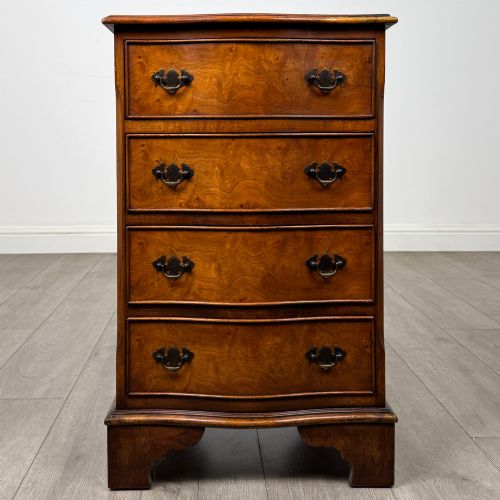
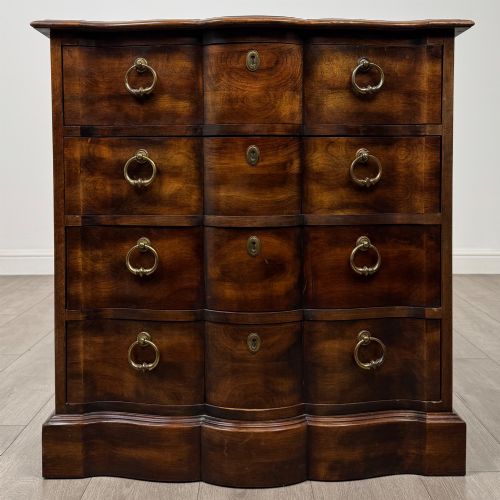
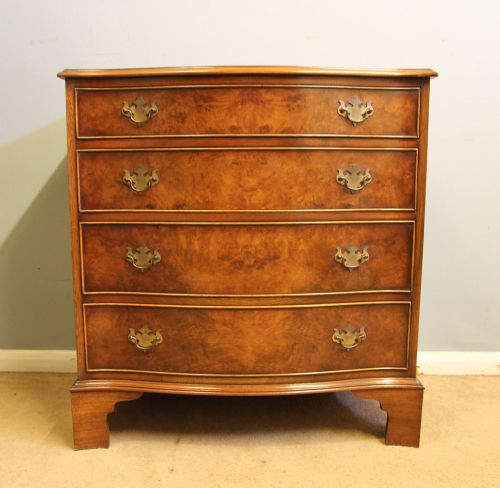
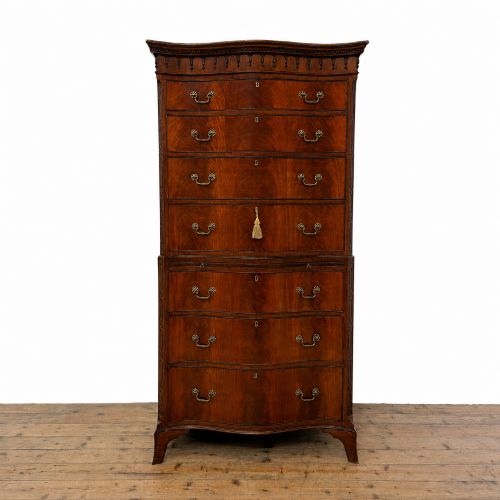
Serpentine Front Storage Chest
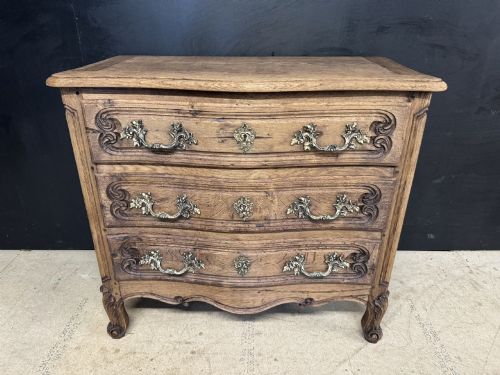
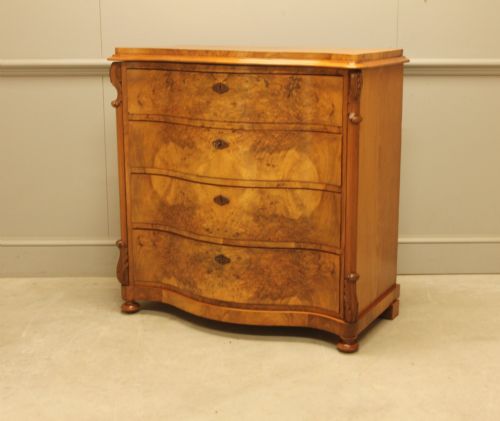
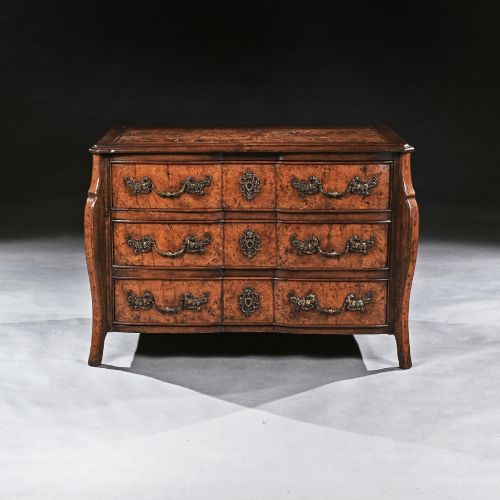
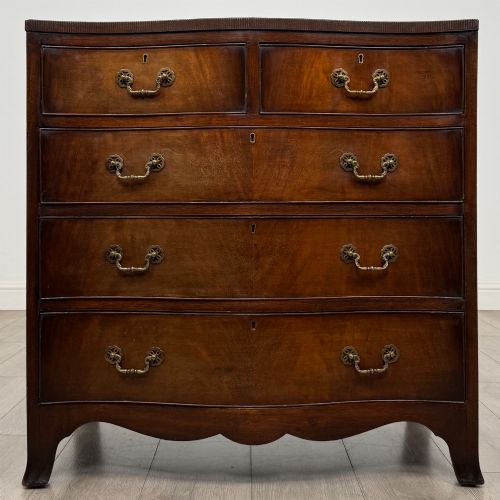
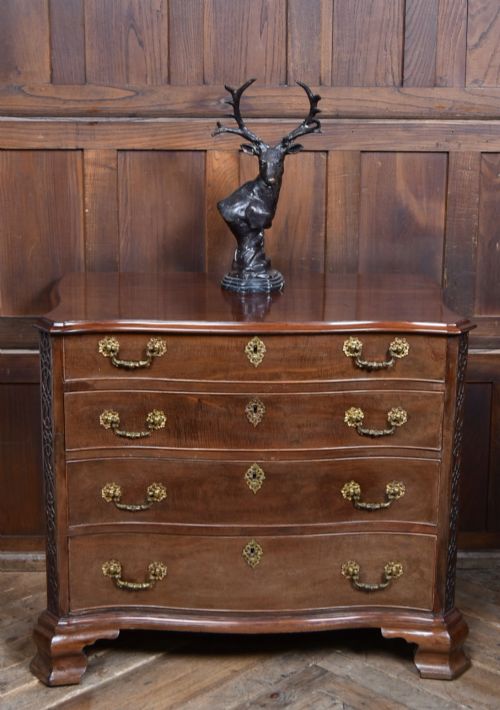
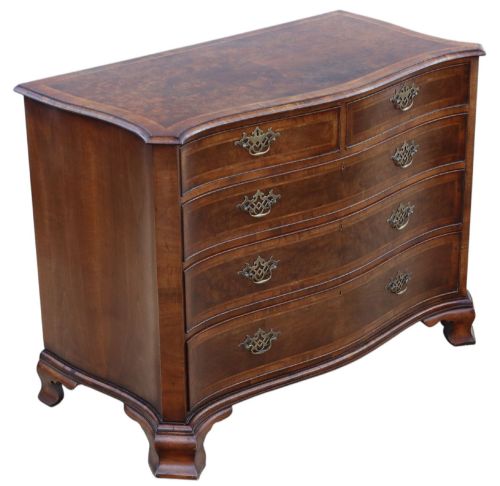
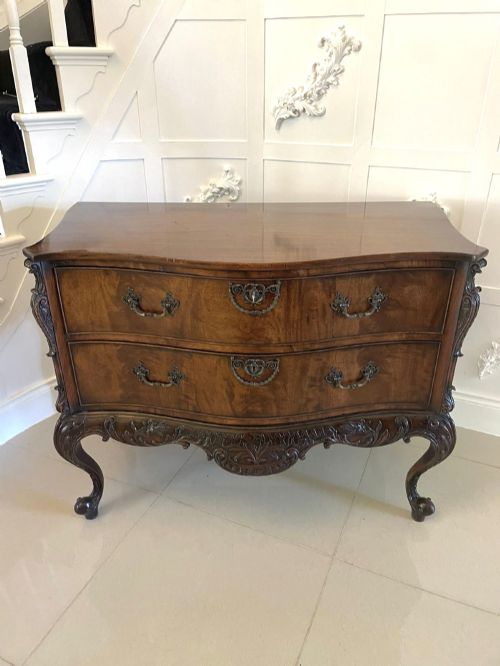
A serpentine front storage chest brings a dynamic, undulating profile to furniture, offering generous capacity with undeniable visual movement.
Serpentine Front Storage Chest
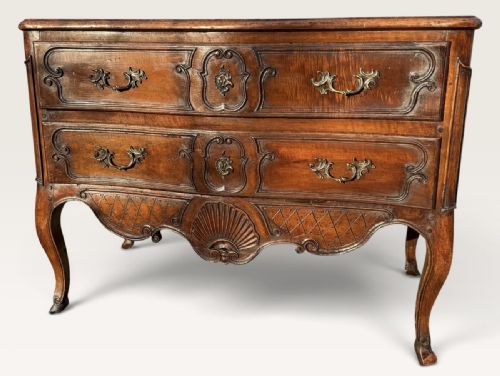
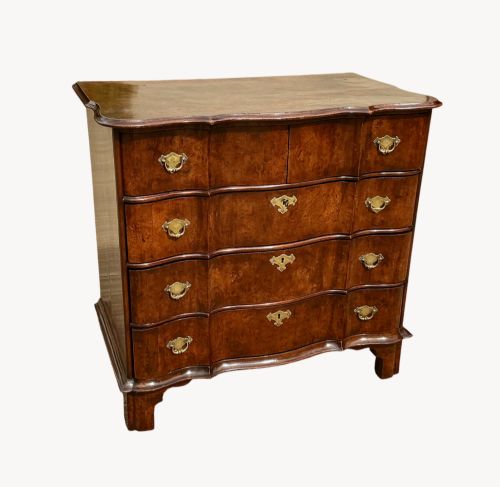
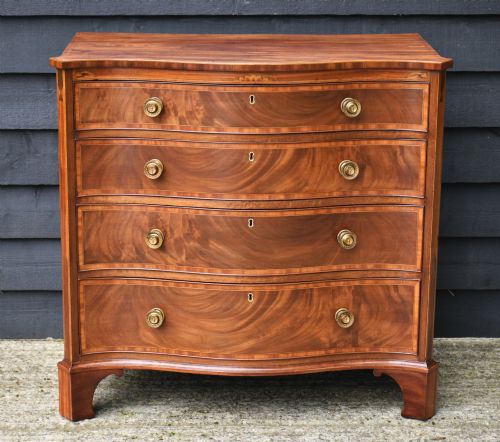
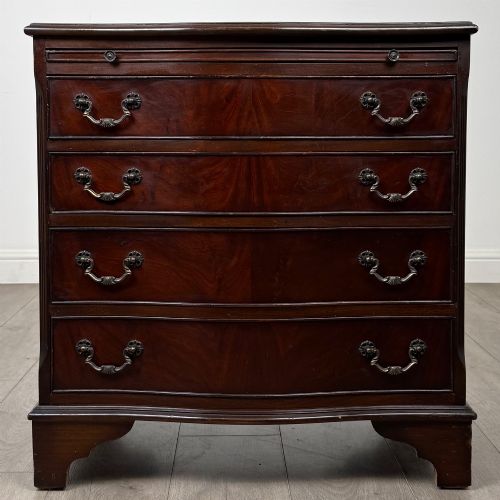
The pieces span several distinct eras, appearing in 18th century Georgian designs, 19th century Victorian works, and later 20th century revivals. Examples range from compact provincial commodes to large George III mahogany chests and Dutch baroque interpretations.
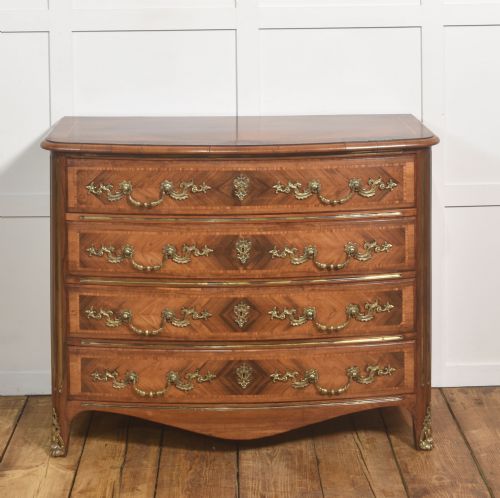
Origin and regional styles heavily influence the silhouette, with French provincial, Dutch baroque, and English Georgian interpretations all contributing to the selection. Walnut and mahogany dominate the offerings, occasionally paired with marble tops or intricate marquetry.
Materials and Construction
Cabinetmakers constructed these chests using solid and veneered timbers, notably figured mahogany, burr walnut, and satinwood over sturdy oak or secondary woods. Curving the front required meticulous shaping of the solid timber frame and careful application of veneers to follow the undulating contours without lifting.
Surface ornamentation involved crossbanding, parquetry, and marquetry inlay, which accentuated the complex geometry of the curved drawer fronts. Many iterations incorporated cast brass handles and escutcheons shaped specifically to fit the sweeping planes of the drawer faces.
Some continental and high-status pieces integrated heavy marble tops that followed the exact serpentine contour, requiring expert stone-cutting techniques. Structural integrity relied on dovetailed drawer construction and robust carcase assembly to withstand the tension of the curved timber.
Some continental commodes curve outward so aggressively they practically lean forward to greet you.
Standards of Execution
The calibre of a serpentine front storage chest depends significantly on the tightness of the timber figure and the precision of the curved joinery. Superior examples display continuous grain matching across the drawer fronts, whereas lesser pieces show disjointed patterning.
The complexity of the carcass shape dictates the level of craftsmanship, with double-sweep profiles requiring advanced carpentry skills compared to simpler single-curve fronts. Original hardware, intact parquetry, and well-fitted marble slabs elevate a piece well above standard utilitarian chests.
The Serpentine Front Storage Chest Glossary
- Serpentine
- A furniture front characterised by a convex centre flanked by concave sides. This undulating shape creates a sense of movement and visual depth.
- Commode
- A low chest of drawers or cabinet, often associated with French 18th century design and frequently featuring a serpentine or bombe profile.
- Crossbanding
- A border technique where thin strips of veneer are laid perpendicular to the grain of the main panel, framing the drawer front.
- Tallboy
- A tall chest of drawers, often constructed as one chest stacked upon another, providing substantial storage capacity.
- Marquetry
- Decorative patterns created by fitting together small pieces of tinted wood, shell, or ivory veneer onto a structural surface.
Serpentine Front Storage Chest: Frequently Asked Questions
How do I style a serpentine chest in a modern room?
Place the chest against a principal wall in a hallway or bedroom where its curved silhouette can catch natural light and stand free from visual clutter.
Keep surface accessories minimal to allow the undulating wood grain and brass hardware to serve as the primary focal point.
What is the difference between a serpentine chest and a commode?
The term commode typically denotes a low, decorative chest of continental origin, often featuring more elaborate marquetry or marble tops.
Standard chests of drawers generally follow English or regional British traditions with straightforward timber construction and functional drawer arrangements.
Can these chests be used for everyday storage?
These pieces provide deep, practical drawer capacity suitable for clothing, linens, or general household storage needs.
Ensure drawers slide smoothly and avoid overloading antique timber runners to preserve the original structural mechanics.
How do I identify a Georgian serpentine chest?
Look for dense mahogany or walnut timbers, hand-cut dovetails, and restrained proportions typical of 18th century British cabinetmaking.
Examine the backboards and drawer linings for signs of period hand-tooling and construction methods consistent with the Georgian era.