
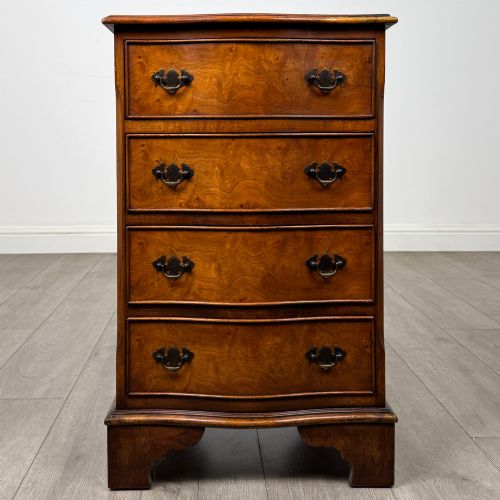
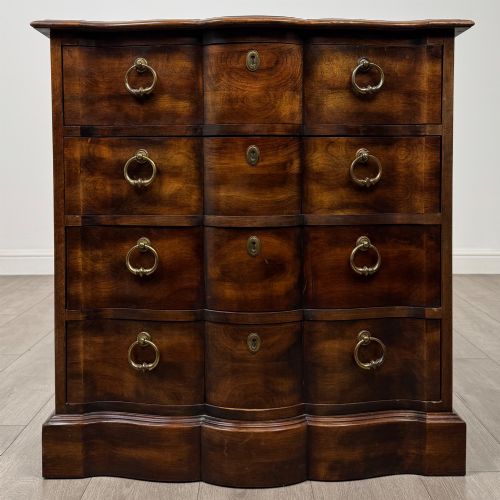
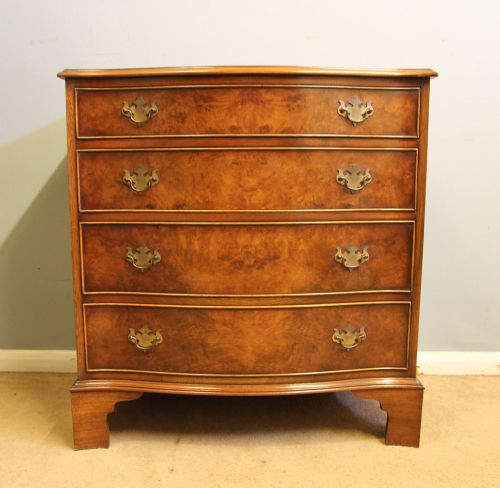
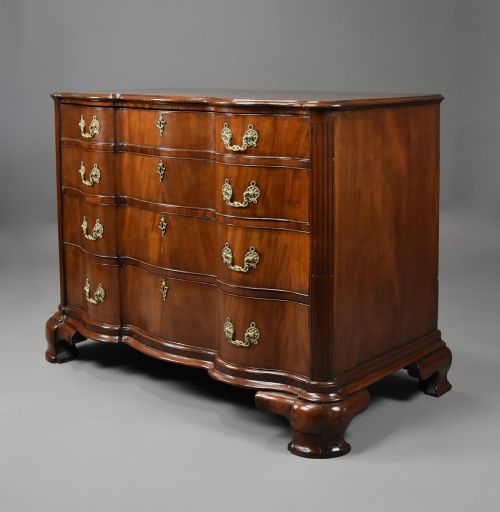




Four Drawer Serpentine Commode
A four drawer serpentine commode brings sculptural elegance to a room with its gently undulating front and practical storage.
Four Drawer Serpentine Commode
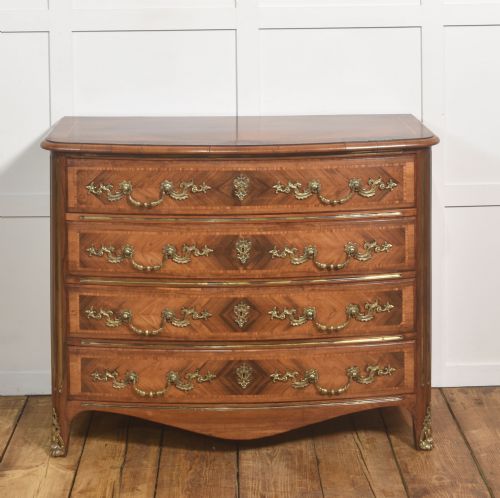
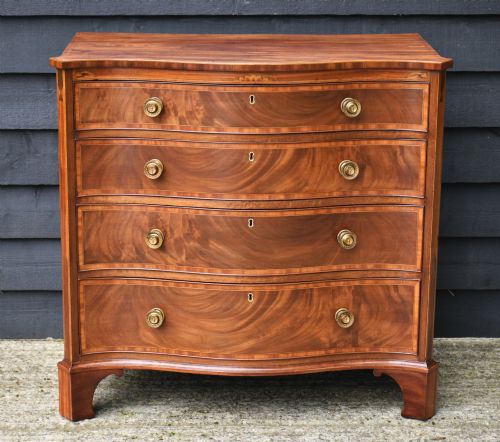
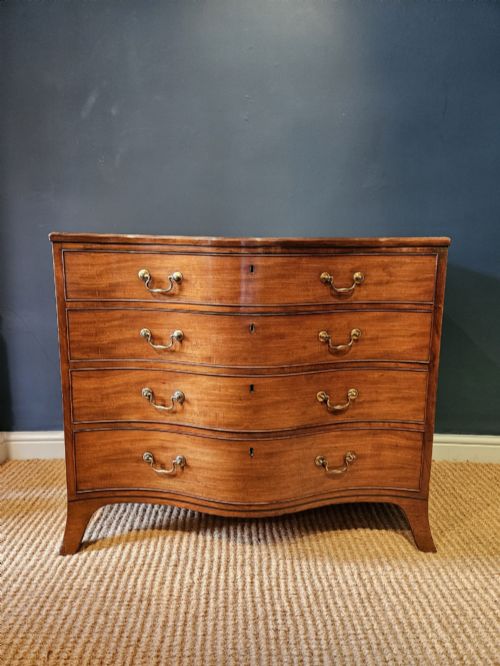
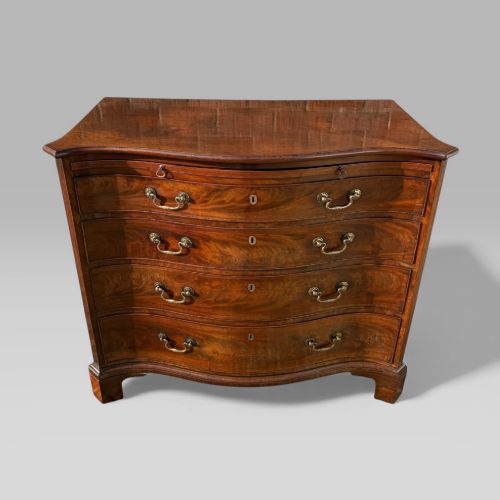
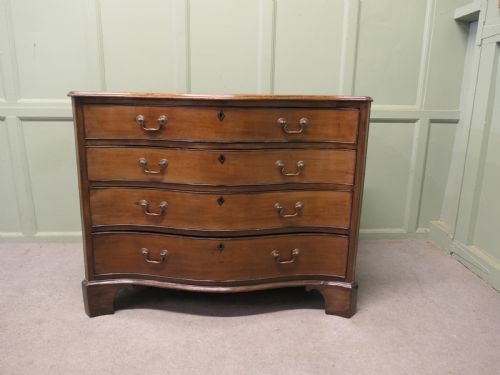
A four drawer serpentine commode presents a distinctive undulating drawer front that curves inward at the centre and outward at the edges, creating a fluid silhouette. These pieces function primarily as statement storage furniture for bedrooms and principal reception rooms, offering four graduated tiers of drawers.
The version most commonly encountered on this page originates from the Georgian period and its later revivals, executed in rich hardwoods. Makers designed these chests to catch the ambient light across their curved surfaces, demonstrating both high cabinet-making skill and aesthetic ambition.
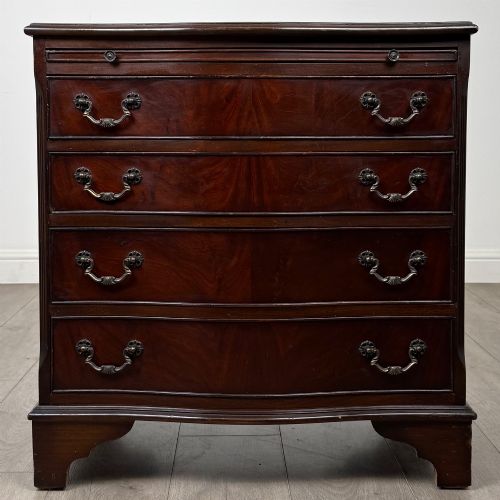
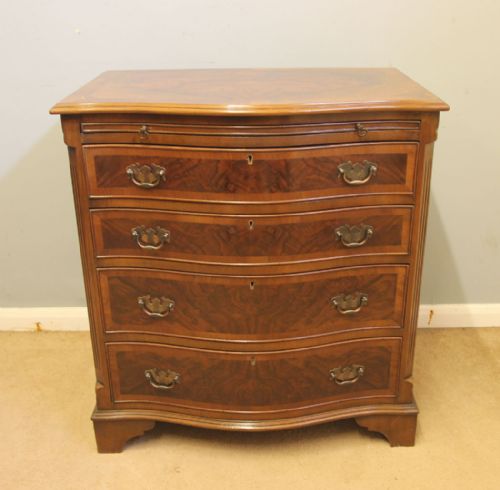
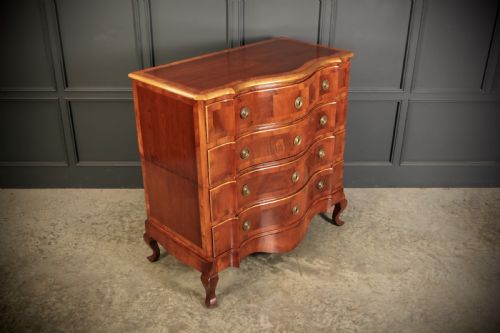
Examples span from eighteenth-century originals to later Edwardian and twentieth-century interpretations, showing influences from English cabinet-makers as well as continental workshops. Walnut, mahogany, and burr veneers dominate the offerings, often complemented by finely cast brass handles and escutcheons.
Materials and construction
Cabinet-makers relied heavily on solid mahogany, walnut, and burr walnut, frequently applied as figured veneers over stable secondary timbers like oak and pine. Boxwood inlay and fine stringing often highlight the curved outlines of the drawer fronts and top edges.
Shaping the serpentine front required thick timber or skilled lamination so the wood could be planed and carved into the characteristic double-curved contour without compromising structural integrity. Drawer linings typically utilised durable secondary woods joined with hand-cut dovetails to ensure longevity.
Some eighteenth-century variants include a pull-out writing slide concealed just beneath the top surface, perfect for standing notes.
Quality variations in the range
The distinction between tiers of quality rests largely on the choice of timber and the precision of the carved serpentine profile. Superior examples display highly figured mahogany or rich burr walnut veneers matched symmetrically across the drawer fronts, while simpler versions use plain timber.
Construction details such as the tightness of the dovetail joints, the presence of original brass hardware, and the crispness of edge mouldings separate masterwork items from standard production pieces. The fluid continuity of the curves across the drawers and frame remains a primary indicator of workshop ability.
The Four Drawer Serpentine Commode Glossary
- Serpentine
- A furniture front characterised by a wavy outline, curving outward at the sides and inward in the middle. This shape demands exceptional skill from the cabinet-maker to execute successfully.
- Commode
- A low chest of drawers or cabinet, often originating from continental traditions or high-style English Georgian design. The term frequently denotes pieces with decorative flair and prominent brass mounts.
- Burr walnut
- Timber taken from growths on walnut trees, showing highly twisted and mottled grain patterns. Cabinet-makers prized this material for creating highly decorative veneer surfaces on grand furniture.
- Dovetail
- A traditional woodworking joint interlocking wedge-shaped fingers to secure corners. Fine, narrow dovetails indicate careful hand assembly by a skilled artisan.
- Escutcheon
- A protective plate surrounding a keyhole, often cast in brass and shaped to complement the style of the hardware. Original matching escutcheons contribute significantly to the integrity of a piece.
Four Drawer Serpentine Commode: Frequently Asked Questions
Where should I place a serpentine commode?
These chests suit principal bedrooms, hallways, or living rooms where their curved fronts can be appreciated from multiple angles. Their decorative presence allows them to stand alone against a feature wall rather than being crowded by other furniture.
Because they provide four practical tiers of storage, they function well for linens or clothing while maintaining a smaller visual footprint than flat-fronted chests.
How do I care for antique wood surfaces?
Maintain the timber by keeping pieces away from direct heat sources and strong sunlight, which can dry out or fade delicate walnut and mahogany veneers. Dust regularly with a dry cloth and apply a quality beeswax sparingly when the wood appears dry.
Avoid using modern silicone sprays or harsh chemical cleaners, as these can penetrate the porous old finishes and damage the patina accumulated over centuries.
How can I tell a Georgian piece from a later revival?
Examine the construction methods inside the drawers, looking for hand-cut dovetails, tool marks, and timber shrinkage consistent with eighteenth-century work. Secondary woods like oak or pine inside the carcass often provide clues to the geographic origin and period.
Revival pieces from the Edwardian era or the twentieth century tend to feature more uniform machine processing, cleaner interior surfaces, and styling that mimics earlier Georgian proportions.
What is the difference between a commode and a chest of drawers?
While both offer tiered drawer storage, the term commode historically implies a more decorative, continental, or French-influenced piece of furniture. English makers adopted the word during the eighteenth century for their most elaborate serpentine and bombe designs.
A standard chest of drawers often follows simpler rectilinear proportions, whereas a commode prioritises sculptural curves and ornamental hardware.