


Ormolu Mounted Storage Chest
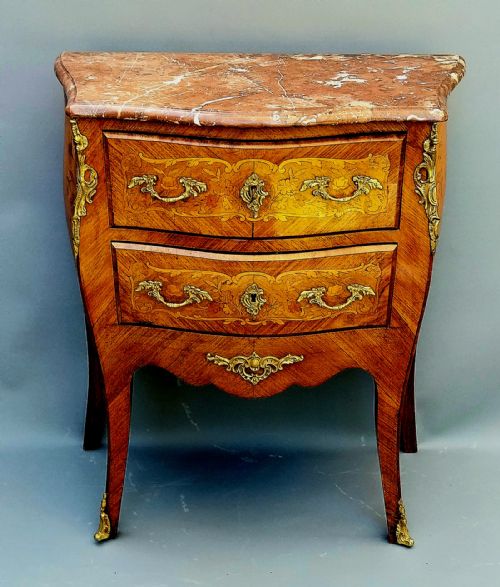
An ormolu mounted storage chest brings heavy gilt bronze mounts and fine marbles together on structured timber carcasses for display and containment.
Ormolu Mounted Storage Chest
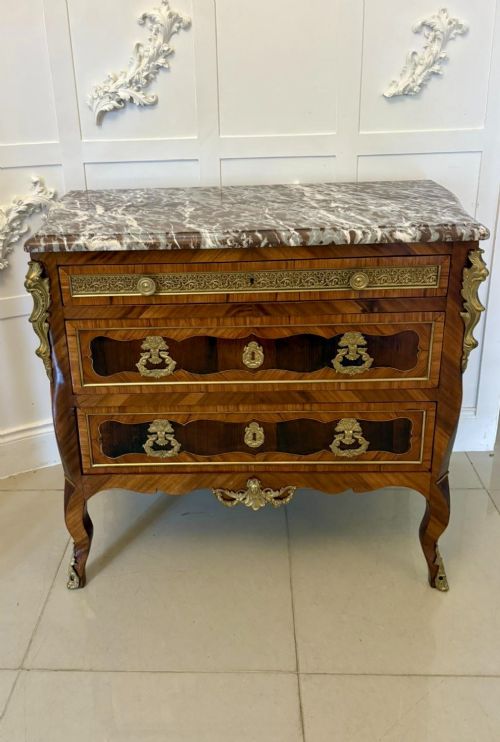
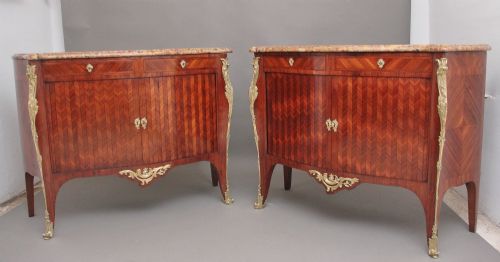
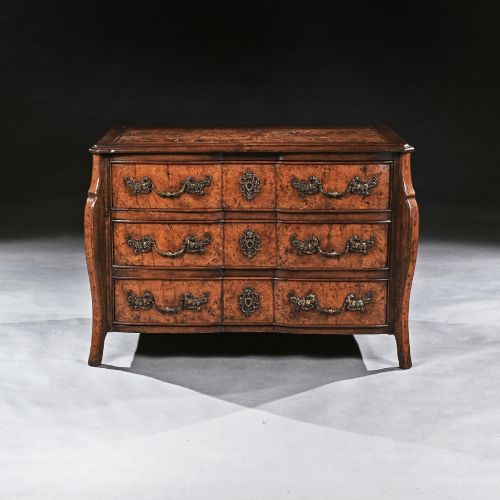
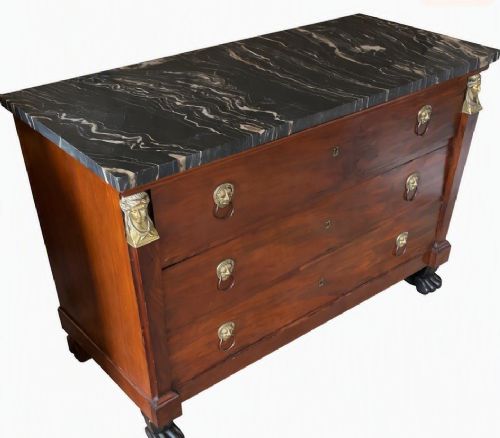
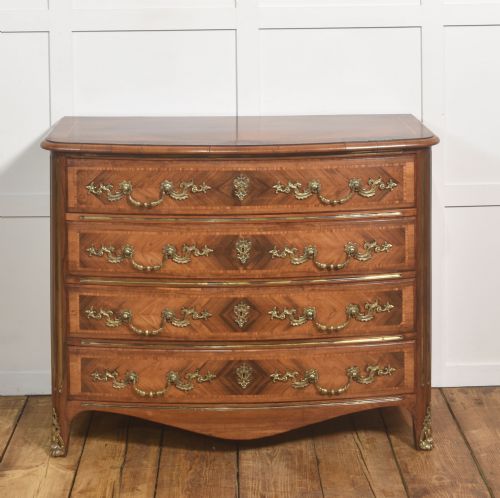
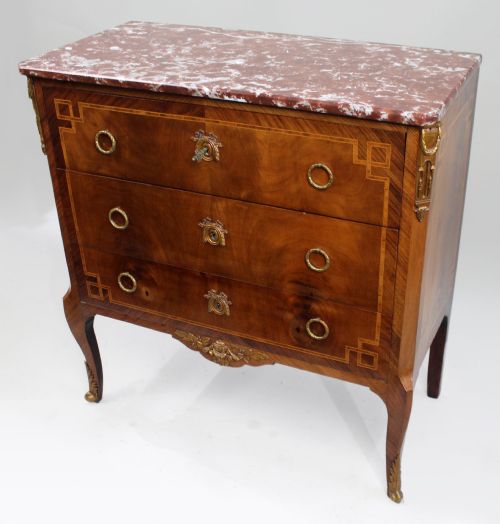
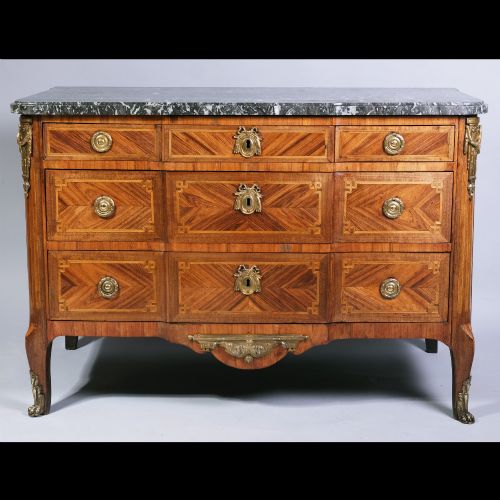
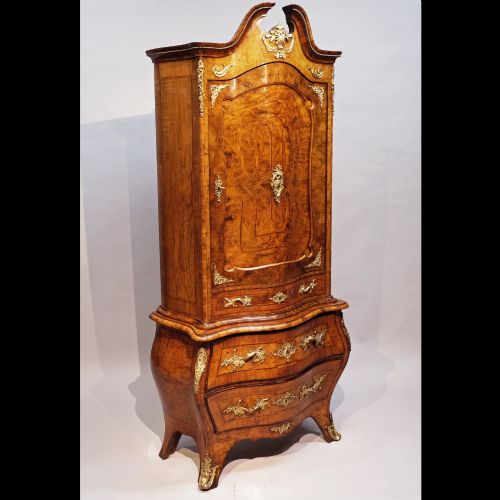
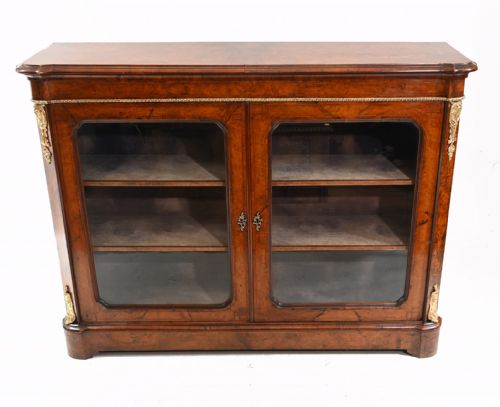
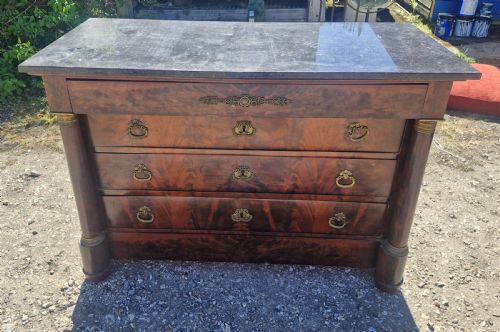
An ormolu mounted storage chest primarily takes the form of commodes, drawer chests, and cabinets spanning the eighteenth through early twentieth centuries. These pieces emerge predominantly from French workshops operating in Louis XV, Louis XVI, Empire, and Régence styles, alongside broader Victorian interpretations.
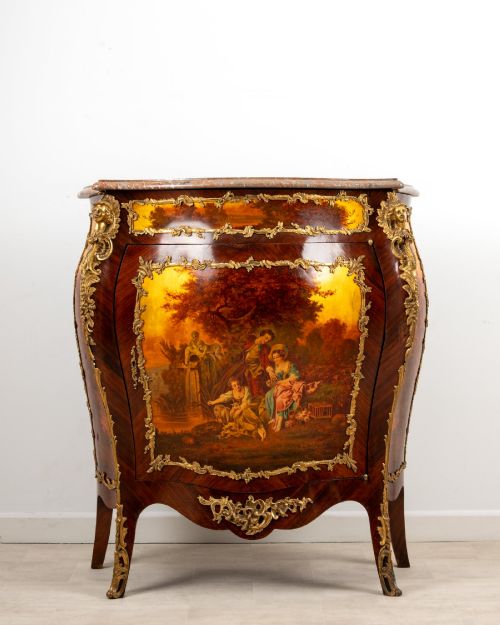
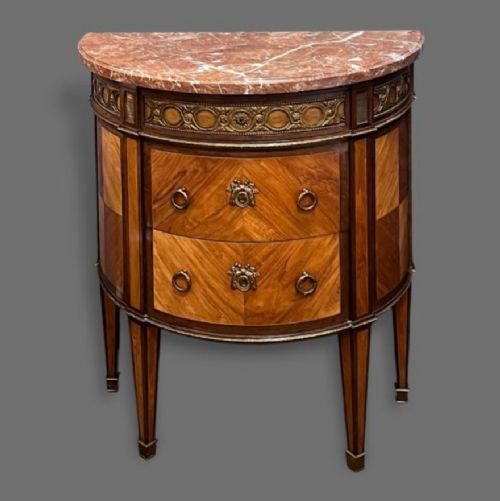
Buyers meet serpentine and bombe profiles frequently on this page, often topped with rouge, breccia, or scagliola marble surfaces. The carcass forms range from compact demi-lune chests to grand sideboards and cellarettes designed for formal rooms.
How they were made
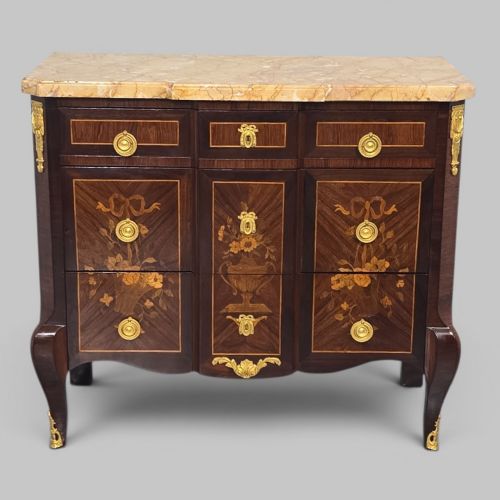
Cabinetmakers constructed these frames using solid and veneered timbers including walnut, mahogany, kingwood, burr walnut, and cherrywood. Surfaces frequently display intricate marquetry and parquetry patterns arranged in geometric or floral motifs across the drawer fronts and sides.
Gilt bronze ormolu mounts are cast, chased, and secured to corners, handles, and aprons to accent the structural lines of the wood. Heavy marble slabs sit fitted directly onto the upper carcasses of the commodes and cabinets.
Several chests hide their working drawers behind clever curved fronts that trick the eye into seeing solid sculpture.
What varies in quality
The crispness and depth of the chased ormolu mounts separate standard production from finer work, as sharper metal detailing requires skilled hand finishing. The precision of the veneer matching and the complexity of the marquetry inlay also distinguish superior cabinets.
Originality of the fitted marble top and the survival of the early surface patination dictate the standing of an individual chest. Substantial timber construction with coherent period mounts marks the upper tier of these storage pieces.
Mon Krieger·Jean-Henri Riesener·Mercier Frères
The Ormolu Mounted Storage Chest Glossary
- Ormolu
- Gilt bronze applied as decorative mounts to furniture frames. The technique involves treating metal with gold amalgam to create a bright golden finish.
- Commode
- A low chest of drawers designed during the eighteenth century and later revived in various French styles. These pieces typically feature prominent marble tops and decorative mounts.
- Marquetry
- The art of applying small pieces of veneer to a structure to form decorative patterns. Craftsmen utilise various coloured woods to build intricate pictorial designs.
- Bombé
- A swelling, outward-curved contour characteristic of certain eighteenth-century furniture shapes. This rounded profile requires precise woodworking to maintain structural integrity.
- Parquetry
- Geometric wood inlay patterns resembling mosaics. It differs from marquetry by focusing on repeating angular shapes rather than pictorial scenes.
Ormolu Mounted Storage Chest: Frequently Asked Questions
What is an ormolu mounted storage chest?
An ormolu mounted storage chest is a decorative cabinet or commode featuring gilt bronze mounts fixed to a timber frame. These pieces often incorporate marble tops and intricate wood veneers.
Originating largely from French design traditions, they function as both practical storage units and focal points within a room.
How do I identify a Louis XV style chest?
Louis XV style chests display characteristic curved lines, serpentine fronts, and asymmetrical floral or scroll marquetry. The legs often sweep outward in a cabriole form.
These pieces rely heavily on prominent ormolu mounts at the corners and feet to accentuate the flowing woodwork.
Are marble tops original to these chests?
Many chests retain their original fitted marble tops, which were selected by makers to complement the wood tones and ormolu mounts. Breccia, rouge, and standard polished marble slabs are common.
Examining the underside and the fit against the wooden moulding helps confirm whether the stone belongs to the period of the carcass.
How should I care for a marquetry commode?
Marquetry commodes require stable indoor humidity levels to prevent the delicate veneer woods from shrinking or lifting away from the carcass. Gentle dusting with a dry cloth protects the polished surface.
Avoid placing these chests near direct heat sources or in strong sunlight that might fade the coloured wood veneers over time.