




Rococo Style Bedroom Furniture
Rococo style bedroom furniture brings exuberant curves, intricate marquetry, and serpentine forms straight into private chambers.
Rococo Style Bedroom Furniture
Rococo style bedroom furniture encompasses grand beds, matching bedside cabinets, complete bedroom suites, and serpentine chests of drawers. Buyers seeking this aesthetic encounter pieces spanning the eighteenth century through to early twentieth-century revivals.
The dominant forms on this page are commodes, bombes, and beds echoing Louis XV design. These items originate from periods including the eighteenth century, eighteen-eighties, eighteen-nineties, and nineteen-tens, reflecting enduring European craftsmanship.
Makers and manufacturers channel French Rococo, Bavarian Rococo, and Louis XV revival traditions into practical chambers. Each piece balances decorative excess with functional domestic storage and sleeping arrangements.
How they were made
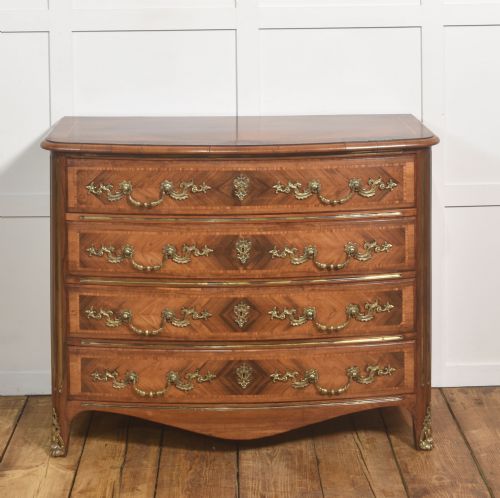
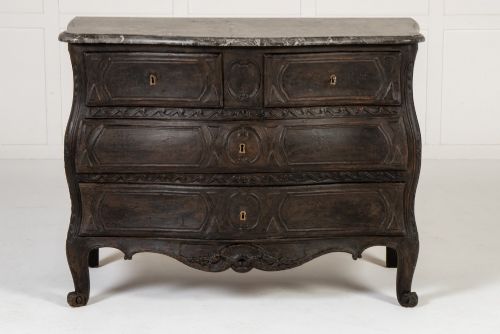
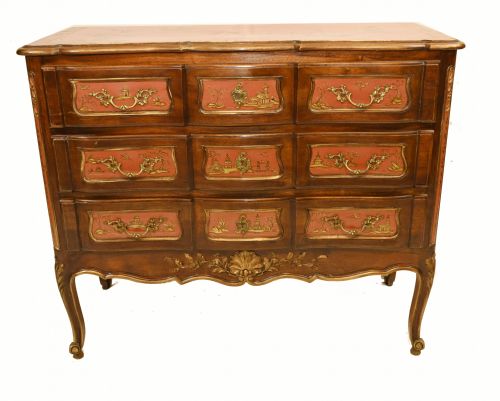
Cabinet makers utilised choice timbers such as walnut, burr walnut, kingwood, and pine as foundations for elaborate veneering and marquetry patterns. Painted wood and ebonised finishes also appear, alongside exotic Chinese lacquer chinoiserie decorations on specific chests.
Structural flourishes rely on cast ormolu mounts, polished marble tops, and detailed brass hardware fitted to serpentine and bombe shapes. Beds feature carved wooden frames and upholstered panels designed to match accompanying bedside cabinets.
If a commode cannot decide whether it is flat or bulging, it simply chooses the bombe route and curves in all directions at once.
What varies in quality
Quality rests upon the crispness of the carved woodwork and the precision of the marquetry inlay across curved surfaces. Finer examples display harmonious grain selection in walnut or kingwood and seamless integration of heavy ormolu mounts.
The structural integrity of bombe forms and serpentine drawers dictates overall standard. Superior pieces maintain smooth drawer operation and well-fitted marble slabs that sit securely upon robust wooden carcases.
The Rococo Style Bedroom Furniture Glossary
- Bombe
- A bulging, outward-curving chest or commode shape popular in continental cabinet making. This swelling profile requires advanced woodworking skill to execute properly.
- Serpentine
- A front or edge shaped with a central concave curve flanked by two convex sweeps. It provides the characteristic undulating movement seen on quality commodes.
- Ormolu
- Gilded bronze mounts applied to furniture for decorative accent. These metal additions catch the light and frame the wooden structure.
- Marquetry
- Decorative patterns formed by fitting together thin veneers of various coloured woods. Craftsmen use this technique to create pictorial or geometric designs on drawer fronts.
- Commode
- A low chest of drawers or cabinet originating in France. These pieces serve as both decorative focal points and practical storage.
Rococo Style Bedroom Furniture: Frequently Asked Questions
What defines rococo style bedroom furniture?
These pieces are characterised by asymmetrical curves, elaborate natural motifs, and flowing serpentine outlines. They draw heavily on eighteenth-century French design principles.
Items range from full bedroom suites and beds to dedicated commodes and chests of drawers finished in marquetry or polished wood.
How do I date these pieces accurately?
Dating relies on examining construction methods, timber choices, and secondary woods inside the drawers. Eighteenth-century originals differ structurally from nineteenth-century and early twentieth-century revivals.
Stylistic details like ormolu mounts and veneer thickness also help distinguish period items from later revival interpretations.
Are beds usually part of a set?
Beds often appear alongside matching bedside cabinets or as part of larger coordinated bedroom suites. Single beds and king-size beds both feature heavily carved wooden frames.
Many beds incorporate upholstered headboards or footboards matching the wider aesthetic of the suite.
How do I care for marble tops?
Marble surfaces require gentle cleaning with mild, non-acidic soap and water to preserve the polished finish. Avoid harsh chemicals that can etch or dull the stone.
Using coasters and mats prevents scratching and staining from everyday objects placed on commodes and cabinets.