


Continental Walnut Commode Chest
A continental walnut commode chest brings sculptural timber and deep grain into a room, offering generous storage with regional flair.
Continental Walnut Commode Chest
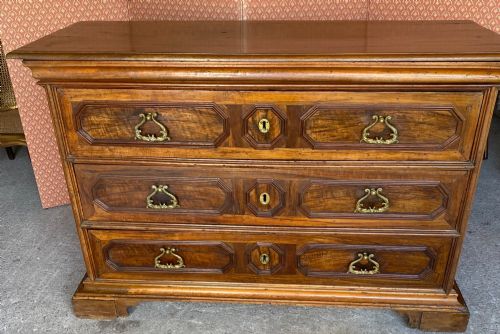
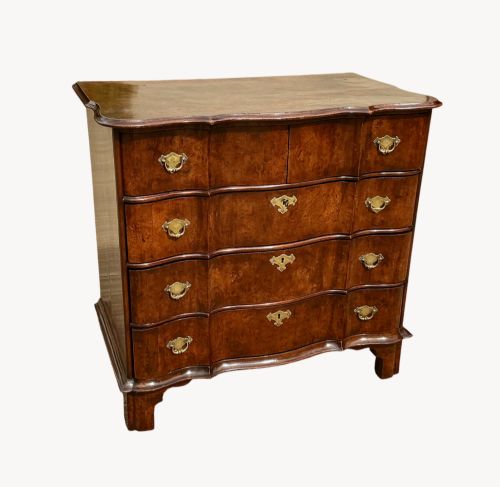
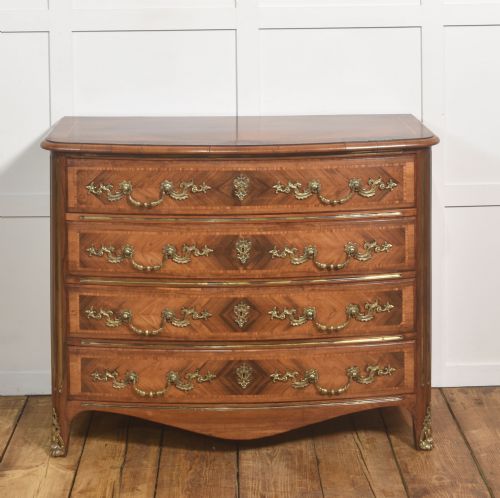
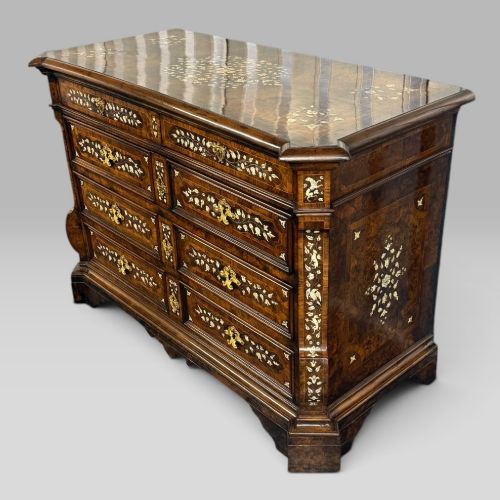
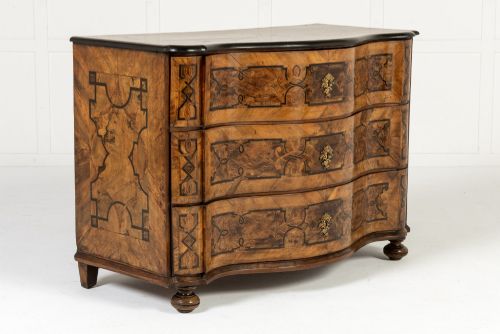
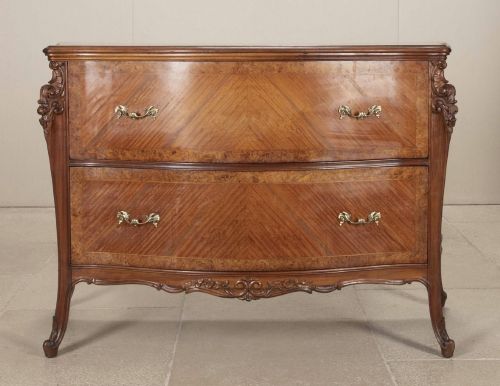
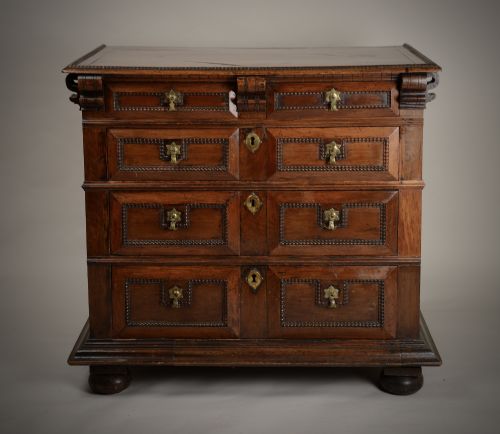
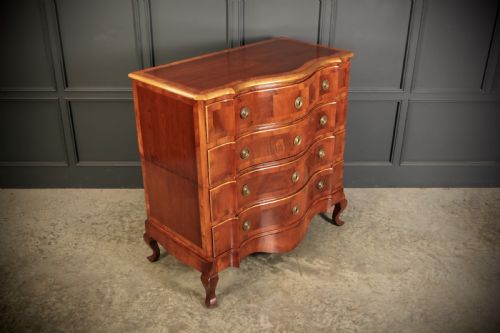
A continental walnut commode chest is a substantial storage piece originating from European workshops, spanning several centuries of design. These chests of drawers appear in various forms, from straightforward rectangular shapes to complex serpentine and bombé outlines.
Buyers encounter numerous regional interpretations on this page, including Dutch, Italian, German, Austrian, and French examples. The selection ranges from severe 17th-century pieces to lighter 19th-century variants like Biedermeier models.
Materials and construction
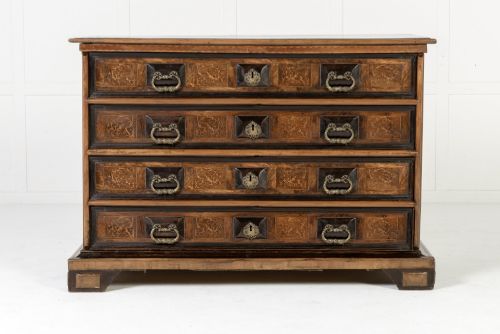
Cabinet makers built these carcasses using regional primary and secondary timbers such as oak, pine, and fruitwood to support heavy walnut and burr walnut veneers. Marquetry and inlay often incorporate contrasting woods to create intricate floral or geometric patterns across the drawer fronts.
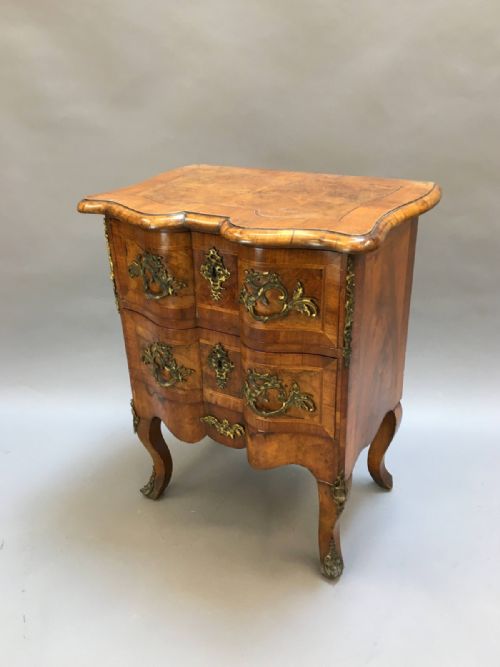
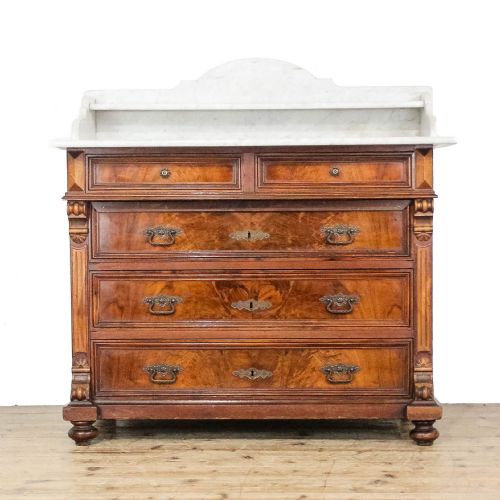
Many 18th-century and 19th-century specimens feature shaped marble slabs fitted to the top surface, alongside cast brass and ormolu mounts handling the drawer pulls and key escutcheons.
The listings span multiple centuries, incorporating 17th, 18th, and 19th-century periods alongside materials like marble, ormolu, and burr walnut.
Judging quality
Quality rests upon the selection and matching of the walnut veneer, where symmetrical burr patterns show superior workshop selection. The fluidity of the serpentine or bombé curves and the crispness of the carving dictate the artisan's skill level.
Original mounts, sound structural framing, and intact marble tops distinguish the finer survivals from pieces that have undergone extensive rebuilding over the centuries.
Grand Ducal Workshops
The Continental Walnut Commode Chest Glossary
- Commode
- A low chest of drawers, typically of European origin, developed from the chest in the late 17th century. They serve primarily as decorative yet functional bedroom or living space storage.
- Bombé
- A swelling, outward-curving chest profile associated with Baroque and Rococo continental furniture. This bulging shape requires advanced timber bending and shaping techniques.
- Serpentine
- A front contour that curves inward at the centre and outward at the ends, or vice versa. This undulating line is a hallmark of 18th-century cabinet making.
- Marquetry
- The art of applying small pieces of veneer to a structure to form decorative patterns and pictures. Craftsmen utilise diverse woods to achieve tonal variation.
- Biedermeier
- A central European style dating from the early to mid 19th century emphasising clean lines and blonde veneers. These pieces prioritize utilitarian comfort and understated elegance over heavy ornamentation.
Continental Walnut Commode Chest: Frequently Asked Questions
How do I date a continental commode chest?
Examine the construction methods of the drawer linings, the type of secondary woods used, and the overall silhouette. Baroque pieces show heavier architectural moulding, while later 19th-century examples tend towards lighter timbers.
Hardware styles and veneer thickness also provide reliable clues to the decade of manufacture. Compare the carcass construction against known regional traits from Dutch, Italian, or German traditions.
Are marble top commodes original?
Many continental commodes were designed with fitted marble tops, particularly those originating from 18th and 19th-century France and Italy. These stone slabs provided a durable, decorative surface.
Inspect the edges of the marble and the top frame of the wooden chest to ensure they rest together naturally. Later replacements often sit differently on the wooden rebate than period originals.
How do I care for walnut veneer?
Keep walnut furniture away from direct sunlight and steady heat sources to prevent the timber and underlying veneer from drying out. Dust regularly with a soft, dry cloth rather than using silicone polishes.
Maintain stable room humidity levels to protect the antique glue and wood joints. Natural wax applied sparingly helps preserve the depth of the grain.