




Parquetry Coffee Tables
Parquetry coffee tables bring geometric timber work to low reception furniture, offering durable surface patterns crafted from contrasting woods.
Parquetry Coffee Tables
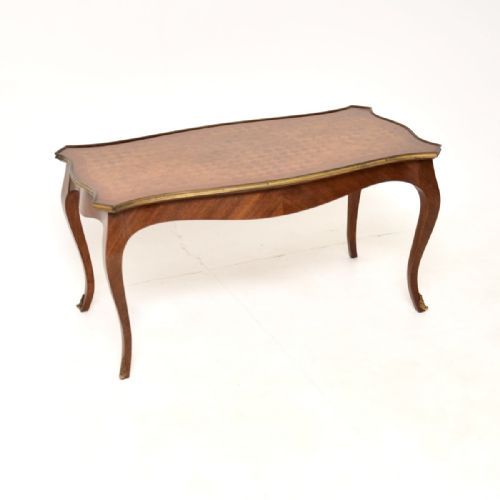
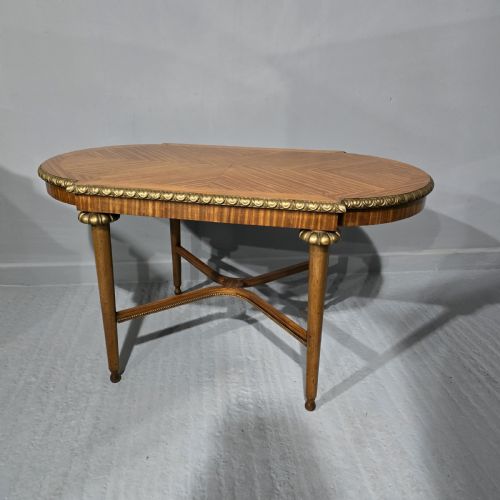
Parquetry coffee tables unite low table forms with geometric wood veneers, appearing on this page across periods from the seventeenth century through to the mid twentieth century. Buyers seeking parquetry coffee tables encounter various structural formats, including individual occasional tables, nests of tables, and centre tables adapted to coffee height.
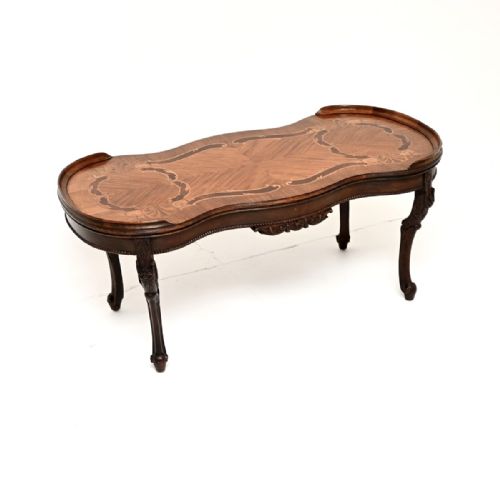
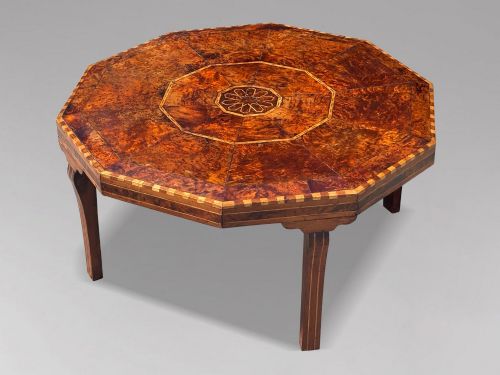
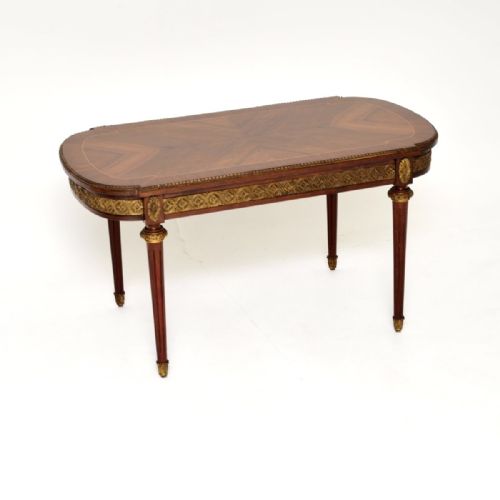
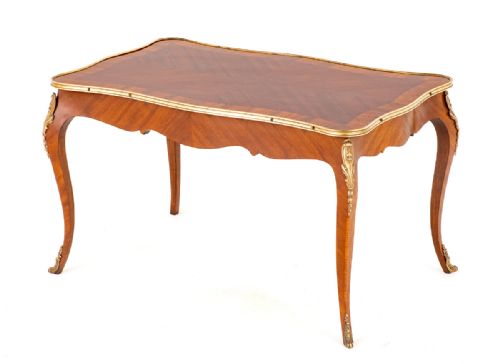
The selection ranges from French Louis XV style and Louis XVI revival pieces to Moorish revival and Dutch designs. Common configurations include rectangular, square, and octagonal shapes, alongside two-tier occasional pieces and galleried trays.
How they were made
Craftsmen built these tables using solid timber frames of walnut, oak, or mahogany, applying fine veneers in patterns across the top surface. Woods such as rosewood, kingwood, satinwood, fruitwood, and boxwood provided the contrasting tones necessary for geometric parquetry and floral inlay.
Many examples incorporate cast brass or ormolu mounts to edge the tops, frame the borders, or adorn the legs. Surfaces were finished to highlight the natural grain and colour variation of the individual veneer sections.
What varies in quality
The sophistication of the timber selection dictates the visual depth of the surface pattern, separating standard production from finer work. Precision in the geometric arrangement and the tightness of the veneer joints determine the overall integrity of the piece.
The choice of secondary materials, such as heavy ormolu mounts rather than simple brass trim, alters the character of the table. Age also influences standing, with seventeenth-century and nineteenth-century examples demonstrating different structural traditions compared to twentieth-century production.
Emile Galle·Zwiener
The Parquetry Coffee Tables Glossary
- Parquetry
- A geometric mosaic of wood pieces used for decorative surfaces. It relies on precise cutting of contrasting timbers to form patterns like cubes, chevrons, or squares.
- Ormolu
- Gilt bronze mounts applied to furniture for decoration and edge protection. This technique appears frequently on French revival pieces from the nineteenth and twentieth centuries.
- Nest of tables
- A set of graduated tables designed to fit neatly beneath one another. These provide flexible surface space in compact seating arrangements.
- Galleried
- Featuring a raised decorative rail around the edge of the tabletop. This border prevents items from slipping off tray-top and occasional tables.
- Burr yew
- Timber taken from the growth burls of the yew tree, prized for its swirling grain pattern. It creates highly figured table surfaces when sliced into veneer.
Parquetry Coffee Tables: Frequently Asked Questions
What is a parquetry coffee table?
A parquetry coffee table is a low surface featuring geometric wood veneer arrangements on the top. These pieces draw on historical furniture styles including Louis XV revival and Moorish designs.
They function as central low tables in reception rooms, combining decorative patterned woodwork with practical surface space.
How do I identify the period?
Period identification relies on construction methods, timber choices, and stylistic markers such as ormolu mounts or cabriole legs. Pieces range from seventeenth-century Dutch designs to mid-twentieth-century oak examples.
Looking at the underside, drawer construction, and veneer thickness helps confirm the age of the table.
Are nest of tables practical?
Nests of tables offer flexible surface area by stacking together when floor space is limited. They appear in walnut and parquetry finishes across nineteenth and twentieth-century listings.
Users can pull out individual tables as needed for drinks or books during gatherings.
What woods are used in parquetry?
Parquetry combines contrasting timbers like rosewood, kingwood, satinwood, fruitwood, and boxwood over a solid walnut or oak base. The natural variations in these woods create the optical depth of the geometric patterns.
Selected areas may also feature burr yew or mahogany depending on the specific regional style.