



Parquetry Center Table
A parquetry centre table brings geometric wood patterns and freestanding presence to a room, offering both decorative impact and practical surface space.
Parquetry Center Table
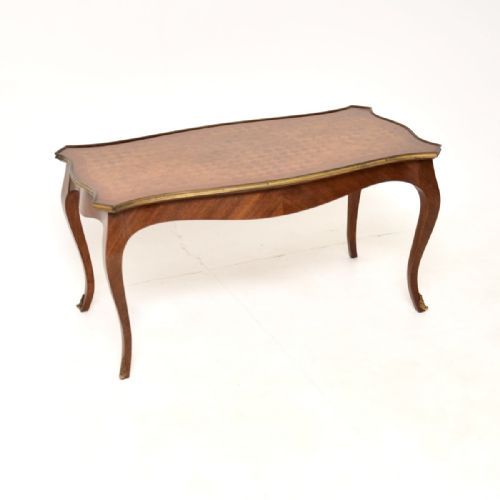
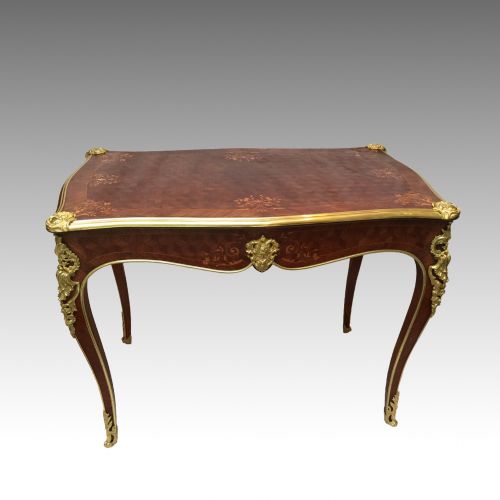
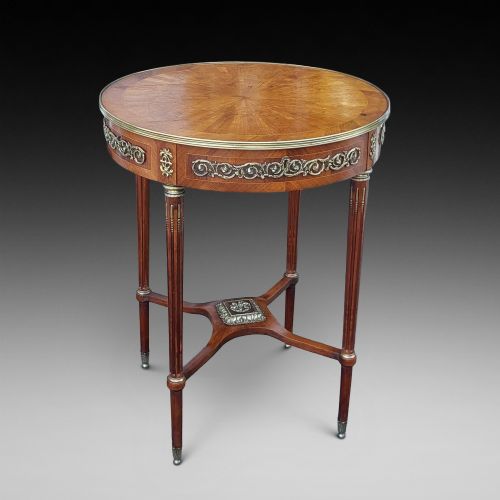
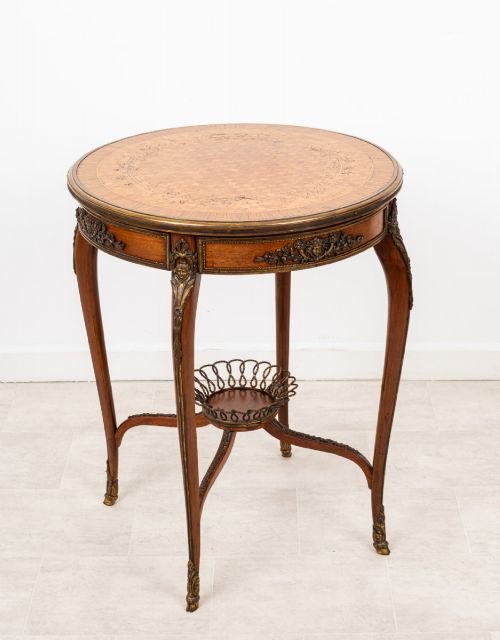
A parquetry centre table is a freestanding piece designed to be viewed from all sides, commonly taking the form of a centre table, coffee table, or occasional table. These items appear frequently in nineteenth-century French designs, alongside Victorian, Edwardian, and mid-twentieth-century examples.
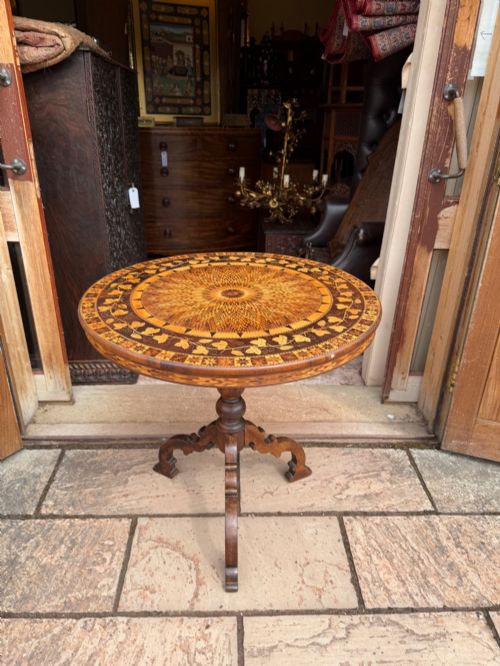
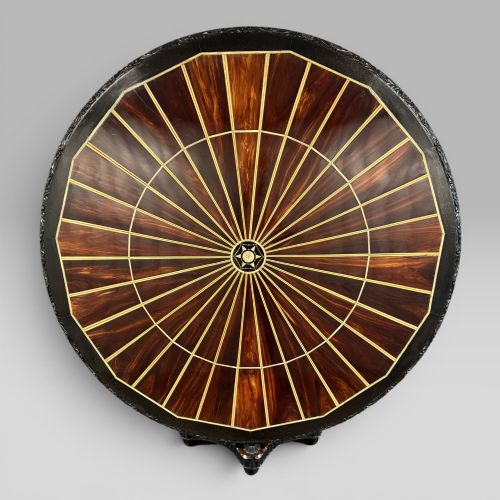
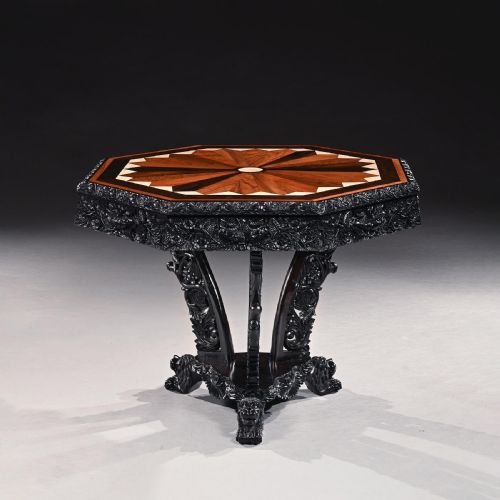
The selection ranges from French Louis XV style and revival pieces to Anglo-Indian Colonial and Dutch variants. Makers and craftsmen utilised diverse timber forms, positioning these surfaces to anchor a principal room.
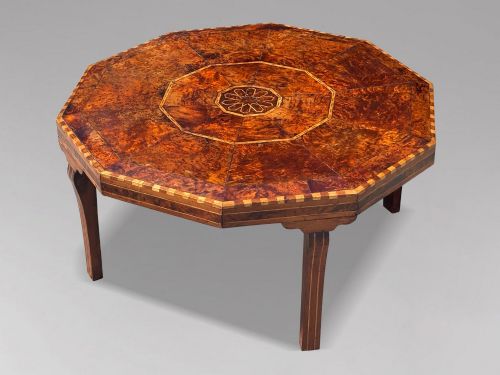
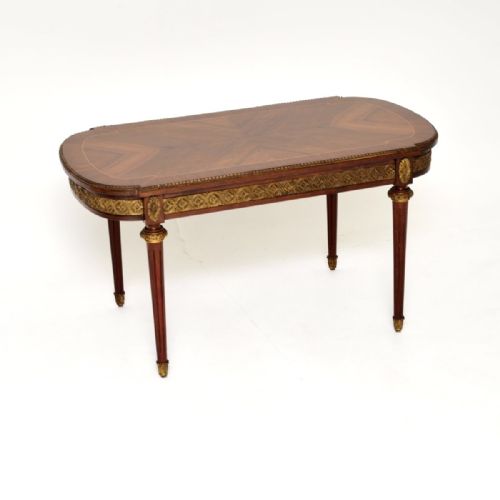
The inventory spans from seventeenth-century Dutch works to 1930s coffee tables. Buyers encounter circular, oval, octagonal, and rectangular formats intended for central placement rather than against a wall.
Materials and Construction
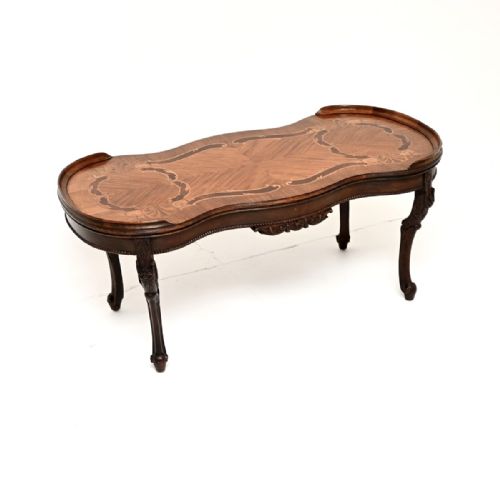
Cabinetmakers constructed these tables using a carcase of woods such as walnut, oak, mahogany, or fruitwood, overlaid with decorative veneers. Exotic timbers including kingwood, rosewood, ebony, calamander, satinwood, and burr yew provided contrasting tones for geometric parquetry and pictorial marquetry.
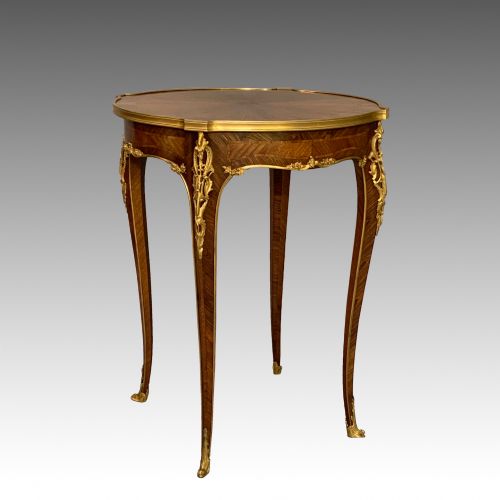
Surface ornamentation frequently incorporates cast brass and gilt bronze ormolu mounts to accent borders and legs. Marble tops also feature on select nineteenth-century French examples, adding weight and contrasting texture to the wooden framework.
Periods represented span from the seventeenth century through the Victorian era and into the 1930s.
Assessing Craftsmanship
Quality rests in the precision of the veneer work and the tightness of the geometric joints across the top. Superior examples demonstrate meticulous grain matching and seamless integration of contrasting timbers without gaps or lifting sections.
The refinement of the cast metal mounts and the structural integrity of the underframe separate standard production from master craftsmanship. Heavier secondary woods and carefully hand-chased ormolu indicate a higher grade of manufacture.
Joseph Emmanuel Zwiener·Francois Linke·Anton Seuffert·Almerico Gargiulo
The Parquetry Center Table Glossary
- Parquetry
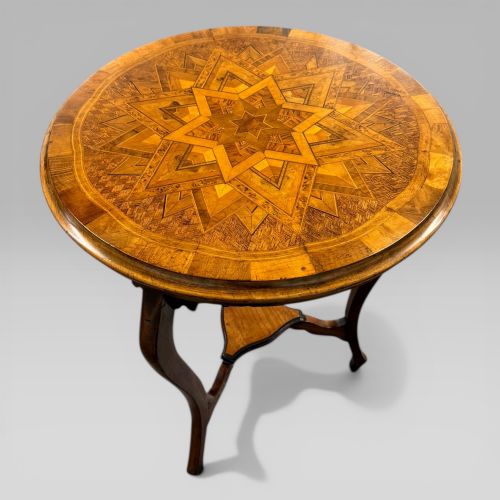
- Geometric wood mosaic work formed by small veneer pieces laid down in repeating patterns like cubes, chequers, or diagonals. This technique creates a structured surface texture on the tabletop.
- Marquetry
- The art of applying pieces of veneer to a structural structure to form decorative pictures or floral designs. It differs from parquetry through its pictorial and curved composition.
- Ormolu
- Gilt bronze ornamentation applied to furniture mounts, feet, and borders. The metal is cast and then finished with gold leaf or mercury gilding.
- Gueridon
- A small freestanding table supported by one or more columns or pedestals. The form originated in France during the seventeenth century.
Parquetry Center Table: Frequently Asked Questions
Where should I place a centre table?
A centre table is built to stand free in the middle of a room rather than pushed against a wall. This allows the parquetry top and any decorative mounts to be admired from every angle.
In modern rooms, they work well in large entrance halls or positioned centrally within a main sitting area as a focal point.
How do I care for antique veneer?
Keep wooden tables away from direct heat sources and strong sunlight to prevent the timber and underlying glue from drying out. Consistent indoor humidity helps protect delicate parquetry from warping.
Dust regularly with a soft, dry cloth and avoid commercial polishes that contain silicones or harsh solvents.
What is the difference between parquetry and marquetry?
Parquetry relies on geometric shapes such as squares, triangles, and cubes to build repeating patterns across a surface. It creates an architectural and orderly visual effect.
Marquetry uses varied veneer cuts to picture floral sprays, landscapes, or scrolls. Many tables on this page combine both techniques on the same top.
How can I tell a French revival table from an earlier piece?
Nineteenth-century French revival pieces often combine Louis XV or Louis XVI styling with industrial-era machine precision in the cutting of veneers. Examining the secondary woods underneath and the style of the bronze ormolu casting helps indicate the exact manufacturing period.
Makers working in the nineteenth century frequently referenced eighteenth-century designs while utilising contemporary workshop methods.