
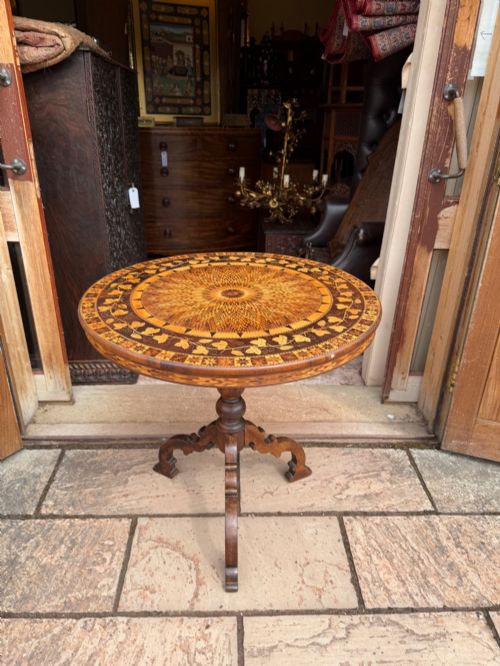
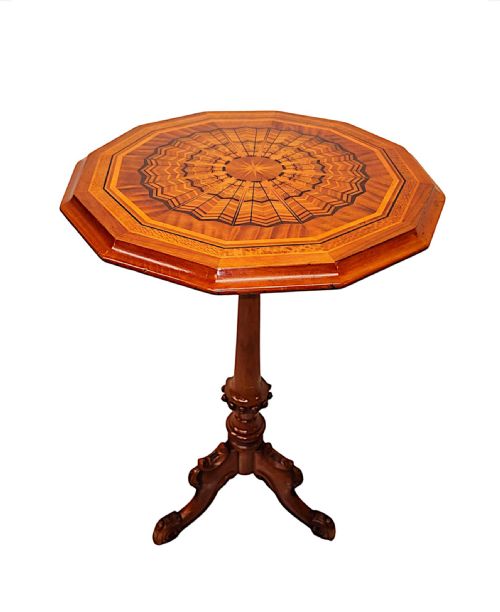
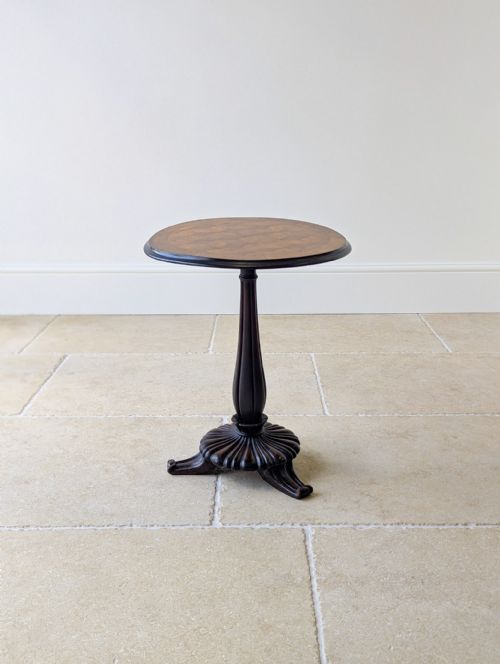
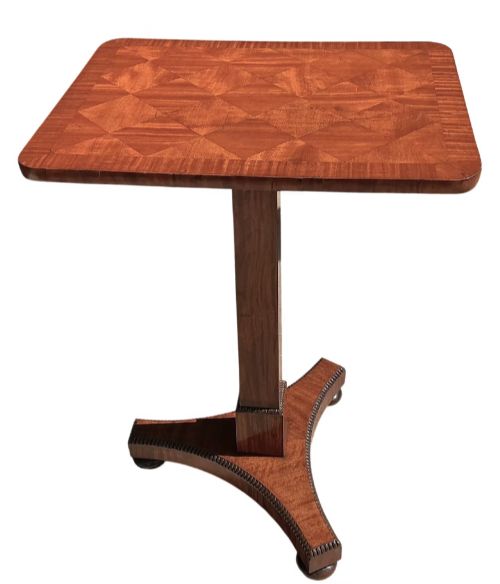

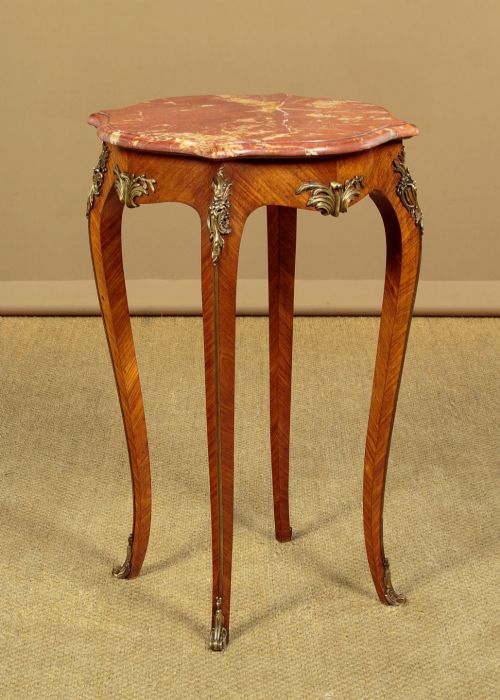


Parquetry Wine Table
A parquetry wine table brings geometric wood patterns and compact proportions together, offering a surface for a glass or a lamp.
Parquetry Wine Table
A parquetry wine table combines patterned timber surfaces with a compact footprint, designed to stand beside a chair or in the centre of a room. When searching this phrase, buyers encounter small pedestal forms, tripod designs, and occasional tables featuring geometric wood arrangements.
The selection ranges across the nineteenth and early twentieth centuries, drawing on Victorian, Edwardian, and revival influences. Makers in England, France, and Italy produced these pieces using diverse regional timbers and pedestal supports.
French examples often adopt the guéridon format with circular tops, whilst British pieces frequently employ tilt mechanisms or sturdy tripod bases. Each variant serves the traditional purpose of holding small household items while displaying decorative wood craft.
How they were made
Cabinet makers constructed these tables by applying fine veneers to solid timber substrates, arranging contrasting woods in precise geometric patterns. Walnut, mahogany, rosewood, kingwood, and satinwood provide the tonal variations required for complex parquetry and specimen designs.
Metal elements such as brass mounts, galleries, and gilded ormolu details frequently accent the wood structures, particularly on French revival pieces. Pedestal bases often terminate in carved tripod legs or weighted central columns for stability.
Materials recorded on this site feature walnut, mahogany, oak, rosewood, satinwood, kingwood, and ormolu.
What varies in quality
The standard of a parquetry wine table depends largely on the precision of the wood mosaic and the choice of contrasting timbers. Finer examples display meticulous alignment in geometric tiling and utilise rich cabinet woods such as kingwood and rosewood.
Construction methods also distinguish output, with superior pieces maintaining tight joints in the pedestal and base without excessive movement. The integration of cast bronze or ormolu mounts reflects the original maker's investment in materials and finish.
Gillows·L.Martin of Paris·A Hugnet Paris·Anton Seuffert·William Norrie
The Parquetry Wine Table Glossary
- Parquetry
- Geometric mosaic woodwork formed by small veneer pieces fitted together to cover a surface. This technique creates patterned tabletops with varied timber tones.
- Guéridon
- A small French occasional table supported by a central pillar or columns. These tables often feature circular marble or inlaid wood tops.
- Specimen wood
- Furniture constructed using a variety of native and exotic timbers to display natural colours and grains. Tops often combine multiple species in decorative arrangements.
- Ormolu
- Gilded bronze mounts applied to furniture for decoration. This material appears frequently on French revival tables from the nineteenth century.
Parquetry Wine Table: Frequently Asked Questions
What is a parquetry wine table?
A parquetry wine table is a small, portable stand featuring a geometric wood-inlaid top supported by a central pillar or tripod base. These tables were traditionally used to hold drinks, lamps, or small decorative objects.
The surface displays a pattern of contrasting wood veneers arranged in geometric shapes. They occupy minimal floor space and suit placement beside seating or in smaller rooms.
How do I identify French styles?
French tables from this group often adopt the guéridon form, featuring circular tops supported by slender columns and detailed brass or ormolu mounts. Revival styles drawing on Louis XV aesthetics appear frequently in continental pieces.
The timbers selected often include kingwood, rosewood, and walnut with sophisticated marquetry or parquetry layouts. Ormolu accents and shaped aprons further distinguish continental work from British cabinet making.
Where should I place it?
These tables fit easily beside armchairs, sofas, or in corners where a full-sized table would prove too large. Their compact proportions make them suitable for holding a reading lamp or a cup.
Because many examples feature decorative wood tops or geometric patterns, positioning them in open spaces allows the surface design to remain visible. Avoid placing them in direct sunlight to protect the aged veneers.
How do I care for the surface?
Maintaining the timber surface involves dusting with a soft, dry cloth and avoiding modern silicone-based polishes. Natural wax applied sparingly helps preserve the sheen of older veneers.
Protecting the parquetry from excessive moisture and heat prevents the wood from warping or the veneer from lifting. Using coasters helps safeguard antique finishes from liquid marks.