
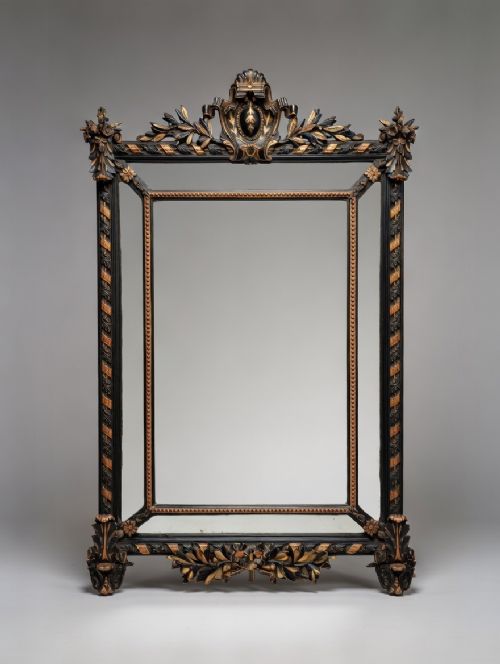

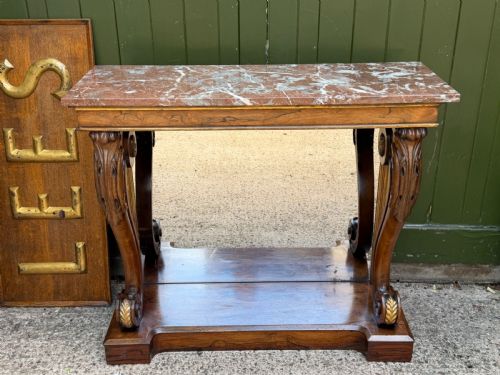


Parcel Gilt Pier Mirror
A parcel gilt pier mirror brings architectural presence and reflected light to a room, combining warm wood tones with bright accents of gold leaf.
Parcel Gilt Pier Mirror
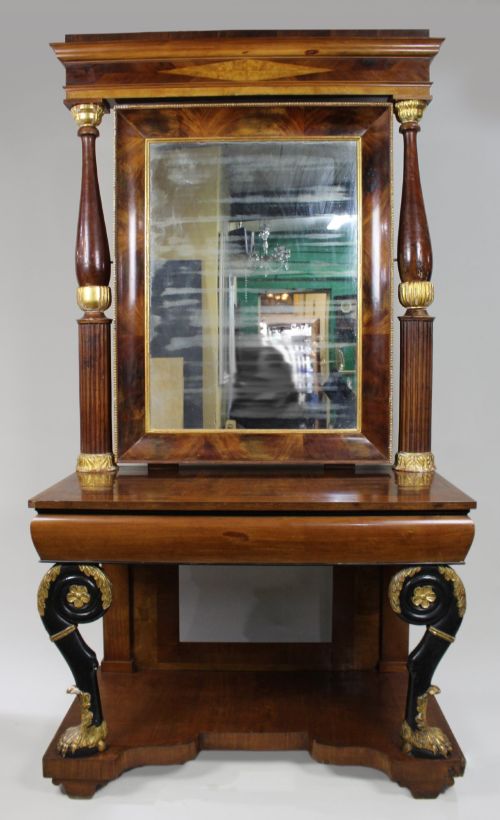
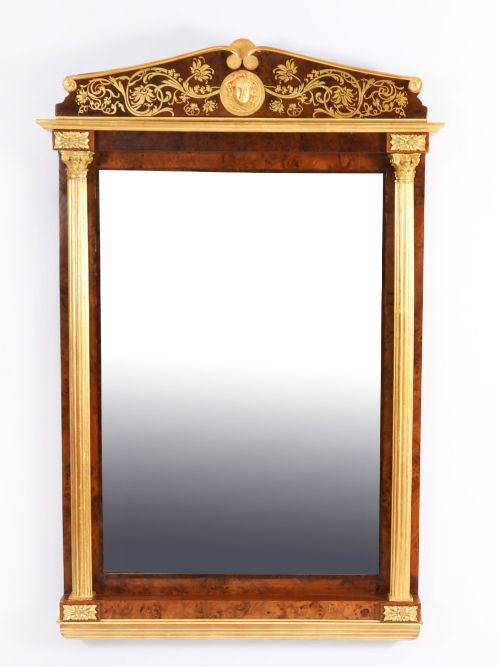
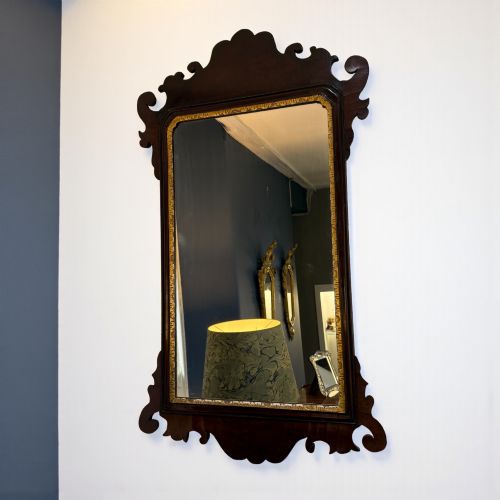
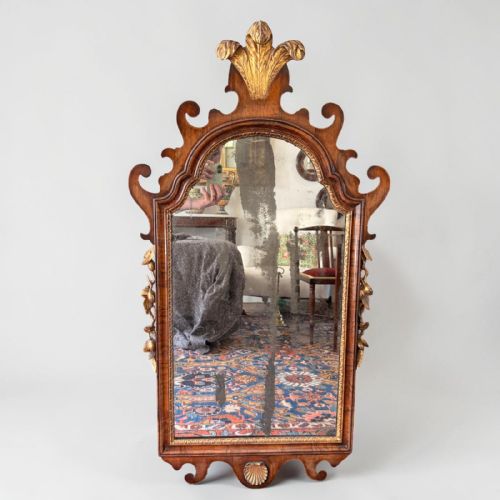
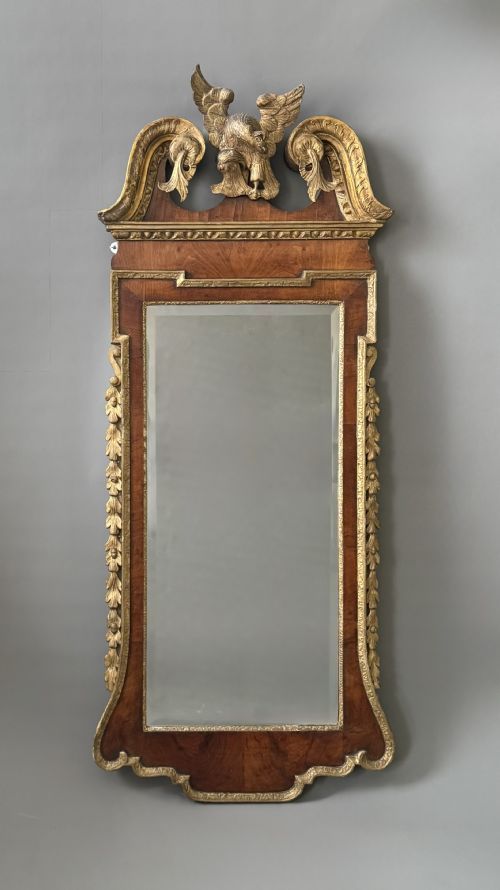
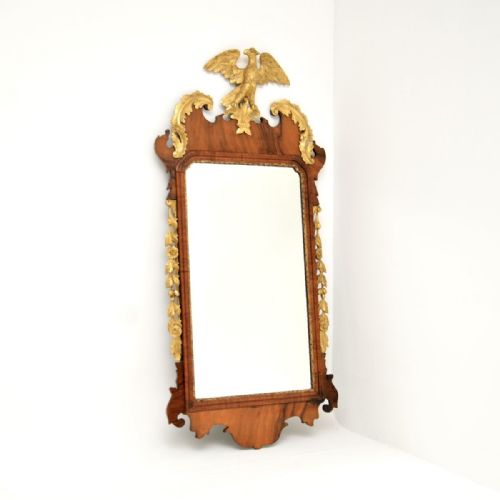
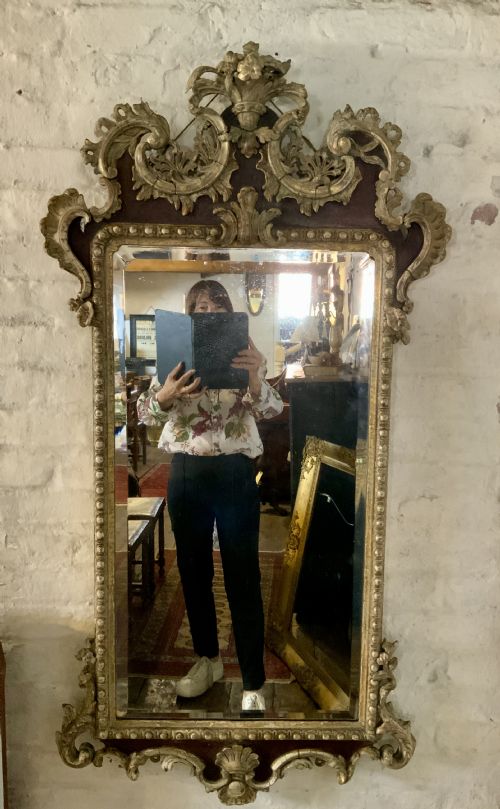
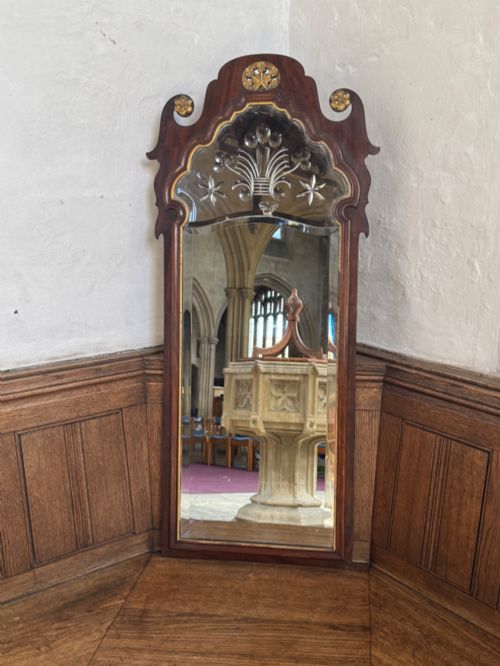
A parcel gilt pier mirror is a tall wall-hanging looking glass designed to hang in the wall space, or pier, between windows. These pieces combine exposed timber frames, predominantly walnut and mahogany, with selective gilding on carved details.
The versions met most frequently on this page span the eighteenth and nineteenth centuries, alongside revival pieces from later decades. Forms range from simple fretwork plates to grand console tables paired with matching wall mirrors.
How they were made
Cabinet makers constructed the foundational frames from dense timbers like walnut and mahogany, often incorporating burr veneers or carved fretwork details. Wood was shaped, joined, and prepared to receive decorative elements.
Gesso, a plaster-like mixture, was applied to specific carved areas of the wood to build up relief decoration before applying gold leaf. This selective application created the characteristic contrast between the dark timber grain and the bright parcel gilding.
Glass plates, sometimes featuring reverse cut designs or original silvering, were fitted into the rabbet of the frame. Some larger console table combinations incorporated marble tops alongside the mirrored glass.
Some eighteenth-century walnut mirrors survived centuries of household redecorating by hiding quietly in Welsh country houses.
What varies in quality
The depth and crispness of the carving distinguish finer examples, particularly in the treatment of fretwork scrolls, foliage, and gilded motifs. High-grade pieces show precise hand-chiselled details rather than soft or uniform moulding.
The choice and figuring of the primary wood elevate a piece, with richly grained walnut veneers or dense mahogany displaying superior cabinet work. Original mirror plates with appropriate foxing and untouched structural integrity add considerable substance.
Proportion and architectural harmony define the upper tier of these mirrors, where scale relates logically to the console tables or wall spaces they accompany. The integration between the carved timber frame and the gold leaf application reveals the hand of a skilled workshop.
The Parcel Gilt Pier Mirror Glossary
- Parcel gilt
- The decorative technique of applying gold leaf to only specific parts of an object, leaving the underlying wood or paint exposed elsewhere. This creates a striking visual contrast across the carved surface.
- Pier mirror
- A tall looking glass specifically proportioned to hang on the narrow wall space between two windows. They often sat above matching console tables to amplify light in a room.
- Gesso
- A prepared mixture of binder mixed with chalk, gypsum, or pigment, applied to wooden frames as a smooth base for gilding. It allows carvers to achieve sharp, raised details before applying gold leaf.
- Trumeau mirror
- A decorative wall mirror featuring an upper glass plate paired with a lower painted panel or carved wooden artwork. Originating in France, these pieces function as integrated architectural wall panelling.
- Fretwork
- Thin panels of wood pierced with decorative patterns using a fretsaw, commonly seen on eighteenth-century mirror frames. This technique added delicate, openwork silhouettes to otherwise solid timber outlines.
Parcel Gilt Pier Mirror: Frequently Asked Questions
How do I identify an eighteenth-century mirror?
Early pieces typically utilise solid walnut or mahogany with hand-cut fretwork and traditional joinery methods. Examining the backboards, fixings, and the quality of the carved gesso details helps determine the period of construction.
Original glass plates often exhibit subtle distortions, bubbles, or age-related foxing rather than the uniform perfection of modern float glass. Revival pieces from later centuries frequently emulate these earlier styles but betray their age through machine-cut elements or different backing timbers.
What is the difference between French and English styles?
English designs from the Georgian period lean towards architectural mahogany or walnut frames, often featuring scrolled broken pediments and intricate fretwork. These emphasise the natural grain of the timber alongside restrained gilding.
French pieces, including trumeau mirrors and chateau styles, frequently incorporate painted surfaces, elaborate crestings, and integrated console tables. The gilding on French examples often covers more expansive carved plaster motifs.
Can these mirrors be cleaned safely?
Dust the carved wooden frame gently with a soft, dry brush to prevent accumulation in the recesses of the gesso and gilding. Avoid using liquid cleaners or abrasive cloths near the gold leaf, as moisture can lift the delicate leafing.
Clean the glass plate sparingly using a cloth slightly dampened with a mild glass cleaner, ensuring no liquid seeps behind the frame edge. Protecting the surface from direct sunlight prevents further ageing of the original silvering.