





Papier Mache Tilt Table
These papier mache tilt tables are versatile nineteenth-century tripod pieces that fold away neatly when not in use.
Papier Mache Tilt Table
A papier mache tilt table is a nineteenth-century occasional piece designed with a top that pivots vertically for compact storage against a wall or in a corner. These tables appear in forms such as wine tables, side tables, occasional tables, tea tables, and games tables.
The pieces on this page span the Victorian era, with dates recorded across the nineteenth century including eighteen-eighty, eighteen-fifty, and eighteen-sixty. Styles range from Victorian and Victorian Chinoiserie to Anglo-Indian and Regency origins.
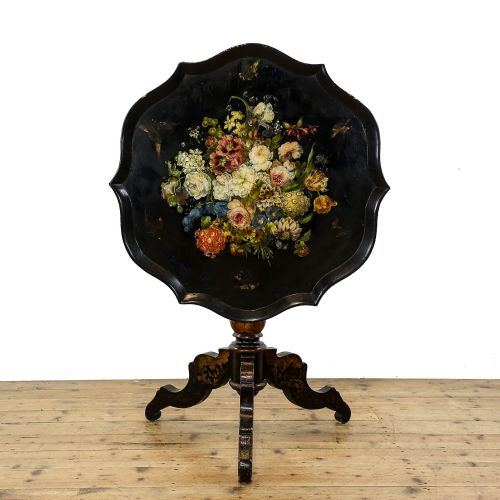
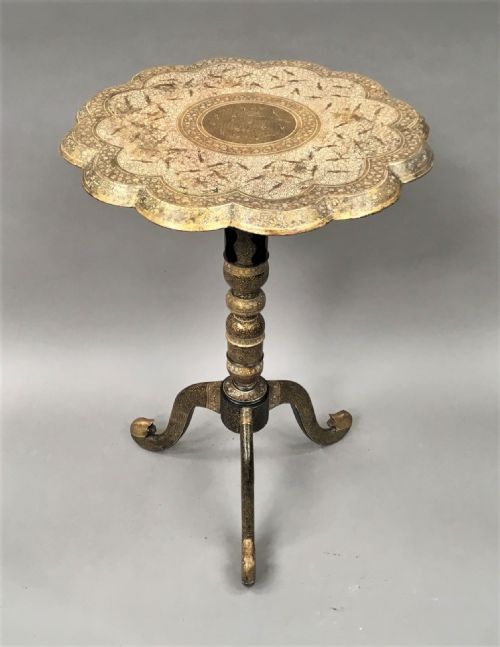
Most examples combine a tilt mechanism with a tripod base, often constructed from ebonised wood to support the decorated papier mache surface. They serve readily as lamp tables, supper tables, or decorative display pieces in a reception room.
How they were made
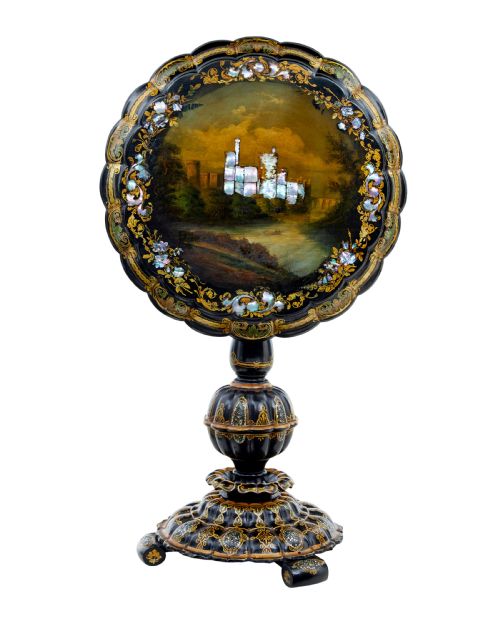
Makers formed the table tops by pressing layers of paper pulp mixed with glue and binding agents under heavy pressure, creating a rigid and durable board before lacquering and painting. Artisans then applied black lacquer or ebonised finishes to the papier mache and wood components.
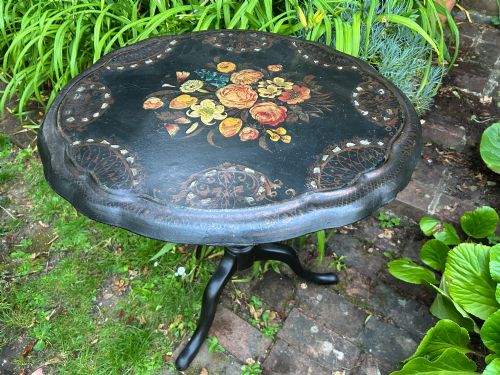
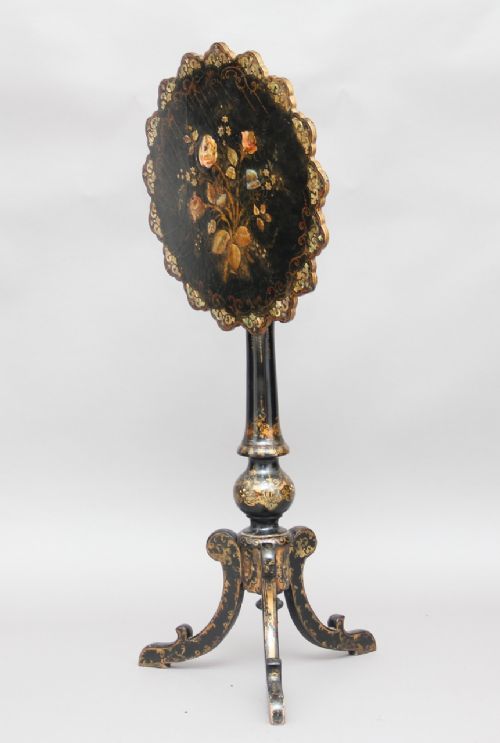
Decoration relied on hand painting, gilding, and the precise inlay of mother of pearl pieces to catch the light. Timber such as rosewood or ebonised wood formed the supportive tripod stands and tilt actions.
These clever tables allowed Victorian hosts to magically reclaim their floor space by pivoting the tabletop upright once the supper plates were cleared.
What varies in quality
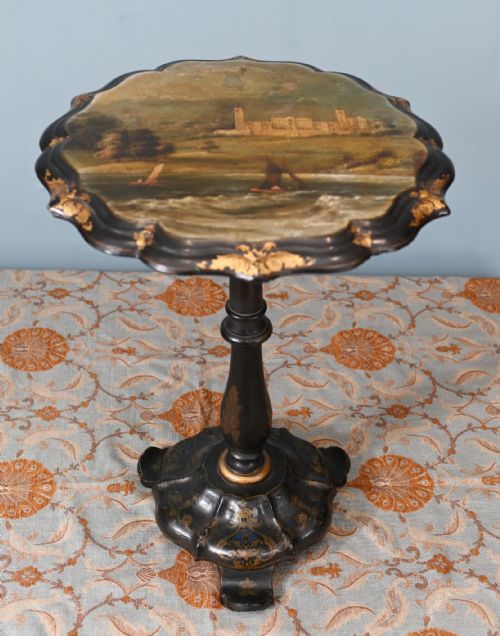
The distinction between standard examples and finer works lies in the intricacy of the hand-painted details and the depth of the mother of pearl inlay. Pieces featuring elaborate Chinoiserie scenes or fine detailed paintwork represent the higher end of the range.
Structural integrity of the tilt mechanism and the stability of the tripod base dictate daily usability. Well-preserved lacquer surfaces free from extensive craquelure or heavy restoration command greater appreciation among collectors.
Regency Gillows
The Papier Mache Tilt Table Glossary
- Tilt-top
- A table mechanism featuring a hinged block that allows the top to pivot from horizontal to vertical. This design enabled the furniture to be pushed out of the way when the room was cleared.
- Papier-mache
- A composite material made from paper pulp, reinforced with binders, and pressed into solid forms. It provides a smooth, stable ground for lacquer and decorative painting.
- Chinoiserie
- European decorative style reflecting Chinese artistic motifs and landscapes. Artisans utilised this style extensively on nineteenth-century lacquerware and tea tables.
- Mother of pearl
- Iridescent inner layer of mollusc shells cut into thin tesserae for inlay work. Craftsmen embedded these glittering fragments into lacquered surfaces to depict flowers, birds, and figures.
- Tripod
- A three-legged support base commonly used on small occasional and wine tables. It ensures stability on uneven floors without rocking.
Papier Mache Tilt Table: Frequently Asked Questions
What is a papier mache tilt table?
A papier mache tilt table is a small nineteenth-century occasional table featuring a hinged top that folds flat against the pedestal column. This clever mechanism allows the table to be stored compactly against a wall when not in use.
These pieces typically function as wine, tea, or lamp tables, combining a lightweight papier mache top with a sturdy wooden tripod base.
How do you use a tilt top table?
To use the table, release the brass catch or tilt mechanism beneath the top and pivot the surface into the horizontal position. It locks securely in place to hold drinks, books, or lamps.
When the room needs more space, simply tilt the top back to the vertical orientation and tuck the table away in an alcove.
Are these tables sturdy enough for daily use?
Victorian papier mache tables are surprisingly resilient when handled with reasonable care. The pressed paper pulp core provides a remarkably tough surface that resists warping better than solid timber.
However, heavy objects should be avoided, and hot cups or wet glasses require coasters to protect the delicate lacquer and painted decoration.
How can you tell the age of a papier mache table?
Dating relies on examining the construction of the tilt mechanism, the style of the tripod base, and the nature of the decoration. Most pieces date from the nineteenth century, particularly the Victorian period around eighteen-eighty and eighteen-fifty.
Hand-painted details, mother of pearl inlay work, and specific stylistic cues like Chinoiserie or Regency elements help narrow down the manufacturing era.