




Lacquered Decorative Accent Table
These lacquered decorative accent table pieces bring hand-painted narrative and rich surface texture directly to a corner that needs weight.
Lacquered Decorative Accent Table
When you search for a lacquered decorative accent table, you find a varied group of occasional tables, nests, wine tables, and table lamps from the nineteenth and early twentieth centuries. These pieces cross several distinct regional styles, notably Chinoiserie, Kashmiri, and Anglo-Indian designs, bringing specific cultural decorative traditions into domestic spaces.
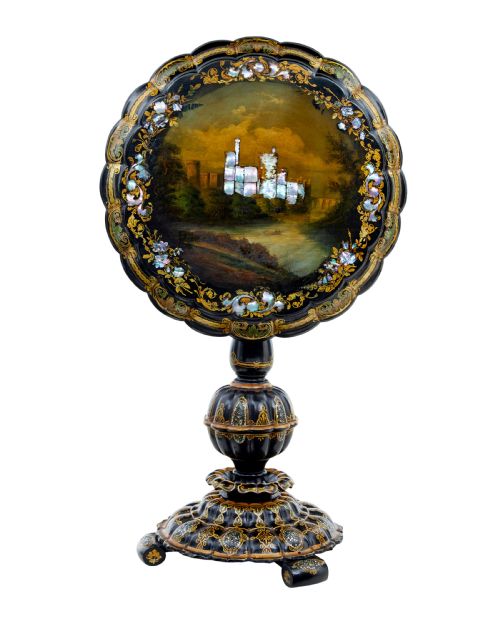
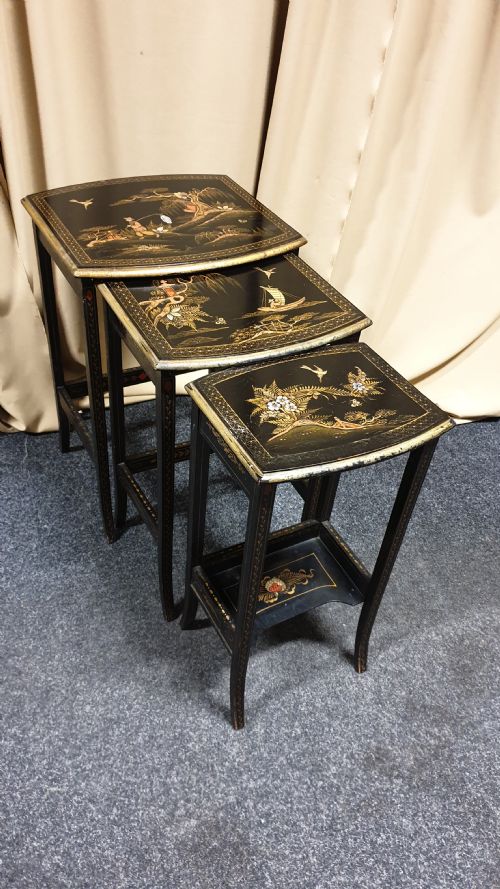
The items listed on this page lean heavily towards smaller surface forms, including side tables, three-tier tiers, and tilt-top tables inlaid with mother of pearl. Most examples date from the Victorian era up to the nineteen-thirties, showing how portable decorative surfaces evolved to suit changing interior tastes.
Buyers meet both functional surfaces and illuminated forms, as the inventory includes several painted table lamps alongside traditional low tables. This mix reflects how makers adapted lacquered and painted techniques to lighting as well as furniture during the nineteenth and twentieth centuries.
How they were made
Makers built these pieces using wood, papier-mâché, and occasionally brass, applying layers of lacquer, paint, and gold leaf to create glossy, ornamented surfaces. Papier-mâché items often incorporate mother of pearl inlay directly into the hardened, painted ground.
Surface decoration relies on detailed hand painting, frequently featuring Chinoiserie motifs or intricate Kashmiri patterns laid over red lacquer or ebonised bases. Artisans combined traditional carpentry for tripartite bases and nesting frames with meticulous brushwork and gilding.
Mother of pearl catches the evening light, proving that Victorian tea drinkers enjoyed a bit of shimmer with their wine.
What varies in quality
The distinction between ordinary and superior pieces rests on the crispness of the hand painting and the depth of the lacquer layers. Finer examples display precise brushwork and intact gold leaf that retain their lustre across the entire surface.
Structural integrity also separates the grades, particularly in the joinery of tripartite bases and the snugness of nesting tables. Superior workmanship ensures that painted surfaces and inlays remain stable and harmonious over decades of use.
The Lacquered Decorative Accent Table Glossary
- Chinoiserie
- European decorative style reflecting Chinese artistic influences. It appears frequently on nineteenth-century tables and lamps through painted landscapes and figures.
- Kashmiri
- Ornamental style originating from Kashmir, known for dense floral and botanical painted patterns. Pieces from this tradition often utilise rich red lacquer grounds.
- Tripartite base
- A three-sided or three-pronged support structure. This form frequently underpins wine tables and occasional stands for stability.
- Tilt-top table
- A table with a hinged top that folds vertical when not in use. This mechanism saved space in smaller period rooms.
- Papier-mâché
- A composite material made of paper pulp reinforced with glue, then lacquered and painted. It allowed makers to create smooth, curved surfaces ideal for intricate inlay.
Lacquered Decorative Accent Table: Frequently Asked Questions
What is a lacquered decorative accent table used for?
These pieces serve as functional surface areas for lamps, drinks, or small decorative objects in sitting rooms. Their compact proportions allow them to fit into corners or beside chairs where larger furniture will not go.
Beyond utility, they introduce colour, pattern, and reflective surfaces to balance heavier upholstered furnishings. Nests and tilt-top versions offer flexible display options that adjust to daily needs.
How do I identify a Victorian piece?
Victorian examples often combine traditional wood construction with painted Chinoiserie motifs or contrasting ebonised finishes. Look for period manufacturing techniques such as hand-cut joinery and traditional lacquer layers.
Materials like papier-mâché with mother of pearl inlay also point firmly toward nineteenth-century workshop practices. Comparing the specific decorative motifs with documented regional styles helps confirm the era.
Where were Kashmiri tables made?
Kashmiri tables originate from the Kashmir region, where local artisans developed distinctive hand-painted woodwork traditions. These items frequently feature dense floral patterns set against red lacquer backgrounds.
Export demand during the late nineteenth and early twentieth centuries brought these decorative pieces into British homes. They represent a specific intersection of traditional local craft and international trade.