


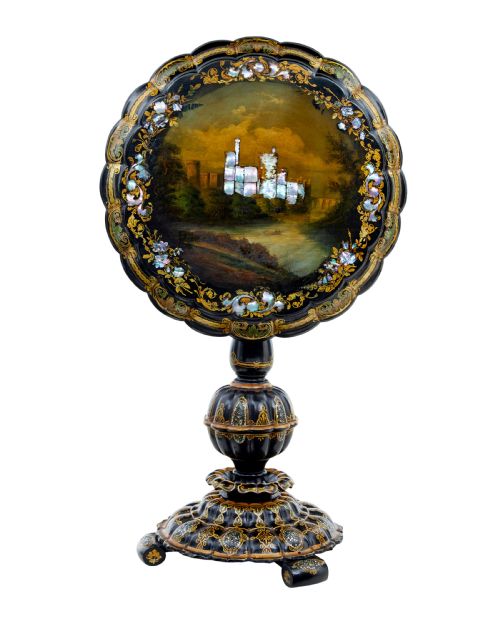


Painted Landscape Table
These painted landscape table pieces bring hand-painted scenery and decorative motifs into rooms through occasional tables, side tables, and coffee tables.
Painted Landscape Table
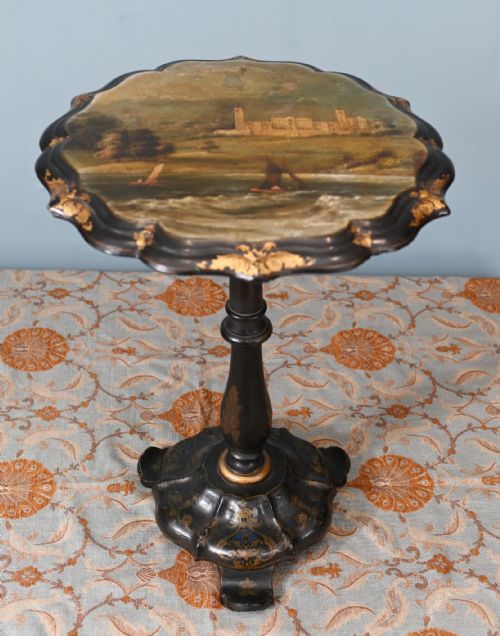
When you search for a painted landscape table, you are looking at items featuring hand-painted scenic decoration across various periods including the Regency, Victorian, and Edwardian eras. The selection on this page predominantly includes occasional tables, side tables, and coffee tables ornamented with pictorial scenes.
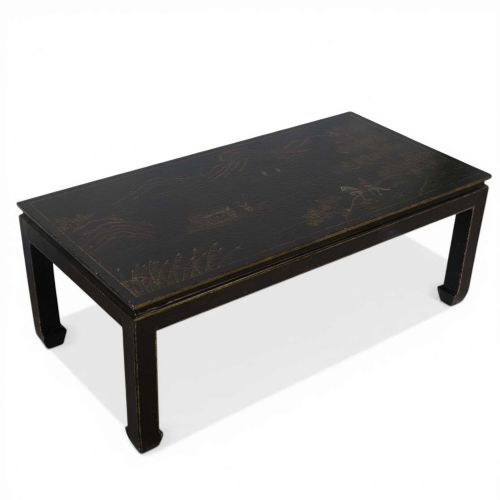
Beyond standard tables, the broader grouping encompasses related household furnishings such as decorated lamp tables, tilt-top tables, and lacquered chests. These items range from nineteenth-century productions to early twentieth-century examples incorporating chinoiserie and painted motifs.
The materials and styles span from ebonised wood and papier-mâché to lacquer and paint, reflecting both English and continental workshops. Each piece employs a surface-level artistic approach to turn functional furniture into decorative art.
How they were made
Makers utilised solid woods, ebonised wood, and papier-mâché as base materials for these tables and decorative items. These substrates provided smooth foundations capable of receiving detailed artistic treatments.
Craftsmen applied paint, lacquer, and enamel directly onto the surfaces, frequently incorporating decorative scenes and oriental motifs. In specific instances, mother-of-pearl inlay enhanced the visual depth of the papier-mâché structures.
Form variations on this page include side tables, coffee tables, lamp tables, and tilt-top tables decorated with painted scenes.
What varies in quality
Quality in these items rests upon the execution and preservation of the hand-painted scenes. Finer examples display precise brushwork and well-composed landscape details that remain crisp across the surface.
The underlying construction and material selection also dictate the tier of the piece. Items utilising sturdy timber frames, stable lacquer, or careful mother-of-pearl inlay sit above simpler productions.
Jennens and Bettridge·Coalport
The Painted Landscape Table Glossary
- Chinoiserie
- European artistic style reflecting Chinese motifs and decorative landscapes. It appears frequently on furniture and decorative objects from the eighteenth through the early twentieth centuries.
- Papier-mâché
- Composite material made of paper pulp or layers of paper reinforced with glue, then moulded and dried. It serves as a lightweight yet firm base for intricate painting and inlay.
- Ebonised wood
- Timber treated with a dark finish to imitate ebony. This process provides a contrasting dark background that highlights painted scenes and gilt decoration.
- Tilt-top table
- Table featuring a mechanism that allows the tabletop to pivot into a vertical position when not in use. This form saves space and showcases the decorated surface.
Painted Landscape Table: Frequently Asked Questions
What is a painted landscape table?
A painted landscape table is an item of furniture featuring artistic depictions of scenery applied directly to the surface. These pieces incorporate styles such as chinoiserie and Victorian decoration across various table forms.
They serve as both functional furniture and decorative display surfaces within living spaces, utilising materials like wood, lacquer, and papier-mâché.
How do I date a painted table?
Dating involves examining the structural materials, underlying wood types, and painting techniques used by the makers. Stylistic markers from periods such as Regency, Victorian, and Edwardian provide clear chronological context.
Comparing the decorative motifs against known production eras helps confirm whether a piece originates from the nineteenth or twentieth century.
Are papier-mâché tables fragile?
Papier-mâché is surprisingly sturdy due to the layered construction methods employed by makers. However, it requires care to protect the painted surface and any inlaid mother-of-pearl details from moisture and heavy impact.
Normal domestic placement away from direct heat sources ensures these surfaces remain stable over time.
Where were these tables used?
These tables functioned primarily in reception rooms, drawing rooms, and parlours as occasional or side furniture. They provided convenient surfaces for lamps, clocks, and decorative objects.
Their artistic painted scenes ensured they contributed directly to the interior aesthetic of period homes.