





Black Lacquer Tripod Table
These black lacquer tripod table examples bring hand-painted motifs and dark finishes to any room, offering a functional surface with decorative presence.
Black Lacquer Tripod Table
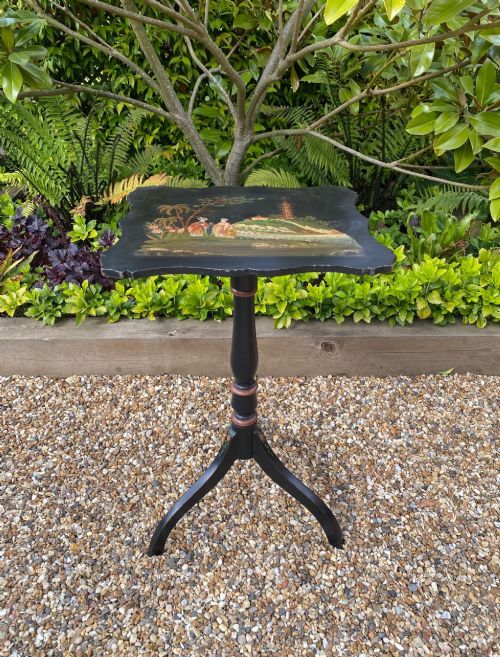
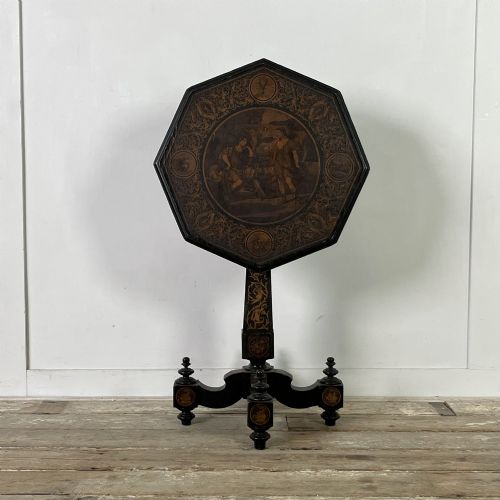
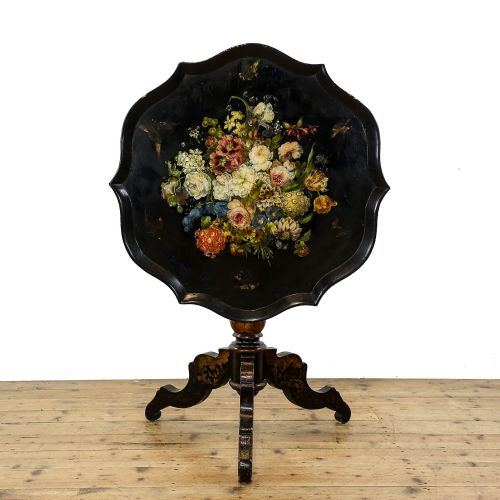
A black lacquer tripod table combines a central turned pillar with three supporting feet and a dark surface, serving as a versatile side or occasional piece. These tables frequently appear in forms such as wine tables, plant stands, and tilt-top surfaces designed for easy storage when not in use.
The selections on this page span several historic periods, including the Georgian, Regency, Victorian, and Edwardian eras. Buyers encounter diverse interpretations ranging from early George III Chinoiserie examples to later revival pieces and papier-mâché constructions.
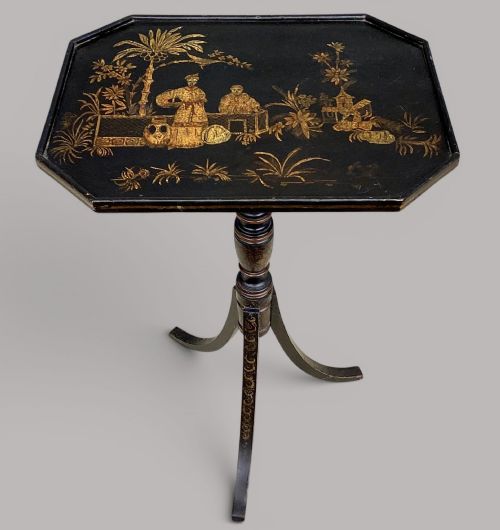
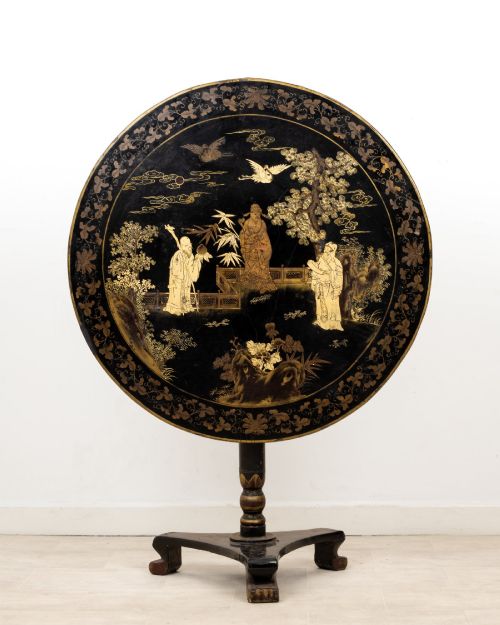
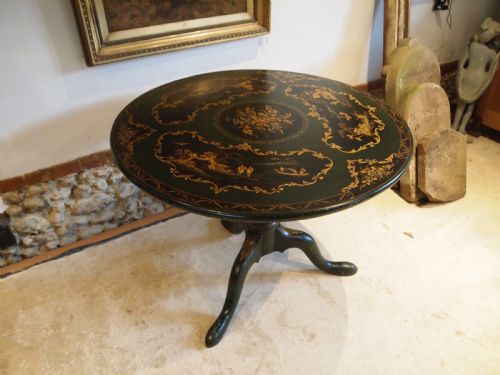
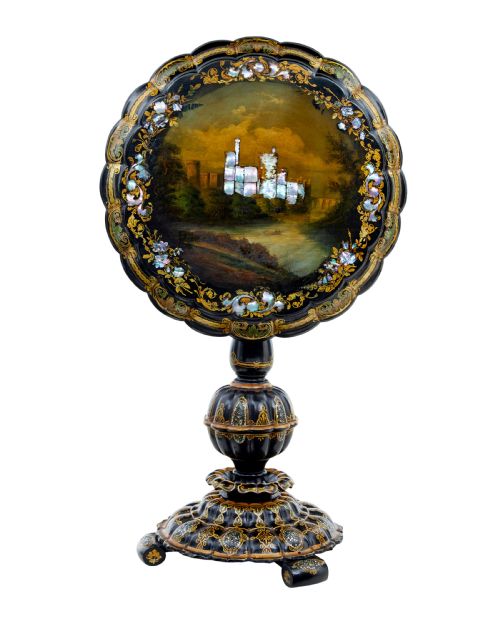
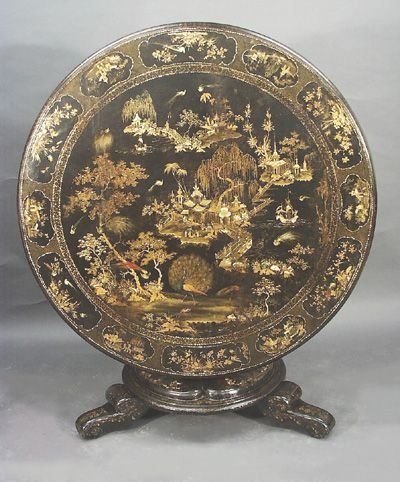
Many items display oriental Chinoiserie decoration, featuring gilt figures, landscapes, and floral motifs painted across the dark background. Others rely on simple ebonised wood or japanned finishes to achieve the characteristic dark glossy appearance.
Materials and construction methods
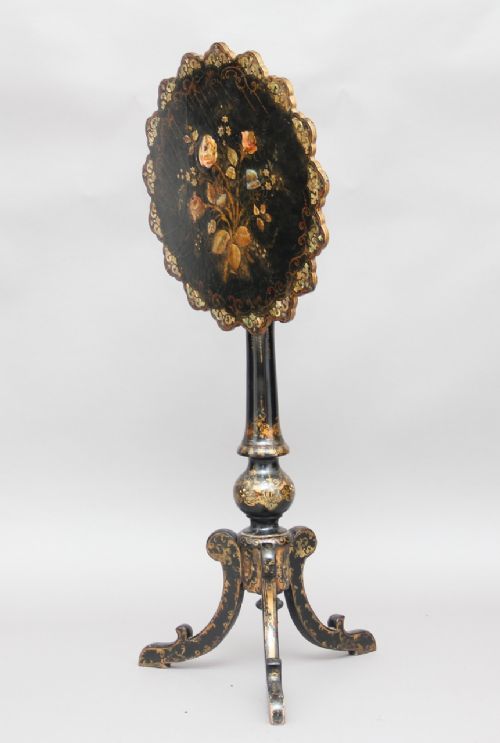
Makers utilised timber, papier-mâché, and ebonised wood as the structural base for these items, applying multiple layers of dark lacquer to build a hard, smooth finish. Artisans then decorated the surfaces using hand-painted pigments, ink work, and gold leaf highlights.
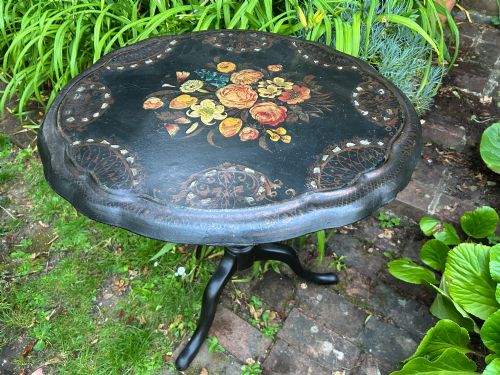
Certain pieces incorporate parcel gilt details or mother-of-pearl inlay embedded directly into the lacquer layer to create tonal contrast and catch the light. The tripartite base construction joins three legs securely to a central pillar, supporting either fixed tops or hinged mechanisms for tilt-top tables.
Current listings feature pieces spanning the Georgian, Regency, Victorian, and Edwardian periods, utilising materials including papier-mâché, ebonised wood, and gold leaf.
Markers of distinction in craftsmanship
Quality rests upon the crispness of the hand-painted or gilt decoration and the depth of the dark lacquer finish. Finer examples display intricate, well-preserved Chinoiserie scenes with careful brushwork, whereas simpler pieces rely on plain japanned surfaces.
Structural integrity also separates standard items from superior ones, particularly in the stability of the tripartite base and the precision of the tilt-top mechanism. The integration of materials like mother-of-pearl inlay adds complexity that elevates the visual merit of the piece.
The Black Lacquer Tripod Table Glossary
- Chinoiserie
- European decorative style reflecting Chinese artistic influences, commonly featuring figures, pagodas, and landscapes painted in gold or colours on dark backgrounds. This style dominates the decoration found on many period occasional tables.
- Japanned
- European imitation of East Asian lacquerwork, created by applying layers of varnish and dark paint to a wooden substrate. It provides the glossy black finish seen on numerous antique side tables.
- Tripod base
- A furniture support comprising three legs radiating from a central pillar. This design offers stability on uneven floors and characterises wine tables and torchere stands.
- Tilt-top
- A table top mounted on a hinged mechanism that allows the surface to pivot vertically. This feature enables the furniture to stand flat against a wall when not in active use.
- Parcel gilt
- Portions of an object highlighted with applied gold leaf or gold paint. It adds contrast against the black lacquer ground on Regency and Georgian examples.
- Papier-mâché
- A composite material made from paper pulp or layers of paper bound with glue, then moulded and lacquered. It provides a lightweight yet durable surface for Victorian tray and wine tables.
Black Lacquer Tripod Table: Frequently Asked Questions
How do I use a tripod table?
These tables function well as small side surfaces for drinks, books, or decorative objects beside seating. Their compact footprint suits corners and tighter spaces where larger furniture does not fit.
Many versions feature tilt-top mechanisms, allowing the surface to fold away flat when not needed. This makes them adaptable for both daily use and periodic entertaining.
What is Chinoiserie decoration?
Chinoiserie represents the European interpretation of Chinese and East Asian design motifs, popular across the eighteenth and nineteenth centuries. Artisans painted figures, floral arrangements, and architectural scenes in gold and colour upon dark lacquered surfaces.
This decorative approach gives these tables their distinctive pictorial character. Each hand-painted scene varies according to the skill and period of the maker.
How do I care for black lacquer?
Dust surfaces gently with a soft, dry cloth to prevent scratching the delicate finish. Avoid placing lacquer pieces in direct sunlight or near heat sources, which can cause the dark surface to dry or crack.
Keep moisture away from the wood and lacquer seams. Gentle handling preserves the painted motifs and the integrity of the polished coating.
What is the difference between japanning and lacquer?
True Asian lacquer utilises sap from native trees applied in numerous cured layers over a timber base. European japanning adapts this aesthetic by using resin varnishes and paint to mimic the glossy oriental finish.
Both techniques yield a hard, dark surface suitable for intricate painted decoration. The listings encompass these overlapping traditions across various historic periods.