


Paper Watercolour Still Life
Paper watercolour still life pieces bring botanical studies and quiet domestic arrangements to life with transparent pigments on paper.
Paper Watercolour Still Life
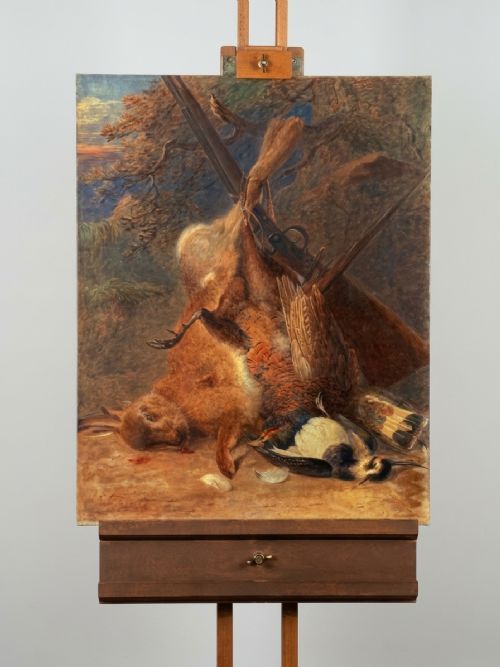
A paper watercolour still life is a painting executed on paper using water-soluble pigments, capturing domestic arrangements, cut flowers, or fruit. The pieces recorded here span from the Victorian period through the Edwardian era to mid-century modern works.
Most examples concentrate on floral subjects, such as roses, anemones, and wallflowers in jugs or baskets. Works by named artists sit alongside archival pieces from the nineteenth and twentieth centuries.
Framed artwork and wall art dominate the selection, often protected by glass and housed in wooden frames. These paintings range from botanical studies to interior arrangements recorded by British impressionist and modern British practitioners.
Materials and technique
Artists apply watercolour pigment and bodycolour or gouache onto paper supports, sometimes introducing ink to define details. The transparent washes of paint rely on the white of the paper beneath to create luminosity.
Works are preserved beneath glass within wooden frames to protect the delicate paper and water-soluble pigments from moisture and light damage.
Apples, plums, and fish rub shoulders with delicate azalea blooms and amaranth red cockscomb flowers.
Judging quality
Quality rests on the confidence of the brushwork and the precision of the botanical or domestic depiction. Masterful control of pigment and water creates depth and clarity in floral petals and fruit surfaces.
The sensitivity of the composition and the preservation of the paper support distinguish finer works from simpler decorative studies.
George Sydney Shepherd·Cecil Beaton·James Tower·Henrietta Creswell·William Edward Fox·Lester Sutcliffe·William Hough·Edith Barrow·Harry Davis·Rowland Henry Hill·Grace Hastie·Phyllis I Hibbert·Marian Chase·Jabez Bligh·Alice Macallan Swan·Marion Broom·Edith Alice Andrews·John Sherrin·William B Hough·Owen Bowen·Wendela Boreel
The Paper Watercolour Still Life Glossary
- Watercolour
- A paint consisting of a pigment suspended in a water-soluble vehicle. It is applied in transparent washes to paper.
- Gouache
- An opaque water-based paint, sometimes called bodycolour, used to add solid highlights to a watercolour painting.
- Still life
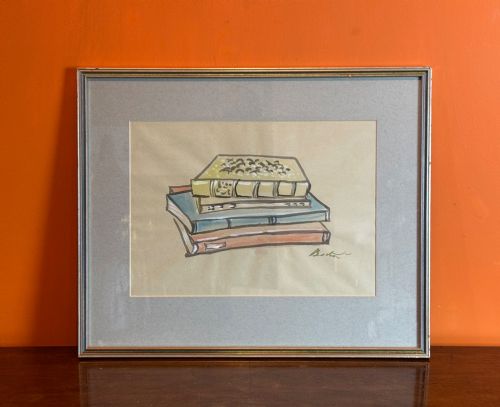
- A painting depicting inanimate subject matter, typically commonplace objects such as flowers, fruit, or books.
- Botanical study
- A rigorous depiction of plant forms focusing on scientific accuracy and detailed observation.
Paper Watercolour Still Life: Frequently Asked Questions
How should I hang these paintings?
Keep watercolour works away from direct sunlight to prevent the pigments from fading over time.
Ensure they hang in rooms with stable humidity levels to protect both the paper and the wooden frames.
What subjects appear most often?
Floral studies dominate the selection, featuring roses, anemones, and wallflowers arranged in jugs, baskets, or vases.
Fruit and books also appear alongside the botanical arrangements.
How do I identify the period?
Stylistic clues such as Edwardian realism or mid-century modern palettes help date the artwork alongside signatures and framing methods.
Victorian pieces often display a dense botanical focus, while later twentieth-century examples show looser brushwork.
Are these works original?
The listings comprise original paintings executed by hand on paper rather than reproductions or prints.
Each piece bears the distinct touch of the artist through individual brushstrokes and pigment application.