


Pink Flower Watercolour
These pink flower watercolour works bring botanical studies and still life arrangements from the nineteenth and twentieth centuries directly to the wall.
Pink Flower Watercolour
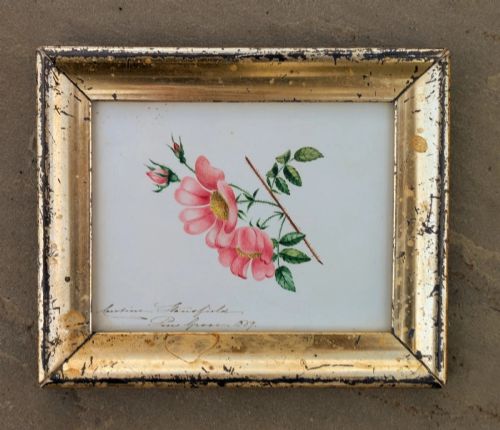
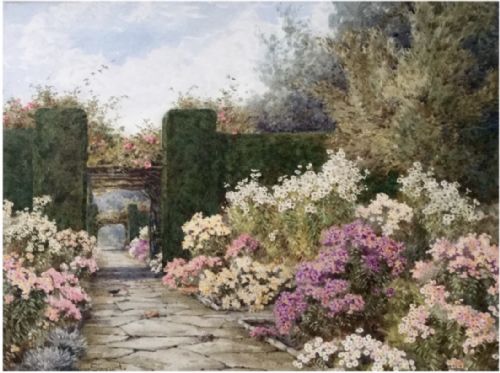
When you search for pink flower watercolour works, you encounter original paintings on paper depicting botanical subjects and floral still life arrangements. The selections span the nineteenth century, Edwardian era, and mid-century modern periods, showcasing various blooms.
You meet Victorian botanical studies alongside British Impressionist and twentieth-century interpretations. Common subjects include roses, fuchsias, pelargoniums, anemones, and cosmos flowers arranged in jugs or captured as standalone specimens.
Most examples arrive framed behind glass, often mounted in card and housed within wood or gilt wood frames. The formats range from intimate botanical studies to larger still life compositions.
Materials and methods
Artists apply watercolour pigment and paint onto paper supports, occasionally utilising gouache for denser opacity and deeper tone. Card mounts provide structural support and aesthetic separation within the framing.
Frames are constructed from wood, with several examples featuring gilt wood finishes that complement the painted botanical subjects. Protection is completed by glass glazing fitted over the paper artwork.
Listings feature paper, watercolour pigment, glass, and wood frames spanning Victorian, Edwardian, and mid-century modern periods.
Quality and execution
The distinction lies in the precision of the brushwork and the botanical accuracy of the floral representation. Finer works capture the delicate translucency of petals and the natural variation of stem and leaf structures.
Condition of the paper and pigment stability influence the overall standard. Superior pieces retain vibrant pigment saturation without excessive fading or discolouration across the paper surface.
Lester Sutcliffe·Lilian Stannard·Jabez Bligh·Charlotte Isa James·Marion Broom·Annie Mary Youngman·Edith Alice Andrews·Phyllis I Hibbert·Olive Higginbottom
The Pink Flower Watercolour Glossary
- Watercolour
- A paint consisting of a pigment suspended in a water-based solution. It is applied to paper to create translucent layers of colour.
- Gouche
- An opaque watercolour paint containing pigment mixed with a binding agent and white filler. It provides heavier coverage and solid areas of colour.
- Card mount
- A border of stiff card placed around a painting inside the frame. It prevents the artwork from touching the glass directly.
- Gilt wood
- Wood that has been treated with a thin layer of gold leaf or metallic gilt paint. It is commonly found on traditional picture frames.
Pink Flower Watercolour: Frequently Asked Questions
How do I care for a watercolour painting?
Keep the artwork away from direct sunlight to prevent the pigments from fading over time. Ensure the hanging environment maintains stable humidity levels to protect the paper and frame.
Check that the glass remains sealed to prevent dust or moisture from reaching the painted surface. Professional framing safeguards the paper from direct contact with the internal mount.
Are these pieces original works?
The inventory consists of hand-painted original artworks rather than modern reproductions. Each piece shows individual brushwork and the distinct touch of the artist.
Signatures or inscriptions appear on many of the paintings, documenting the hand of the creator. Paper textures and pigment applications confirm their unique status.
What periods do these artworks represent?
The selections span from the mid-nineteenth century through the Edwardian era and into the mid-twentieth century. Victorian botanical studies sit alongside twentieth-century British still life compositions.
Stylistic shifts reflect changing artistic approaches, moving from detailed botanical recording toward impressionistic floral arrangements.
How are these paintings usually displayed?
Framed works arrive ready to hang on interior walls, typically protected by glass and surrounded by wood or gilt frames. Card mounts provide a visual border that frames the paper composition.
Wall art placement benefits from subdued lighting conditions that enhance the watercolour pigments while protecting the paper from UV damage.