
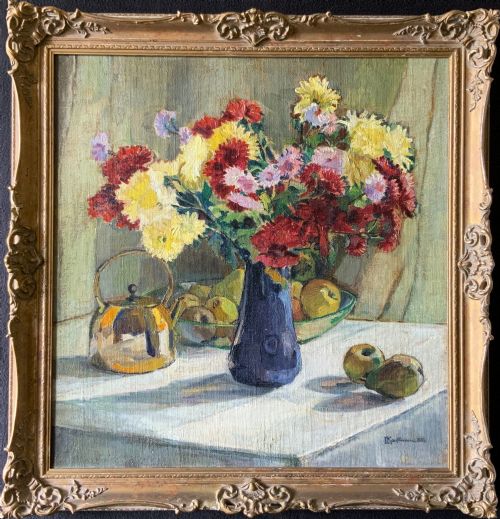
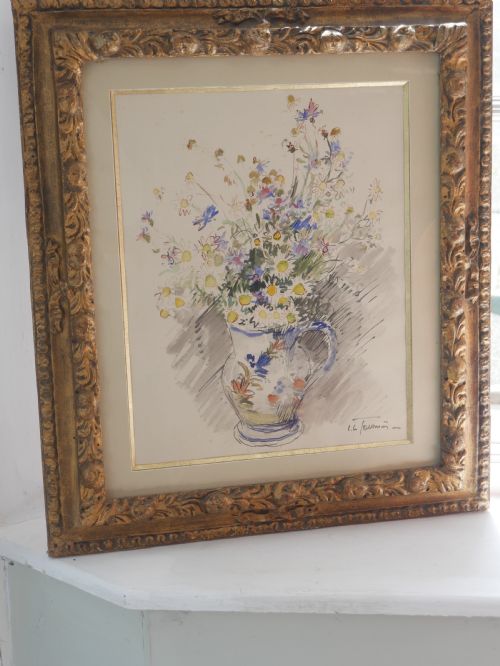
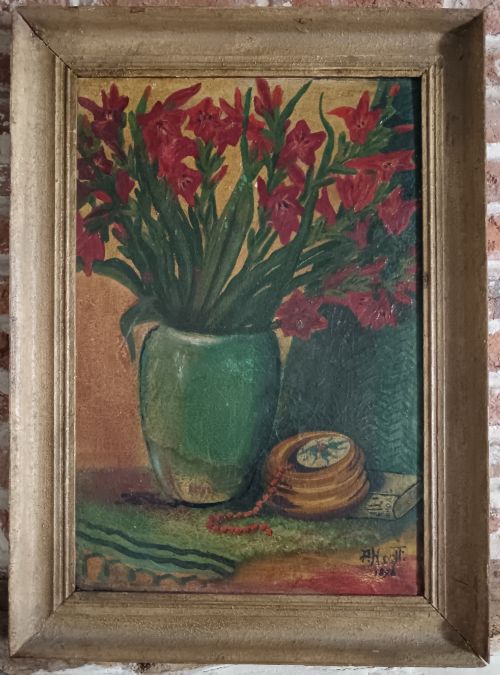

Impressionist Botanical Painting
Impressionist botanical painting captures the fleeting beauty of flora through loose brushwork, bringing garden scenes and floral still lifes vividly into interior spaces.
Impressionist Botanical Painting
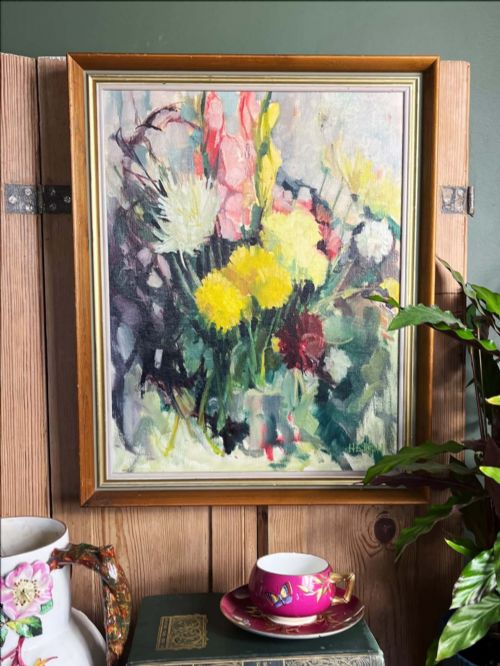
Impressionist botanical painting encompasses works depicting flowers, gardens, and vases of blooms executed in loose, expressive styles. These artworks range from intimate studies of roses and carnations to wider depictions of water lilies, cottage gardens, and walled yards.
The selections span from the late nineteenth century through the mid-twentieth century, capturing the evolution of the genre across British, French, Austrian, Belgian, and American schools. Buyers will encounter both focused still life compositions and broader plein air garden scenes.
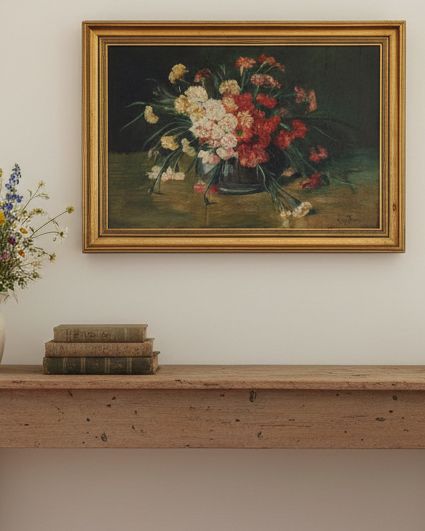
Oil on canvas and oil on board predominate this collection, alongside watercolours, gouache, pastels, and mixed media works. Many arrive housed in period frames, often finished with gilt or gesso detailing that complements the artwork.
Materials and technique
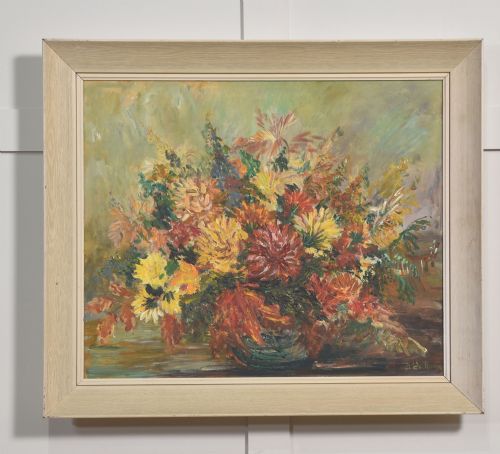
Artists utilised oil paint applied to canvas, wood panels, or metal supports, building texture through impasto or blending pigments to capture shifting natural light on petals and leaves. Watercolours and gouache on paper offer a lighter, more transparent touch, particularly suited to delicate botanical studies.
Support materials range from traditional stretched canvas to sturdy boards and heavy paper. Frames of wood, enhanced with carved gesso and gilt finishes, complete the construction and protect the edges of the paintings.
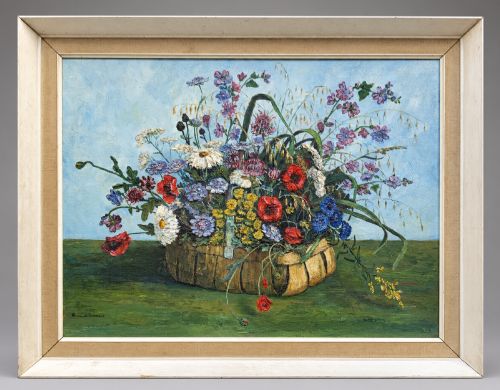
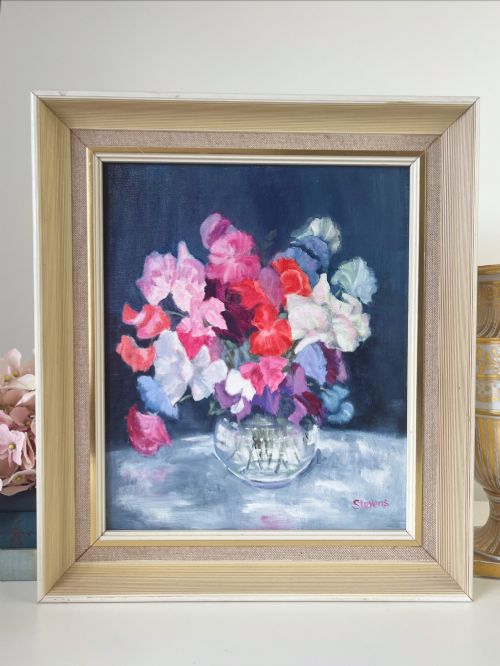
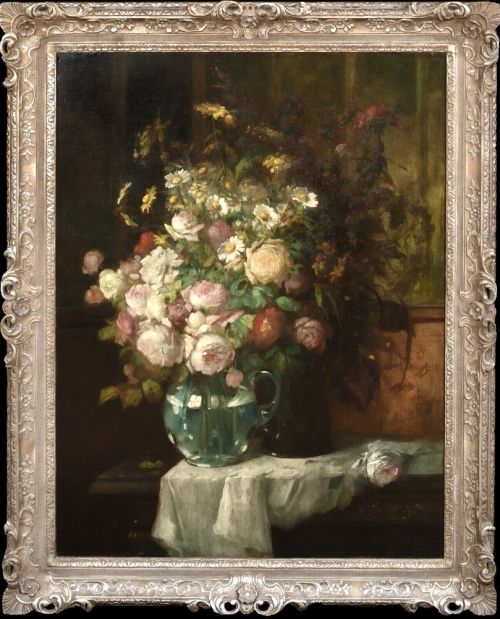
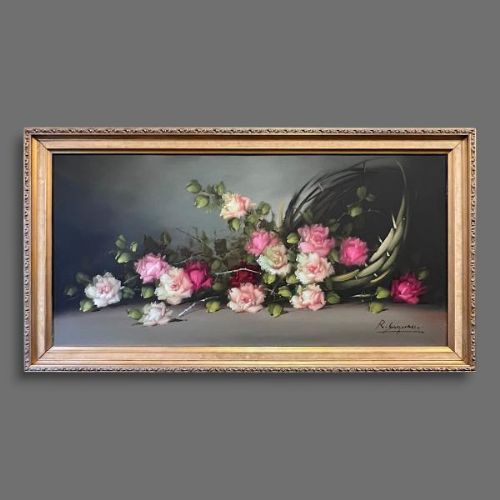
Roses spill from wicker baskets and sit beside hopi pots, proving that nineteenth-century flowers had just as much trouble staying put.
Evaluating quality
Quality rests upon the artist's command of light, colour harmony, and compositional balance within the botanical subject. Superior examples display confident brushwork and a distinct atmosphere rather than rigid botanical illustration.
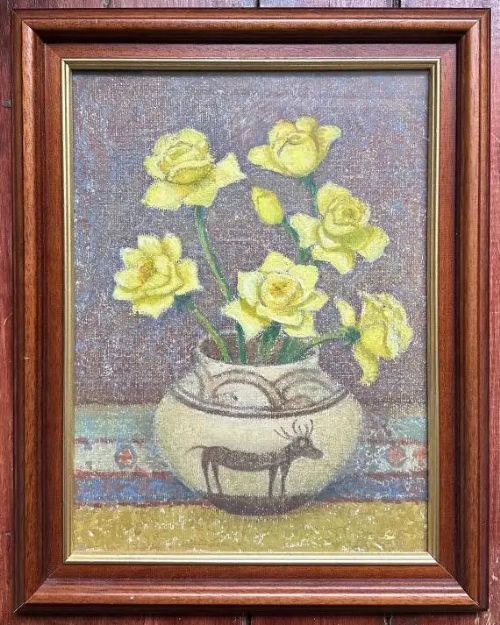
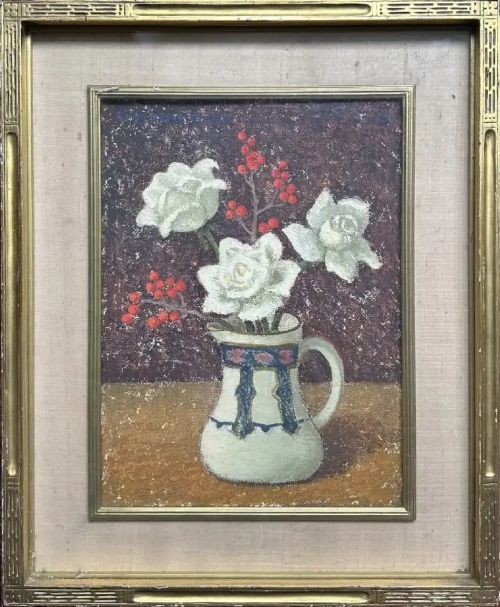
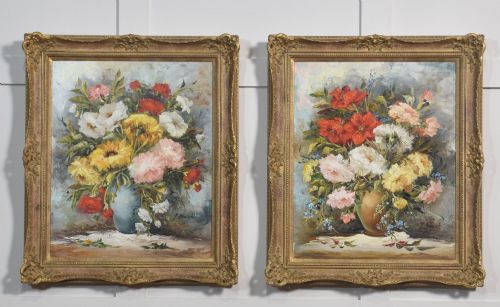
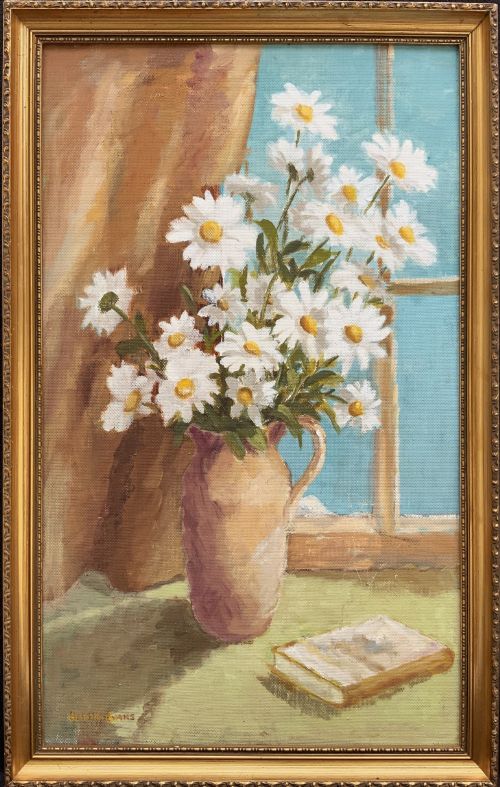
The relationship between the subject and its container, whether a humble jug, a Hopi pot, or a wicker basket, demonstrates the artist's spatial awareness. Original framing and clear provenance or signatures further distinguish finer works.
Konstantin Stoitzner·Emma Fordyce MacRae·Manuela Bonati·William Thomas Wood·Owen Bowen·Gertrude Hayes·Amile Coppieters·Lester Sutcliffe·Kershaw Schofield·Sir Matthew Smith·Lilian Stannard·Rowland Henry Hill·Lena M Alexander·Elizabeth T Sutcliffe
The Impressionist Botanical Painting Glossary
- Impressionism
- A nineteenth-century painting style focused on capturing the visual impression of a moment, characterised by visible brush strokes and an emphasis on light.
- Impasto
- A technique where paint is laid on an area of the surface in very thick layers, standing out from the canvas and holding brush or palette knife marks.
- Gesso
- A plaster mixture used as a smooth base for painting or applied to wood frames before gilding.
- Gouache
- A water-based paint consisting of pigment and other materials designed to be opaque.
- Plein air
- The act of painting outdoors, capturing natural light and atmosphere directly from the subject.
Impressionist Botanical Painting: Frequently Asked Questions
What periods do these paintings date from?
The works span from the late nineteenth century through the 1960s, encompassing Edwardian, Art Deco, and mid-century modern eras.
Most pieces cluster around the early decades of the twentieth century, reflecting the height of international impressionist floral painting.
How should I hang an oil painting?
Ensure your wall can support the weight of the framed canvas or board, utilising appropriate picture hooks and sturdy wire.
Keep paintings away from direct sunlight and excessive humidity to protect the oil pigments and wooden frames over time.
Are watercolours framed differently than oils?
Watercolours on paper require framing behind glass with a mount to prevent the surface from touching the glazing.
Oils on canvas or board are typically framed openly without glass, allowing the textured paint surface to breathe.
How do I identify a post-impressionist piece?
Post-impressionist works often feature bolder outlines, intensified colours, and a greater emphasis on geometric structure than traditional impressionism.
Artists in this category pushed beyond pure optical recording to express emotional responses to floral subjects.