





Paper Watercolour Seascape Painting
A paper watercolour seascape painting captures the movement of coastal tides and the expanse of open water through fluid pigments.
Paper Watercolour Seascape Painting
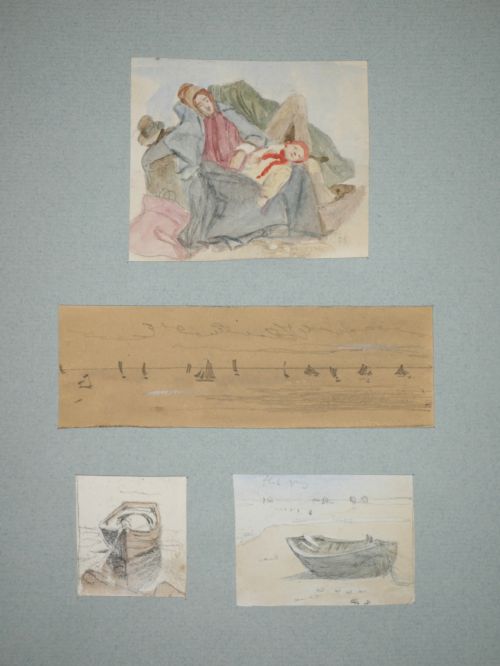
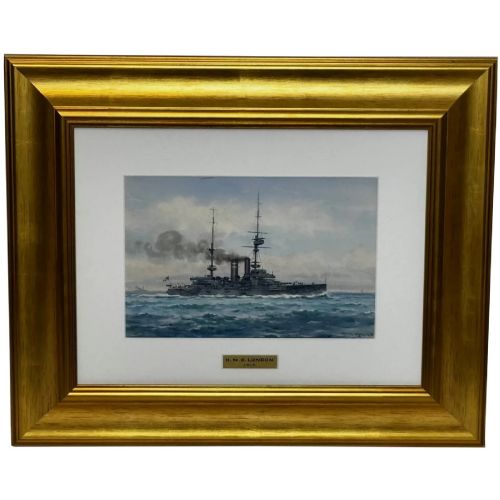
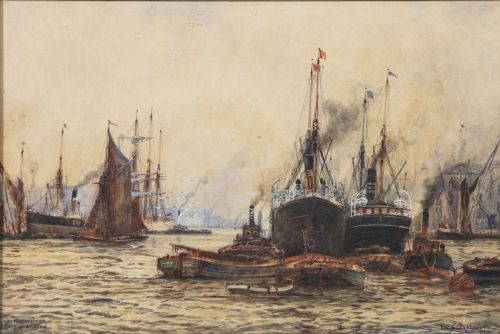
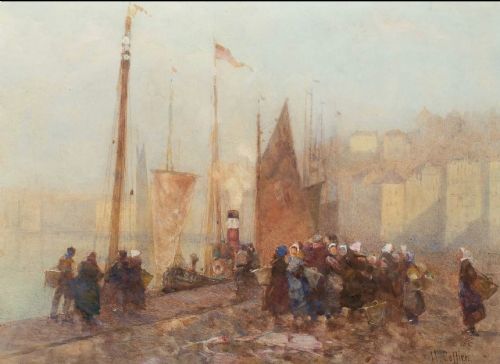
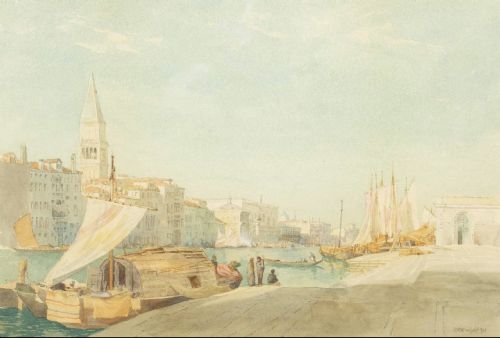
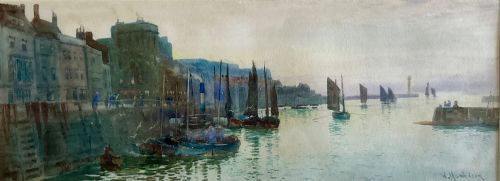
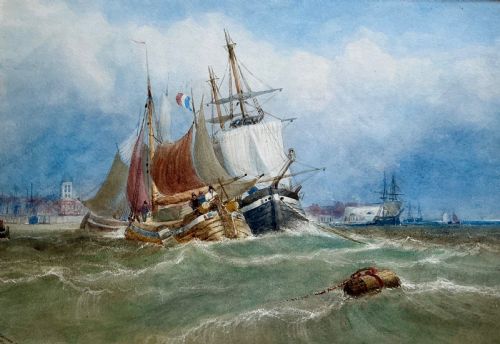
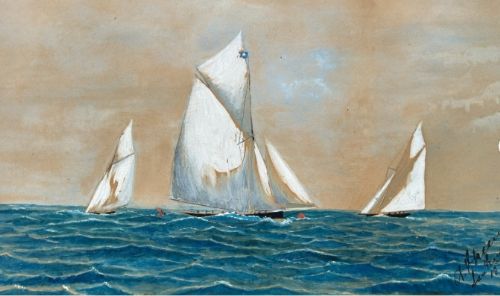
A paper watercolour seascape painting represents maritime scenes, coastal villages, and harbour views executed on a paper support. These works focus on ships at sea, fishing fleets, and tidal shores depicted with translucent washes.
The examples gathered here span from the nineteenth century into the mid-twentieth century, encompassing Victorian marine art, British impressionism, and early twentieth-century coastal studies. Works range from intimate sketches to detailed framed watercolours of British and European ports.
How they were made
Artists applied watercolour pigment and ink onto paper surfaces, utilising the white of the paper to create light and luminosity in sky and water. Painters built up compositions through transparent washes alongside opaque highlights.
Framed works commonly incorporate glass and wood to protect the delicate paper support and pigments from environmental damage. Detail work often involved fine brushwork or pen lines to define rigging, architecture, and figures.
Several artists clearly braved the bracing winds of Whitby and Scarborough just to capture fishermen hauling nets.
What varies in quality
The distinction between standard works and exceptional examples lies in the artist's handling of atmosphere, light, and maritime detail. Superior execution conveys the weight of water and the motion of air with confident, economical brushstrokes.
Condition and preservation significantly influence the standing of a piece, particularly regarding pigment retention and paper stability. Stronger works maintain vibrant colour harmonies without excessive fading or discolouration from age.
James Orrock·James Smetham·Frank Watson Wood·Frank William Scarbrough·Hector Caffieri·Richard Henry Wright·William Matthison·Henry Barlow Carter·William Frederick Settle·Paul Delvaux·Thomas Bush Hardy·Sir Thomas Newenham Dean·Robert Leslie Howey·John McDougal·Frank H. Mason·Frederick William Hattersley·John Mitchell·Samuel Owen·Frederick William Booty·Kate E Booth·Ernest F. Hill·Frederick Stuart Richardson·Stephen John Batchelder·Percy Brooke·William Kay Blacklock
The Paper Watercolour Seascape Painting Glossary
- Watercolour pigment
- Colouring matter ground in a water-soluble medium, applied to paper in varying dilutions to create transparent washes.
- Wash
- A thin, fluid layer of diluted watercolour paint spread across paper to create smooth areas of tone or colour, particularly effective for skies and open water.
- Support
- The underlying physical material upon which the artwork is painted, which in these pieces consists entirely of paper.
- Monogram
- A motif made by overlapping or combining letters to form a logo or identifier, frequently utilised by artists to sign works discreetly.
Paper Watercolour Seascape Painting: Frequently Asked Questions
What is a paper watercolour seascape painting?
It is an original work of art executed with water-soluble pigments on a paper support, depicting marine subjects such as ships, harbours, and coastal landscapes. These paintings rely on the luminous quality of the paper showing through transparent colour washes.
Artists across the nineteenth and twentieth centuries used this medium to capture the shifting light of the sea and sky. They range from rapid observational sketches to highly finished exhibition pieces.
How should I frame and hang these watercolours?
Paper watercolours require careful framing behind glass with acid-free mounts to prevent direct contact between the paper and the glazing. This setup protects the delicate pigments from atmospheric moisture and physical wear.
Display the artwork away from direct sunlight to prevent the watercolours from fading over time. Stable indoor humidity levels will keep the paper support from warping or developing foxing spots.
How can I tell different periods apart?
Nineteenth-century works often display detailed rigging, dramatic coastal narratives, and a structured approach to maritime subjects. Victorian examples frequently lean towards romanticism in their treatment of light and sea conditions.
Later works from the early twentieth century and the interwar period often embrace looser brushwork influenced by impressionism. The attire of figures, style of shipping vessels, and framing choices also offer clues to the decade of creation.
Were these paintings made outdoors?
Many marine artists produced quick watercolour sketches outdoors to capture transient weather effects, wave action, and shifting coastal light. These field studies frequently served as reference material for larger studio compositions.
More finished watercolours were typically completed in a studio setting using these initial observations and drawings. Both plein-air studies and studio works appear across the historical range.