


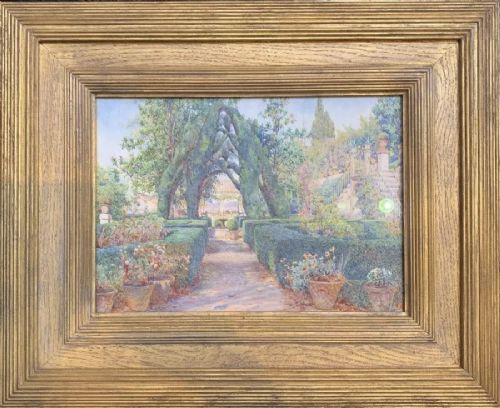
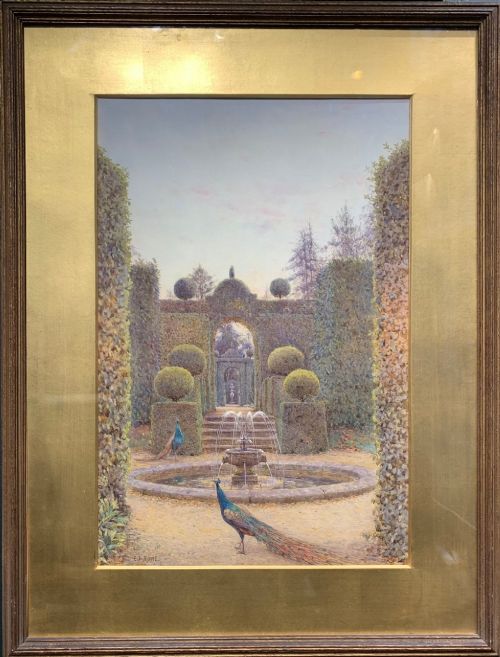
Framed Victorian Watercolour Landscape
Framed Victorian watercolour landscape works capture the atmospheric beauty of nineteenth-century countryside and coastal scenes beneath protective glass.
Framed Victorian Watercolour Landscape
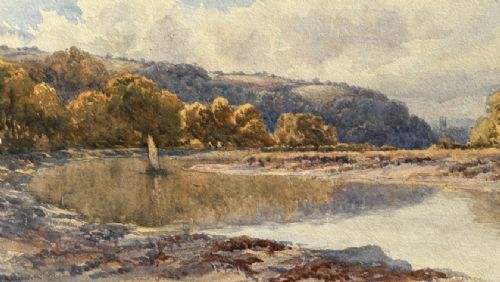
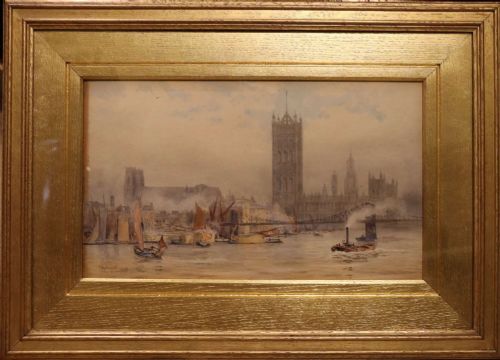
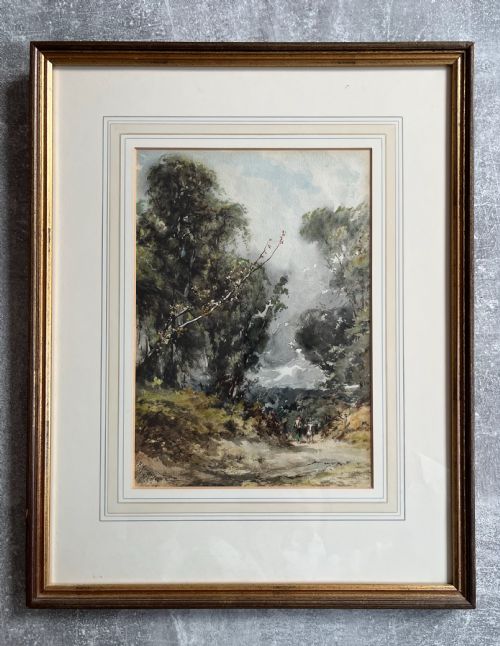
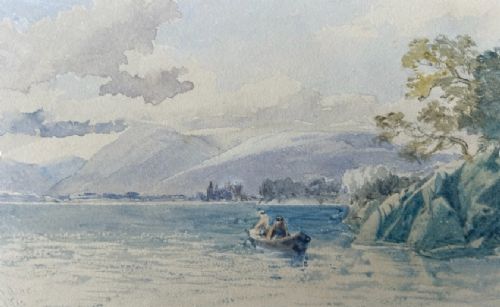
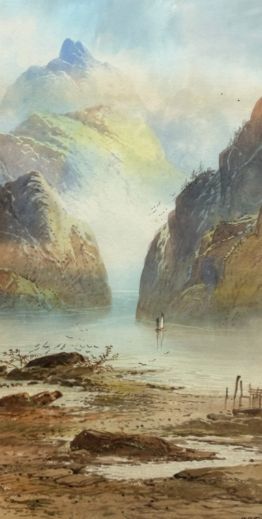
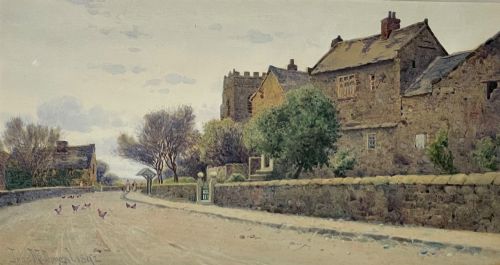
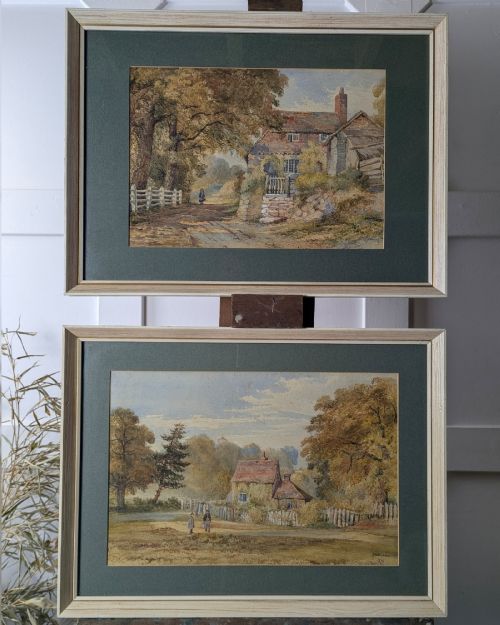
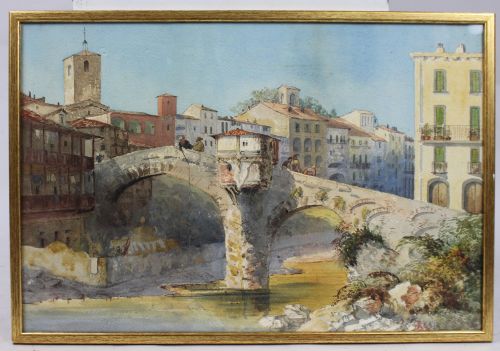
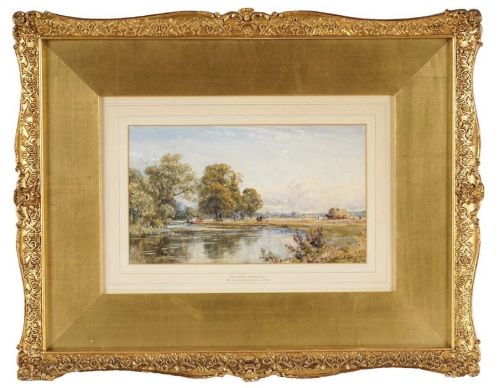
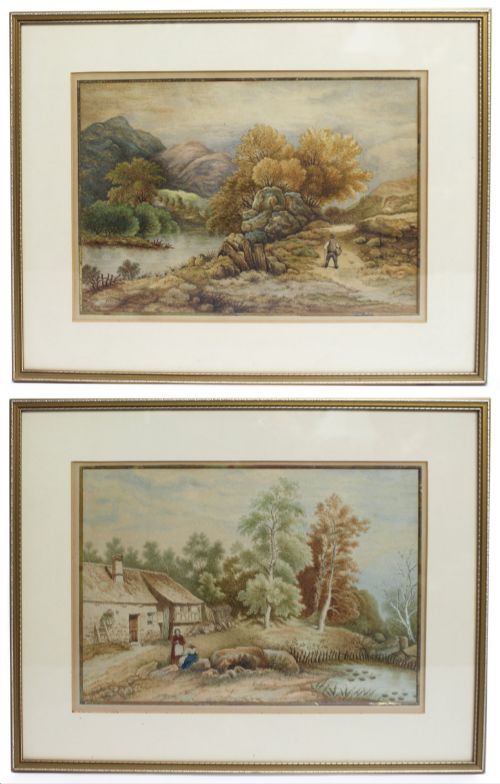
A framed victorian watercolour landscape depicts natural scenery, rural valleys, and coastal vistas created during the nineteenth century and early twentieth century. These paintings frequently record specific locations across Britain and Europe, ranging from Scottish lochs to Welsh passes and southern English pastures.
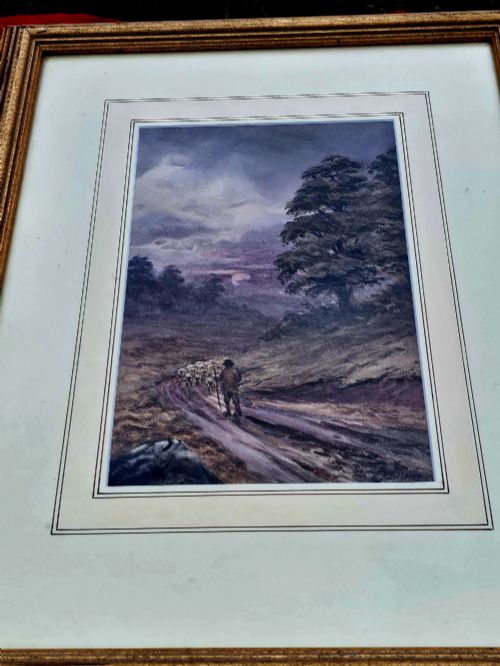
Most examples encountered on this page originate from the Victorian era, Edwardian period, or the transition years around 1900. They present subjects like agricultural harvesting, river views, and pastoral livestock farming rendered through traditional water-based pigments on paper.
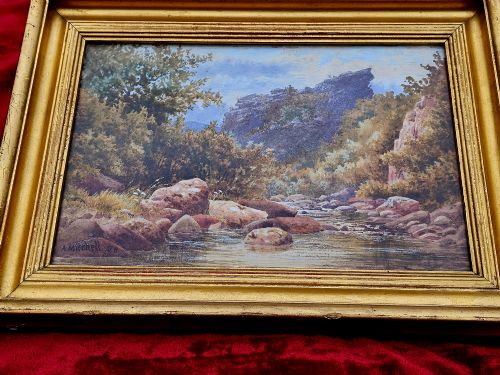
The surviving works include both signed original compositions by named Royal Academy exhibitors and anonymous regional studies. Collectors discover these paintings enclosed within period wooden frames, often augmented by gold leaf or gilt wood mouldings.
Materials and Technique
These works rely on watercolour pigment applied to paper supports, utilising the transparency of the medium to create light effects across sky and water. Artists built up their compositions through washes, brushwork, and occasional gouache highlights.
Finished paintings were secured behind protective glass within timber frames, frequently constructed from gilt wood or embellished with gold leaf. This mounting protected the delicate paper surface from atmospheric moisture and handling damage.
The listings feature nineteenth-century and Edwardian watercolours created using paper, watercolour paint, glass, and gilt wood frames.
Evaluating Quality
Quality rests upon the handling of light, atmospheric depth, and the precision of brushwork within the landscape. Superior paintings demonstrate confident control over pigment dilution and tonal gradation across expansive skies.
The preservation of the paper support and the retention of original framing elements influence the integrity of the piece. Stronger examples maintain vibrant pigment saturation without excessive fading or discoloration from historical exposure to sunlight.
Thomas Miles Richardson Jnr·James Orrock·William Henry Earp·Ernest Arthur Rowe·Cornelius Pearson
The Framed Victorian Watercolour Landscape Glossary
- Watercolour pigment
- Finely ground colour particles suspended in a water-soluble binder, applied to paper to form the image. This medium allows for luminous washes and subtle atmospheric effects.
- Gilt wood
- Timber framing treated with a thin layer of gold leaf or metallic gilt finish. Such surrounds provide a traditional decorative border that complements the nineteenth-century artwork.
- Monogram
- A cipher or initials combined into a single mark used by artists to sign their work. These marks help attribute unsigned or partially documented paintings.
- Diptych
- A painting created across two distinct panels or sheets designed to be displayed together as a matched pair. This format was occasionally utilised for panoramic or companion coastal views.
Framed Victorian Watercolour Landscape: Frequently Asked Questions
How do I date a framed watercolour landscape?
Dating relies upon visible artist signatures, period framing styles, and biographical records of the painter. Handwritten inscriptions on the reverse often record precise dates and locations.
Paper types and stylistic markers associated with the Victorian period further help narrow down the decade of creation.
Where should I hang these watercolours?
Watercolours require placement away from direct sunlight to prevent the fading of delicate pigments on paper. Stable indoor humidity levels protect both the artwork and the wooden frame.
Positioning them at eye level in rooms with indirect light ensures safe viewing conditions.
Are these paintings original works?
The listings comprise original hand-painted watercolours rather than mass-produced prints or reproductions. Each sheet bears unique brushstrokes and pigment textures.
Close inspection under magnification reveals the individual application of wash and line by the artist.
How do I identify Scottish landscape subjects?
Scottish subjects are frequently identified through contemporary inscriptions naming specific lochs, castles, or regional landmarks. Artists often recorded locations such as Loch Awe or Dunbar Castle directly on the mount or backing.
Mountainous topography and atmospheric northern light styles also signal Scottish provenance.