





Paper Nautical Artwork
Paper nautical artwork captures maritime history on fragile sheets through watercolour, gouache, and ink.
Paper Nautical Artwork
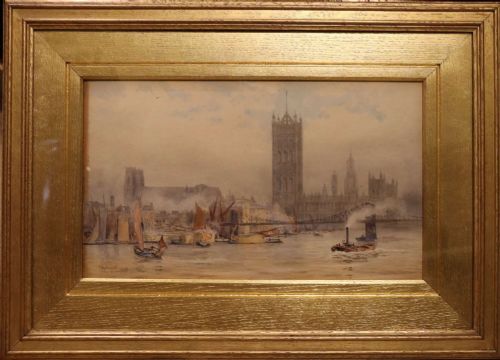
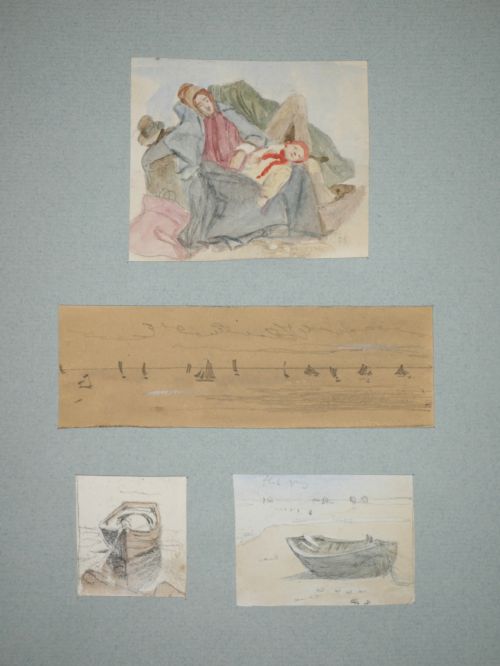
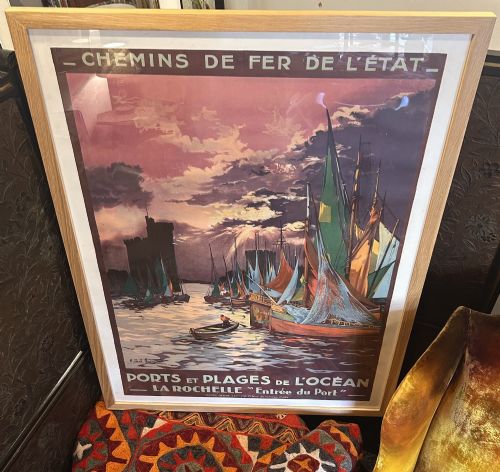
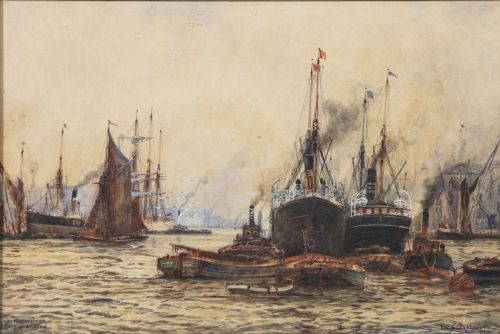
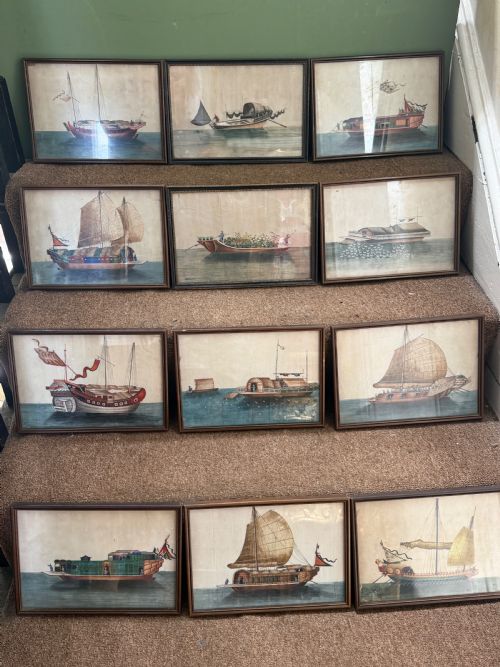
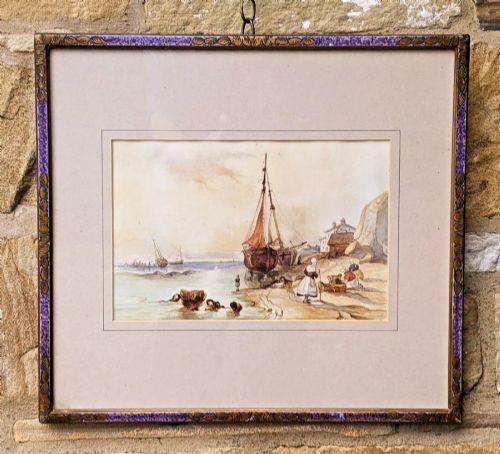
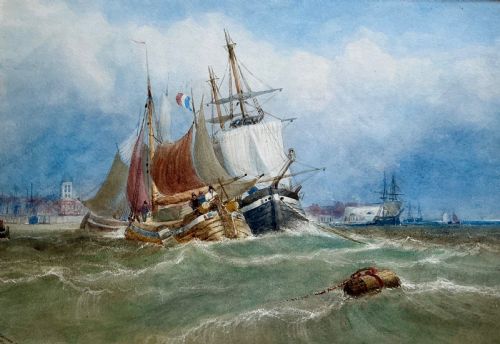
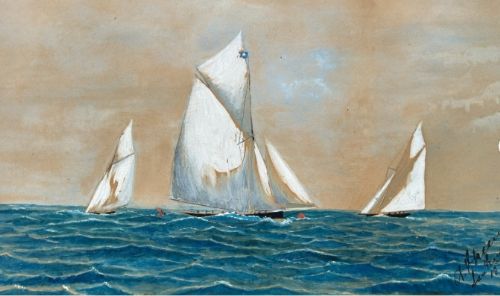
Paper nautical artwork encompasses watercolour paintings, gouache sketches, pencil drawings, and framed prints depicting marine scenes and ships. When exploring paper nautical artwork, buyers encounter pieces ranging from Victorian coastal views to mid-century harbour depictions.
The selections span the nineteenth century through the mid-twentieth century, featuring British and European rivers, ports, and deep-sea vessels. Works on paper often include detailed depictions of sailing ships, fishing boats, and naval vessels rendered by named artists.
Materials and Techniques
Artisans applied watercolour pigments, gouache, and ink onto paper or cardboard substrates to create marine views. Many pieces utilise delicate brushwork combined with pencil underdrawings to define rigging, hulls, and architectural shorelines.
Protection came from glass framing, which preserved the fragile paper media from atmospheric moisture and handling damage over decades.
Sailors occasionally traded shore-leave sketches for tobacco.
Craftsmanship and Execution
Excellence in paper nautical artwork rests on the precision of line and the skilful handling of light on water and sky. Superior examples demonstrate confident brushwork that captures movement in choppy water and intricate detail in ship rigging.
The strength of composition and the artist's ability to render atmosphere accurately distinguish finer works from simpler topographical sketches.
William Lionel Wyllie·Thomas Bush Hardy·James Orrock·Henry Barlow Carter·Frank William Scarbrough
The Paper Nautical Artwork Glossary
- Gouache
- An opaque water-based paint that provides solid colour and bright highlights on paper. It allows artists to build dense layers of pigment.
- Etching
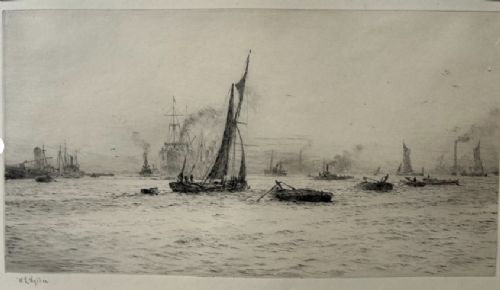
- A printmaking technique where lines are bitten into a metal plate with acid before being inked and pressed onto paper. This method creates sharp, fine linear details.
- Lithography
- A planographic printing process based on the repulsion of oil and water. It enables the reproduction of multi-coloured artistic images.
- Provenance
- The documented history of ownership surrounding an artwork. A clear record verifies authenticity and past exhibitions.
- Seascape
- A work of art depicting the sea, ships, or coastal views. These scenes focus primarily on marine environments and maritime activity.
Paper Nautical Artwork: Frequently Asked Questions
How should I hang paper nautical artwork?
Display these pieces away from direct sunlight to prevent the fading of watercolour pigments and paper degradation.
Ensure framing uses acid-free mounts to protect the delicate paper substrates over time.
What subjects appear in these works?
The pieces frequently depict bustling ports, sailing ships, fishing boats, and coastal landscapes from British and European locations.
Naval vessels and specific rivers like the Thames also feature prominently across the collection.
Are these works original paintings?
The inventory includes original hand-painted watercolours, gouache works, and pencil sketches created directly by artists.
It also incorporates period prints and etchings produced in limited numbers.
How do I identify the period?
Stylistic clues, artist signatures, and framing materials often point to specific eras such as the Victorian period or the mid-twentieth century.
Subject matter and paper characteristics further help narrow down the date of creation.