
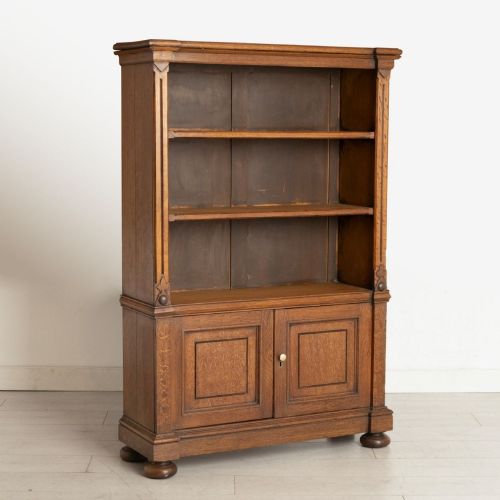
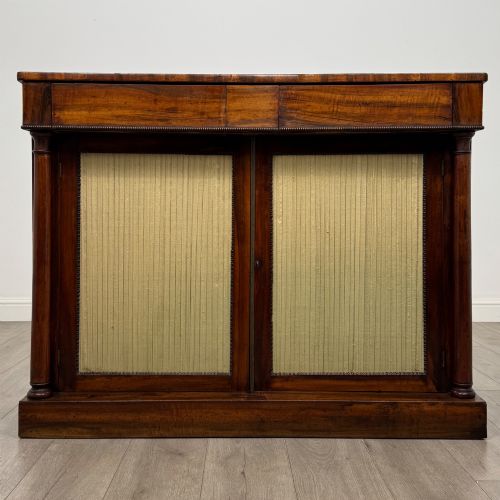
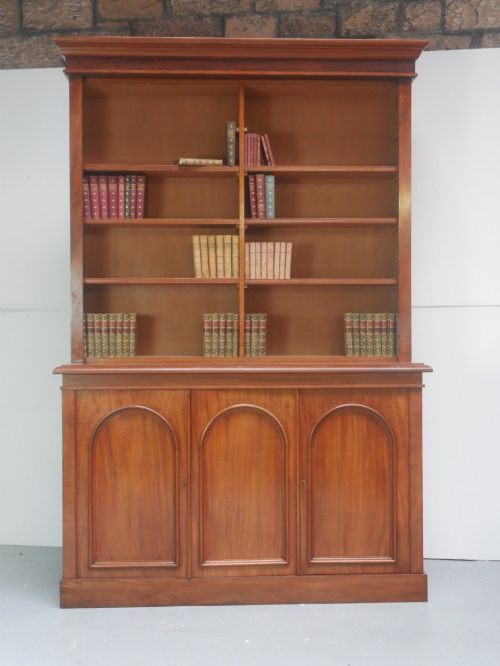
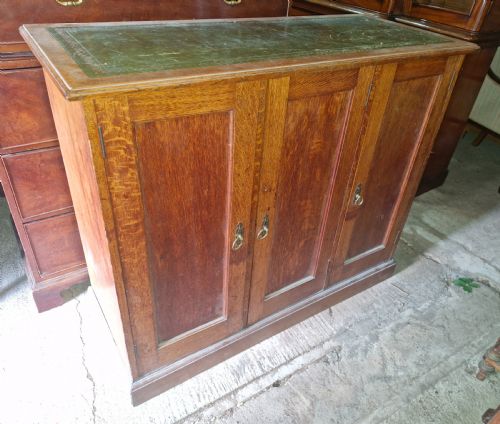
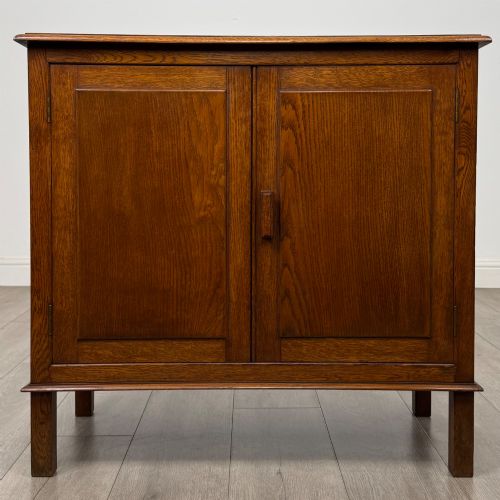
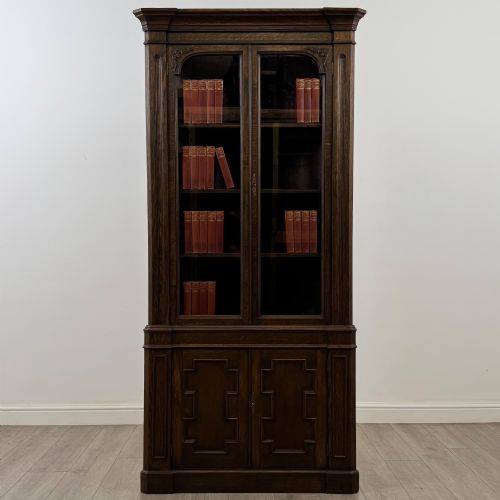
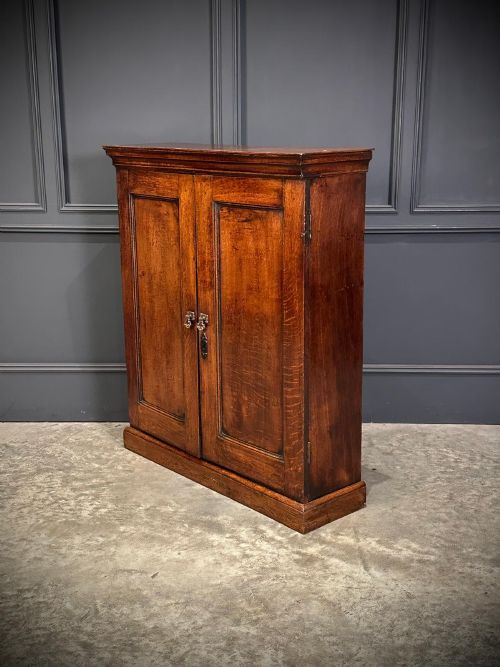
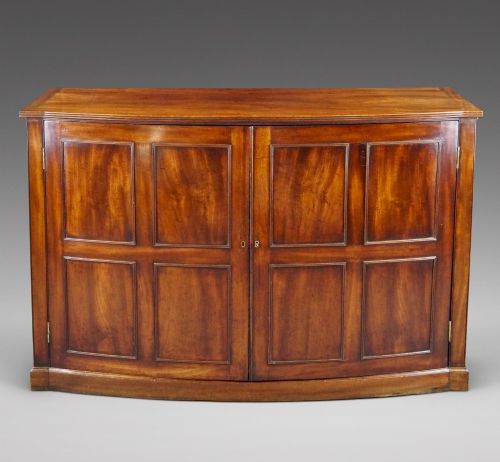
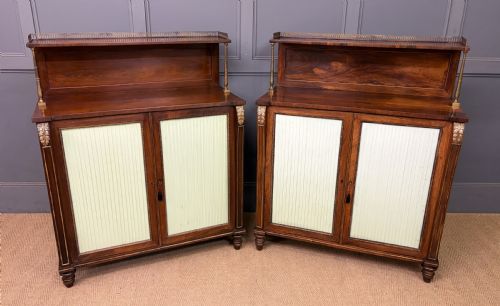
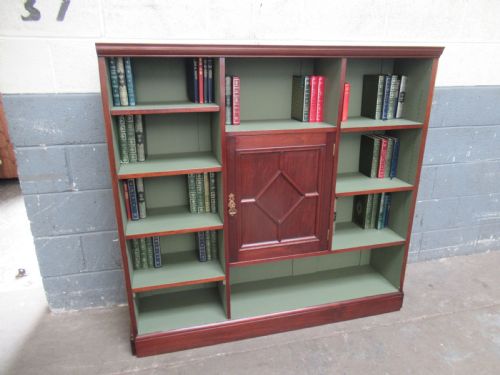


Panelled Cupboard Bookcase
Panelled cupboard bookcases combine fitted shelving and enclosed storage behind solid or glazed doors, bringing practical organisation and period character to any study or living space.
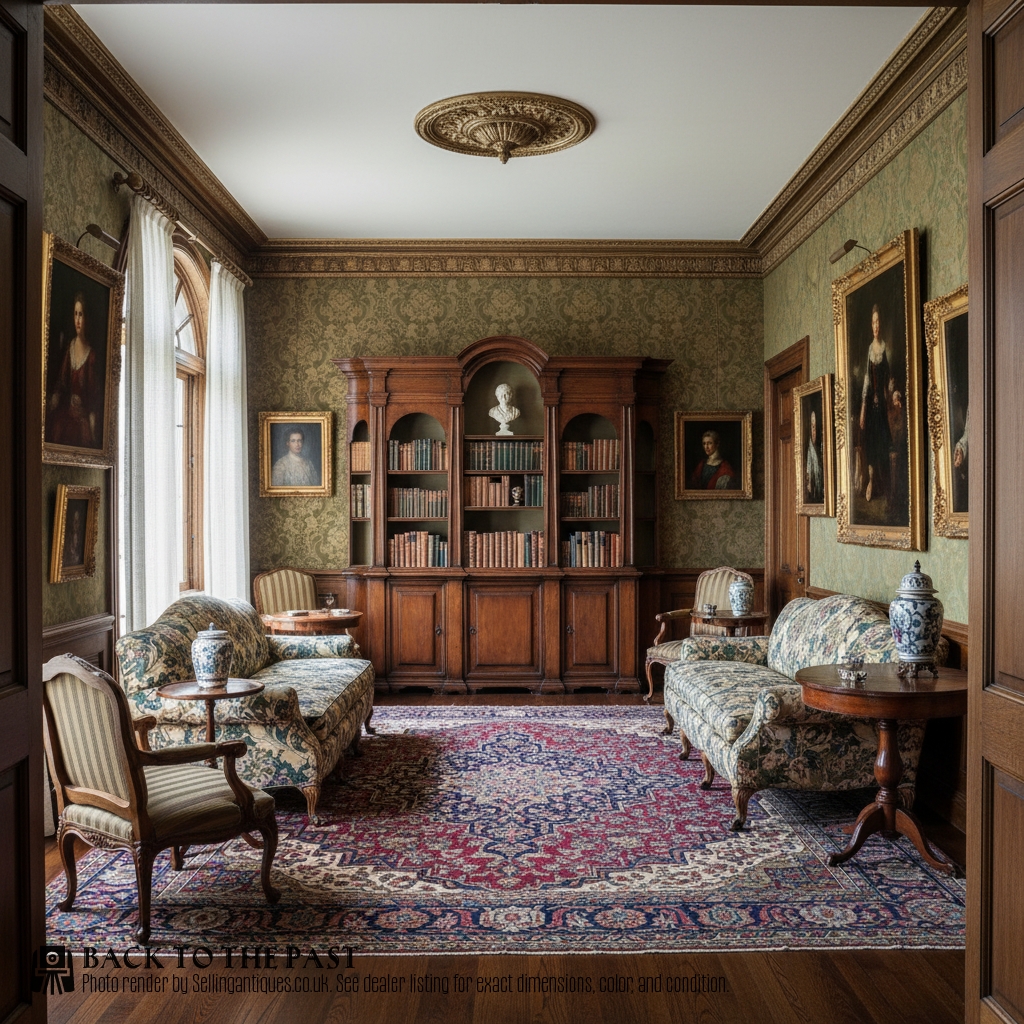
Panelled Cupboard Bookcase
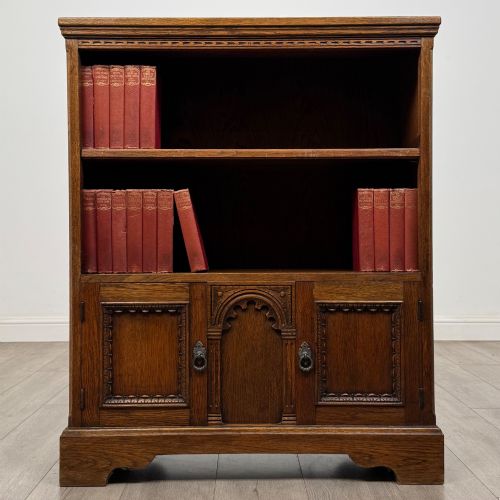
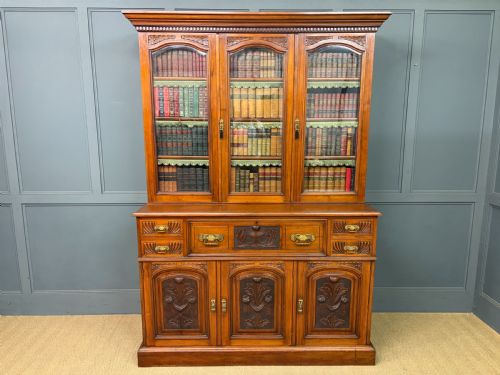
A panelled cupboard bookcase unites a shelved book storage section with a lower enclosed cabinet, offering dual functionality for display and concealment. The selections here span the Georgian, Victorian, Edwardian, and Regency periods, alongside pieces from the seventeenth, eighteenth, and twentieth centuries.
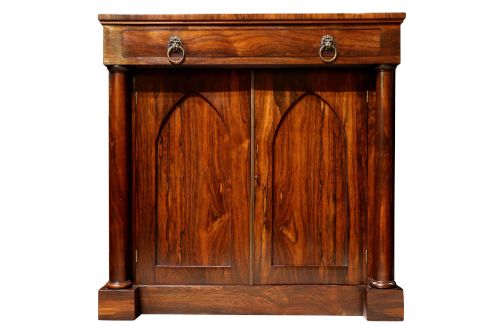
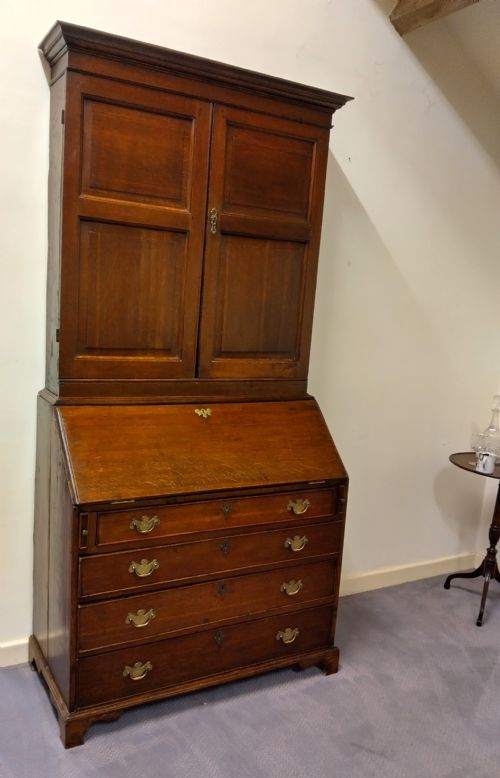
Makers utilised various timber types, including oak, mahogany, rosewood, and walnut, frequently incorporating glazed doors, fabric panels, or painted surfaces. Forms range from compact corner cabinets and side cabinets to large library bookcases and bureau variants.
Regional influences appear across English, French, Danish, and Italian examples, incorporating styles from Jacobean Revival to French Provincial and the Aesthetic Movement. Buyers frequently encounter oak and mahogany iterations from the nineteenth and early twentieth centuries on this page.
Materials and Technique
Cabinet makers constructed these pieces primarily from solid hardwoods and veneers such as oak, mahogany, rosewood, walnut, satinwood, and bamboo. Surfaces often feature polished finishes, while specialised examples incorporate painted panels, ormolu mounts, parquetry, and embossed leather.
Joinery techniques relied on traditional timber framing for the structural carcasses, supporting heavy shelves and fitted cupboard interiors. Glazing bars secure glass panes within display sections, while brass hardware secures doors and drawers.
At least one early oak bureau bookcase has adapted its historical interior for modern television viewing.
Craftsmanship and Proportion
Quality rests in the selection of figured timber veneers, the crispness of carved details such as Jacobean motifs or stylistic mouldings, and the integration of secondary woods. Superior examples maintain balanced proportions between the upper display area and the lower cupboard base.
The precision of door alignment, the original state of glass panes or brass fittings, and the integrity of internal shelving distinguish standard utility pieces from finely finished library cabinets.
The Panelled Cupboard Bookcase Glossary
- Chiffonier
- A low sideboard or cabinet featuring a combination of shelves, drawers, and enclosed cupboards. These pieces frequently incorporate fabric-backed or panelled doors.
- Secretaire
- A cabinet or bookcase containing a pull-down writing flap that conceals a fitted interior of small drawers and pigeonholes. It merges desk functionality with storage.
- Parquetry
- A geometric mosaic of wood pieces used for decorative surfacing on furniture tops and cabinet doors. This technique displays contrasting timber tones.
- Vernis Martin
- A type of fine furniture varnish and decorative painting technique developed in eighteenth-century France. It mimics Asian lacquer work using layered resin finishes.
- Ormolu
- Gilded bronze mounts applied to furniture for decorative enrichment. These metallic accents frame panels and highlight architectural corners.
Panelled Cupboard Bookcase: Frequently Asked Questions
How do I choose the right size?
Measure your available wall space and ceiling height carefully before selecting a cabinet. Consider whether you require a compact corner unit or a large library bookcase.
Account for the clearance needed to open cupboard doors and lower writing flaps comfortably within the room.
Are these pieces suitable for modern books?
Many older bookcases feature adjustable or fixed shelving depths designed for historical book sizes. Standard volumes fit securely, though larger modern folios require deeper shelves.
Verify internal shelf dimensions if you plan to store oversized volumes or heavy art books.
How do I care for antique wood?
Maintain stable indoor humidity and temperature to prevent timber from warping or splitting. Avoid placing cabinets in direct sunlight to protect polished finishes.
Dust regularly with a dry cloth and apply appropriate furniture wax sparingly to preserve the lustre of the grain.
What is the difference between glazed and open bookcases?
Glazed bookcases feature glass doors that protect books from dust and environmental wear while keeping collections visible. Open bookcases provide immediate, unobstructed access to volumes.
Enclosed lower cupboards on panelled bookcases offer concealed storage for items you prefer to keep out of sight.