



Paired Chinese Jars
Paired Chinese jars bring symmetry and colour to a room, offering matched porcelain and cloisonne forms that have found homes in European interiors for centuries.
Paired Chinese Jars
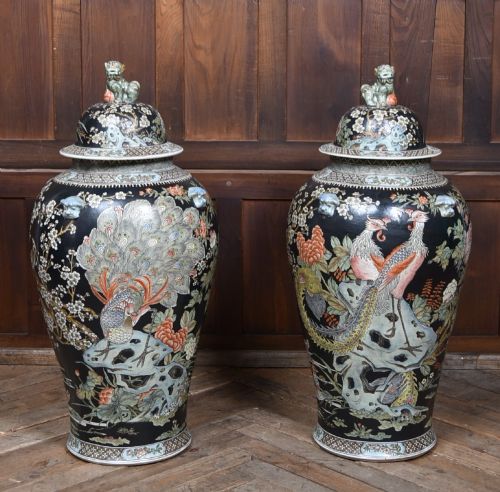
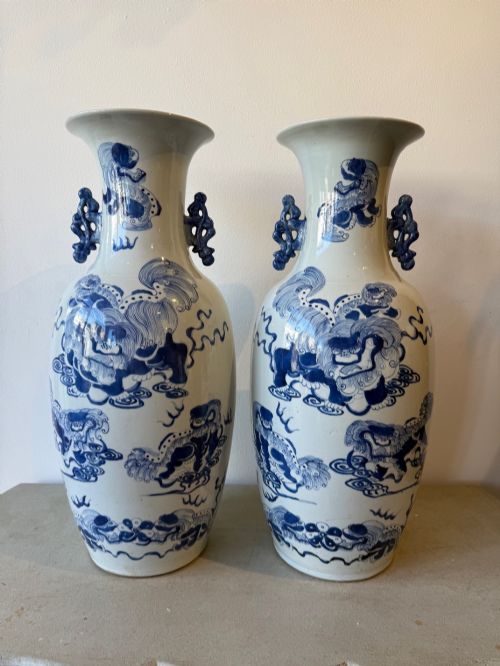
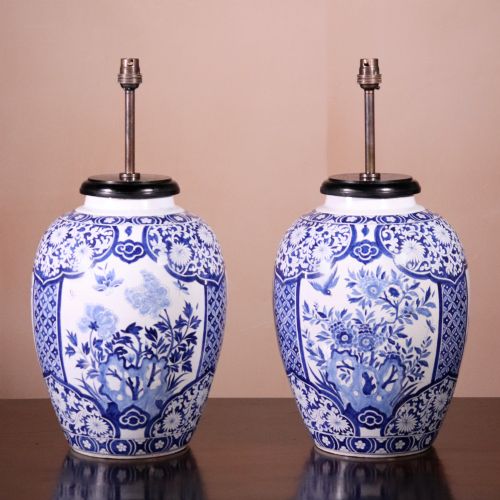
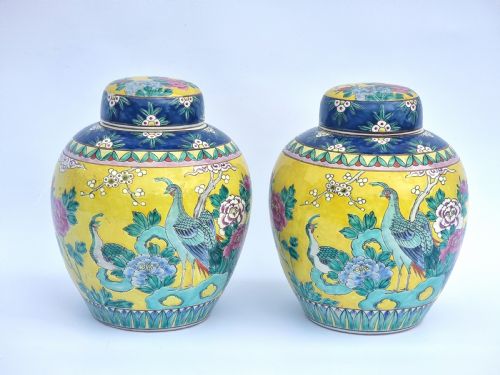
Paired Chinese jars encompass matching sets of ginger jars, floor vases, and lidded urns originating from various periods including the nineteenth century and the Qing Dynasty. These objects frequently appear as blue and white porcelain, famille rose, or cloisonne vessels, alongside examples adapted as table lamps.
Buyers encounter distinct forms such as ovid jars and baluster vases, often complete with covers. Many pieces display traditional decorative schemes including Canton, Rose Medallion, and crackleware patterns.
The selection ranges from early seventeenth-century pots and Kangxi period items down to twentieth-century decorative pieces and occasional tables paired with temple jars.
Materials and construction
Porcelain and ceramic form the core of these vessels, shaped into ginger jars and vases before receiving hand-painted blue and white or enamel decoration. Coloured glazes such as powder blue and tea dust provide dense surface finishes on specific nineteenth-century bodies.
Cloisonne examples utilise metal wire soldered to brass or copper bases to create cellular compartments filled with enamel paste and fired. Ormolu mounts occasionally appear on nineteenth-century pieces, adding cast bronze ornamentation to porcelain bodies.
Listings feature materials including porcelain, enamel, brass, wood, glaze, ceramic, gold leaf, and copper across multiple centuries.
Judging quality
Quality rests in the crispness of the hand-painted brushwork on porcelain surfaces and the precision of enamel placement within cloisonne wirework. Finer examples display balanced proportions across both items in a pair, maintaining symmetry in form and detail.
The sophistication of the glaze and the integrity of the body dictate the standing of a piece, with early periods and complex polychrome palettes commanding greater attention from collectors.
The Paired Chinese Jars Glossary
- Ginger jar
- A broad-shouldered ceramic vessel with a domed cover, originally designed for storing spices and preserved goods. These containers subsequently became standard decorative items in Western interiors.
- Famille rose
- A ceramic palette dominated by opaque pink enamel, introduced during the Qing Dynasty. This scheme allows for nuanced shading in floral and figural compositions.
- Cloisonne
- An enamelling technique where metal strips create raised barriers on a copper or brass foundation. Coloured glass paste fills these partitions prior to firing and polishing.
- Crackleware
- A ceramic finish featuring a network of fine decorative fissures deliberately formed in the glaze during cooling. This texture appears on various nineteenth-century wares.
- Ormolu
- Gilded bronze used for decorative mounts and fittings on furniture and porcelain. French craftsmen popularised this technique to enhance luxury objects.
Paired Chinese Jars: Frequently Asked Questions
What were paired Chinese jars used for?
These vessels originally stored dry goods, spices, or wine in Chinese households before evolving purely into ornamental objects. Export markets embraced them as decorative garnitures for mantelpieces and large rooms.
Pairs were specifically arranged to create balanced focal points within traditional and European interior schemes.
How do I date a Chinese jar?
Dating relies on examining the potting technique, the characteristics of the glaze, and the style of painted decoration. Reign marks can offer clues, though many later pieces bear marks from earlier periods.
Comparing the baseline, body weight, and enamel type against known examples helps narrow down the era of production.
Can I use jar lamps safely?
Many historical jars have been converted into table lamps by wiring through the base or adding upper fittings. These pieces retain their decorative presence while serving a modern lighting function.
Buyers should have older electrical components inspected by a qualified professional before daily use in a home.
What is the difference between famille rose and famille verte?
Famille verte relies predominantly on a transparent green enamel combined with iron red, yellow, and blue pigments. This palette flourished during the seventeenth and early eighteenth centuries.
Famille rose emerged later, substituting the green dominance with an opaque pink or purple enamel derived from gold.