

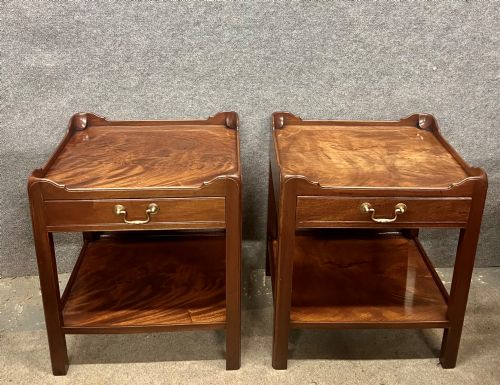
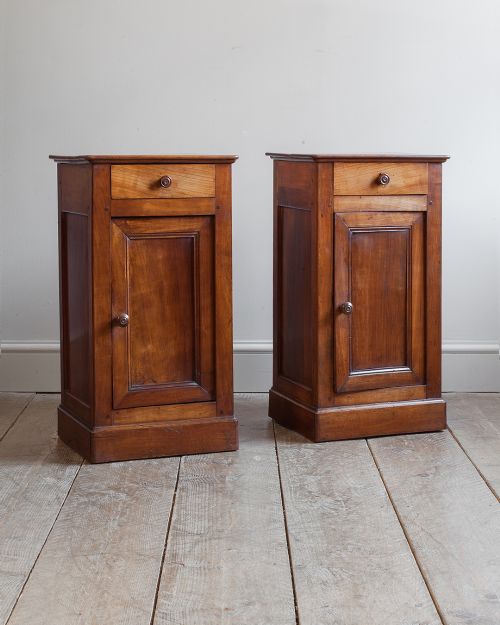
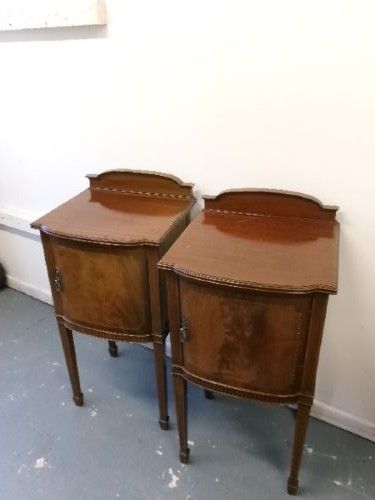
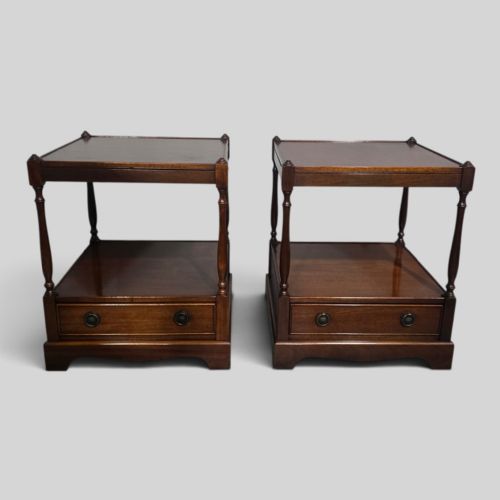
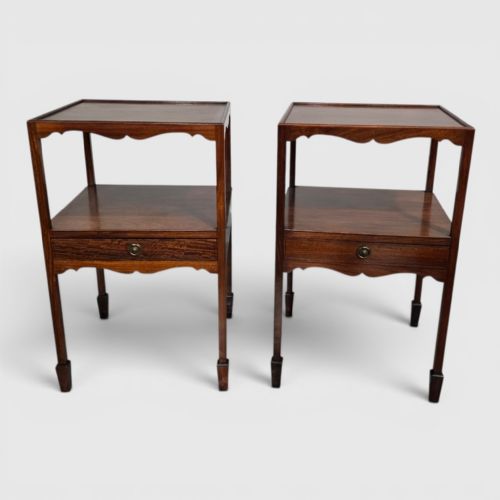

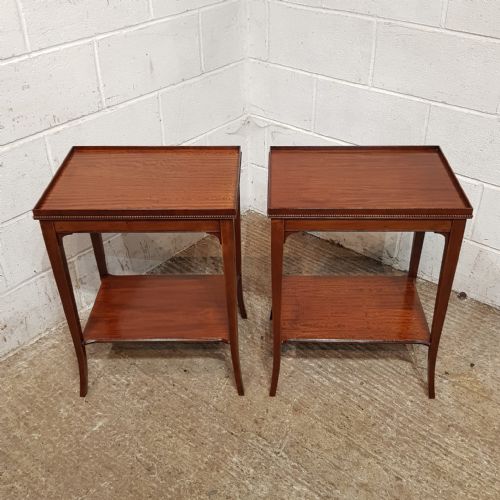
Pair Wooden Nightstands
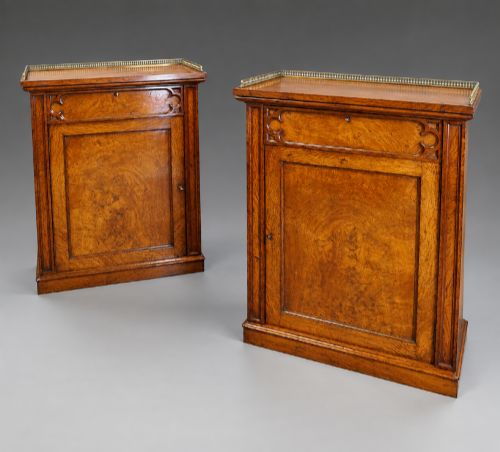
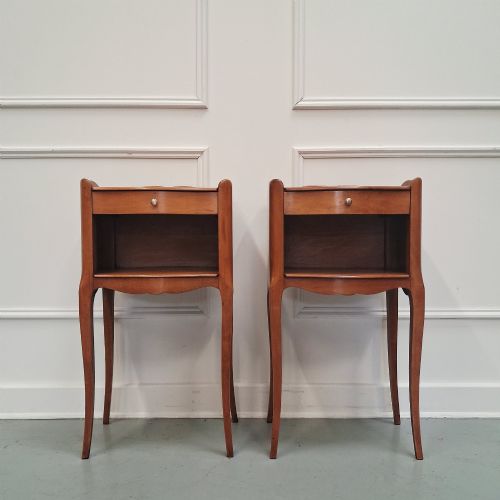
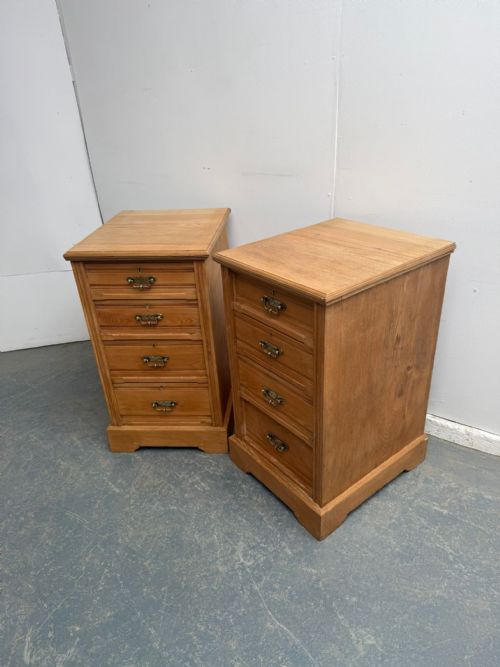
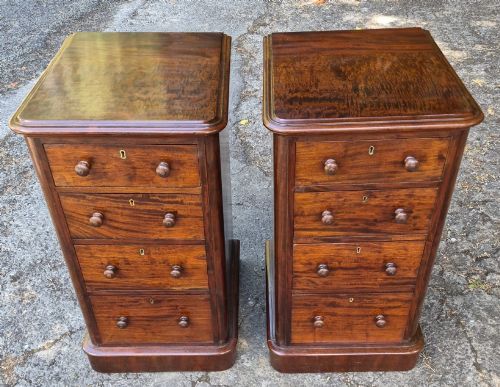
These pair wooden nightstands bring matched proportion and timber warmth to either side of a bed.
Pair Wooden Nightstands
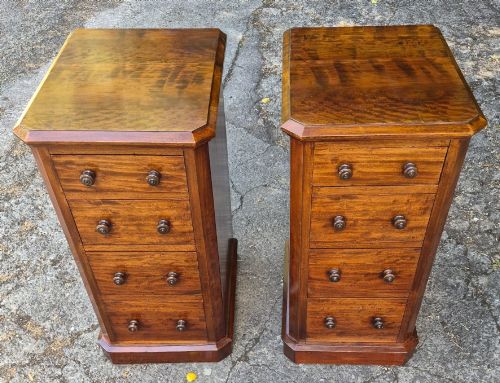
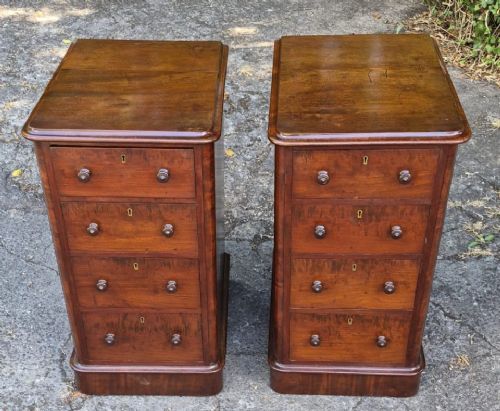
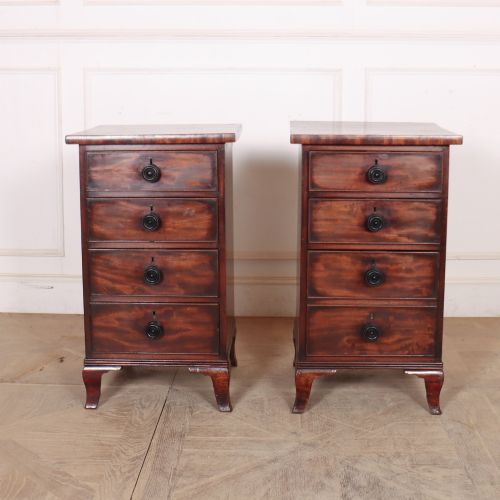
A pair wooden nightstands search reveals matched companions designed to flank a bed, appearing across this selection primarily as Victorian mahogany chests or Edwardian inlaid cabinets. These pieces function as bedside storage and display surfaces, bridging utilitarian storage needs with decorative symmetry.
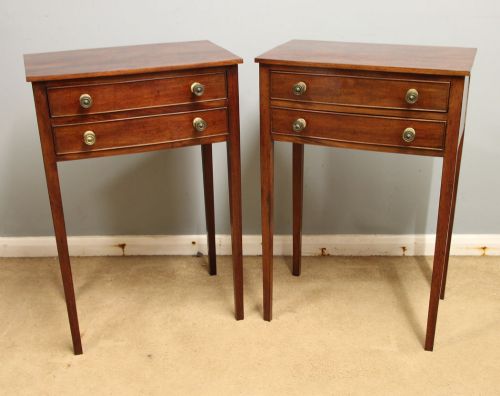
The inventory leans heavily towards nineteenth-century examples and early twentieth-century variations including Georgian style tables and French provincial pieces. Cabinets and chests of drawers dominate the forms, offering enclosed cupboards or stacking drawers alongside open lamp table formats.
How they were made
Cabinetmakers constructed these pieces using solid timbers like mahogany, oak, walnut, and cherrywood, frequently applying decorative veneers such as kingwood and satinwood to visible surfaces. Joinery methods relied on traditional frame and panel construction for cupboards and precise dovetailing for drawer boxes.
Surface ornamentation involved contrasting stringing, marquetry inlay, and wax polishing to highlight the natural grain of the wood. Selected examples incorporate inset marble tops and cast brass hardware, combining durable utility with refined detail.
Pair wooden nightstands occasionally reveal mismatched interior drawer depths, proving that even strict cabinetmakers occasionally miscalculated behind closed doors.
What varies in quality
The distinction between standard production and superior craftsmanship rests on the selection of timber figures, such as highly grained figured walnut or richly toned mahogany. Master cabinetmakers ensured precise symmetry in matched pairs, maintaining consistent grain direction and proportion across both pieces.
Refinement in secondary details elevates a piece, visible in the precision of marquetry inlay, the quality of cast brass mounts, and the integrity of original marble slabs. Structural stability in the drawer runners and door hinges separates everyday utility from enduring cabinet work.
Holland and Sons
The Pair Wooden Nightstands Glossary
- Marquetry
- Decorative patterns formed by fitting together thin slices of wood veneer into designs on a furniture surface. This technique allows intricate floral or geometric ornamentation across tabletops and cabinet doors.
- Pedestal cabinet
- A tall, freestanding cupboard typically supported on a single enclosed base rather than distinct legs. These units offer deep interior storage while maintaining a compact footprint beside a bed.
- Inlay
- A method of ornamenting a wooden surface by embedding pieces of contrasting timber, brass, or shell flush with the surrounding wood. Craftsmen utilise this technique to define borders and panels.
- Kingwood
- A dense, heavily figured exotic timber featuring rich dark brown and golden tones, favoured for high-end French cabinetmaking. Its distinct grain makes it easily recognisable on decorative tables.
- Satinwood
- A durable, lustrous timber with a characteristic golden-yellow sheen used for contrasting stringing and banding on eighteenth and nineteenth-century furniture. It catches light differently depending on the viewing angle.
Pair Wooden Nightstands: Frequently Asked Questions
How do I match antique nightstands to a modern bed?
Matching antique nightstands with a contemporary bed involves balancing wood tones and scale rather than matching exact historical periods. Dark mahogany or warm oak introduces grounding contrast and texture against neutral modern upholstery.
Consider the height of the mattress relative to the tabletop to ensure comfortable access to lamps and nighttime items. Proportions matter more than strict period adherence in a mixed-style interior.
Are marble-topped nightstands practical for daily use?
Marble-topped nightstands provide a resilient, heat-resistant surface that withstands condensation from water glasses and daily wear far better than polished wood. The stone is heavy and securely fitted into the timber frame, offering a stable platform.
Care simply involves wiping the surface with a damp cloth and avoiding acidic liquids that might etch polished marble over time.
How do I distinguish Edwardian nightstands from Victorian ones?
Victorian bedside pieces generally display heavier proportions, darker mahogany timbers, and simpler architectural lines with less surface embellishment. Edwardian examples often feature lighter satinwood inlay, tapered legs, and a brighter overall finish reflecting a shift towards airier interiors.
Examining the internal drawer construction and secondary woods underneath usually confirms the transition from nineteenth-century manufacturing methods to twentieth-century workshop practices.