


Edwardian Style Chests
Edwardian style chests bring architectural proportion and figured timber into a room, offering practical storage disguised as historical revival elegance.
Edwardian Style Chests
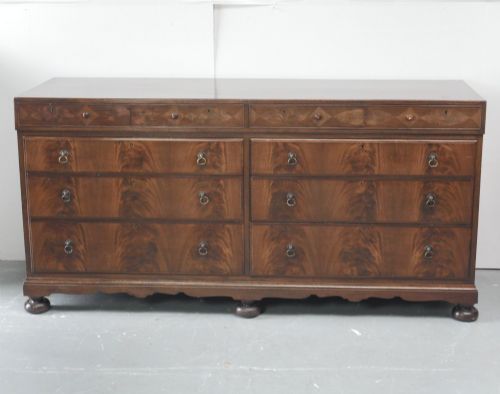
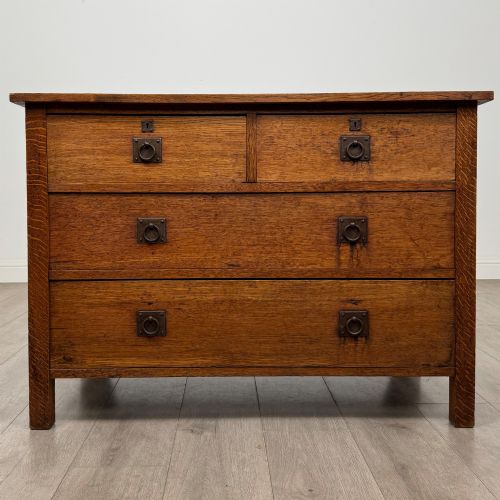
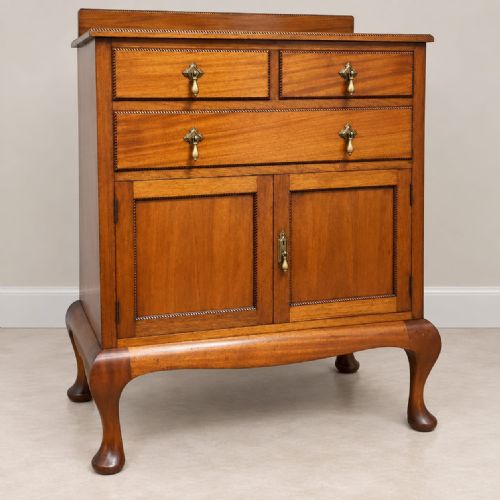
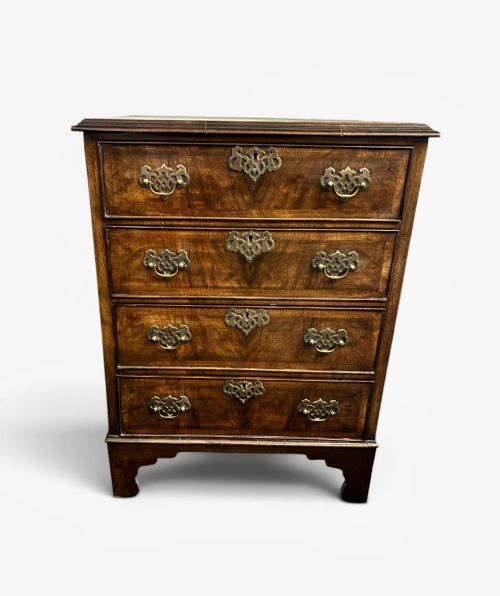
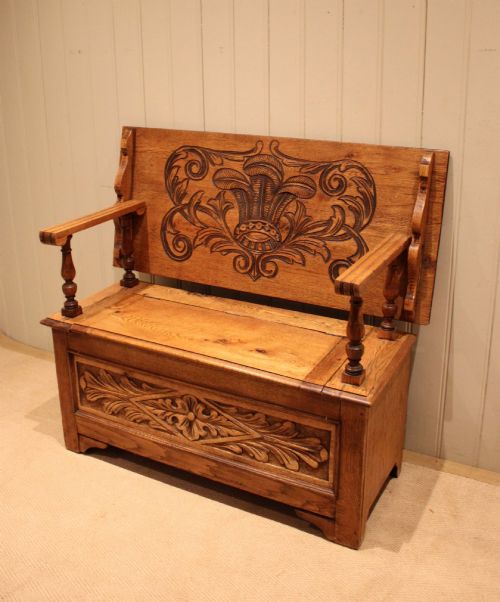
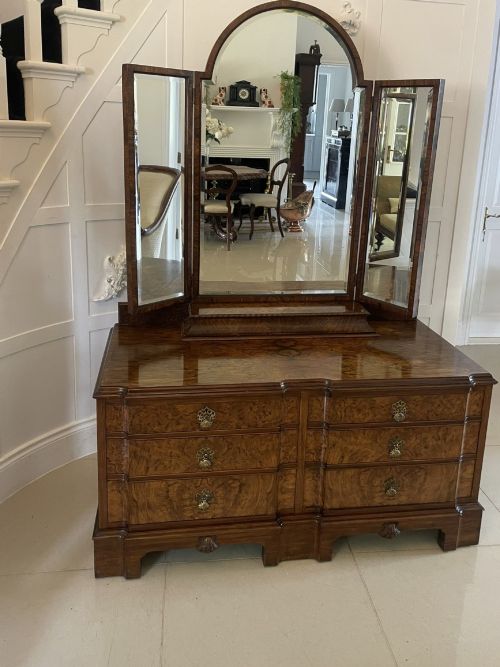
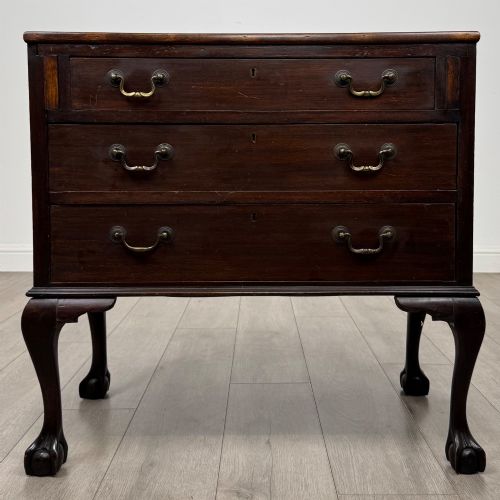
Edwardian style chests represent a continuation of classical forms produced during the early twentieth century and the preceding decades. When searching for Edwardian style chests, buyers encounter pieces drawing heavily on Georgian, Sheraton, and Chippendale vocabularies, alongside functional oak and walnut furniture from the period around nineteen hundred.
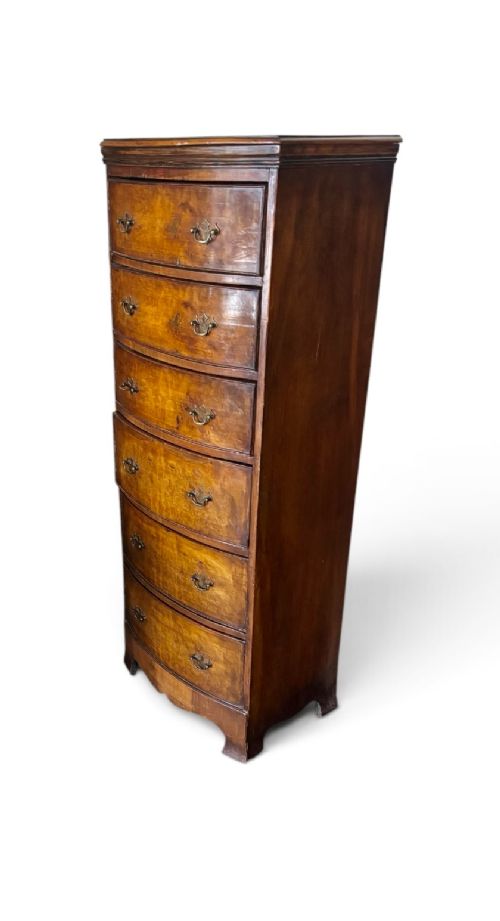
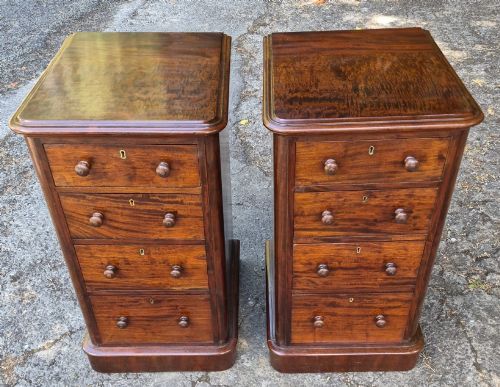
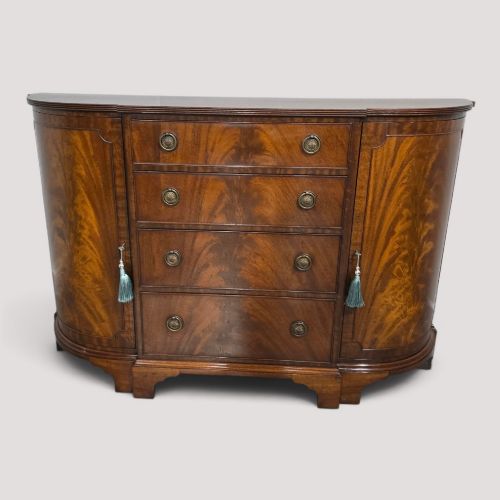
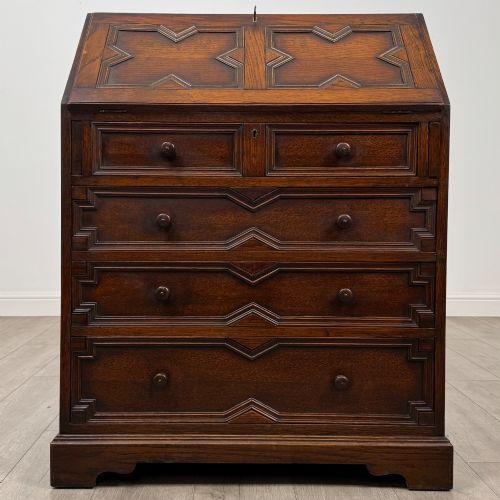
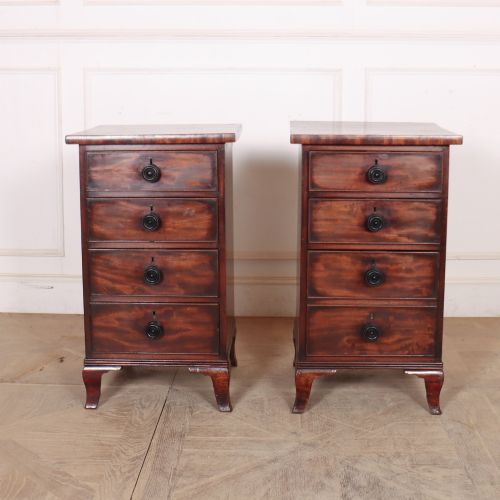
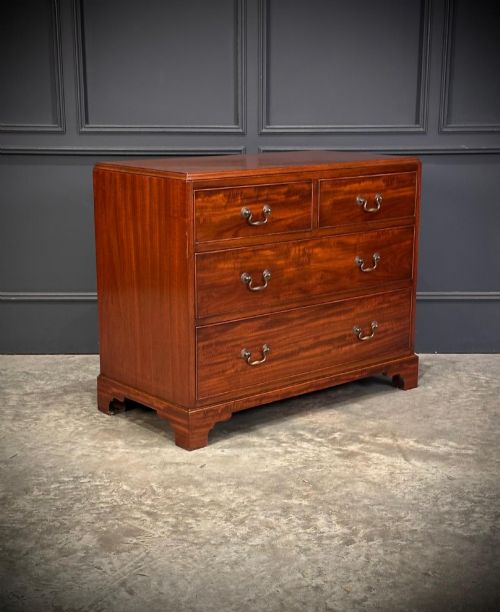
The selection here encompasses standard chests of drawers, tallboys, and bedside pieces executed in mahogany, oak, and figured walnut. Many items incorporate satinwood inlay or revival styling that looks back to eighteenth-century models while fulfilling domestic requirements of the early nineteen hundreds.
Makers and workshops of the era, including established London firms, adapted historical motifs to suit contemporary proportions. These pieces range from modest oak cupboards to substantial bow-fronted commodes and tall chests.
Construction and Materials
Makers utilised solid timbers alongside finely figured veneers, mounting burr walnut, mahogany, and satinwood over stable secondary woods. Surface enrichment frequently involved delicate contrasting stringing and satinwood inlay.
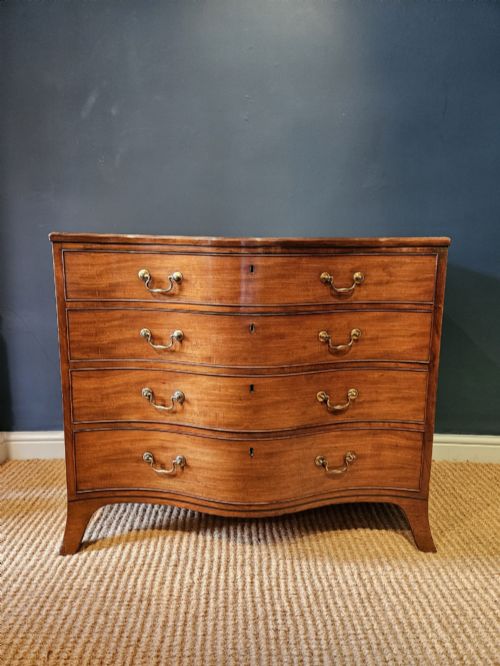
Drawer construction relied on traditional hand-cut dovetails and solid linings, paired with brass handles and escutcheons. Cabinets often combined curved or serpentine frontages with veneered tops, finished with wax or polish to highlight the grain.
Several chests hide their paperwork inside music cabinets and wine coolers, proving the Victorians and Edwardians liked a secret compartment.
Quality and Execution
Quality rests upon the selection of timber veneers, the precision of the inlay work, and the structural integrity of the carcase. Superior examples display symmetrical grain patterns across drawer fronts and crisp execution of revival mouldings.
The competence of the cabinetmaker dictates how drawers run and how joints meet under seasonal movement. Lesser pieces rely on simpler construction and plainer timber, whereas finer commissions incorporate bespoke brass hardware and sophisticated curved silhouettes.
Whytock and Reid·Edwards and Roberts·Druce and Co
The Edwardian Style Chests Glossary
- Tallboy
- A tall chest of drawers standing higher than a standard chest, often combining a set of drawers with an upper cupboard or smaller tier.
- Bow front
- A convex curved cabinet front that projects outward in an arc, frequently seen on mahogany and walnut chests from the revival periods.
- Satinwood inlay
- A contrasting decorative technique where light-toned satinwood is set into the primary timber surface to create geometric or floral patterns.
- Serpentine front
- A cabinet front featuring a concave centre flanked by two convex ends, demanding high skill from the cabinetmaker.
- Linen press
- A large storage piece consisting of an upper section with internal sliding trays enclosed by doors, positioned above a set of drawers.
Edwardian Style Chests: Frequently Asked Questions
What defines an Edwardian style chest?
These pieces combine early twentieth-century manufacturing dates with design idioms borrowed from earlier Georgian, Sheraton, or Victorian periods. They reflect a strong interest in historical revivals while serving domestic storage needs.
Cabinetmakers utilised figured walnut, mahogany, and oak, frequently incorporating decorative satinwood inlay and curved serpentine or bow fronts.
How do I distinguish Edwardian from Georgian originals?
Edwardian interpretations often display secondary woods, construction methods, and hardware characteristic of the early nineteen hundreds, even when copying eighteenth-century proportions. Timber selection and internal linings provide reliable clues to the actual date of manufacture.
Revival pieces also tend to exhibit specific surface finishes and standardised brasses typical of commercial workshops active around nineteen hundred.
Where were these chests placed in the home?
Bedrooms, dressing rooms, and formal landings accommodated these chests and tallboys for storing clothing and household linens. Smaller bedside tables and commodes sat adjacent to sleeping quarters.
Their decorative cabinetwork allowed them to function equally as display surfaces in reception rooms.
How should I care for figured walnut surfaces?
Protect veneered furniture from direct sunlight and dramatic shifts in room humidity to prevent timber movement and fading. Regular dusting with a soft, dry cloth preserves the polished finish.
Occasional application of appropriate wax feeds the timber without building up excess residue on the grain.