

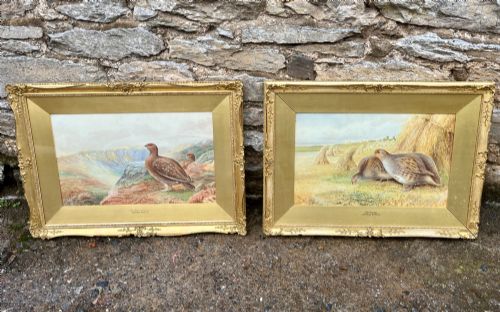


Pair Vintage Watercolours
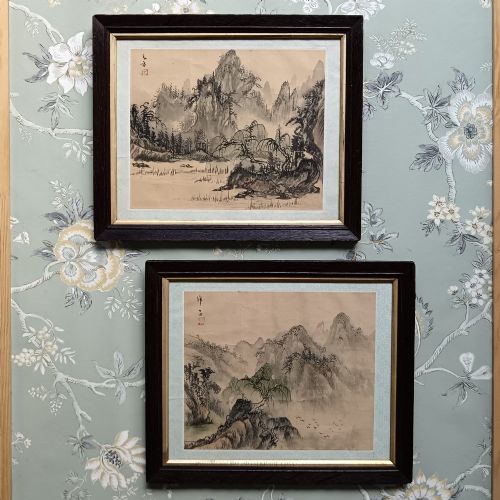
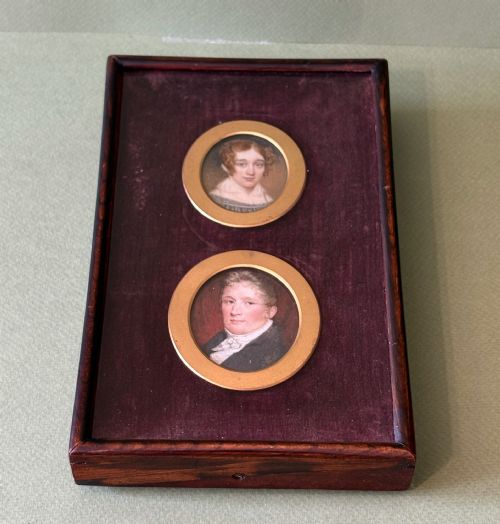
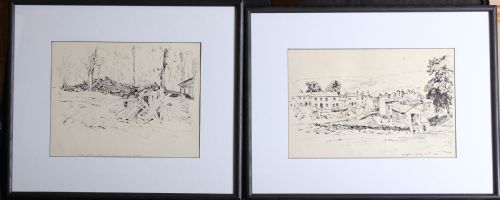
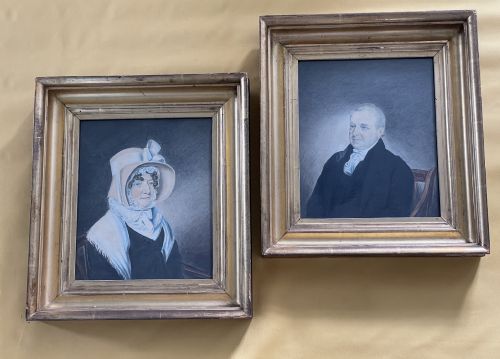
These pair vintage watercolours deliver symmetry to wall displays, offering paired landscape, portrait, and sporting scenes mounted in period frames.
Pair Vintage Watercolours
When you search for pair vintage watercolours, you encounter dual companion pieces created as matching sets by artists documenting landscapes, portraits, and genre scenes. These works originate from periods spanning the Georgian era through the mid twentieth century, encompassing British, American, French, and Asian artistic traditions.
You are most likely to meet landscape views, character portraits of children and adults, and sporting depictions of dogs or game birds. These compositions often arrive housed in original wooden, ebonised, or gilt wood frames beneath protective glass layers.
The subjects range from tranquil rural moorlands and coastal harbours to intricate silk paintings and miniature portraits. Each matching set preserves a unified vision from the hand of a single creator or coordinated school.
Materials and construction methods
Artists painted these works primarily using watercolour pigment, gouache, and ink applied directly onto prepared paper or delicate silk surfaces. Some early examples incorporate fine gold leaf accents to highlight specific pictorial details within the composition.
Makers housed these paintings behind glass within custom wooden frames, utilising traditional joinery and ebonised finishes to protect the fragile paper substrates from environmental damage over the decades.
Materials documented across the inventory include paper, silk, glass, wood, and gold leaf.
Evaluating the standard of execution
The distinction between tiers rests upon the precision of brushwork and the stability of the pigment against fading. Superior examples maintain crisp lines and vibrant colour tones across both companion pieces without heavy foxing or moisture staining on the paper.
The integrity of the framing also influences the overall standard, as original matching wood or gilt frames preserved in clean condition elevate the pairing. Hand-signed sheets by documented artists generally indicate a higher level of compositional ambition.
Fred Lawson·George Rankin·F.J. Snell·Alfred George Morgan·Ernest Uden·George Whyatt·Sidney James Beer·Nora Cundell·Leslie Rackham·John Sanderson Wells·AJ Thornton·Karl Feiertag·Arthur Alfred Davis·Leon Girardet·WD Scull·M.K Rhodes·Frank Dadd·Gordon Meadows·T Fairfax
The Pair Vintage Watercolours Glossary
- Diptych
- A pair of painted or carved panels associated together as a single artwork. These matched watercolours display connected themes or mirrored compositions.
- Gouache
- An opaque watercolour paint consisting of pigment mixed with a water-binding agent and white filler. This medium provides heavier coverage and solid areas of colour.
- Foxing
- Brown spots or patches appearing on old paper caused by chemical reactions in the pulp. This common ageing process affects paper durability and visual clarity.
- Ebonised
- Wood finished to resemble ebony through dark staining or painting techniques. This treatment appeared frequently on nineteenth century picture frames.
Pair Vintage Watercolours: Frequently Asked Questions
How should I protect vintage watercolours from light damage?
Watercolour pigments and paper substrates remain sensitive to ultraviolet radiation from direct sunlight, which causes fading and discoloration over time. Displaying them away from bright windows preserves the original colour intensity.
Utilising conservation grade framing materials and UV-filtering glass provides an additional layer of protection against environmental deterioration.
Are these paintings executed on paper or card?
Most of these works utilise traditional rag paper as a flexible base for water-soluble pigments and ink applications. Some specific Asian examples employ stretched silk instead of paper surfaces.
Heavier weight papers and boards offered artists adequate durability to support wet washes without excessive warping or structural failure.
How do I identify the period of the framing?
Original frames often display period construction methods, such as corner mitres joined with wooden slip blocks and aged backing boards secured with old nails. Gilt wood and ebonised finishes show authentic wear patterns consistent with age.
Replacing historical frames risks removing part of the object's provenance, making original housing particularly desirable for collectors.