
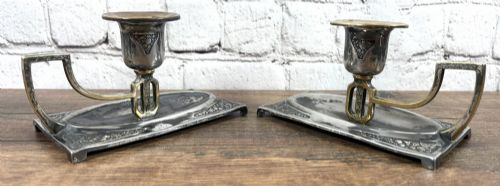
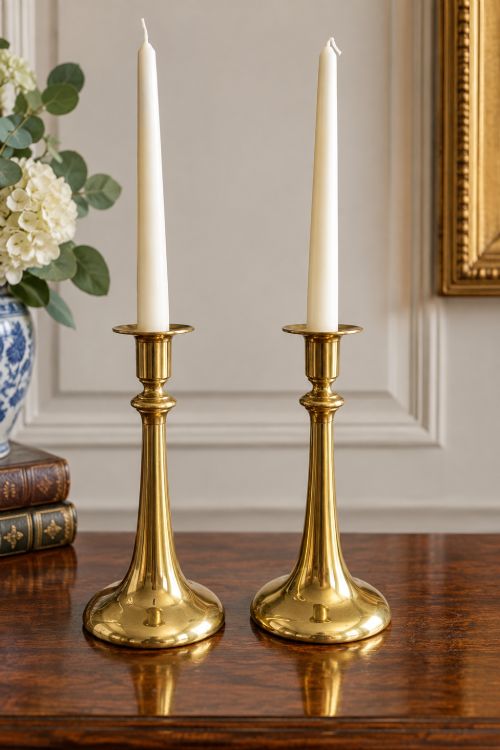
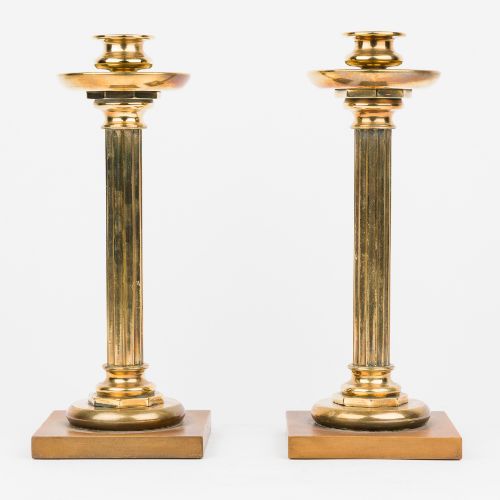
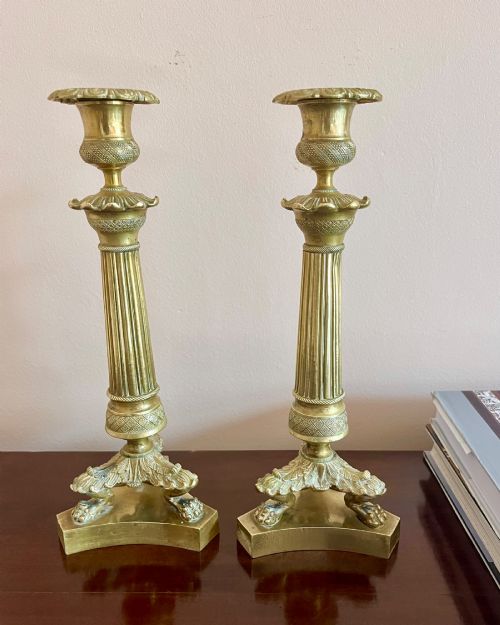

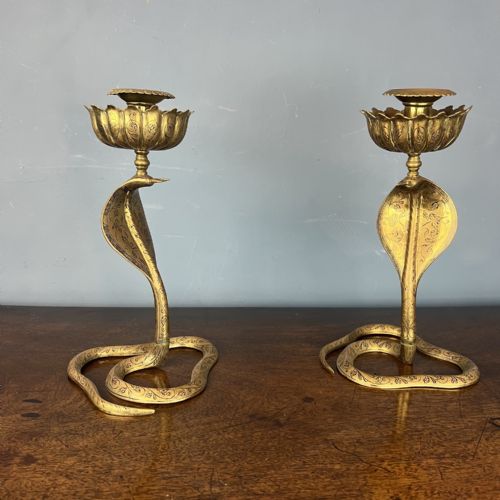
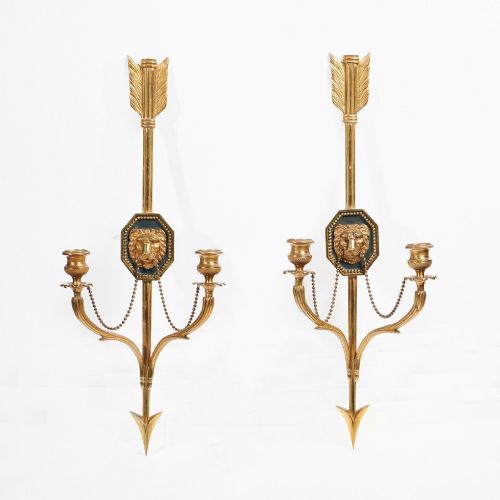
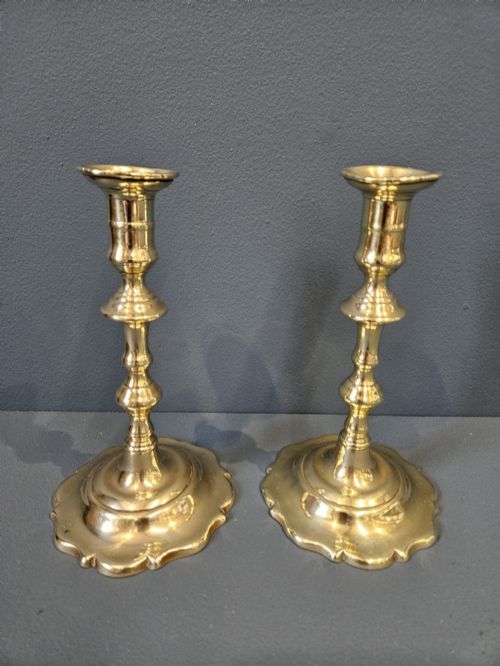
Pair Vintage Brass Holders
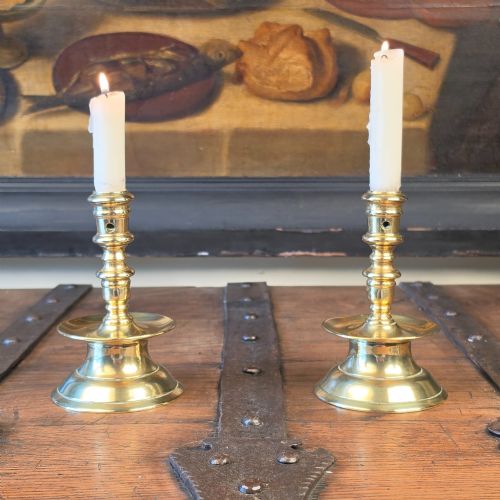
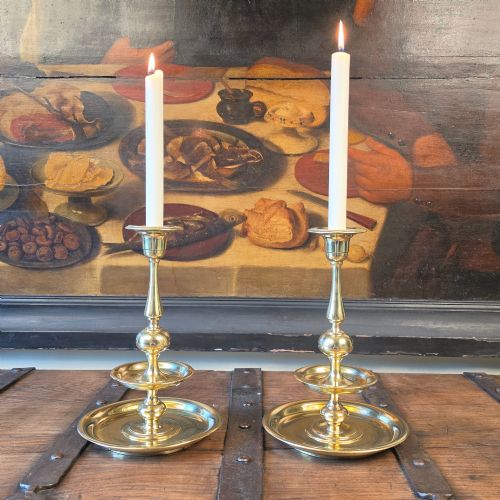
These pair vintage brass holders bring instant warmth and period character to a room, offering both practical illumination and sculptural presence.
Pair Vintage Brass Holders
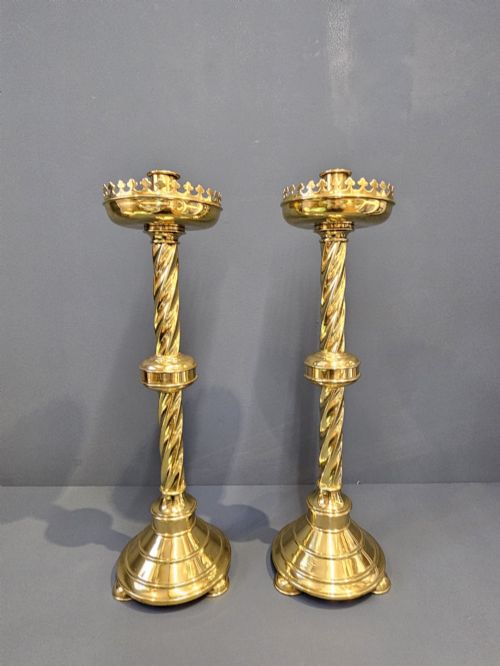
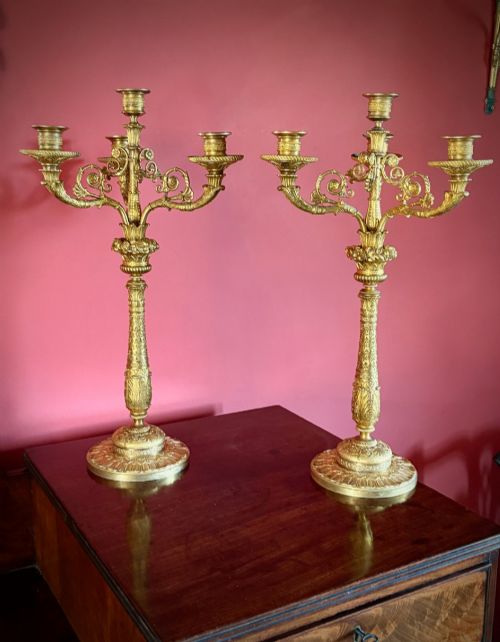
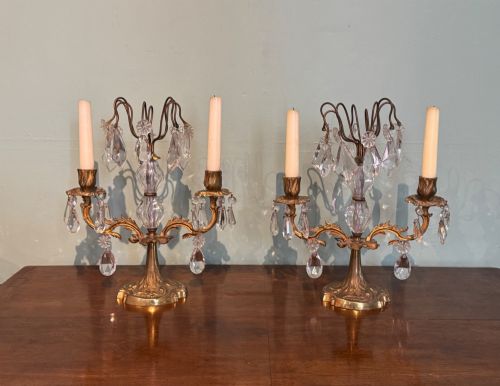
When you search for pair vintage brass holders, you examine a diverse group of lighting objects spanning several centuries, including tall church examples, domestic chambersticks, and multi-armed candelabra.
The versions you meet most frequently on this page date from the Victorian era and the nineteenth century, alongside Georgian and early twentieth-century designs.
These items take various forms such as wall sconces, ejector candlesticks with internal mechanisms for pushing out remnants, and ornate French or Gothic revival styles.
Method and Material
Many early examples utilise seamed brass construction, where sheet metal was rolled and joined before being attached to cast bases.
Heavier items employ traditional sand casting in brass, bronze, or ormolu, often finished with chased detail and parcel gilding.
Some decorative variations incorporate contrasting elements such as champleve enamel, onyx, glass, copper, and patinated metal.
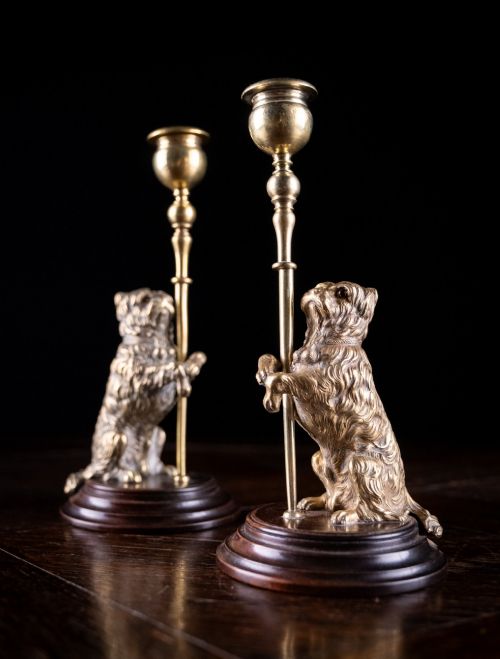
Standing terrier dogs occasionally hold the light, proving that even utilitarian brass could join in on Victorian whimsy.
Distinctions in Standard
Quality rests upon the crispness of the casting and the depth of the hand-chasing, which separates mass-produced items from finely worked studio or foundry pieces.
The integrity of the material, proper weight, and proportional balance define superior examples, whereas lesser items often feel light or mechanically uniform.
J.T. & Co
The Pair Vintage Brass Holders Glossary
- Ejector candlestick
- A domestic holder fitted with an internal spring or sliding lever to push out the remaining wax stub. This clever mechanism made clearing and resetting the light much cleaner.
- Champleve
- An enamelling technique where troughs are dug into the metal surface and filled with vitreous colour before firing. It creates rich decorative patterns against the brass.
- Ormolu
- Finely ground high-purity gold applied to a bronze base using a mercury amalgamation method. This technique produces a brilliant, enduring metallic sheen.
- Pricket
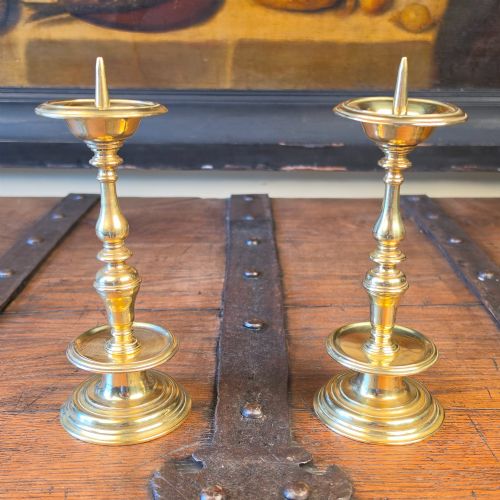
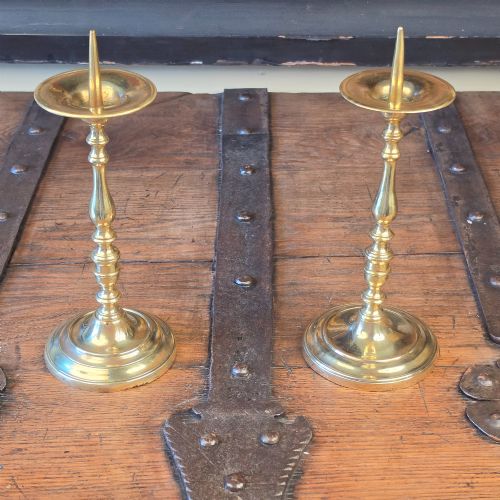
- A sharp metal spike set in the centre of a holder to impale large candles. These are commonly found on church altars and ecclesiastical pieces.
- Chamberstick
- A short candlestick mounted on a wide drip-pan with a loop handle. It was carried by hand to light the way through dark hallways at night.
Pair Vintage Brass Holders: Frequently Asked Questions
How do I clean old brass holders?
Maintenance requires gentle dusting and occasional wiping with a soft cloth to preserve the natural patina accumulated over decades. Aggressive chemical polishes strip away the aged surface that collectors value.
Avoid scrubbing engraved or chased details where dark residues highlight the maker's handiwork. A light application of microcrystalline wax can protect the metal from further oxidation.
What is an ejector mechanism?
An ejector mechanism uses an internal sliding stem operated by a small side knob to raise the remaining wax out of the socket. This practical addition prevented burnt fingers and stubborn wax build-up.
Such devices are strongly associated with nineteenth-century domestic production and remain a mark of functional utility.
Are these items safe for modern candles?
Most antique sockets were designed for narrower taper candles than standard modern ones. Forced fitting can crack fragile metal or create an unstable flame.
Checking the interior diameter before use ensures the light sits securely upright without leaning.
How do I date a brass candlestick?
Dating relies on manufacturing clues such as seamed construction lines, base weights, and stylistic indicators like Georgian petal feet or Victorian ornamentation. Heavy sand casting typically points to earlier periods.
Comparing turnings, thread types, and wear patterns against dated benchmark examples helps confirm the era of origin.