
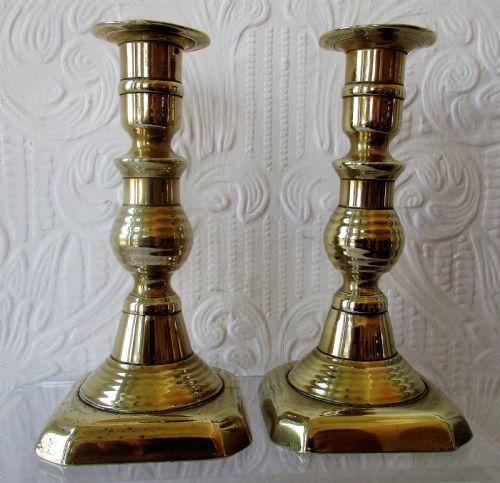


Victorian Baluster Candle Holders
Victorian baluster candle holders are robust brass and silver light fittings shaped with traditional columnar profiles that bring period character to any mantelpiece.
Victorian Baluster Candle Holders
When you search for Victorian baluster candle holders, you encounter sturdy English metalware and treen designed to support tallow or wax candles securely. The selections span standard household candlesticks alongside occasional two-light candelabra.
Brass examples dominate the listings, frequently shaped with the characteristic swelling baluster column seen throughout the nineteenth century. These pieces emerge from periods including the eighteen-sixties, eighteen-eighties, and eighteen-nineties.
Alongside standard brass and sterling silver work, variations incorporate bronze church designs and dense lignum vitae treen. Certain pairings blend brass stems with ceramic elements under Aesthetic Movement influences, reflecting broader nineteenth-century design shifts.
How they were made
Makers utilised heavy cast brass, bronze, and sterling silver to form the structural body and weighted base of each candlestick. Metal components often combine cast sections with turned elements, ensuring proper stability for the candle nozzle.
Treen alternatives rely on dense hardwoods like lignum vitae, shaped cleanly on a lathe to create the classic baluster silhouette. Ceramic inserts and details appear alongside metalwork in specific Aesthetic Movement items.
Design styles represented across the items include standard Victorian, Gothic Revival, and the Aesthetic Movement.
What varies in quality
The degree of crispness in the cast detail and the proportional harmony of the baluster shaft define the better pieces. Heavy metal gauge and solid construction distinguish standard utilitarian items from more ambitious decorative examples.
The integration of mixed materials, such as ceramic alongside brass, demonstrates greater design ambition during the nineteenth century. Surface finish and the preservation of original patination also influence the overall character of the piece.
The Victorian Baluster Candle Holders Glossary
- Baluster
- A turned vertical column with a swelling profile, commonly used as the main stem of a candlestick.
- Candelabra
- A branched lighting fixture designed to hold multiple candles simultaneously on a single base.
- Aesthetic Movement
- A nineteenth-century design style emphasising visual beauty and artistic reform across decorative objects.
- Gothic Revival
- An architectural and decorative style drawing inspiration from medieval forms.
Victorian Baluster Candle Holders: Frequently Asked Questions
What are Victorian baluster candle holders?
These pieces are nineteenth-century lighting supports featuring a distinctive swelling column profile. They are constructed primarily from brass, sterling silver, bronze, and lignum vitae.
Most items appear in matched pairs and date from the mid to late nineteenth century. They served a functional role in lighting rooms before widespread electricity.
How were these candle holders used?
Households placed them on tables, sideboards, and mantelpieces to provide movable illumination throughout living spaces. The heavy bases prevented accidental tipping during use.
Candle sockets caught dripping wax while allowing the light to be carried by hand from room to room. Larger two-light candelabra provided fixed illumination for dining tables or formal parlours.
How do I date these items?
Dating relies on stylistic shifts, material combinations, and occasional hallmarking on silver pieces. Brass examples often display manufacturing traits typical of the eighteen-sixties through to the eighteen-nineties.
The introduction of Aesthetic Movement ceramics or Gothic Revival motifs helps narrow the production window. Examination of casting seams and base construction provides further clues to the manufacturing decade.
How do I care for brass candlesticks?
Maintain the metal surfaces by dusting regularly with a soft cloth to prevent grime accumulation. Avoid aggressive chemical polishes that strip away the desirable historic patination.
Keep the items away from excessive moisture to protect any iron weighting or wooden components concealed within the base. Allow the metal to retain its natural aged appearance over time.