






Pair Victorian Side Cabinets
Pair victorian side cabinets bring symmetry and rich nineteenth-century timber grain to a room, offering practical storage alongside period character.
Pair Victorian Side Cabinets
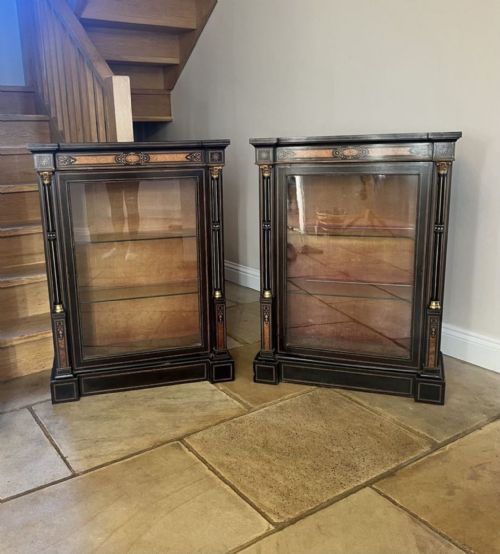
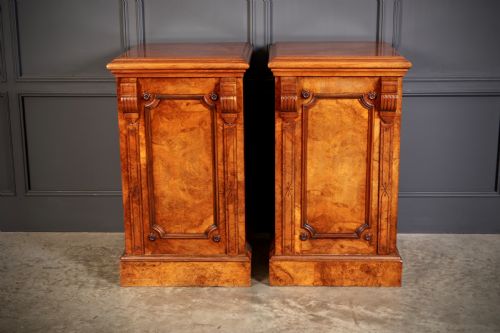
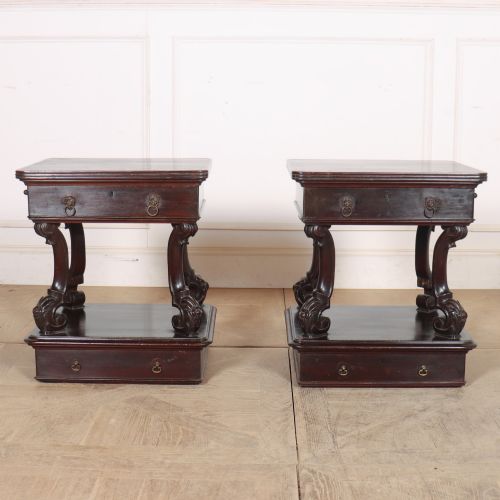
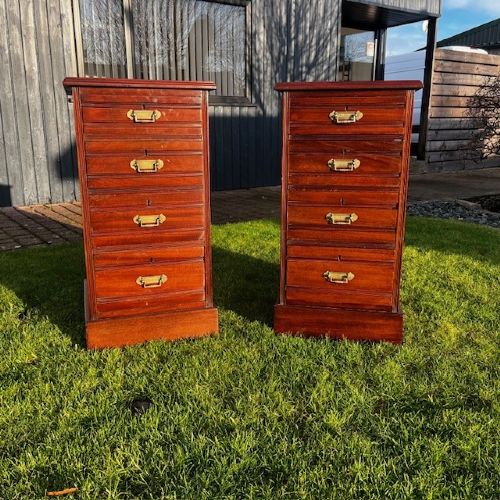
When searching for pair victorian side cabinets, a buyer encounters dual matching storage furniture spanning bedside chests, pier cabinets, and larger pedestal cupboards created during the nineteenth century.
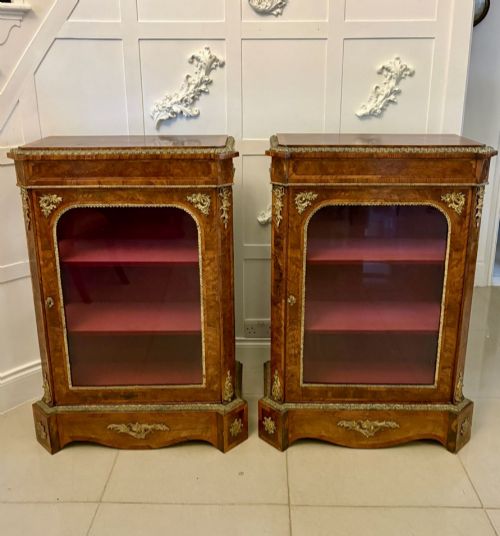
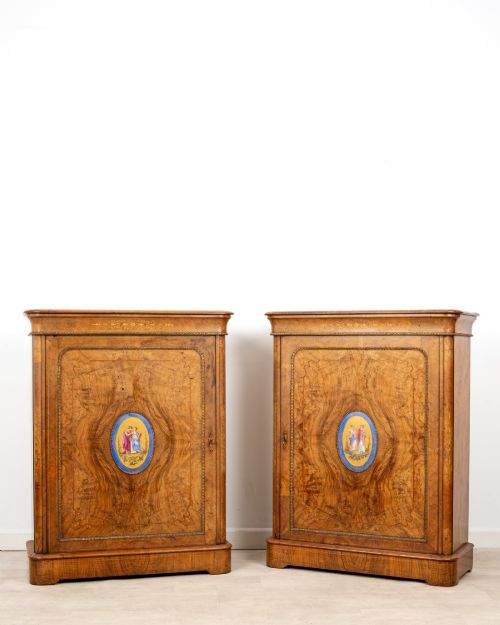
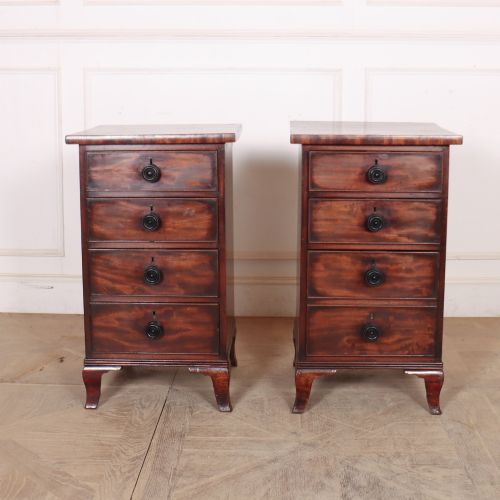
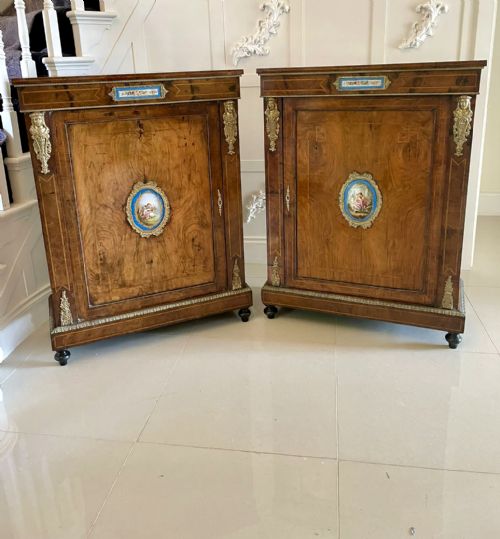
The most frequent examples on this page are matched pairs of bedside cabinets and pier cabinets fashioned from rich timbers like burr walnut and mahogany, often featuring marquetry or porcelain plaques.
These items originate primarily from the Victorian era, alongside occasional French revival and Regency influenced designs that reflect the decorative tastes of the period.
How they were made
Cabinet makers utilised dense native and exotic hardwoods, constructing carcasses from mahogany, walnut, or rosewood, and applying highly figured burr walnut or amboyna veneers to visible surfaces.
Decorative enrichment relied on contrasting materials, incorporating cast ormolu mounts, brass handles, inlaid ebonised wood, and painted porcelain plaques set directly into the timber doors.
Joinery techniques combined traditional cabinet construction with hand-cut dovetails for drawers and intricate marquetry detailing, frequently finished with French polish.
Listings feature nineteenth-century woods including mahogany, burr walnut, rosewood, amboyna, and pine.
What varies in quality
The degree of refinement in timber selection separates standard utility pieces from exhibition grade examples, particularly the depth of figure in burr walnut veneers and the crispness of hand-carved details.
Construction fidelity dictates longevity, seen in whether drawers retain hand-cut joinery and whether doors align precisely within their frames without warping over time.
The sophistication of secondary ornamentation, such as fire-gilt ormolu mounts rather than plain brass, and finely executed marquetry inlay, defines the upper tier of the range.
The Pair Victorian Side Cabinets Glossary
- Pier cabinet
- A low freestanding cabinet designed to fit against the narrow wall space between windows during the nineteenth century.
- Marquetry
- Decorative veneer work arranged in geometric or floral patterns using contrasting woods.
- Ormolu
- Gilded bronze ornamentation applied to furniture fronts and corners for decorative contrast.
- Ebonised
- Wood treated with a dark stain or finish to imitate expensive ebony.
Pair Victorian Side Cabinets: Frequently Asked Questions
Are these cabinets truly matching pairs?
Many examples survive as original matching pairs made together in the workshop, sharing identical timber grain and proportions. Others are assembled close pairs where two individual cabinets match closely in style and period.
Examining the internal construction and timber characteristics helps determine whether the pieces originated side by side.
Where were these cabinets placed in homes?
Smaller variations functioned as bedside tables, lamp stands, or pot cupboards within bedrooms. Larger side cabinets and credenzas stood in drawing rooms and dining parlours to display porcelain and store dining accessories.
Their symmetrical nature made them versatile for flanking fireplaces, doorways, or windows.
How can I identify Victorian timber choices?
Victorian cabinet makers favoured dense hardwoods that displayed dramatic natural grain patterns. Mahogany and rosewood provided deep reddish-brown tones, while burr walnut offered swirling, highly decorative figured surfaces.
Exotic accents like satinwood, kingwood, and ebonised details were frequently combined to create visual contrast on panelled doors.