


Pair Victorian Glass Goblets
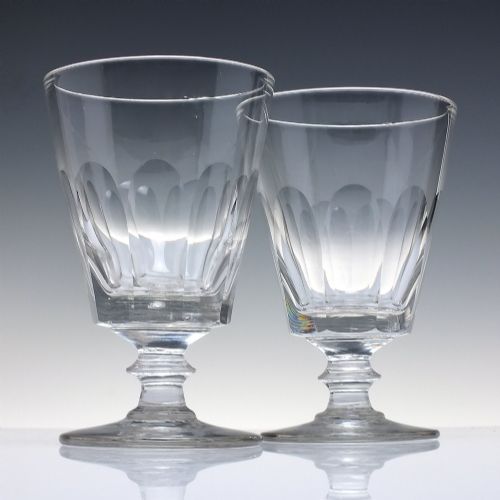
These pair victorian glass goblets are heavy lead crystal drinking vessels and decorative table pieces that bring genuine nineteenth-century weight and colour to a dining room.
Pair Victorian Glass Goblets
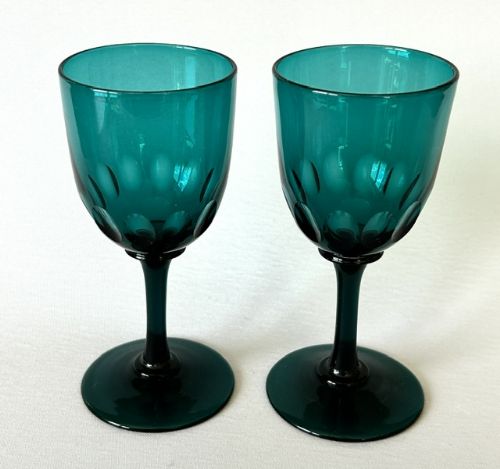
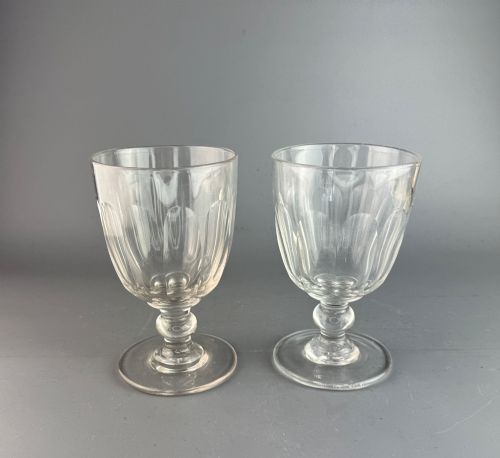
When you search for pair victorian glass goblets, you encounter matched sets of drinking vessels and display glasses dating primarily from the mid to late nineteenth century. The selection spans robust English rummers alongside richly coloured continental pieces from Bohemia and Italy.
The form stretches from tall wine glasses and dessert wines to large ceremonial rummers designed for heavy daily use or display. Clear lead crystal examples sit alongside vibrant green, aqua, and blue specimens produced during the height of Victorian manufacturing.
How they were made
The foundation of these vessels lies in lead glass and clear or coloured blown glass, shaped by hand at the furnace. Molten metal was gathered, blown into form, and joined to stems and feet while hot.
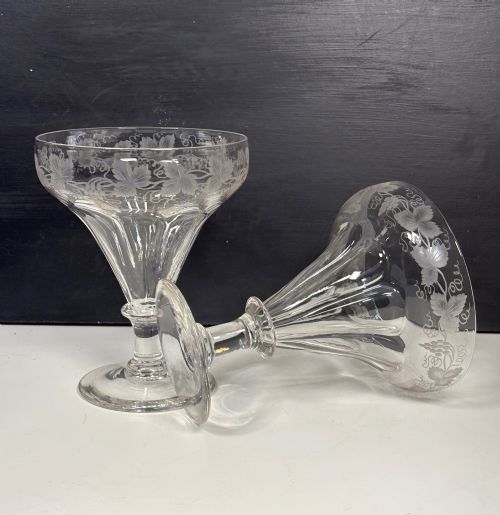
Decoration relied on deep wheel cutting, acid etching, and surface engraving to catch the light. Continental workshops added further complexity through gold leaf gilding, figurative enamelling, and layered cased glass techniques.
Listings feature items spanning the Victorian era, specifically drawing from decades between 1850 and 1900 in clear glass, lead crystal, and coloured variations.
What varies in quality
Quality reveals itself in the clarity of the metal and the precision of the hand-cut facets. Sharply defined wheel cuts and clean, distortion-free glass distinguish superior work from simpler moulded pieces.
Weight and balance matter significantly in matching pairs, where uniform wall thickness and identical height demonstrate the skill of the original blower and cutter.
Salviati·Stevens & Williams
The Pair Victorian Glass Goblets Glossary
- Rummer
- A large, heavy-stemmed drinking glass popular in the nineteenth century for ale, wine, or punch. These sturdy vessels often feature bucket bowls and thick feet.
- Lead Crystal
- Glass containing substantial lead oxide, which increases weight, brilliance, and resonance. This material allows for deep, crisp facet cutting.
- Cased Glass
- Glass made by fusing two or more distinct layers of different coloured glass together before shaping. Subsequent cutting through the outer layer reveals the contrasting colour underneath.
- Acid Etching
- A decoration technique utilising acid to eat away exposed areas of the glass surface through a resist. This creates frosted or matte designs with fine detail.
- Venetian Revival
- A nineteenth-century style drawing inspiration from historic Renaissance Venetian glassmaking traditions. Pieces often incorporate delicate canes, coloured threads, or intricate applied details.
Pair Victorian Glass Goblets: Frequently Asked Questions
What were pair victorian glass goblets used for?
These large glasses served various table functions, from formal wine service to hearty portions of ale and spirits during nineteenth-century dining. Their generous proportions suited the heavier drinks and social customs of the period.
Over time, many transitioned from functional tavern and dining ware into decorative display pieces valued for their colour and weight.
How can I tell if glass is Victorian?
Examine the base for a pontil mark where the glassblower's rod was snapped off and subsequently ground smooth, which is typical of nineteenth-century production. The weight of the lead crystal and the specific depth of the hand-cutting also point directly to this era.
Colour offers another clue, as specific hues like aqua green and uranium green were widely produced during the Victorian decades.
Are these goblets safe for drinking wine?
Most nineteenth-century lead crystal and glass goblets remain entirely usable for beverages today, provided they are washed by care. Inspect the rim and interior to ensure no historical damage compromises the drinking edge.
Historic lead glass can leach trace amounts of lead over very long periods if acidic liquids are stored in them, but casual use for dinner service presents minimal concern.