




Pair Tall Plant Stands
These pair tall plant stands elevate greenery and display sculpture with vertical presence, drawing the eye upward in traditional interiors.
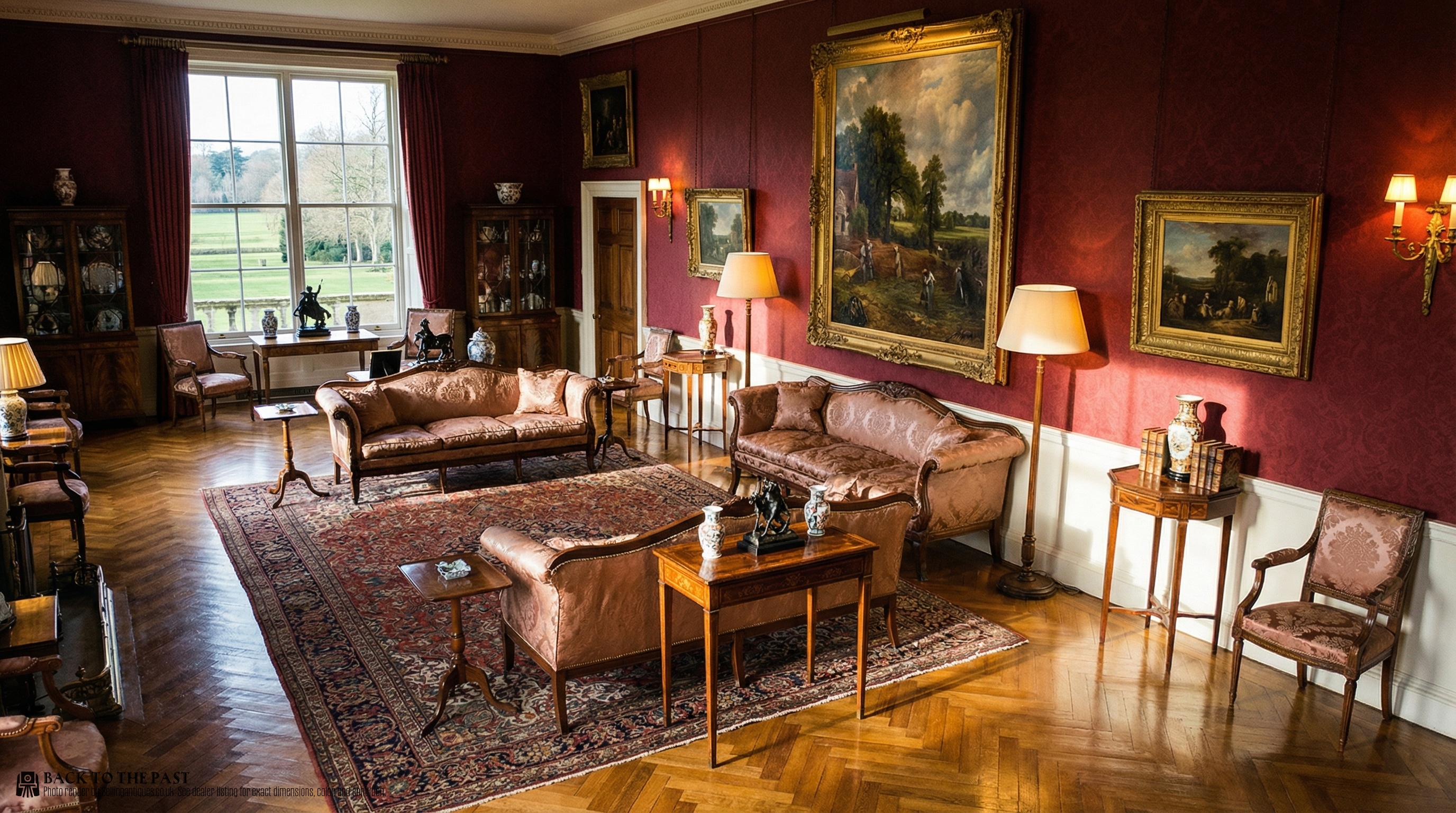
Pair Tall Plant Stands
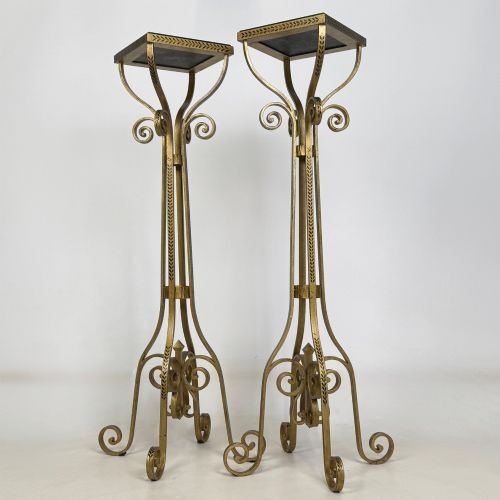
A pair tall plant stands brings symmetrical balance to rooms, designed originally to support heavy jardinieres, urns, or decorative busts. The selection relies heavily on nineteenth-century craftsmanship, alongside Edwardian and 1920s examples.
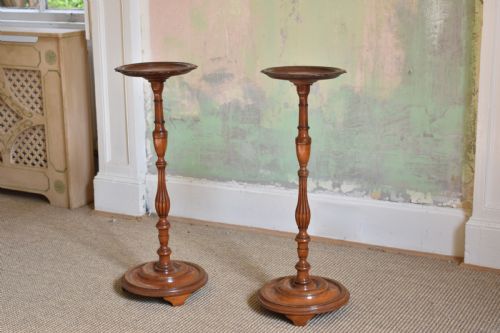
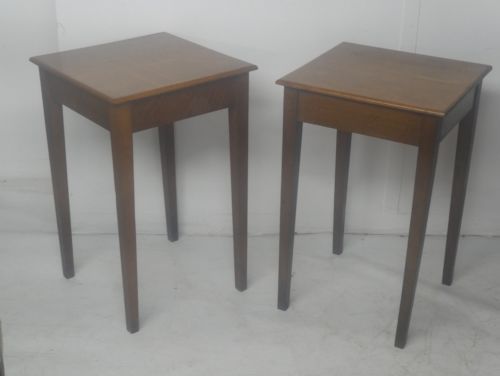
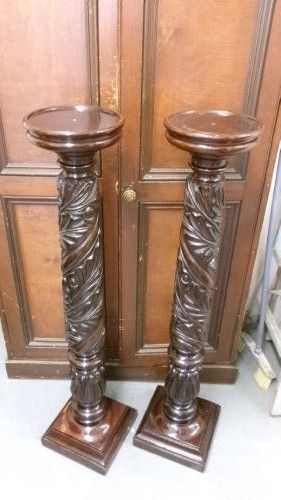
Forms span slender torchieres, fluted columns, and tiered pedestals alongside occasional tables suited for corner placement. Buyers frequently encounter mahogany, walnut, and oak constructions reflecting Victorian and neoclassical design influences.
How they were made
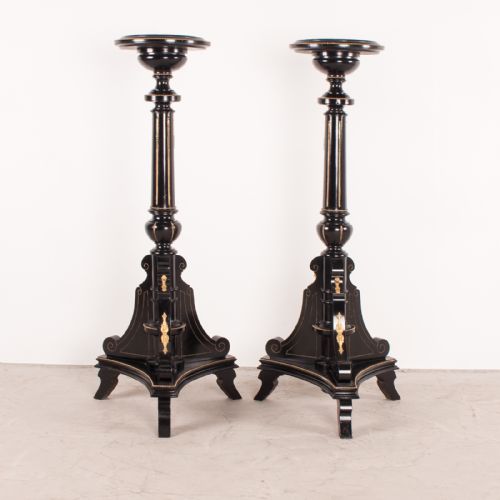
Cabinetmakers utilised dense timbers such as mahogany, walnut, and hardwood, often employing satinwood inlay, gesso, or ebonisation to enrich the surface. Structural stability in tall, slender forms demanded expert joinery and weighted bases.
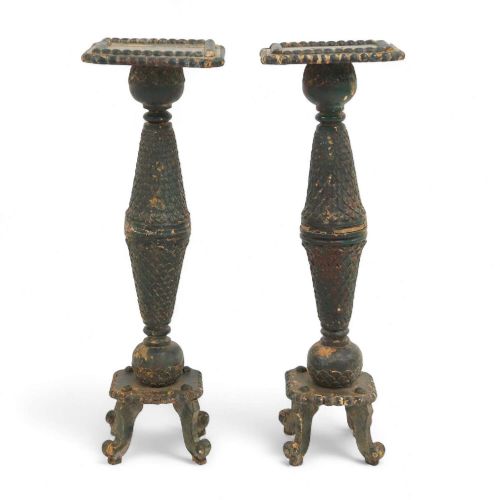
Decorative elements incorporate carved wood details, brass mounts, and inset marble or alabaster tops designed to resist moisture from potted plants. Regional variations introduce painted finishes, original green paint, and mother-of-pearl inlay.
Some nineteenth-century makers evidently expected botanical enthusiasm to involve minor spills, installing cool slabs of alabaster and marble on top.
What varies in quality
Proportion and stability dictate worth in tall furniture, where slender columns must support weight without swaying. Refined carving, crisp inlay work, and genuine marble or alabaster tops elevate standard utility pieces into masterworks of interior display.
The Pair Tall Plant Stands Glossary
- Torchere
- A tall, slender stand originally designed to carry a candle or lamp. These elevated forms now frequently support floral displays or sculptural busts.
- Jardiniere
- An ornamental pot or stand for holding plants or flowers. They often feature moisture-resistant stone tops to protect the underlying timber.
- Pedestal
- A structural support column used to elevate urns, figures, or decorative objects. They appear in carved wood, plaster, and cast brass.
- Inlay
- A decorative technique where contrasting materials like satinwood or mother-of-pearl are inserted into recesses in the primary wood surface.
Pair Tall Plant Stands: Frequently Asked Questions
How were pair tall plant stands used?
These tall stands served primarily to elevate potted plants, heavy urns, and sculptural busts above floor level to catch the light in nineteenth-century drawing rooms and conservatories.
Positioned in corners or flanking doorways, they provided balanced symmetry and protected delicate flooring from damp terracotta pots.
How do I style them at home?
Place matching stands symmetrically on either side of a fireplace, sideboard, or large window to create a formal focal point in a room.
Keep the items displayed on top balanced in scale, pairing trailing plants with heavier ceramics or bronzes.
What woods are most common?
Mahogany and walnut dominate nineteenth-century and Edwardian examples, offering the necessary structural density for tall, slender stems.
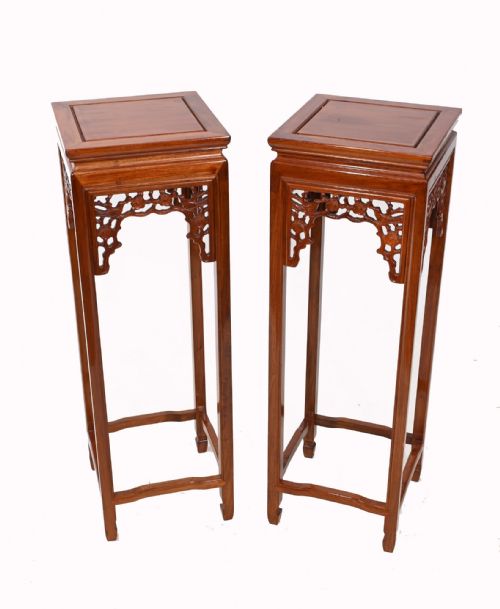
Oak, satinwood, and exotic hardwoods like hongmu also appear frequently, often enhanced with brass mounts or marble tops.
How do I identify Edwardian stands?
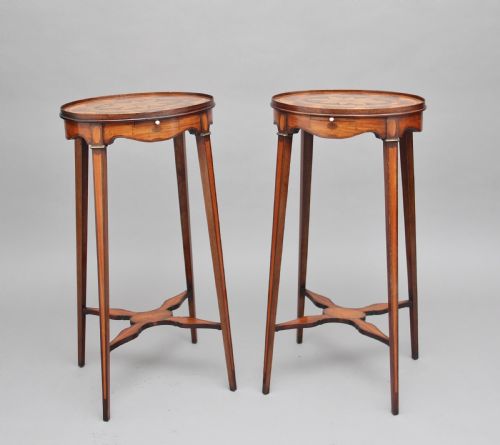
Edwardian examples often feature lighter satinwood inlay, Sheraton revival motifs, and refined mahogany frames dating around the turn of the twentieth century.
They generally display more delicate proportions compared to heavier, darker Victorian counterparts.