
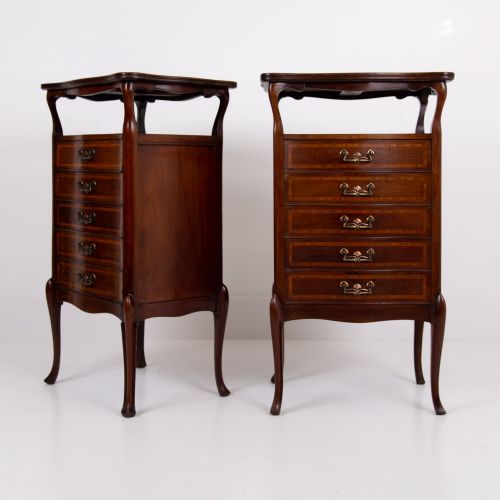

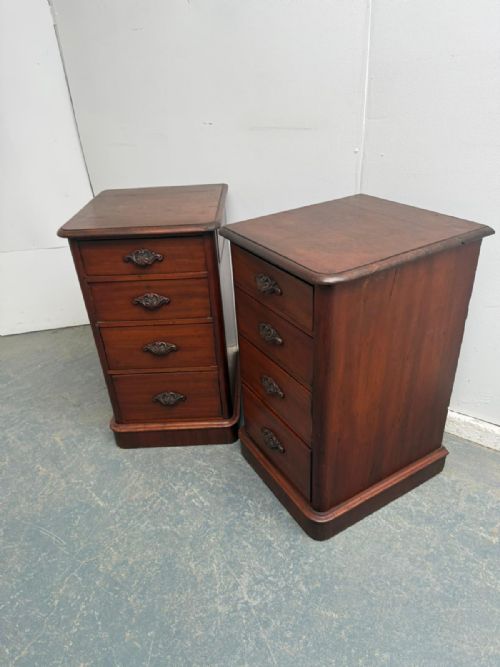
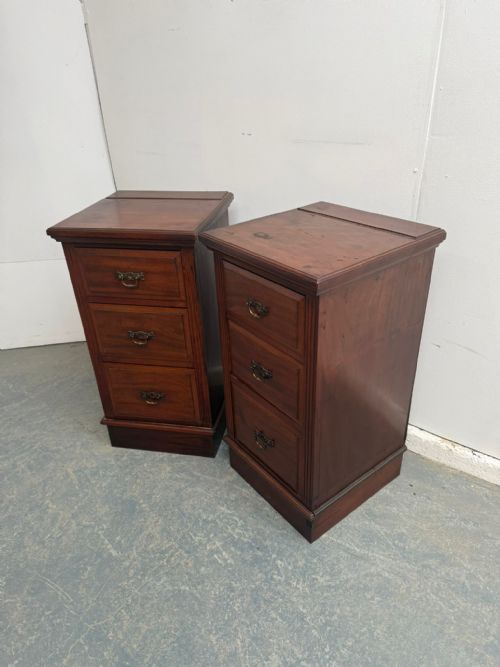
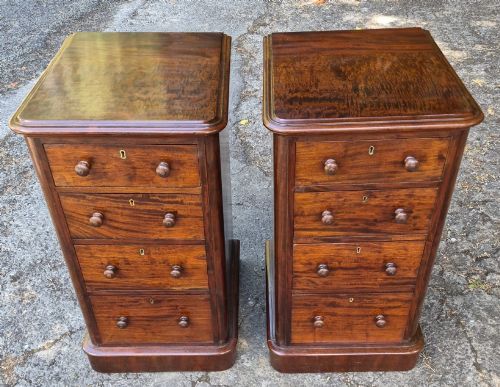


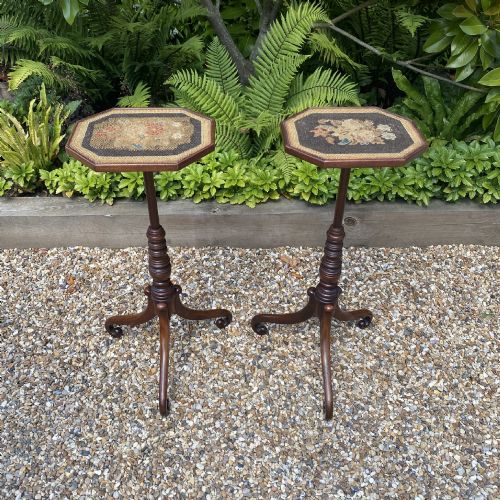
Pair Small Mahogany Tables
These pair small mahogany tables span centuries of domestic use, offering practical surface space alongside rich timber figures.
Pair Small Mahogany Tables
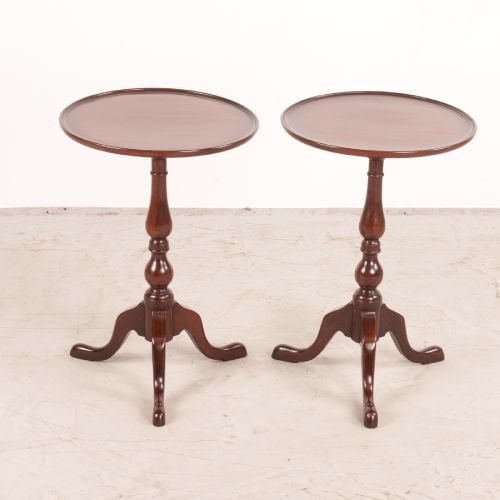
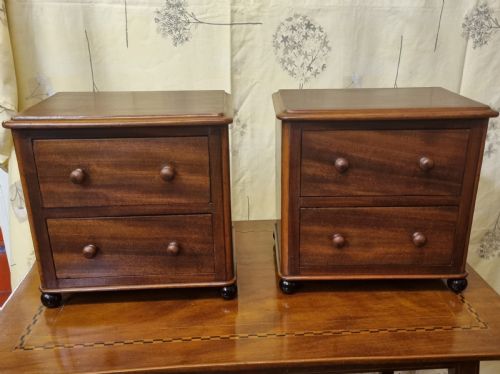
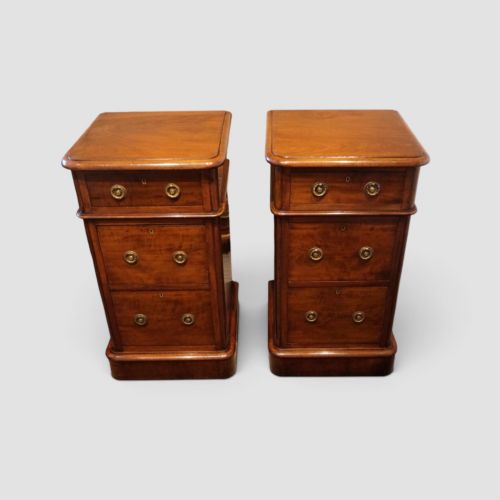
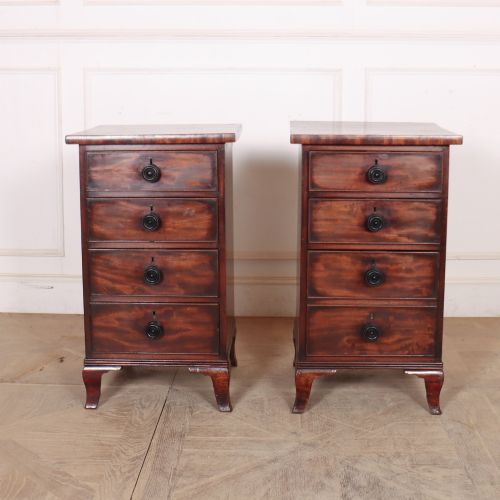
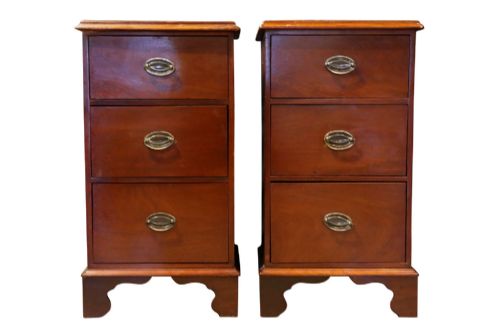
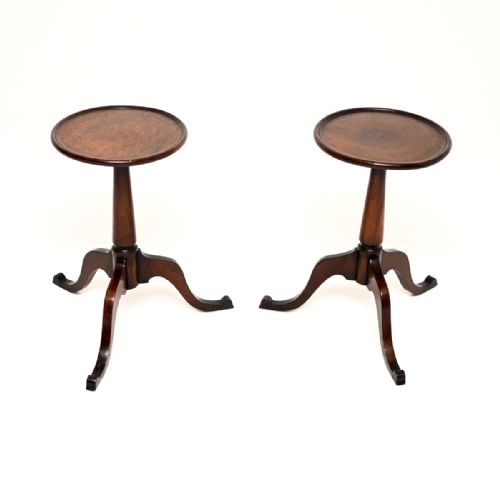
When searching for pair small mahogany tables, buyers encounter utilitarian and decorative furniture produced across the eighteenth, nineteenth, and early twentieth centuries. These items serve varied household roles, functioning primarily as bedside chests, nightstands, wine tables, and tripod tables.
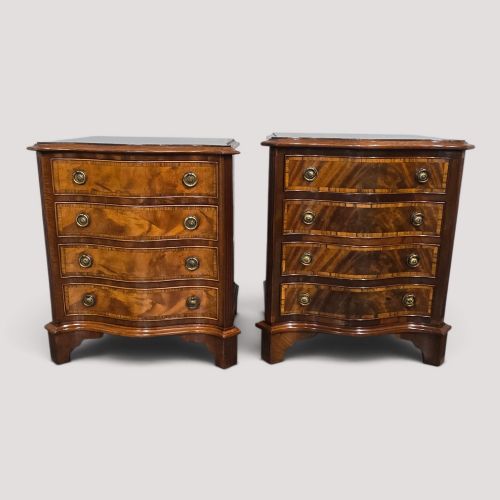
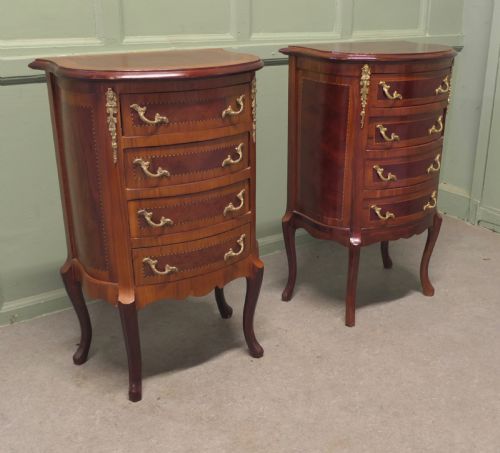
The inventory on this page consists predominantly of Victorian and Edwardian examples, alongside Georgian pieces and later twentieth-century interpretations. Forms range from three-drawer bedside cabinets and serpentine lamp chests to small side tables and revolving bookcases.
Originating largely from British workshops, these matched sets provide symmetrical placement flanking a bed, fireplace, or sofa. Their compact dimensions make them suitable for smaller modern rooms while retaining period character.
How they were made
Cabinetmakers utilised solid mahogany and wood veneer applied to secondary framing timber, often selecting stock for distinct grain patterns such as fiddleback figures. Construction relied on traditional joinery techniques, including dovetailed drawer boxes and mortise and tenon joints.
Decorative detailing on these pieces frequently incorporates contrasting timbers like satinwood and boxwood for stringing and inlay work. Brass hardware, such as drop handles and military-style key escutcheons, provides functional metal accents.
Surface preparation involved waxing or polishing to seal the wood and highlight the natural reddish-brown colour of the mahogany. Some variations include leather inserts on tabletops or subtle serpentine shaping to the front timber.
Object forms include bedside chests, wine tables, tripod tables, and tabletop cabinets.
What varies in quality
Quality in these items rests upon the selection of timber figures and the precision of the cabinetmaker's joinery. Superior examples display tightly matched grain across both pieces and clean, hand-cut dovetails within the drawers.
The finesse of secondary decorative elements, such as delicate boxwood stringing or finely cast brass fittings, distinguishes higher-grade items from utilitarian workshop output. Preservation of the original waxed surface finish without heavy modern intervention maintains the integrity of the piece.
The Pair Small Mahogany Tables Glossary
- Mahogany
- A durable tropical hardwood prized for its deep reddish-brown colour and stability in furniture construction. It accepts polish well and shows varied grain figures.
- Tripod table
- A small freestanding table supported by a central pillar resting on three spreading feet. This form appeared frequently in eighteenth and nineteenth-century parlours.
- Serpentine
- A furniture front curved in a gentle wave shape, convex at the centre and concave at the sides. This contour requires skilled woodworking.
- Inlay
- A decorative technique where contrasting materials such as satinwood or boxwood are embedded into recesses within the primary wood surface.
- Dovetail
- A traditional joint formed by interlocking wedge-shaped fingers, used primarily in drawer construction to ensure tensile strength.
Pair Small Mahogany Tables: Frequently Asked Questions
How do I match bedside tables?
Buyers find matching pairs through uniform height, timber tone, and decorative style, though minor variations in grain occur naturally in period items.
Slight discrepancies in colour often resolve through professional waxing and polishing over time.
Were these tables originally made as pairs?
Many items were constructed as matched pairs for symmetrical placement in bedrooms or reception rooms, while others represent assembled matches from the period.
Evidence of identical workshop origin appears in shared construction methods, timber selection, and dimensions.
How do I clean mahogany surfaces?
Traditional beeswax applied sparingly and buffed with a soft cloth maintains the finish of antique timber without stripping natural oils.
Avoid commercial silicone sprays or excessive moisture, which damage historical polish layers.
What is the difference between Georgian and Victorian tables?
Georgian pieces typically display restrained classical proportions and lighter structural framing dating from the eighteenth into the early nineteenth century.
Victorian items often present heavier dimensions, bolder drawer configurations, and darker finishes reflecting mid-nineteenth-century domestic tastes.