


Pair Rosewood Cupboards
Pair rosewood cupboards offer symmetry and rich timber grain, bringing practical enclosed storage and period character to a room.
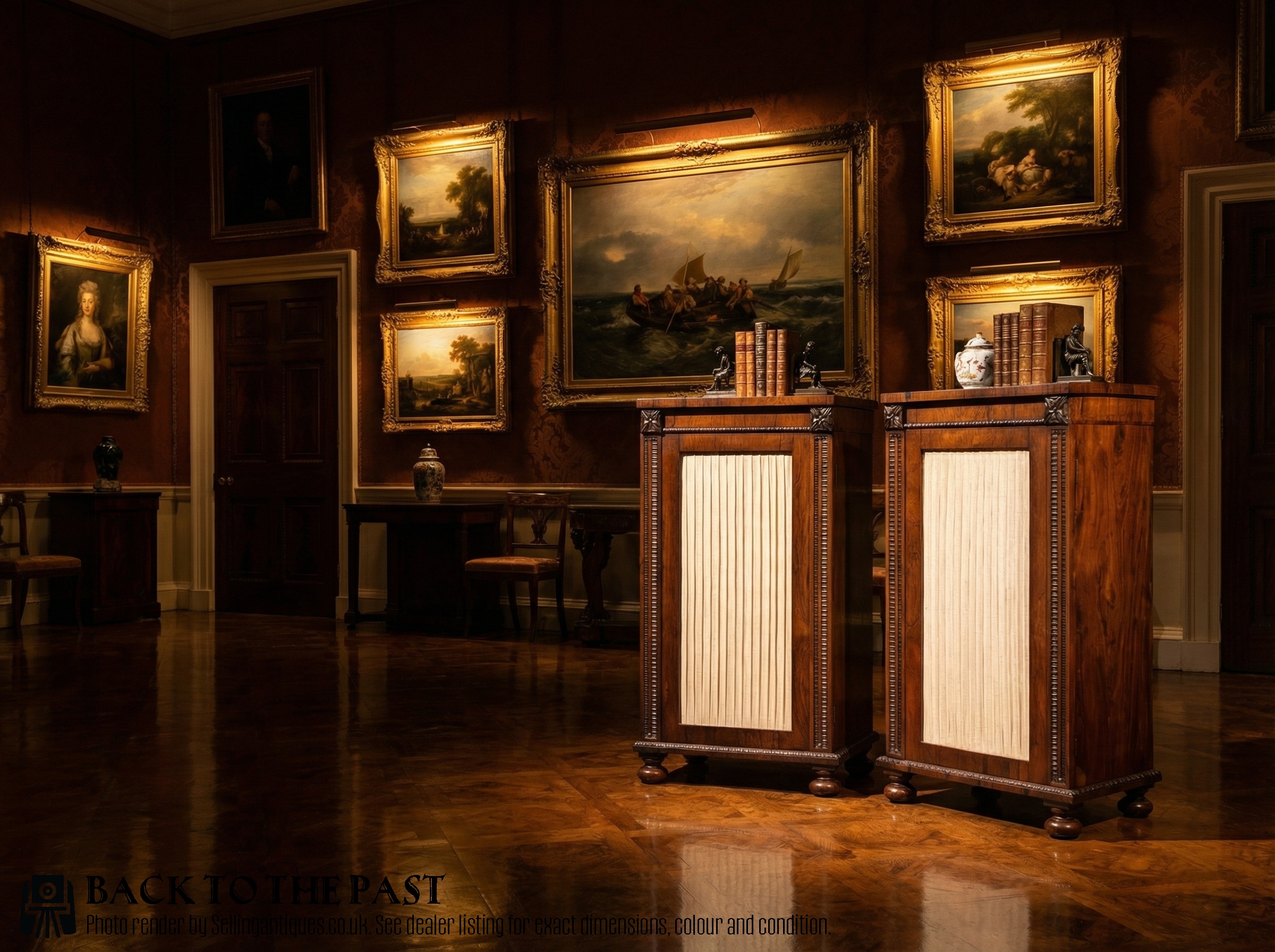
Pair Rosewood Cupboards
These pair rosewood cupboards encompass bedside cabinets, side cabinets, and pedestal cupboards designed to sit symmetrically in a room. They emerge from the nineteenth and early twentieth centuries, spanning Regency, Victorian, Edwardian, and later revival periods.
The forms range from compact bedside tables to breakfront side cabinets and wall-hanging display cases. Many pieces serve specific domestic functions like pot cupboards or bedside drawer pedestals.
Makers and workshops from England, France, and Vienna produced these matched items, employing distinct regional proportions and decorative idioms. Buyers encounter both restrained classical lines and ornate revival styles across the selection.
How they were made
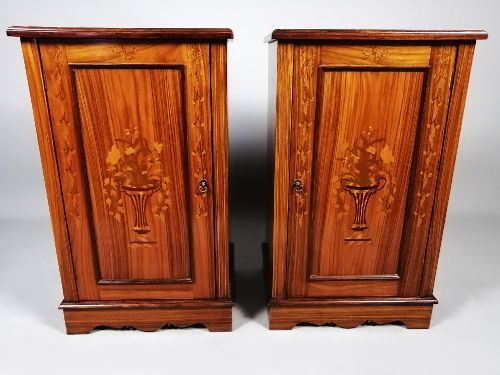
Cabinet makers utilised dense rosewood veneers applied over secondary carcase timbers, often selecting figured stock for the primary visual surfaces. Artisans incorporated boxwood inlay and marquetry to create floral or geometric motifs across doors and panels.
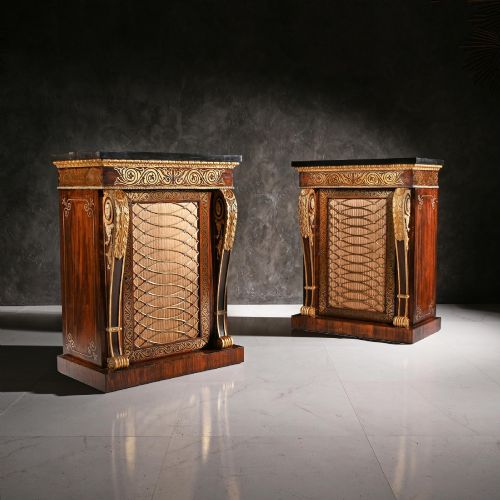
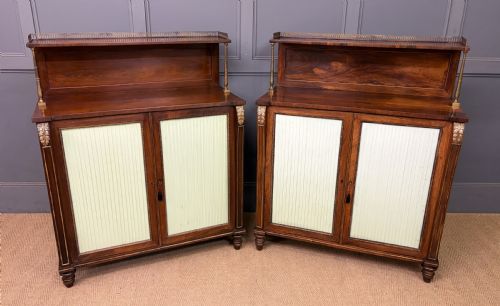
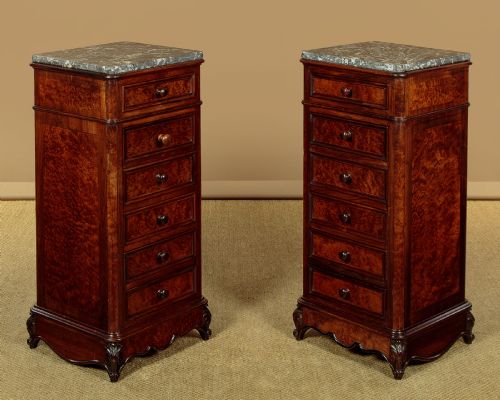
Metalwork played a structural and decorative role, with brass handles, grilles, and inlay work defining the Regency and mid-nineteenth-century pieces. Certain variations incorporate marble tops or glass panels within glazed display doors.
Listings feature brass inlay, marble tops, and boxwood marquetry across nineteenth-century Regency and Victorian forms.
What varies in quality
The refinement of the timber selection and the precision of the marquetry or brass inlay distinguish standard production from exceptional examples. Finer pieces demonstrate careful grain matching across both cabinet doors to maintain visual symmetry.
The integration of secondary materials such as marble tops, original brass mounts, and internal shelving indicates the standing of the workshop. Construction methods, including drawer linings and joinery detail, separate provincial cabinetwork from metropolitan commissions.
Louis Constantin Le Gaigneur·Sigmund Jaray, Wien·J.B.Etienne
The Pair Rosewood Cupboards Glossary
- Marquetry
- Decorative patterns formed by fitting together small pieces of veneer into a wooden background. This technique creates elaborate floral or geometric designs on cabinet doors.
- Pedestal cabinet
- A tall, freestanding cupboard standing on a single base or plinth. These pieces function well as bedside tables or side supports.
- Breakfront
- A piece of furniture whose central section projects forward from the flanking sides. This architectural arrangement adds depth and shadow to large side cabinets.
- Pot cupboard
- A small bedside cabinet originally designed to house a chamber pot. These compact forms now serve widely as lamp stands or general bedside storage.
Pair Rosewood Cupboards: Frequently Asked Questions
Where do pair rosewood cupboards work best?
These cabinets sit comfortably on either side of a bed or flanking a fireplace in a reception room. Their matched nature provides formal balance to an interior layout.
Smaller bedside versions suit intimate sleeping quarters, whilst larger breakfront side cabinets anchor a dining room or hallway wall.
How do I care for rosewood furniture?
Rosewood benefits from stable room temperatures away from direct sunlight and heat sources to prevent the timber and veneer from drying out. Simple dusting with a soft, dry cloth preserves the polished surface.
Occasional light application of appropriate wax feed helps maintain the natural lustre of the timber without building up heavy residue.
How do I identify Regency period pieces?
Regency cabinets often display classical restraint, clean architectural lines, and precise brass inlay work inspired by ancient Roman and Greek forms. The timber grain is typically rich and dark.
Look for structural elements like bracket feet, column supports, and restrained decorative brass mounts rather than heavy Victorian carving.
What is the difference between a bedside cabinet and a pot cupboard?
A pot cupboard historically contained an internal shelf and compartment specifically intended to conceal a chamber pot out of sight. Today they function identically to standard bedside tables.
Bedside cabinets generally offer a combination of small drawers and a cupboard door designed purely for general nighttime storage.