

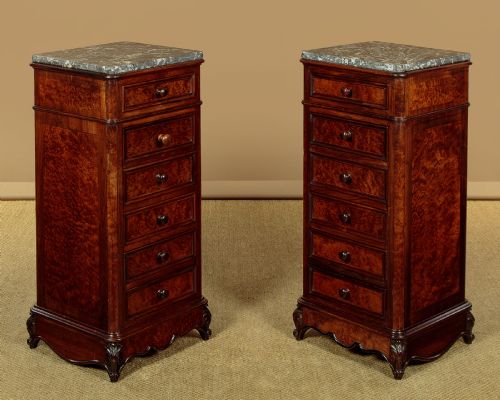


Antique Rosewood Bedside
These antique rosewood bedside pieces bring rich grain and practical surface space to a bedroom, combining dark tropical timbers with period craftsmanship.
Antique Rosewood Bedside
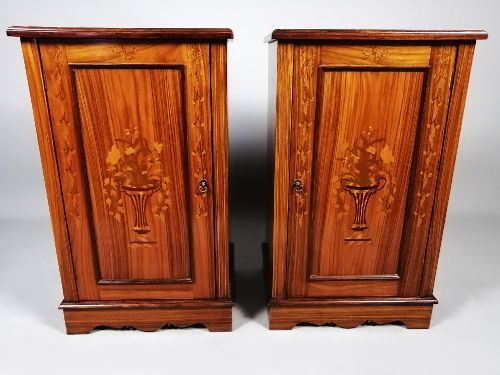
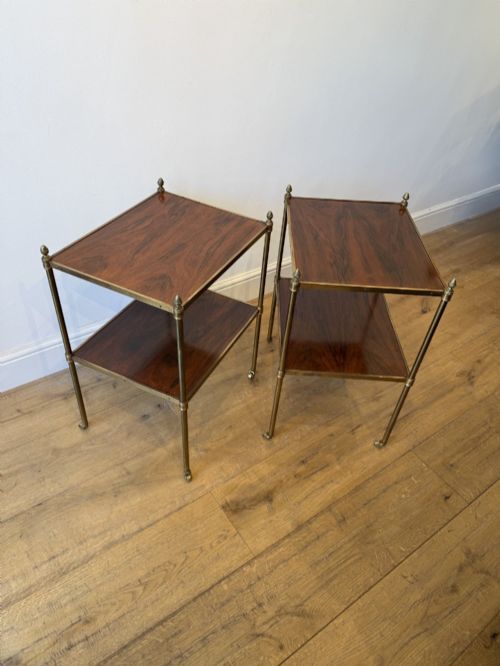
When you search for antique rosewood bedside furniture, you encounter enclosed cabinets, open shelf etageres, and compact side tables designed for the bedroom. The pieces span the nineteenth century, Victorian era, and Edwardian period, frequently appearing as matched pairs alongside single items.
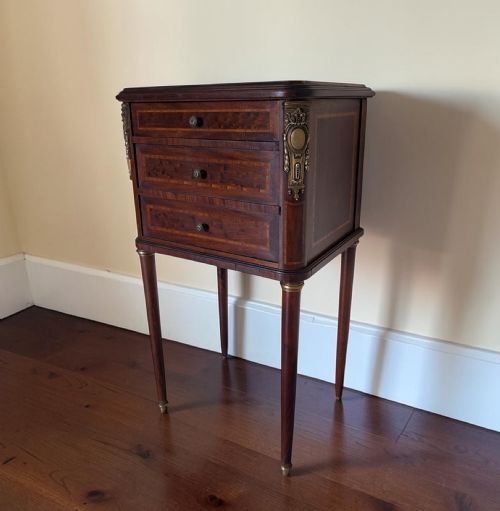
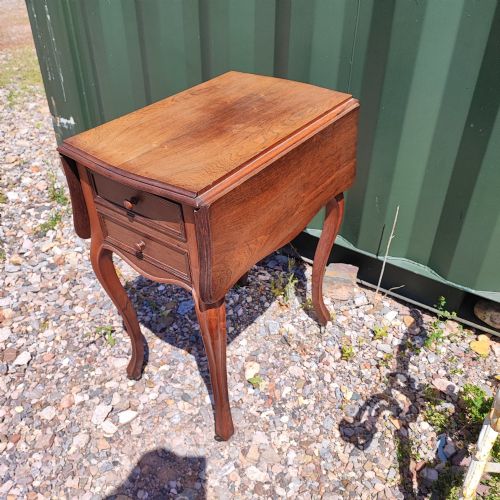
The selection ranges from simple drop-leaf tables and pedestal cupboards to elaborate French styles featuring marquetry and marble tops. Makers often adapted forms like what-nots and commodes to serve beside the bed, drawing on Regency, Louis XV, and Louis XVI design influences.
Materials and construction methods
Makers utilised dense tropical rosewood as the primary timber, often combining it with contrasting woods such as satinwood, kingwood, mahogany, and amboyna for decorative effect. Wood inlay and floral marquetry create detailed geometric or botanical patterns across drawer fronts and top surfaces.
Structural additions include polished marble tops for durability, cast brass handles, and occasionally brass galleries or mounts. Joinery follows traditional cabinet-making standards of the nineteenth and early twentieth centuries, supporting the weight of marble slabs and multiple timber tiers.
Listings feature 19th Century, Victorian, Edwardian, and Regency periods, utilising rosewood, brass, marble, kingwood, mahogany, and walnut.
Distinctions in construction and design
Quality rests upon the crispness of the marquetry and the choice of secondary timbers beneath the rosewood veneer. Stronger examples display precise wood inlay with tightly fitted joints and substantial marble slabs that sit flush against the timber frame.
Proportion and symmetry separate standard utility items from finer workshop output, particularly in matched pairs where grain patterns balance across both sides of the bed. Hardware selection also indicates standard, with cast brass handles showing heavier gauge and sharper detail on better pieces.
Mallett·Collinson & Lock
The Antique Rosewood Bedside Glossary
- Marquetry
- Decorative veneer work forming pictures or patterns using various woods. Craftsmen cut thin slices of tinted or contrasting timber and fit them into a background veneer.
- Pedestal cabinet
- A tall, narrow freestanding cupboard standing on a single base or plinth. These enclose storage space behind a single door while maintaining a small floor footprint.
- Marble top
- A polished stone slab fitted to the upper surface of a cabinet or commode. This provided a heat-resistant and washable surface for water jugs and washing accessories.
- Kingwood
- A dense, richly figured Brazilian timber with dark violet-brown streaks. Cabinet-makers used it alongside rosewood for contrasting borders and banding.
- Etagere
- A set of open shelves for displaying small objects. Multiple tiers provide vertical storage without enclosing the space behind solid doors.
Antique Rosewood Bedside: Frequently Asked Questions
How were antique bedside cabinets used originally?
These cabinets housed chamber pots and night-time necessities behind closed doors before indoor plumbing became standard in bedrooms.
Over time, their enclosed storage and flat tops transitioned to hold lamps, books, and water pitchers as domestic habits changed.
How do I identify a Victorian rosewood piece?
Victorian examples typically display deep reddish-brown grain with contrasting inlay, often incorporating satinwood or marquetry motifs. Construction relies on solid mahogany or secondary hardwoods beneath the rosewood veneer.
Cabinet proportions from this era tend to be heavier and more substantial than earlier Regency or later Edwardian designs.
Are marble top bedside tables practical for daily use?
The stone surfaces offer excellent resistance to water rings, spills, and scratches from bedside lamps or drinking glasses. This makes them durable options for everyday placement next to a modern bed.
Users should avoid dropping heavy objects onto the stone and use coasters to protect the polished finish.
Why do these tables often come in pairs?
Many pairs were produced for twin beds or large double bed setups in nineteenth-century bedrooms. Matching cabinets ensured symmetrical furnishing schemes on either side of the sleeping quarters.
Finding surviving pairs today remains desirable for balanced bedroom interior layouts.