
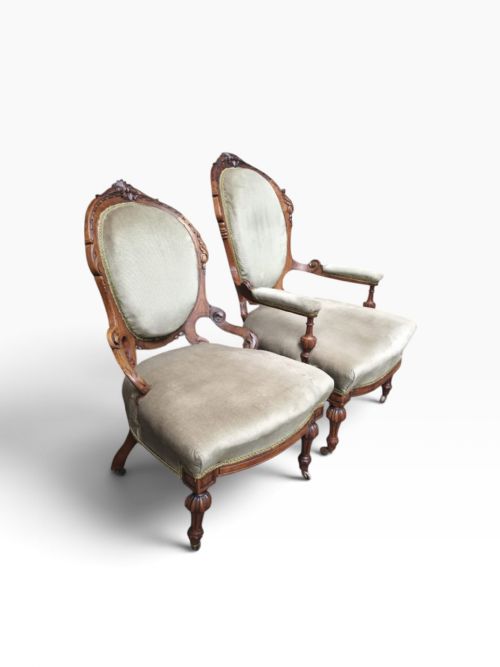
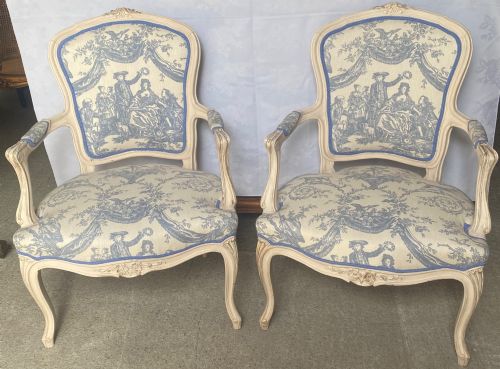
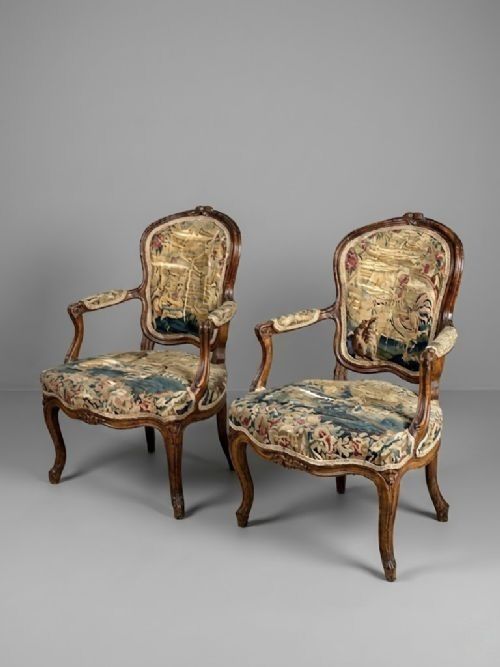
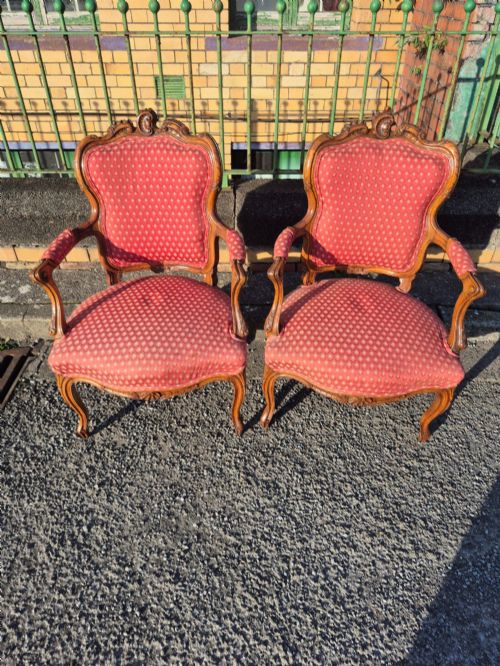
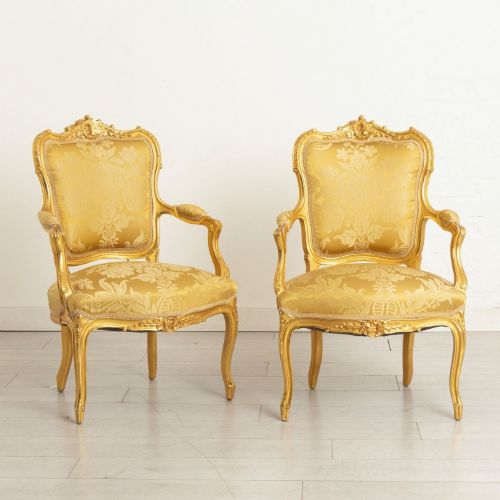


Pair Rococo Armchairs
Pair rococo armchairs bring ornate, serpentine lines and historic grandeur into a room, offering both sculptural presence and comfortable seating.
Pair Rococo Armchairs
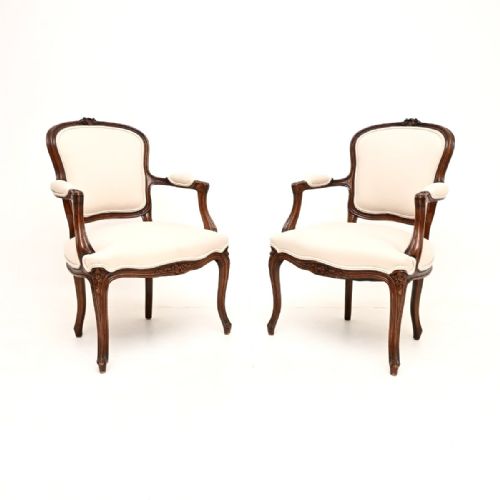
Pair rococo armchairs encompass seating designed with asymmetrical flourishes, scrolled feet, and sweeping cartouche-shaped backs rooted in eighteenth-century aesthetics. Buyers seeking this aesthetic encounter examples ranging from eighteenth-century Italian originals to nineteenth-century revival pieces from French and English workshops.
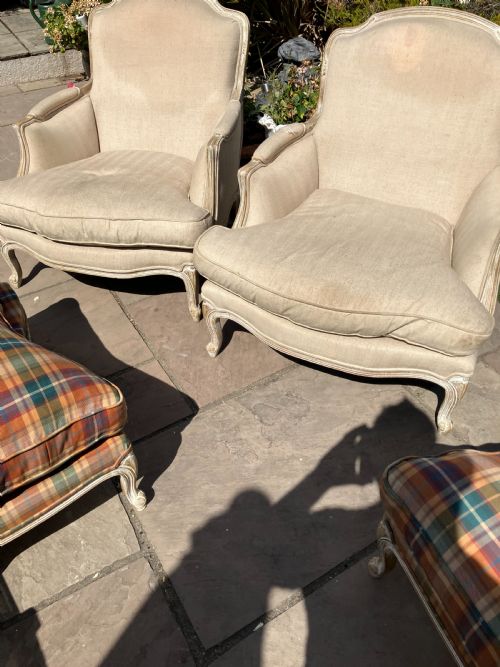
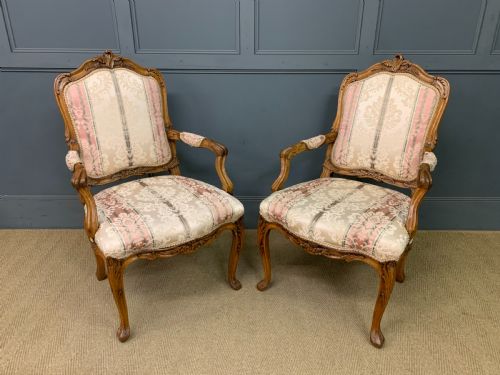
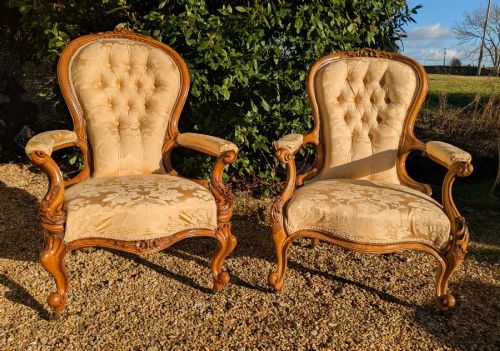
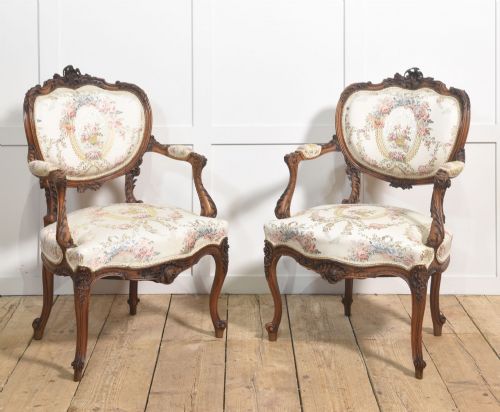
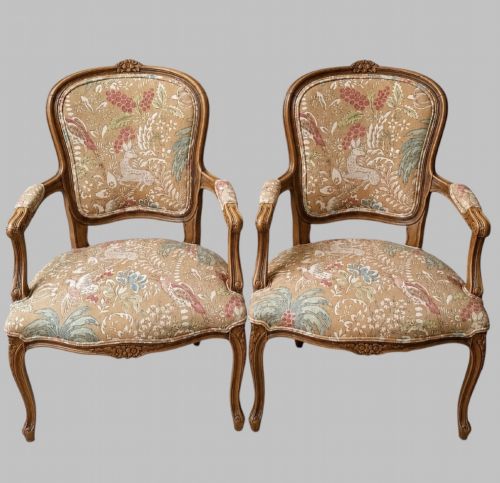
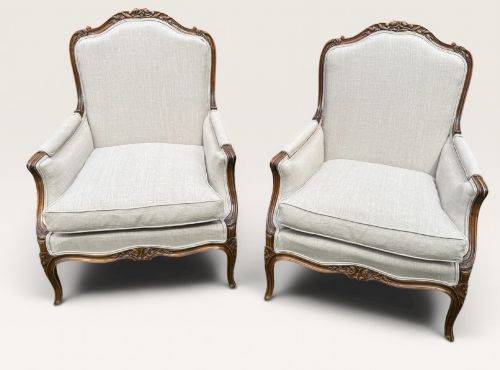
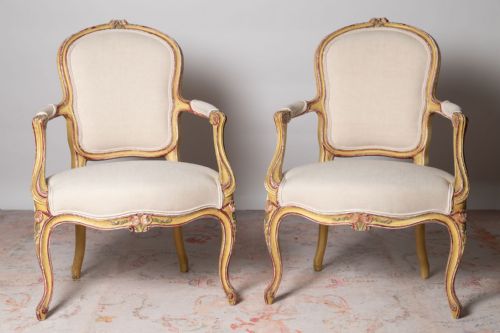
The selections span several distinct forms, including open-framed fauteuils, enclosed bergères, and spoonback varieties often paired within larger salon suites. Walnut, giltwood, and rosewood form the primary structural frameworks for these matched seating pairs.
Origins stretch across continental Europe and Britain, with French revival models and Italian gilded iterations appearing frequently alongside Victorian interpretations. These chairs serve primary functional roles as occasional seating or accent pieces within formal reception spaces.
Evaluating craftsmanship
The depth and crispness of the hand-carving define the upper tiers of production, where floral motifs and scrollwork appear sharp and dimensional rather than soft or shallow. Wood selection also dictates quality, with densely figured walnut and heavy, fire-gilt surfaces distinguishing superior examples from simpler painted or stained alternatives.
Proportion and structural integrity separate masterwork seating from standard commercial output, particularly in the balanced sweep of the armrests and the organic flow of the cabriole legs. The harmony between the original woodwork and the quality of modern or historic upholstery fabrics determines the overall visual cohesion of the pair.
Several pairs preserve whimsical upholstery details like silk parrot patterns alongside traditional floral brocades.
The Pair Rococo Armchairs Glossary
- Fauteuil
- An open-armed wooden armchair featuring upholstered back and seat panels with exposed, carved wooden framing. This French form typically showcases curved armrests and cabriole legs.
- Bergère
- An enclosed upholstered armchair with solid upholstered sides resting on a wooden frame. These pieces often incorporate loose down seat cushions for added comfort.
- Giltwood
- Timber coated with a thin layer of gold leaf applied over a prepared chalk or gesso ground. This finish creates a brilliant reflective surface common on formal European seating.
- Cabriole leg
- A furniture leg that curves outward in a convex arc at the top and inward in a concave arc near the foot, resembling animal limbs. It forms a defining structural element of rococo design.
Pair Rococo Armchairs: Frequently Asked Questions
How do I distinguish an original eighteenth-century pair from a nineteenth-century revival?
Eighteenth-century originals display hand-cut joinery marks, distinct patina accumulated through centuries of use, and timber shrinkage consistent with age. Revival pieces from the Victorian era often utilise machine-assisted secondary woods and standardised hardware while closely imitating earlier decorative motifs.
Examination of the underside and interior frame construction usually reveals the manufacturing methods characteristic of each specific period.
Where should I place these chairs in a modern interior?
These statement seats function effectively as reading chairs in a study or as balanced matching accents flanking a fireplace or console table. Their ornate carving and curved silhouettes contrast sharply against minimalist contemporary architecture.
Positioning them away from direct sunlight protects delicate gilt surfaces and sensitive textile upholstery from fading.
How should I care for gilded wood frames?
Giltwood surfaces require gentle dusting with a soft, dry brush to prevent accumulation without disturbing the delicate gold leaf layer. Moisture and chemical polishes must be avoided entirely, as liquids strip the underlying gesso and adhesive binders.
Professional conservation is recommended if the metallic leaf begins to flake or separate from the timber base.