


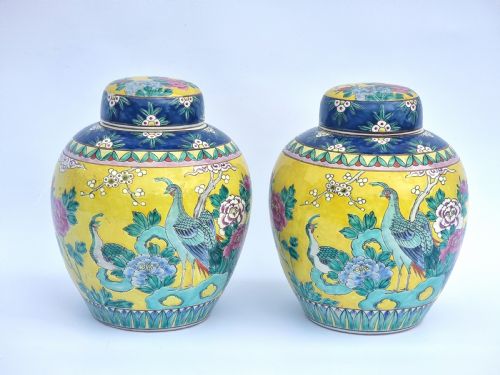


Pair Porcelain Lidded Urns
These pair porcelain lidded urns combine decorative presence with practical lidded forms, spanning diverse international ceramic traditions from the eighteenth to the twentieth centuries.
Pair Porcelain Lidded Urns
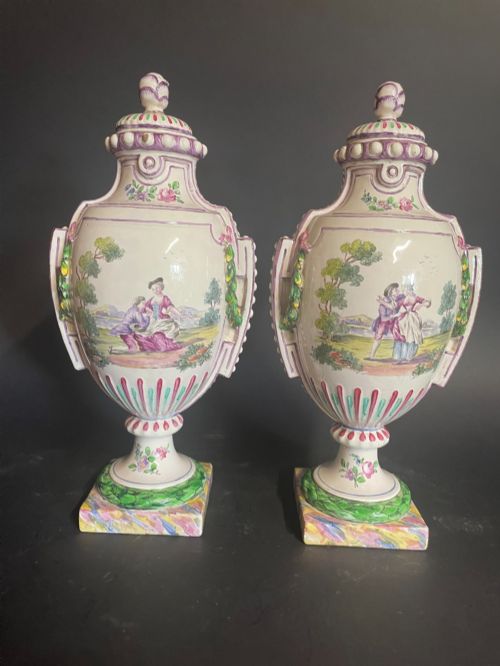
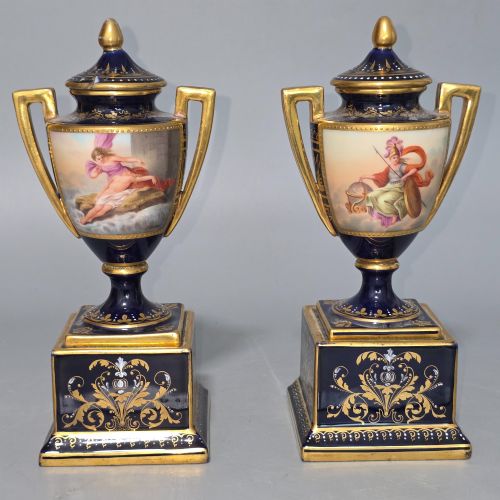
Pair porcelain lidded urns encompass dual decorative vessels designed with matching covers, taking the form of amphoras, ginger jars, and potpourri jars. The selection leans heavily towards nineteenth-century European factories and Japanese export studios.
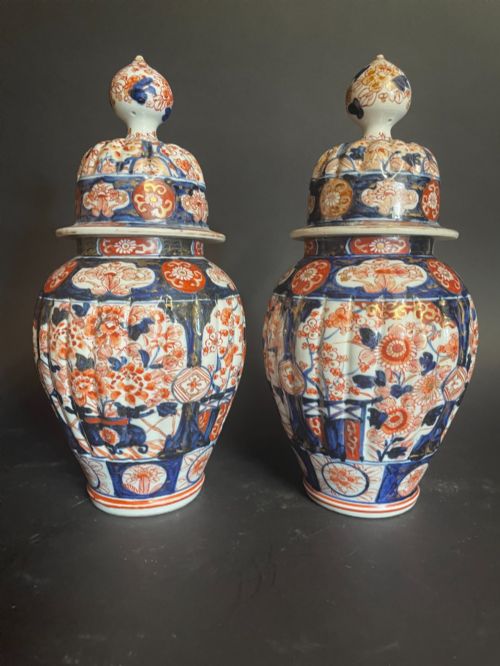
Continental workshops from Vienna, Berlin, Dresden, and Sevres feature prominently alongside British makers such as Coalport and Mason's. Far Eastern pieces range from Edo period Arita Imari to later Satsuma and Kutani wares.
Forms vary from monumental classical shapes to intimate cabinet pieces. Many examples utilise traditional shapes adapted for Western drawing rooms and cabinets of curiosity.
Materials and Technique
Potters shaped these vessels using hard-paste or soft-paste porcelain clay bodies, finished with coloured glazes, enamel pigments, and underglaze blue painting. Many examples incorporate hand-painted pictorial scenes, floral motifs, or stylised Japanese panels.
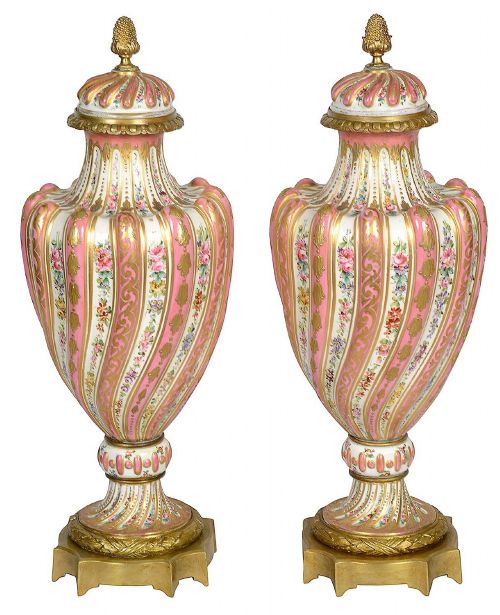
Metal mounts in ormolu and gilt bronze frequently secure the bases and rims of French and Continental specimens. Artisans applied gold leaf, gilding, and raised enamel work to highlight handles, collars, and finials.
Listings feature eighteenth and nineteenth-century European factories alongside Japanese Edo period wares.
Assessing Quality
The standard of execution separates workshop production from exhibition pieces. Finer specimens display meticulous brushwork in hand-painted panels, precise gilding depth, and crisp moulding in the porcelain body.
Proportion and matching determine success in symmetrical pairs. Superior items maintain absolute parity in height, glaze consistency, and decorative detail between both companion pieces.
Sceaux Faience·Vienna Porcelain·Sevres·Mason’s Ironstone·Coalport·Royal Worcester·Dresden·Sitzendorf·Augustas Rex
The Pair Porcelain Lidded Urns Glossary
- Imari
- A Japanese export porcelain style featuring iron red, underglaze blue, and gilt highlights. The palette originates from the Edo period and inspired numerous European copies.
- Ormolu
- Finely chopped high-grade gold cast and chased onto a bronze base. It provides decorative mounts for nineteenth-century Continental urns.
- Bleu Celeste
- A bright turquoise blue ground colour developed at the Sevres pottery. It appears frequently on nineteenth-century French decorative urns.
- Amphora
- A two-handled ancient vessel shape revived during the nineteenth century. Makers applied this classical form to large porcelain display pieces.
- Potpourri
- A pierced ceramic vessel designed to hold dried scented plant material. The lids feature openwork patterns to release fragrance into a room.
Pair Porcelain Lidded Urns: Frequently Asked Questions
What were porcelain lidded urns used for?
These covered vessels served primarily as decorative garnitures on mantelpieces, sideboards, and pier tables. Certain forms held dried scented petals as potpourri while others functioned as ornamental ginger jars.
Their substantial presence reflected taste and status within formal nineteenth-century interiors. They were ornamental centrepieces rather than utilitarian containers.
How do I identify Sevres style pieces?
Sevres style pieces typically exhibit rich ground colours such as turquoise blue or pink, paired with elaborate gilt bronze mounts. Hand-painted panels often feature romantic pastoral scenes or portraits of historical figures.
Many bear factory-style marks on the base, though subsequent European studios frequently emulated these aesthetic traits during the nineteenth century.
Are Japanese Imari urns old?
Japanese Imari examples span from seventeenth-century Edo period production to nineteenth-century revival wares. Earlier pieces show thicker potting and deeper underglaze cobalt tones.
Later copies produced in Japan and Europe during the nineteenth century often feature brighter enamel palettes and crisper white porcelain bodies.
How should I clean porcelain urns?
Dust these vessels gently with a soft dry brush to protect delicate overglaze enamels and applied gilding. Avoid using liquid cleaners or abrasive cloths on decorated surfaces.
Ormolu mounts require separate care using specialist metal conservation techniques to prevent tarnishing without disturbing the surrounding glaze.