


Rococo Style Vases
Rococo style vases bring exuberant asymmetry, scrolling curves and lavish gilding into a room.
Rococo Style Vases
When searching for rococo style vases, collectors encounter ornamental vessels created primarily during the nineteenth century, drawing inspiration from earlier eighteenth-century French royal aesthetics. The selection on this page consists predominantly of nineteenth-century porcelain pairs, lidded urns and garniture sets mounted in gilt bronze or ormolu.
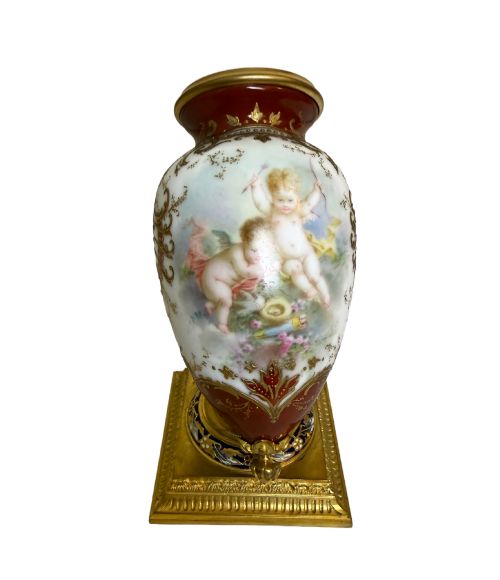
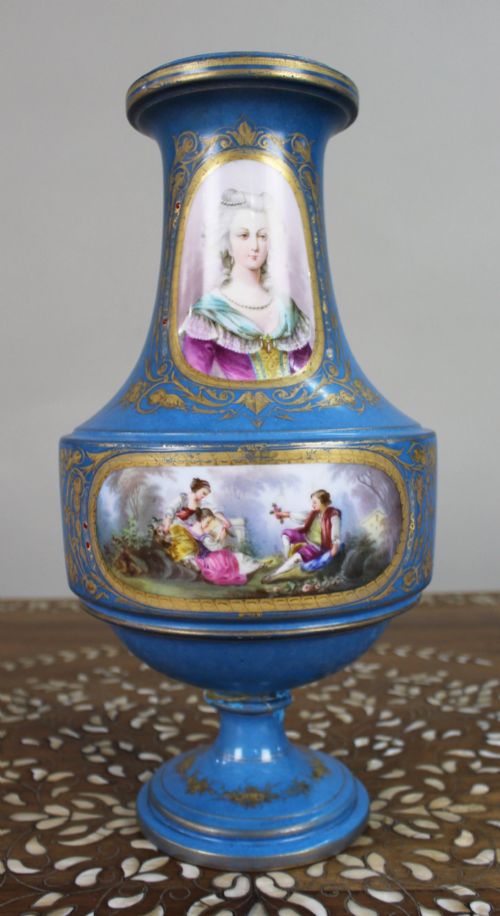
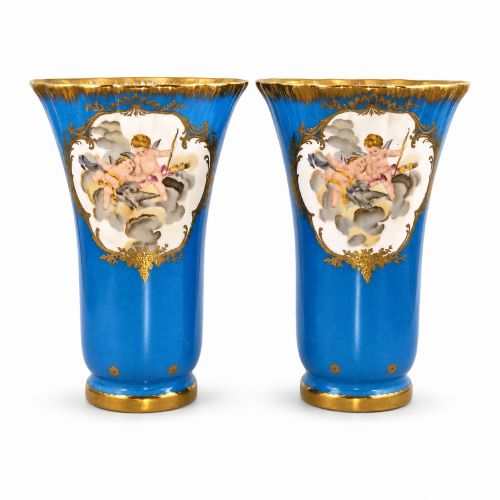
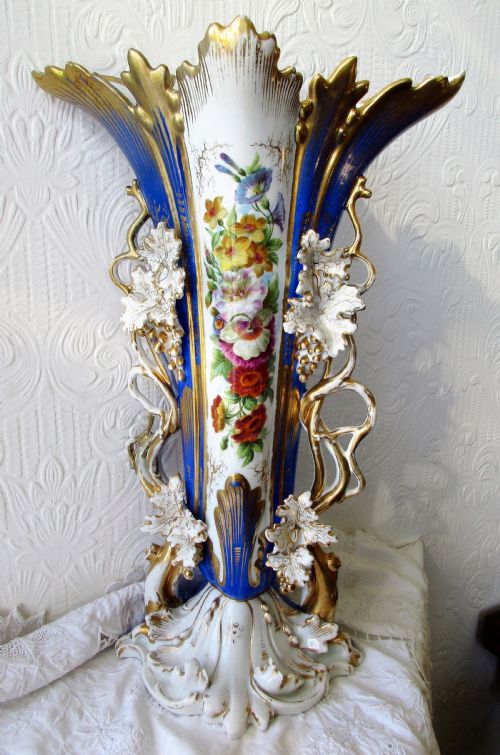
The decorative vocabulary relies heavily on asymmetrical scrolls, C-scrolls, acanthus foliage and pastoral scenes, often rendered in imitation of Sevres or Meissen factories. Many examples incorporate playful motifs such as cherubs, flowers and cobalt blue or bleu celeste grounds enriched with gold leaf.
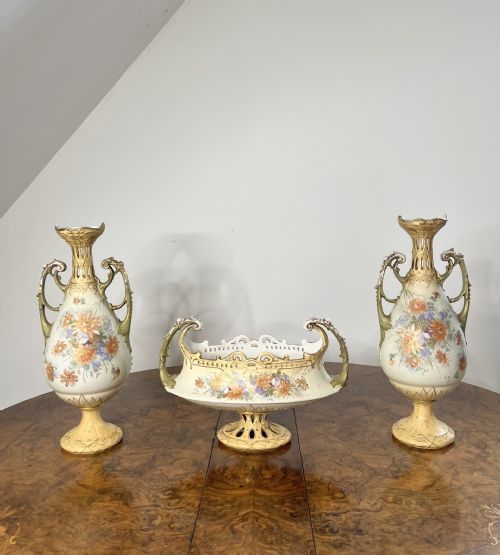
Beyond standard tabletop vessels, forms extend to potpourri jars, ewers and centrepieces adapted from earlier European models. These pieces span French, German and English interpretations of the style, demonstrating how makers adapted eighteenth-century motifs for Victorian drawing rooms.
Materials and construction
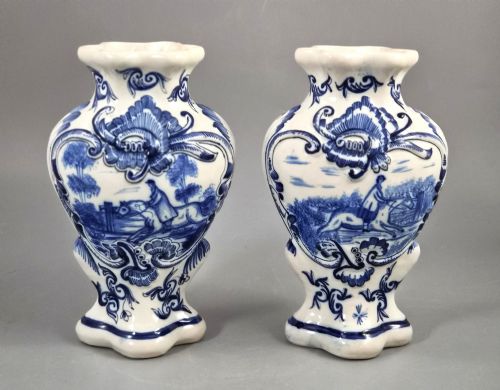
The body of each piece typically begins with high-fired porcelain, earthenware or ceramic, shaped into bulbous urns, fluted vases or tapering jars. Kiln-fired enamel colours and hand-painted motifs, ranging from Watteau-style figures to delicate floral sprays, are applied over or under the glaze.
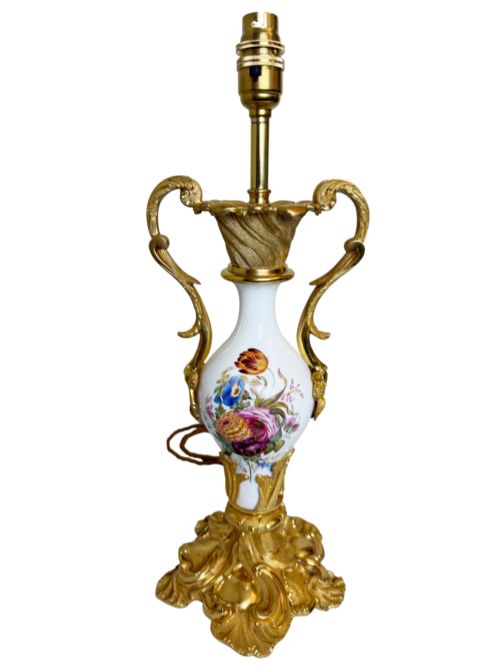
Metal mounts in gilt bronze, ormolu or brass provide structural support and opulent framing for the ceramic bodies. Skilled metalworkers cast these mounts with intricate scrolling foliage and handles, then fire-gild them with gold leaf to achieve a lasting metallic brilliance.
Several vases incorporate cheerful porcelain cherubs peering out from floral scrollwork.
The spectrum of quality
Quality reveals itself in the crispness of the porcelain moulding and the precision of the hand-painted details. Superior examples exhibit finely rendered facial expressions in figurative scenes, meticulous brushwork on floral panels and heavy, well-chased gilt bronze mounts that fit the ceramic body snugly.
The weight and depth of the gilding further distinguish the finer pieces from simpler production items. Heavy fire-gilding retains its warm lustre over centuries, whereas thinner gold leaf applications tend to rub away and reveal the base metal underneath.
Fourmaintraux Courquin·Samson Paris·Royal Vienna·Helena Wolfsohn·Augustas Rex·Jacob Petit·Vion et Baury·Sitzendorf Porcelain·Henry Dasson
The Rococo Style Vases Glossary
- Bleu celeste
- A bright, sky-blue porcelain ground colour popularized by the Sevres factory. It provides a vivid backdrop for hand-painted reserve panels.
- Ormolu
- Gilded bronze mounts cast in decorative, asymmetrical shapes. This technique gives nineteenth-century vases their characteristic metallic borders and handles.
- Garniture
- A matching set of three or five vases designed to sit together on a mantelpiece. These sets typically include a central lidded urn flanked by smaller matching vases.
- Potpourri
- A lidded vase pierced with small holes to release the scent of dried flowers held inside. The porcelain bodies often feature elaborate scrolling apertures.
- Bisque
- Unglazed white porcelain fired to a matte, marble-like finish. It allows sculptural details on figures and cherubs to appear with high definition.
Rococo Style Vases: Frequently Asked Questions
What are rococo style vases?
These decorative vessels are ornamental ceramic and porcelain pieces inspired by the asymmetrical, curving aesthetic of the eighteenth-century French court. They often feature elaborate metal mounts, hand-painted pastoral scenes and rich gilt highlights.
Most surviving examples date from the nineteenth century, when European factories revived eighteenth-century designs for Victorian interiors. They were produced as decorative accents rather than functional vessels for fresh flowers.
How do I live with them?
Placing these vases on sturdy surfaces away from high-traffic areas protects their delicate gilt mounts and painted porcelain bodies. They do not require direct sunlight, which can fade hand-painted enamel colours over long periods.
Dusting them gently with a soft, dry brush preserves the delicate gold leaf and prevents grime accumulation in the deep crevices of the ormolu mounts. Avoid using water or chemical cleaners on the gilt surfaces.
How do I tell periods apart?
Nineteenth-century revival pieces often display factory marks, stampings or blue underglaze ciphers on their bases that help date their manufacture. The chemical composition of the porcelain paste and the style of the metal casting also provide clues to their age.
Earlier eighteenth-century originals show lighter, hand-mixed pastes and distinct potting techniques compared to the more standardised industrial output of the late nineteenth century. Examining the wear on the base helps confirm the age of the piece.