

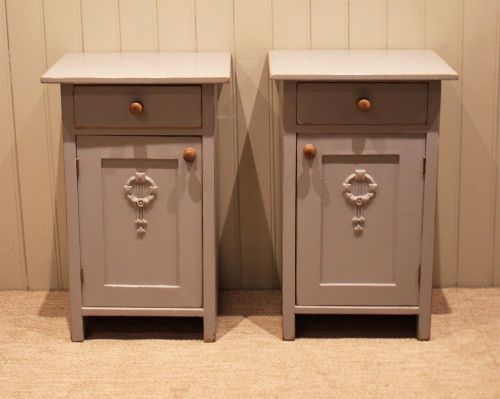
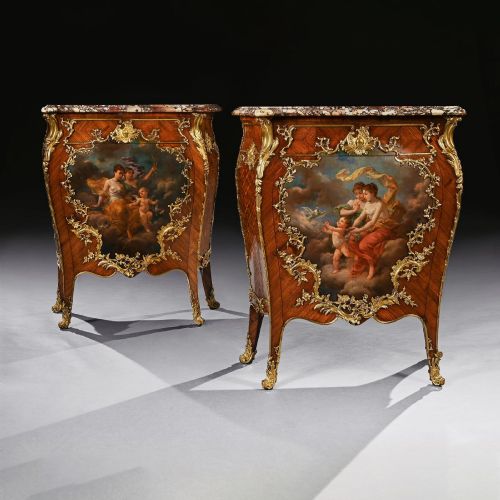
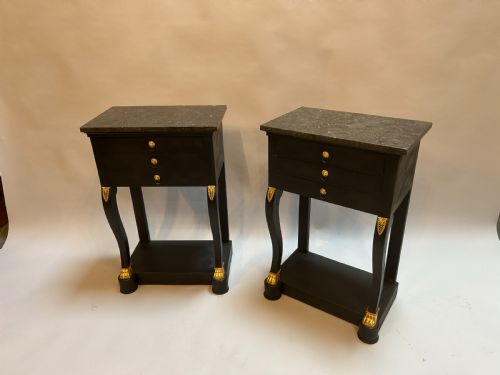
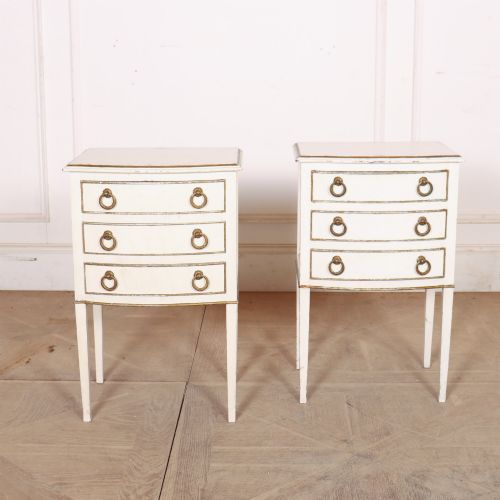


Pair Painted Chests
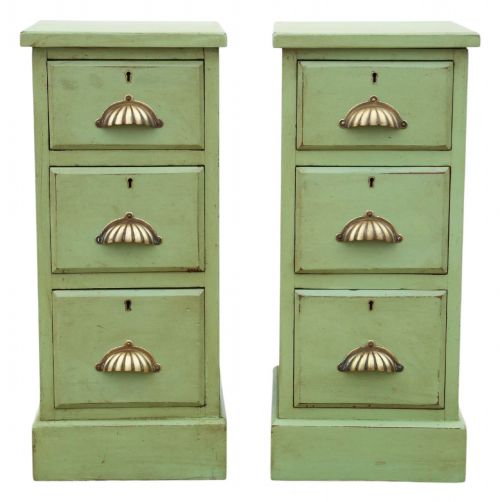
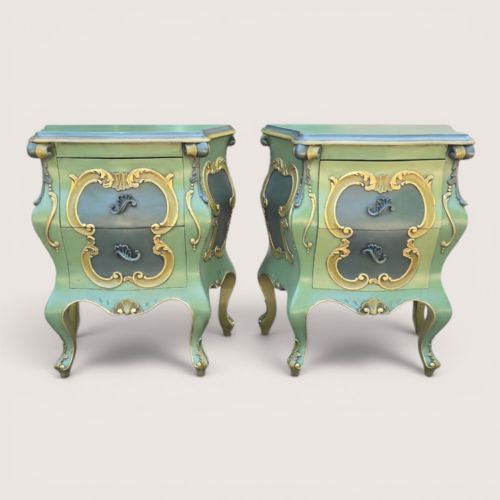
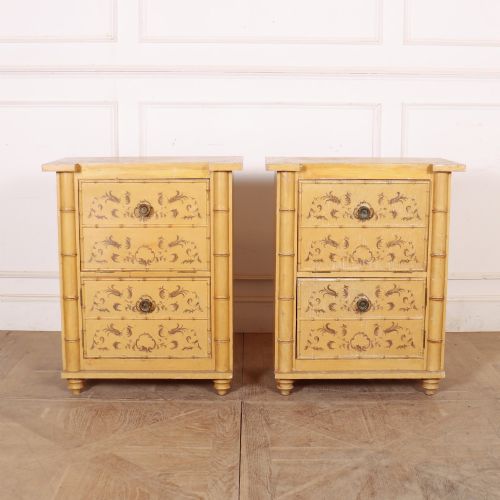
Pair painted chests bring matched symmetry and painted colour to a room, offering practical storage through coordinated pieces.
Pair Painted Chests
When searching for pair painted chests, buyers encounter dual storage forms designed to match, primarily taking the shape of bedside chests, commodes, and chests of drawers. These matching items provide balanced proportions for bedroom or living space layouts, often originating from continental workshops or English makers.
How they were made
Construction relies heavily on timber carcases built from pine and wood, occasionally incorporating kingwood beneath decorative finishes. Surface decoration employs layered paint work, sometimes enhanced with gilt metal or brass mounts and faux marble tops.
Joinery traditions of the nineteenth and early twentieth centuries dictate the structural integrity of the drawers and cabinets. Artisans applied hand-painted pigments and protective varnishes directly to the wood substrate to achieve the characteristic painted appearance.
Pair Painted Chests Retail Price Guide 2026
Typical asking prices for pair painted chests among the pieces listed under this phrase on Sellingantiques today, from the lower quarter to the upper quarter. They describe what is for sale here now, not the wider market.
Listings feature painted finishes spanning pine, wood, and metal, with periods ranging from Victorian and Edwardian eras back through the nineteenth century.
What varies in quality
Quality rests upon the execution of the painted surface and the crispness of decorative detailing such as faux bamboo turnings or gilt bronze mounts. Superior examples display refined proportions and hand-applied finishes that retain harmonious colour across both pieces in the set.
Construction depth also distinguishes the range, where well-fitted drawer carcases and integrated marble tops elevate a pair above standard utility furniture. Consistency between the two individual items determines the overall cohesion and visual success of the matched set.
The Pair Painted Chests Glossary
- Commode
- A low chest of drawers or cabinet, frequently associated with French and Swedish decorative styles of the eighteenth and nineteenth centuries. These pieces often feature decorative painted finishes or marble tops.
- Gustavian
- A Swedish neoclassical style characterised by restrained classical motifs, light painted finishes, and elegant proportions. It reflects Scandinavian interpretations of French Louis XVI design.
- Vernis Martin
- A simulated Japanese lacquer technique developed in eighteenth-century France and emulated later. It involves multiple layers of translucent varnish applied over painted decoration.
- Faux bamboo
- A decorative treatment where wood is carved or turned to imitate natural bamboo stalks. This style gained popularity during the Victorian and Aesthetic Movement periods.
- Petit commode
- A small chest of drawers or bedside cabinet designed for intimate domestic spaces. They frequently incorporate fine mounts and painted or veneered surfaces.
Pair Painted Chests: Frequently Asked Questions
How do I style pair painted chests?
Positioning matched chests on either side of a bed or flanking a fireplace creates immediate visual symmetry in a room. The painted surfaces allow them to introduce accent colour or soften neutral interior palettes.
Keeping the styling simple on top lets the decorative painted finish remain the focal point. Matching lamps or decorative objects enhance the inherent symmetry of the pair.
Are these chests practical for daily use?
Most variants offer functional drawer space or enclosed cabinet storage suitable for modern living requirements. Bedside versions hold evening essentials, while larger drawer chests accommodate clothing or linens.
Construction from solid timber and sturdy wood carcases ensures they withstand regular handling. Drawer operation depends on the age and historical maintenance of the individual runners.
How do I identify Swedish painted furniture?
Swedish pieces from the nineteenth century typically display light colour palettes, including white, grey, and black paint work. Stylistic influences often draw upon Gustavian neoclassicism with clean lines and understated carved details.
Construction timbers generally consist of local pine or softwoods beneath the paint layers. Surface finishes frequently exhibit subtle hand-brushed textures developed over decades.
What is French Empire design?
French Empire style draws upon classical Roman and Greek motifs, incorporating formal symmetry and architectural lines. Pieces from this tradition often feature dark painted or polished surfaces contrasted with metal mounts.
In the context of smaller chests and bedside cabinets, the aesthetic translates into dignified proportions. The influence persisted into early twentieth-century revivals.