


Pair Ornamental Vases
Pair ornamental vases bring classical symmetry and decorative presence to a room, ranging from Regency porcelain to Victorian bronze.
Pair Ornamental Vases
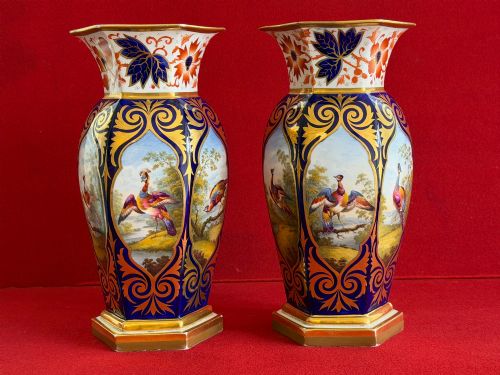
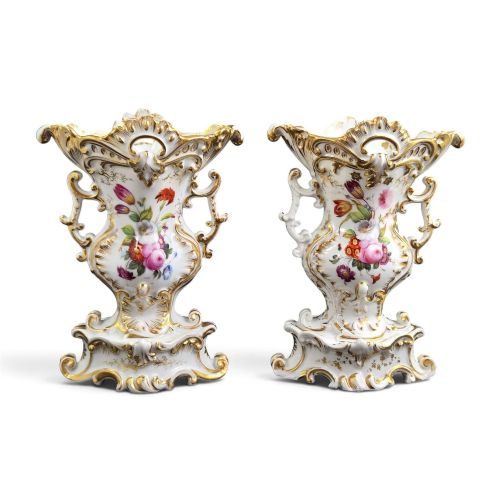
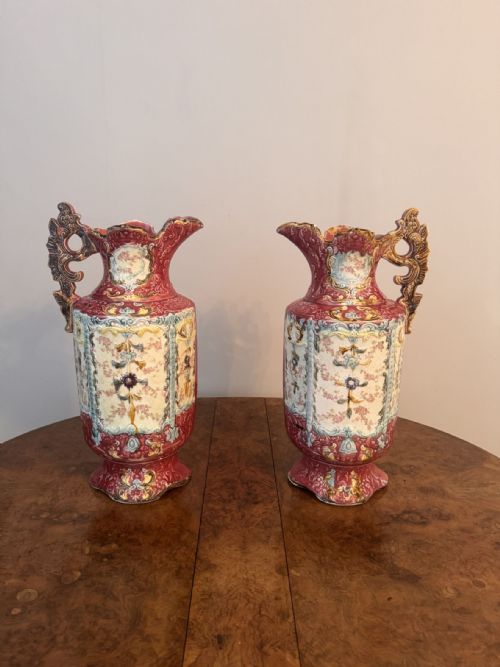
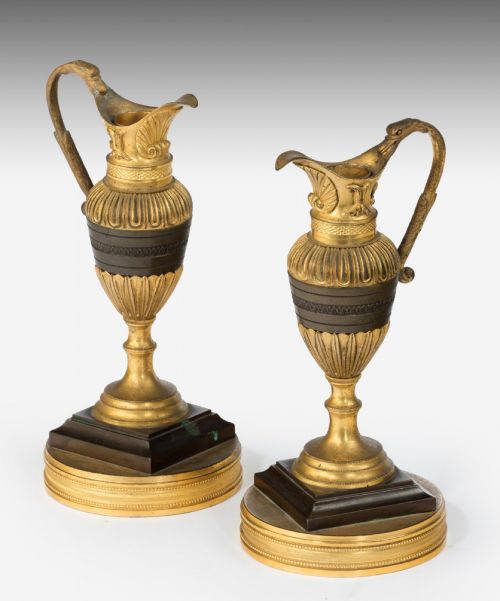
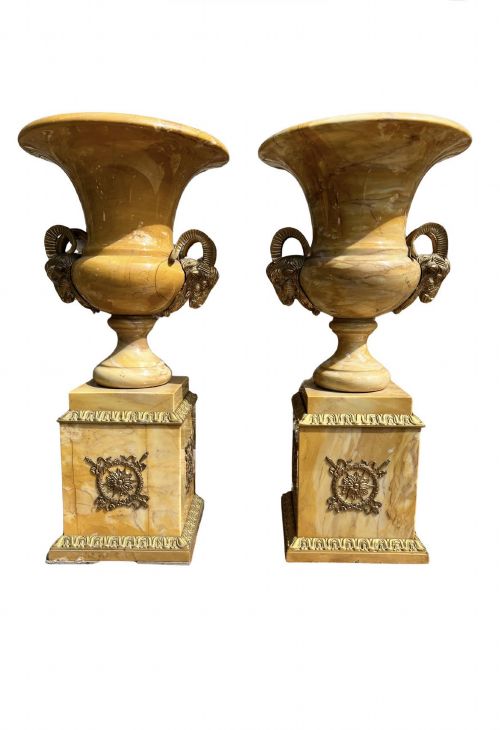
When you search for pair ornamental vases, you encounter matched sets designed purely for display rather than utility. These objects take the form of campana urns, ewers, cassolettes, and pedestals, originating across the nineteenth and early twentieth centuries.
The selections available include porcelain vessels from Worcester and Vienna, alongside metal works cast in bronze, ormolu, and spelter. Italian and French makers dominate the record, producing neoclassical and rococo revival forms for the Grand Tour market and domestic drawing rooms.
You are most likely to meet nineteenth-century examples in porcelain or patinated bronze paired with gilt mounts. These pieces reflect the enduring taste for classical antiquity throughout the Victorian and Regency periods.
How they were made
The construction of these vases combines ceramic arts with metalwork and stone carving. Porcelain bodies undergo high-temperature firing before receiving hand-painted decoration, gilding, and enamel work.
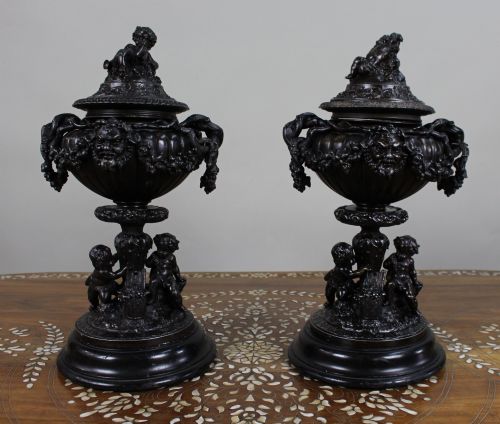
Metal versions utilise bronze, ormolu, and spelter, often cast in sections and chased by hand to define sculptural details like bacchic masks and putti. Marble, Sienna marble, quartz marble, and rosewood provide substantial bases and bodies, turned on lathes or carved to shape.
Listings feature porcelain, bronze, marble, and rosewood across the Regency, Victorian, and early twentieth-century periods.
What varies in quality
Quality in these matched pairs rests upon the crispness of the casting and the fidelity of the hand-painting. Fine bronze and ormolu mounts show sharp relief and careful chiselling, whereas lesser pieces exhibit softer edges and uniform surfaces.
Porcelain quality appears in the precision of the topographical or floral painting and the richness of the applied gold leaf. The selection of materials also dictates standing, with dense marbles and finely patinated bronzes holding greater visual weight than cast spelter.
Flight Barr And Barr·Jacob Petit·Royal Worcester·Royal Vienna
The Pair Ornamental Vases Glossary
- Cassolette
- A decorative vessel with a reversible lid that functions as either a solid vase or a burner for perfumes. They often appear in marble paired with gilt bronze mounts.
- Ewer
- A large jug with a wide spout and a looped handle, modelled after classical water vessels. These serve as ornamental centrepieces rather than tableware.
- Campana urn
- A bell-shaped vessel with a flared rim, standing on a circular foot and plinth. This classical form became popular during the Grand Tour period.
- Ormolu
- Finely ground high-carat gold applied to a bronze base using a mercury amalgam technique. It provides a bright, lasting golden finish on nineteenth-century decorative mounts.
- Spelter
- An alloy of zinc and lead used as a less costly alternative to bronze for sculptural castings. It takes patination well to simulate heavier metals.
Pair Ornamental Vases: Frequently Asked Questions
What were pair ornamental vases used for?
These decorative objects served to adorn mantelpieces, sideboards, and pier tables in formal nineteenth-century interiors. Their symmetry provided visual balance to architectural spaces.
They demonstrated the owner's cultural interests, particularly through Grand Tour souvenirs that referenced classical antiquity and European travels.
How do I style pair ornamental vases at home?
Place the pair symmetrically on a heavy piece of furniture such as a sideboard, console table, or mantelpiece. Their balanced forms work best when given adequate clearance to display their silhouette.
Avoid crowding them with smaller items so the painted details or bronze mounts remain the focal point of the surface.
How can I tell the period of a vase?
Examine the material combination and the style of decoration, comparing neoclassical motifs with later rococo revival trends. Regency pieces often display fine porcelain with topographical scenes, while late Victorian items favour patinated spelter or marble.
Maker marks on the base of porcelain vessels provide definitive chronological markers when present.
Are bronze and spelter vases heavy?
Bronze and marble examples possess substantial weight due to the density of the metal and stone. This heft contributes to their stability on large pedestals and mantelpieces.
Spelter alternatives feel noticeably lighter because the zinc alloy has a lower density than true bronze.