

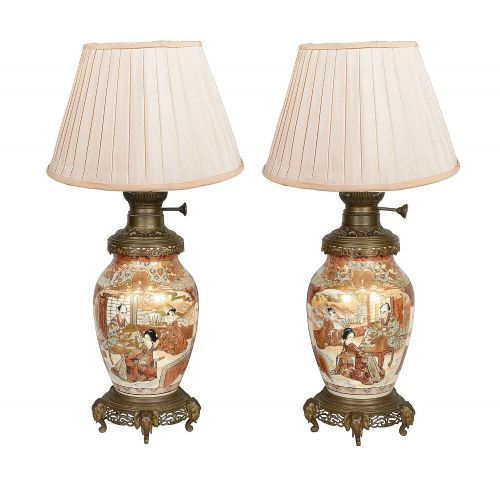


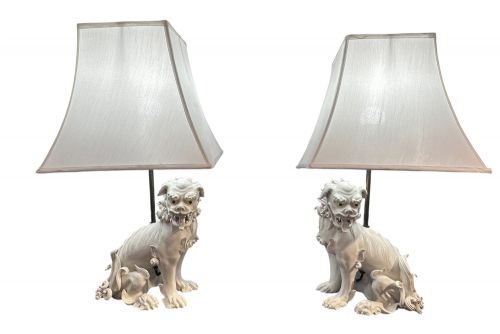

Pair Oriental Bedside Lamps
Pair oriental bedside lamps bring decorative narrative and rich cultural texture to a room, offering matched illumination from historic vessels.
Pair Oriental Bedside Lamps
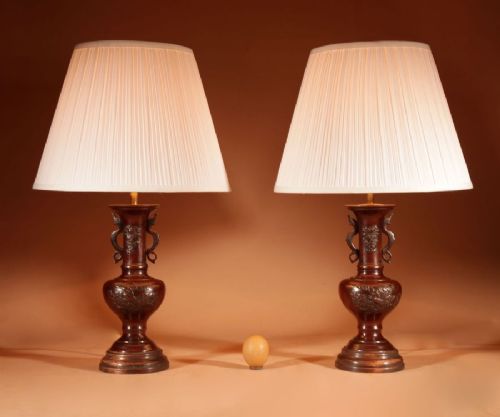
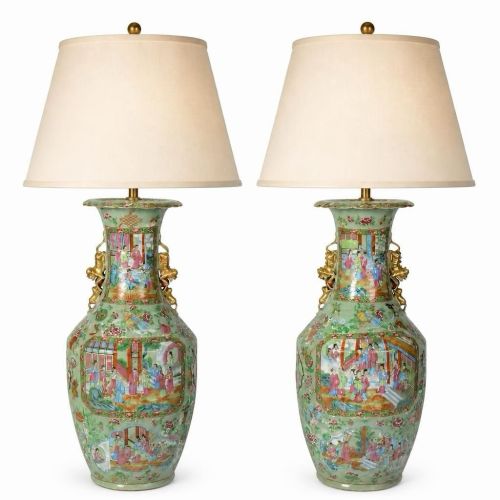
When you search for pair oriental bedside lamps, you encounter matched pairs of lighting fixtures fashioned from imported Asian and Anglo-Indian vessels, alongside occasional small cabinets designed to sit beside a bed. The selection centres heavily on converted nineteenth-century porcelain and bronze vases, supplemented by early twentieth-century decorative pieces.
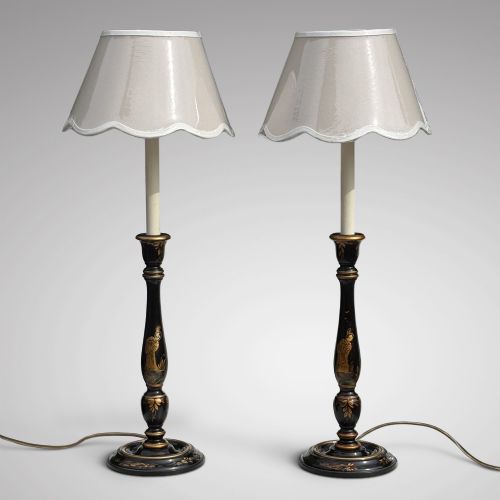
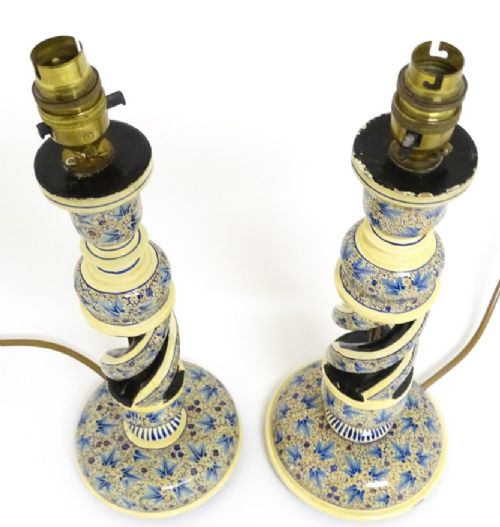
Most examples originate from Japanese Meiji period workshops or Chinese export kilns, featuring traditional hand-painted motifs or enamel work adapted into functional lighting. Alongside ceramic table lamps, the inventory includes lacquered timber cabinets and hand-painted Kashmiri surfaces that serve the same domestic purpose.
How they were made
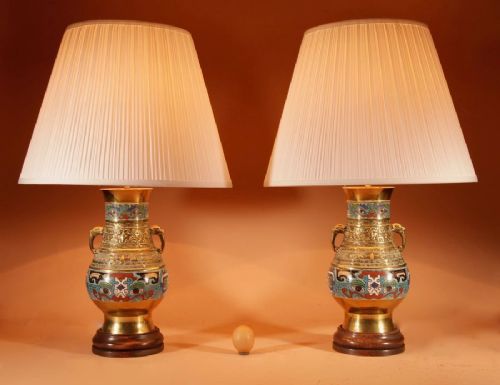
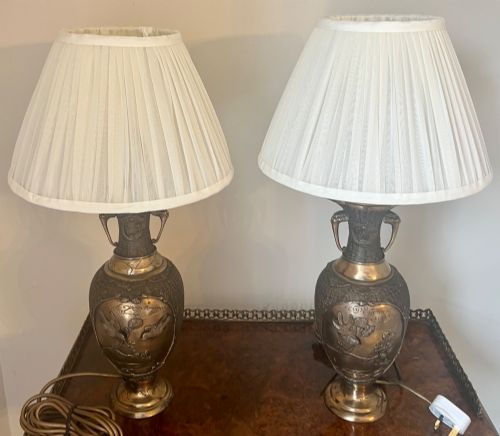
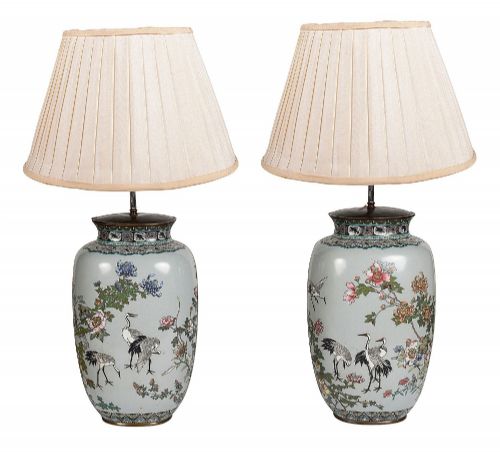
Makers utilised durable base materials such as heavy bronze, brass, and dense porcelain to form the body of each lamp, applying intricate finishes like champlevé enamel, cloisonné wirework, or hand-applied lacquer. Ceramic vessels display detailed underglaze blue, famille rose, or Satsuma enamel palettes fired at high temperatures.
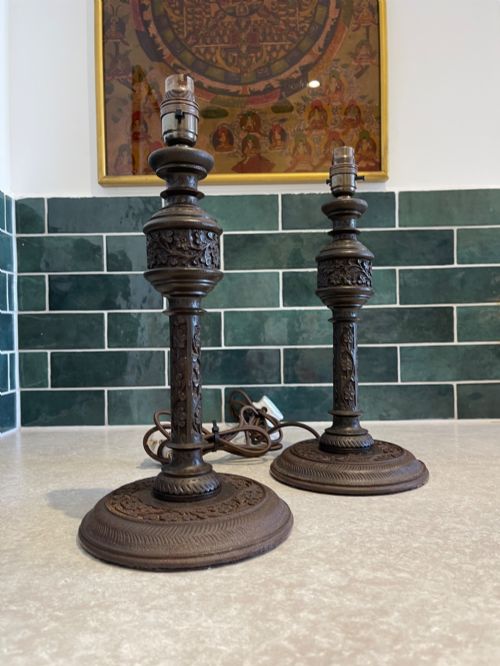
Surface decoration often combines raised gilt detailing with fine brushwork on porcelain, or carved lacquer over timber frames, while fabric shades and silk elements complete the modern wiring adaptation of these antique containers.
Listings feature periods spanning from the Victorian era and Qing dynasty through the 1930s, using porcelain, bronze, lacquer, and brass.
What varies in quality
The standard of a pair depends upon the crispness of the hand-painted brushwork and the precision of the metal cloisonné wire or bronze casting. Superior examples retain their original rich colour saturation and intricate detail without blurring or surface wear.
Symmetry between the two matched pieces defines desirability, as true pairs must share consistent proportions, glaze tones, and decorative motifs that complement each other precisely when placed on either side of a bed.
The Pair Oriental Bedside Lamps Glossary
- Chinoiserie
- European artistic style reflecting Chinese motifs and decorative techniques. It appears frequently on lacquered cabinets and painted wooden surfaces.
- Cloisonné
- Metalwork technique where enamel paste fills compartments enclosed by soldered wire. This method creates vibrant, patterned surfaces on vases and lamps.
- Satsuma
- Japanese earthenware pottery typically characterised by a crackled cream glaze and ornate polychrome enamel painting heightened with gold.
- Famille Rose
- Chinese ceramic palette distinguished by its opaque pink enamel colour. It dominates many nineteenth-century export porcelain vases.
- Meiji
- Japanese imperial period spanning from eighteen sixty-eight to nineteen twelve. Pieces from this era often showcase advanced bronze casting and detailed enamel work.
Pair Oriental Bedside Lamps: Frequently Asked Questions
How do I style pair oriental bedside lamps?
Position these matched lamps on either side of a bed to create visual symmetry and introduce historic pattern into a bedroom scheme. Their decorative bodies provide ambient light while serving as sculptural focal points on timber tables or cabinets.
Pair them with neutral textiles to let the intricate painted porcelain, bronze, or lacquer finishes stand out without competing with surrounding furnishings.
Were these lamps originally made for lighting?
Many of these pieces began life as decorative vases, ginger jars, or ceremonial vessels before being converted into functional electric table lamps in later decades. The conversion process typically involves wiring through the base or neck while preserving the original antique body.
This adaptation allows historic ceramic and metalwork objects to find a practical second life in modern interiors.
What is Chinese export porcelain?
Chinese export porcelain refers to ceramics manufactured in China specifically for overseas markets in Europe and the West. These pieces often blended traditional Eastern forms with decorative elements suited to Western tastes.
Such wares form a substantial portion of the nineteenth-century ceramic lamps found in this category.
How do I care for antique lamp surfaces?
Dust ceramic and bronze surfaces gently with a dry, soft cloth to prevent accumulation without disturbing delicate enamel or gilt details. Avoid using harsh chemical cleaning products that could strip historic patinas or lacquered finishes.
Check the electrical wiring periodically to ensure safe operation alongside modern bedside use.