





Oriental Enamel Lamp
An oriental enamel lamp brings weight, colour and history to a room, drawing the eye instantly.
Oriental Enamel Lamp
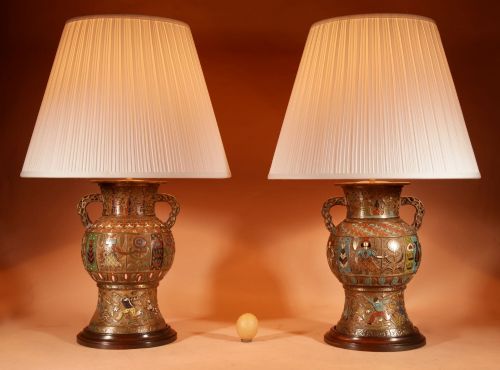
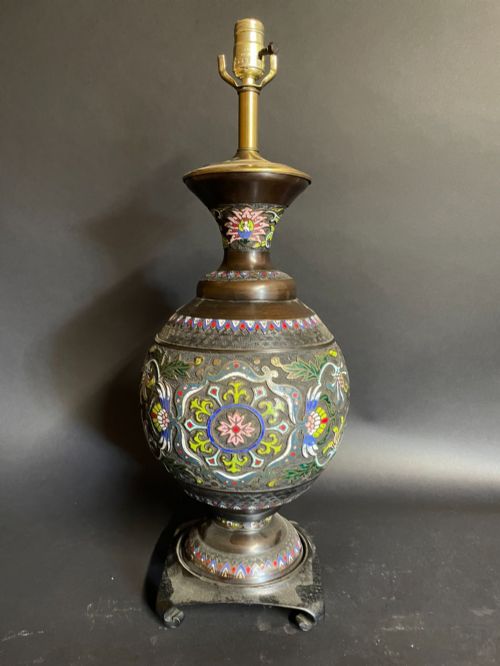
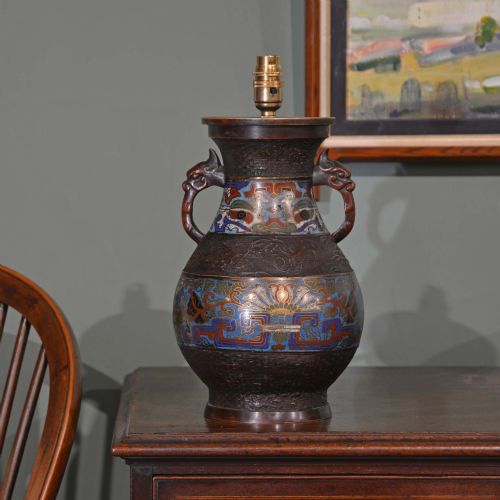
When you search for an oriental enamel lamp, you are looking at substantial table lights created from converted vases and urns. These pieces span the nineteenth century and the early twentieth century, incorporating Chinese and Japanese aesthetics.
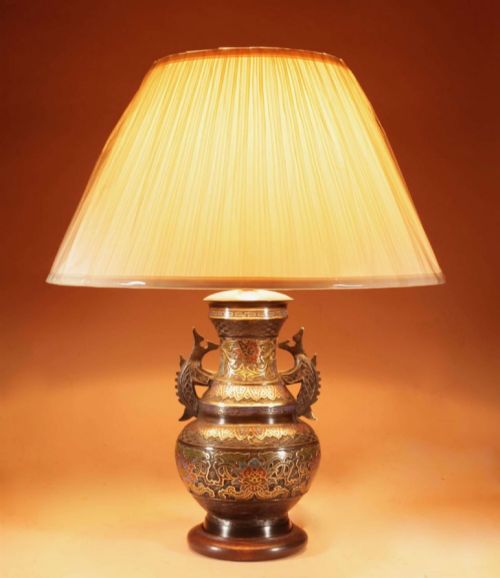
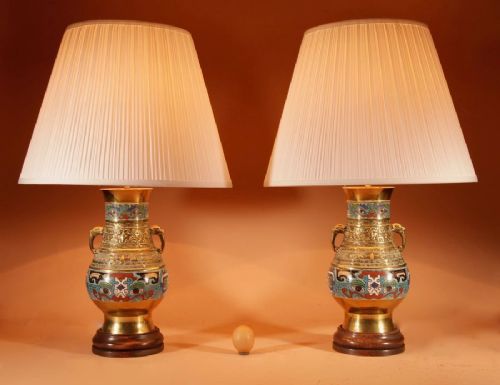
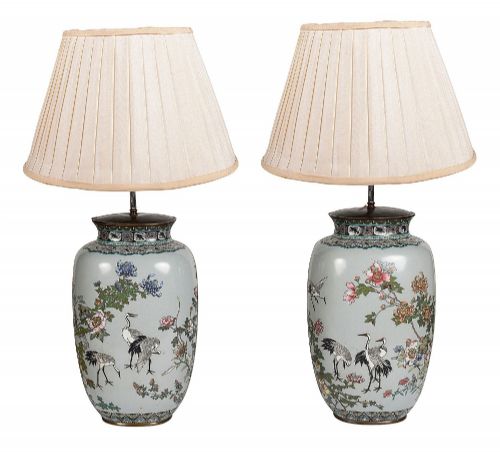
The most common examples on this page are pairs of table lamps fashioned from Chinese cloisonné or famille rose vases, alongside Japanese Meiji period bronzes. Many retain their original vessel form, mounted with brass or ormolu fittings to house modern electrical components.
Makers drew upon diverse traditions, producing Chinoiserie styles and export wares that range from delicate floral motifs to imposing bronze vessels. You will find both single lamp bases and symmetrical pairs well suited for sideboards or mantelpieces.
Materials and Construction
Craftsmen built these lamp bodies using bronze, brass, or porcelain as a foundation, applying intricate enamel work across the surface. Cloisonné and champlevé techniques required fusing glass pastes within wire cells or recessed metal troughs under high heat.
Many vessels were later adapted for illumination by adding wooden or fabric elements alongside metal mounts. Gilt bronze fittings frequently secure the porcelain or enamel bodies, bridging the original Far Eastern export ware with Western domestic lighting.
Listings feature items spanning the Victorian era through the early twentieth century, utilising brass, bronze, porcelain, and fabric.
Judging Quality and Execution
The distinction between average and exceptional pieces lies in the crispness of the enamel work and the weight of the metal base. Finer examples display meticulous cell-work and richly detailed polychrome palettes without blurring or pooling in the vitreous enamels.
Mounting quality also dictates the desirability of a piece, particularly where ormolu or cast brass fixtures integrate smoothly with the antique vase. The presence of matching pairs rather than isolated single lamps elevates the stature of the lighting.
The Oriental Enamel Lamp Glossary
- Cloisonne Enamel
- A metalwork technique where thin wires form raised barriers on a vessel, creating cells that hold coloured glass paste before firing. This method produces intricate geometric and floral patterns across the lamp body.
- Champleve
- A process where troughs or cavities are gouged directly into a thick bronze or brass base to receive enamel powders. These sunken fields yield a robust, textured surface often seen on Japanese table lights.
- Famille Rose
- A palette of opaque enamels dominated by rose-pink hues, developed in China during the eighteenth century and continuing through the nineteenth century. Lamps utilising these porcelain vases feature delicate floral and figural scenes.
- Ormolu
- Gilt bronze mounts applied to the top and bottom of ceramic or metal vessels to provide structural support for lamp fittings. Fine ormolu adds a bright golden contrast to darker patinated bronzes and colourful enamels.
Oriental Enamel Lamp: Frequently Asked Questions
Are these lamps converted from old vases?
Most of these pieces started life as decorative vases, urns, or jars before being professionally mounted as table lamps. The conversion process typically involves adding fitted bases, wiring channels, and lamp holders while preserving the antique body.
Buyers often find that the vessel retains its original character, sometimes showing the subtle signs of a previous utilitarian life before electrical adaptation.
How do I date an oriental enamel lamp?
Dating relies on examining the style of the enamel, the weight of the bronze or porcelain body, and the nature of the mounts. Nineteenth-century examples often display deep patination on the bronze and dense, meticulous cloisonné wirework.
Later pieces from the early twentieth century may feature simpler wiring arrangements and brighter, more uniform enamel palettes. Comparing the decorative motifs to known export periods helps narrow down the decade.
Do these lamps come as pairs?
A significant portion of the available lighting consists of matching pairs, which were created from symmetrical sets of nineteenth-century export vases. Finding balanced pairs makes these lamps particularly sought after for placement on large sideboards or flanking a fireplace.
Single lamp bases also appear frequently, offering a striking focal point for smaller tables or desks.
How do I care for antique enamel and bronze?
Maintenance requires gentle dusting with a soft, dry cloth to protect fragile enamel surfaces and aged metal patinas. Avoid using liquid cleaners, abrasive cloths, or chemical polishes that can strip the gilt bronze or damage the vitreous glass cells.
Keeping the lamps away from direct sunlight preserves the vibrant colours of the famille rose and cloisonné decoration over time.