
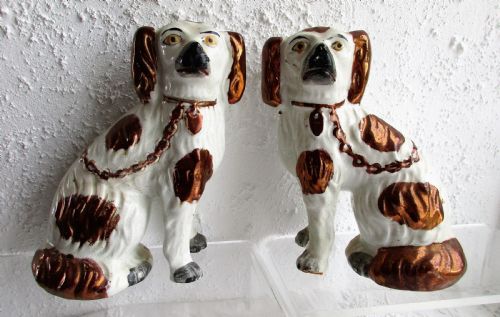
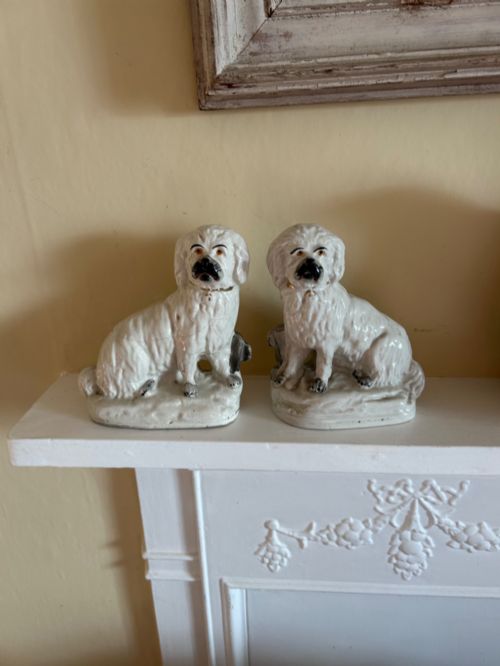


Pair of Staffordshire Dog Figures
A pair of staffordshire dog figures brings cheerful Victorian character to a mantelpiece, offering enduring charm through hand-painted ceramic craftsmanship.

Pair of Staffordshire Dog Figures
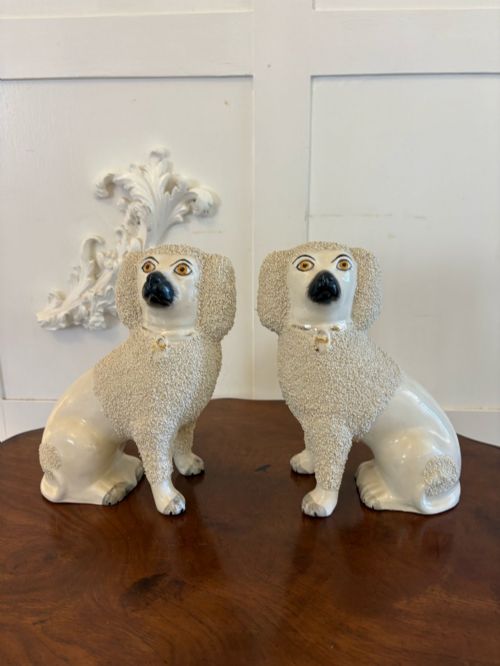
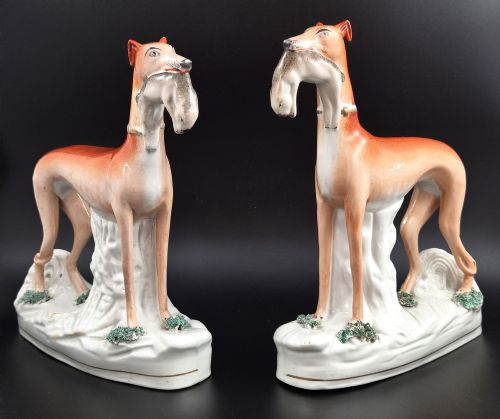
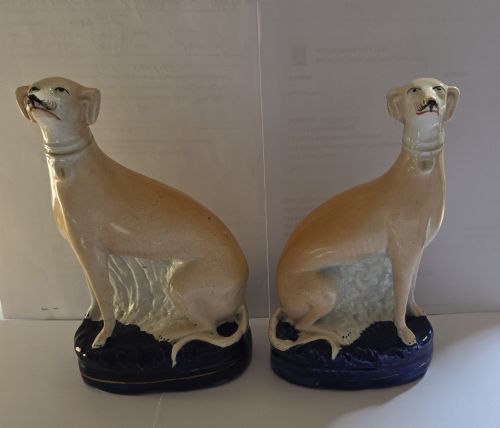
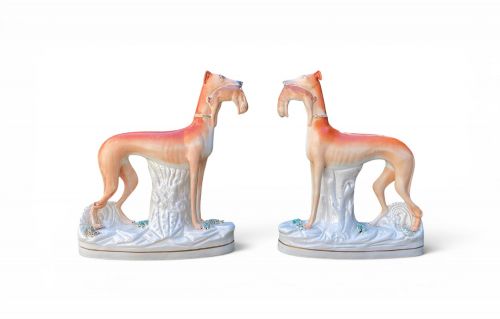
When searching for a pair of staffordshire dog figures, collectors encounter an array of nineteenth-century earthenware and pottery modelled as spaniels, poodles, greyhounds, and whippets. These ornamental ceramic figures range from small mantel ornaments to large fireside companions produced across the Victorian era.
Spaniels known as comforters dominate the selection, alongside sporting hounds often depicted with hares or adapted as quill holders, inkwells, and spill vases. Most examples date from the mid to late nineteenth century, reflecting English traditional pottery practices of the period.
The objects span simpler country pottery figures to finely painted models accented with gold leaf and copper lustre. Buyers typically find symmetrical pairs designed to flank a fireplace or centrepiece.
Materials and production methods
Potters shaped these figures from earthenware and glazed ceramic bodies using press moulds, often producing hollow forms with flat backs intended to face a wall. Artisans then applied lead glaze to seal the clay before adding enamel paint and gilt details.
Certain Victorian poodles feature tiny pieces of shredded clay applied by hand to mimic curly fur.
Assessing quality in ceramic figures
The integrity of the matched pair remains central, as genuine matching sets share uniform size, stance, and decorative treatment. Finer specimens also exhibit careful finishing at the base and minimal kiln distortion during firing.
Thomas Parr·Royal Doulton·Beswick
The Pair of Staffordshire Dog Figures Glossary
- Earthenware
- Porous pottery fired at lower temperatures than stoneware, forming the primary body material for these nineteenth-century figures.
- Lead glaze
- A shiny coating applied to pottery before firing that provides a glossy waterproof surface and deepens the colour of the underlying body.
- Spill vase
- A hollow vertical cylinder attached to a figure designed to hold wooden spills for lighting candles or fires.
- Copper lustre
- A metallic glaze finish that yields a reflective, coppery sheen across the ceramic surface.
- Comforter spaniel
- A popular nineteenth-century Staffordshire spaniel model traditionally placed on mantelpieces as a domestic guardian.
Pair of Staffordshire Dog Figures: Frequently Asked Questions
What were staffordshire dogs used for?
These ceramic figures served primarily as decorative mantel ornaments in Victorian homes, often positioned symmetrically on either side of a fireplace.
Some specialised versions functioned as utilitarian objects, incorporating inkwells, quill holders, or spill vases for everyday desk and parlour use.
How do you date nineteenth century figures?
Dating relies on stylistic clues, manufacturing techniques, and the type of glaze or enamel colours applied to the earthenware body. Victorian examples frequently show characteristic press-mould seams and hand-painted details typical of mid to late nineteenth-century Staffordshire potteries.
Comparing base construction and decorative motifs like copper lustre or gilt highlights helps narrow the production period within the era.
Are these figures always found in pairs?
While many survive as symmetrical pairs intended to flank a central domestic space, single figures and larger groupings with puppies also appear.
Original matched pairs command particular interest from collectors seeking complete fireplace displays from the Victorian period.
How should I clean antique earthenware?
Dust these ceramic pieces gently with a soft, dry brush to preserve the delicate hand-painted enamel and gold leaf decorations.
Avoid using water or chemical cleaners, which can damage the porous earthenware body and nineteenth-century lead glazes.