




Pair of Sauce Boats
A pair of sauce boats brings elegance to the dining table, serving gravies and sauces with undeniable historical charm.
Pair of Sauce Boats
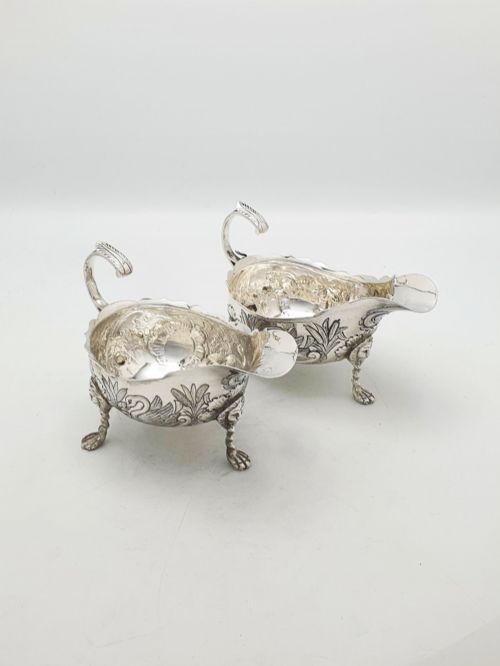
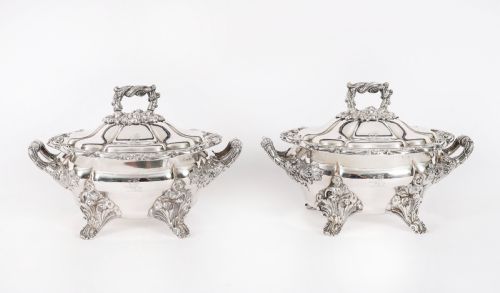
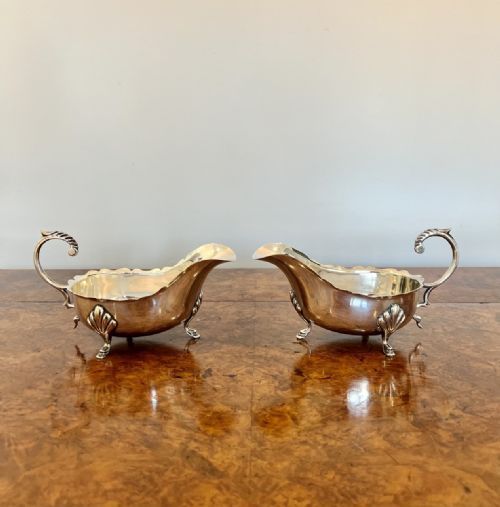
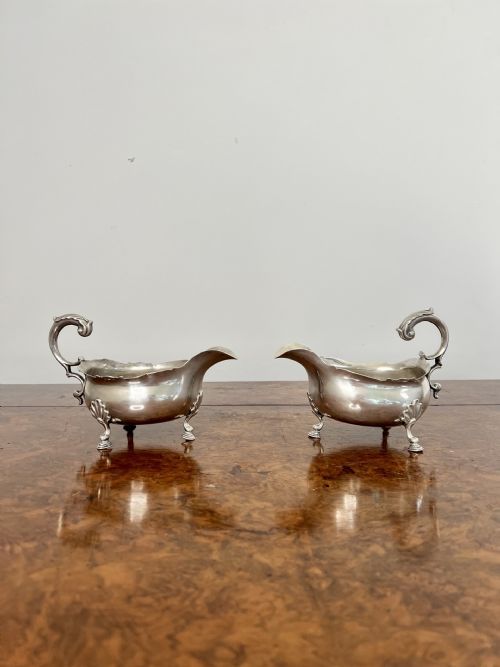
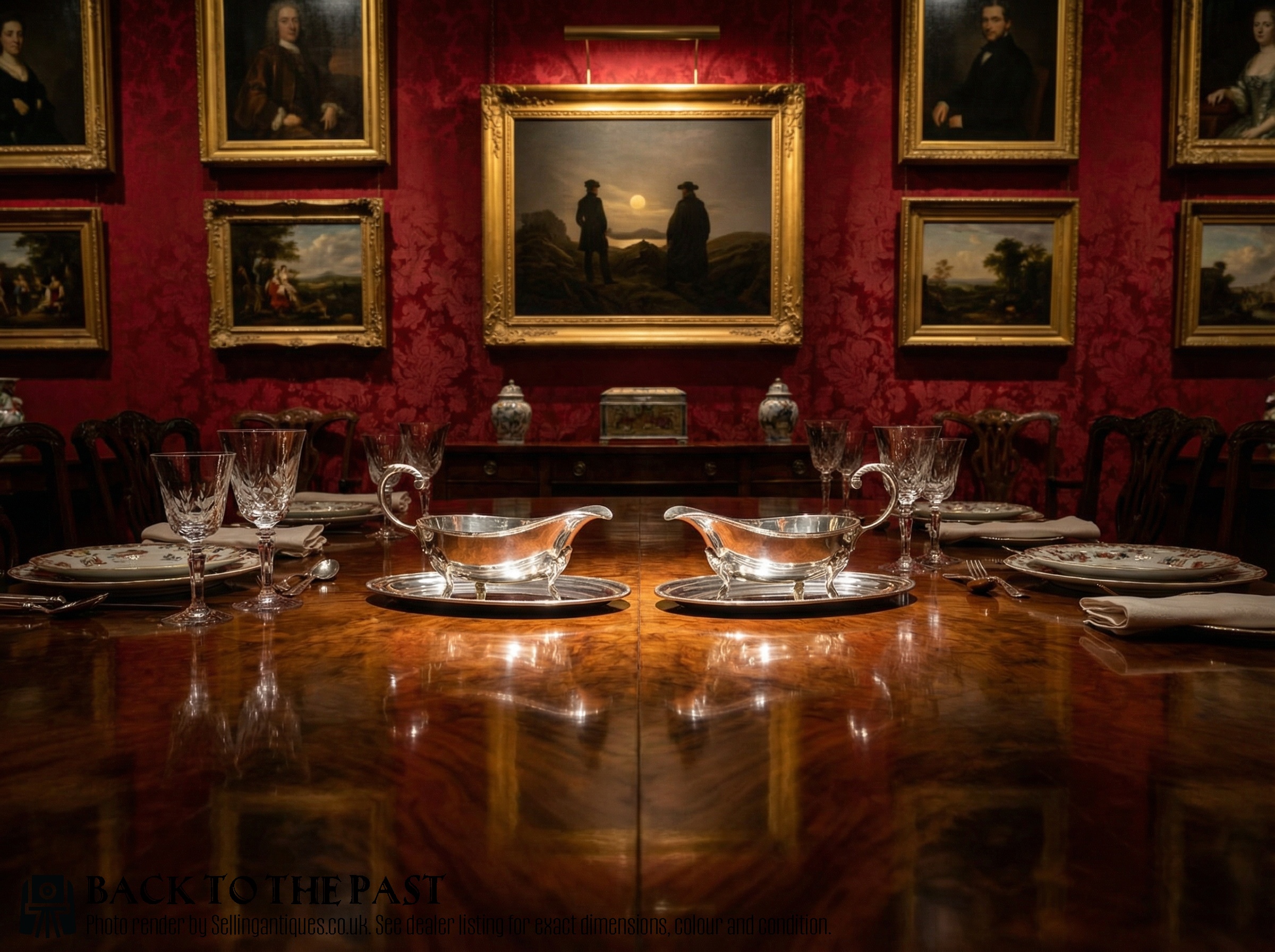
A pair of sauce boats consists of matching vessels designed for serving gravies, melted butter, and culinary sauces during formal dining. When searching for a pair of sauce boats, buyers encounter forms ranging from simple eighteenth-century sterling silver vessels to nineteenth-century ironstone tureens and twentieth-century silver plate.
The pieces appearing on this page span several centuries, including Georgian, Victorian, and Edwardian periods. Alongside traditional silver and silver plate, examples occasionally incorporate ceramic materials such as ironstone and porcelain.
Materials and construction methods
Makers utilised sterling silver, silver plate, and ironstone to shape these serving vessels, often employing casting and hammering techniques for metalwork. Old Sheffield plate appears alongside standard silver plating methods, while ceramic examples utilise glaze and transfer printing.
Handles and feet often display decorative casting, including scroll handles, acanthus leaf motifs, and claw-and-ball supports. Pedestal bases and attached stands provide stability for the pouring lip and deep bowl configuration.
Distinctions in craftsmanship and design
The distinction between standard production and top-tier pieces rests upon the crispness of chased decoration, the weight of the metal, and the balance of the handle and spout. Heavier gauges of silver and intricate hand-engraving indicate superior workshop origin.
Design complexity also separates examples, with pedestal bases, gadrooned rims, and matching ladles elevating a set above plain domestic serveware.
William Grundy·Abraham Portal·Harrods·William Collins·Walker & Hall·Marples & Co·Asprey·William Neale Ltd·Francis Higgins
The Pair of Sauce Boats Glossary
- Sauce boat
- A small pitcher or boat-shaped vessel designed for serving gravy or sauce at the table.
- Sauce tureen
- A covered ceramic or metal serving vessel for sauces, frequently accompanied by a matching ladle and fixed or detachable stand.
- Old Sheffield plate
- A composite material formed by fusing a sheet of silver to a copper core, common in eighteenth and nineteenth-century manufacture.
- Ironstone
- A heavy, durable type of earthenware patented in the nineteenth century as a resilient alternative to porcelain.
- Pad foot
- A rounded foot often found on three-legged Georgian silver vessels, resting firmly on the surface without scratching the table.
Pair of Sauce Boats: Frequently Asked Questions
How were sauce boats used?
These vessels were placed on the dining table to hold and pour warmed gravies, melted butter, or sweet sauces during meals.
Guests or servants used the pouring spout to dispense the contents neatly over meats and puddings.
Can I use them for dining?
Metal and ceramic examples remain fully functional for modern dining and serveware duties.
Hand washing preserves the finish of older silver plate and delicate ironstone glazes.
How do I date silver sauce boats?
Hallmarks stamped onto silver pieces indicate the assay office, the specific year of testing, and the maker's mark.
Stylistic shifts, such as the transition from plain George II bodies to elaborate Victorian embossing, provide further chronological clues.
What is the difference between a sauce boat and a gravy jug?
The terms frequently overlap in historical descriptions to describe open vessels with a lip and handle designed for pouring liquids.
Some collectors apply gravy jug to taller, narrower forms, while sauce boats are typically wider and shallower.