
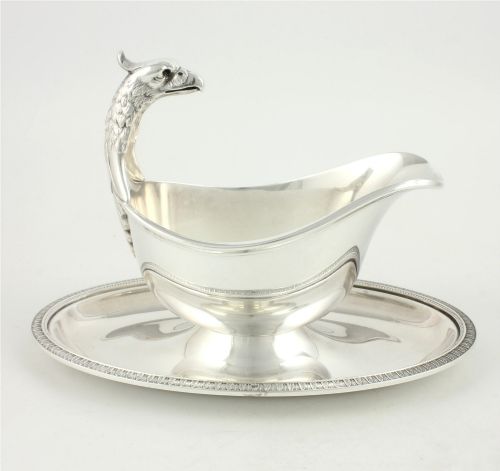
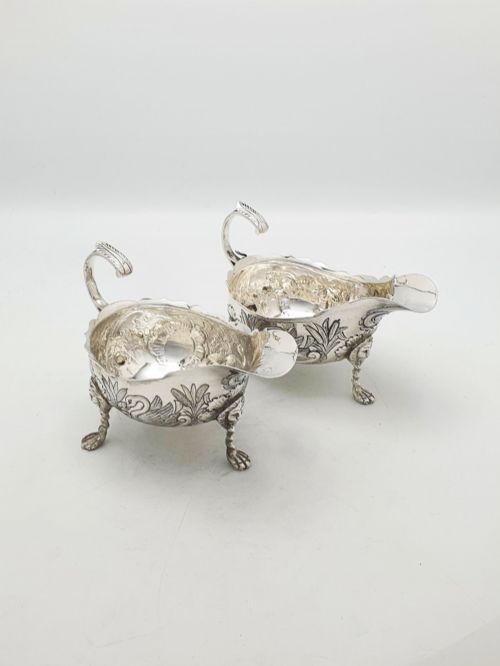
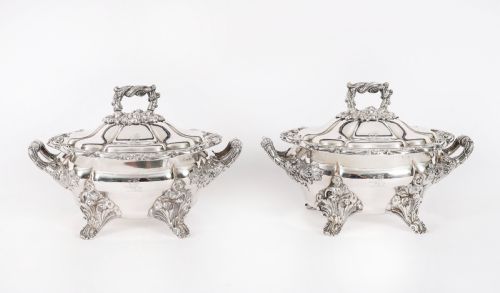
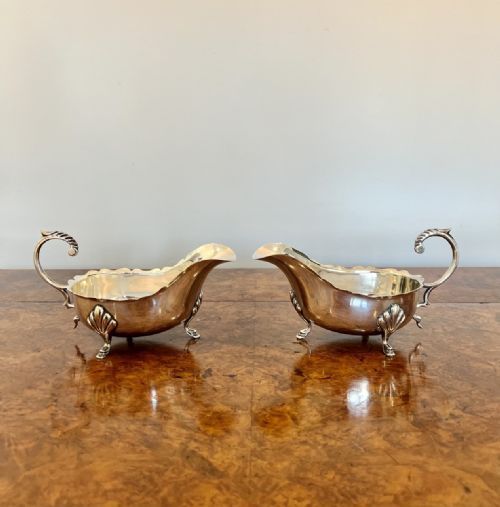
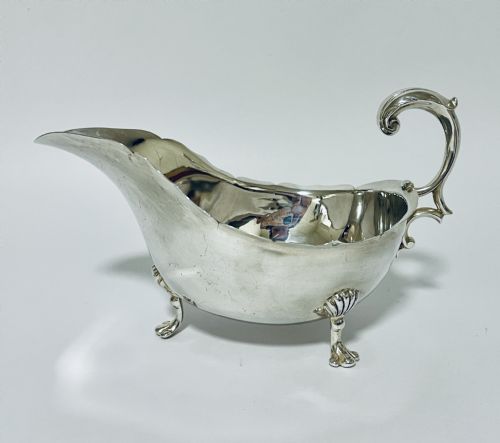


Silver Plated Gravy Boat
A silver plated gravy boat brings traditional dining elegance to the table, offering practical warmth and refined polish for sauces.

Silver Plated Gravy Boat
A silver plated gravy boat comprises open sauce boats, lidded tureens, and specialised warmers designed to keep liquids hot at the table. These vessels appear across multiple periods, including the eighteenth century, nineteenth century, Edwardian era, and mid-twentieth century.
The search phrase encompasses related serveware such as sauce dishes, spoon warmers, and Argyll gravy warmers. Edwardian and nineteenth-century styles dominate the selection available to buyers today.
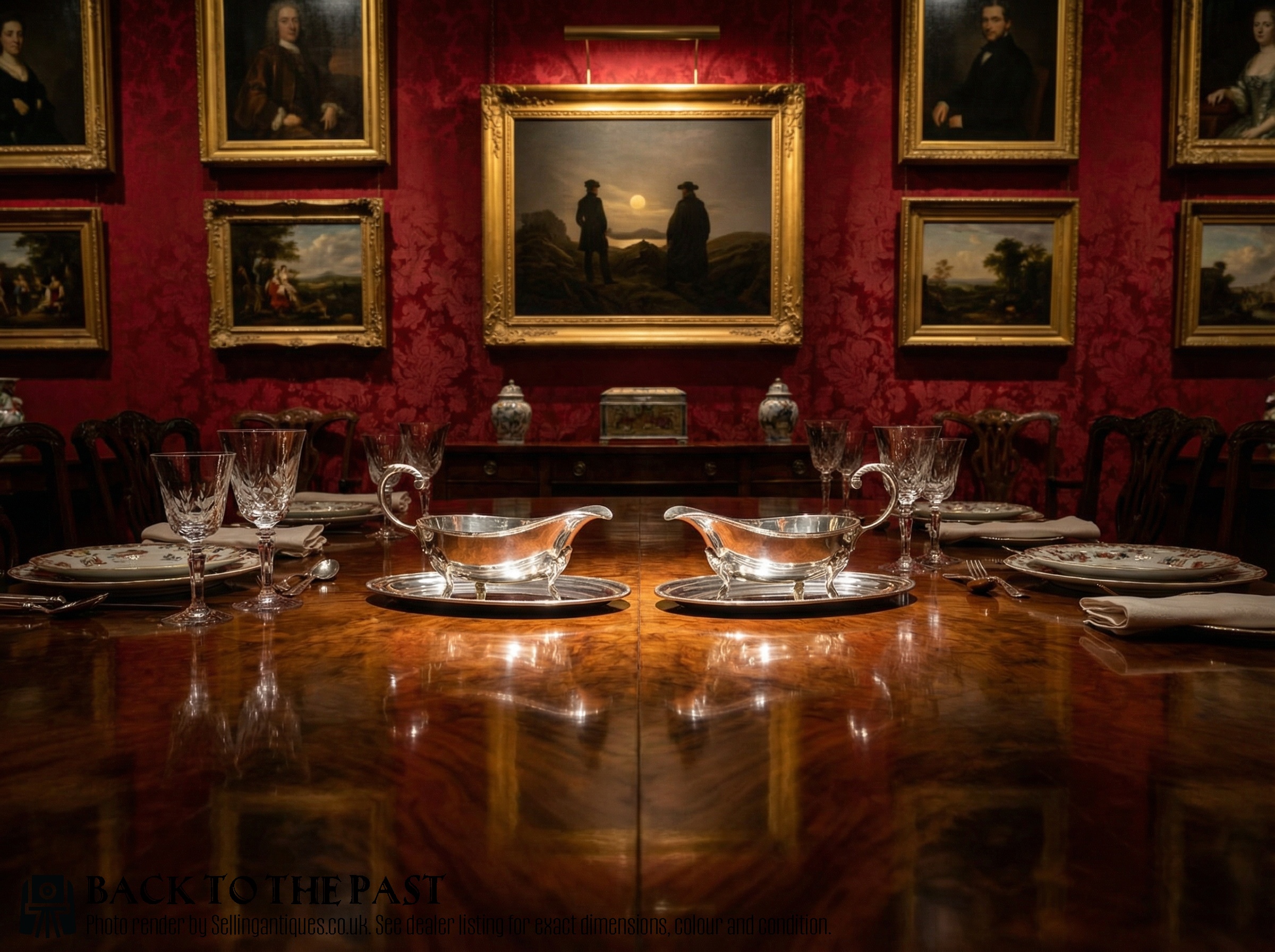
Materials and construction methods
Makers utilised base metals such as copper and nickel silver, bonded or coated with a layer of fine silver. Early pieces frequently rely on Old Sheffield Plate, where a thin sheet of silver is fused to a copper core.
Later nineteenth-century and twentieth-century production adopted electroplating techniques, depositing silver evenly over an electroplated nickel silver substrate. Interiors of warmers and certain tureens often incorporate cane insulation or double-walled chambers for hot water.
Silver Plated Gravy Boat Retail Price Guide 2026
Typical asking prices for silver plated gravy boat among the pieces listed under this phrase on Sellingantiques today, from the lower quarter to the upper quarter. They describe what is for sale here now, not the wider market.
Listings feature items spanning the eighteenth century to nineteen-fifty, utilising copper, silver plate, and Old Sheffield Plate.
Distinctions in quality and execution
Quality rests in the crispness of chased or engraved ornament, the structural integrity of handles and legs, and the retention of the underlying silver layer. Heavier gauge metalwork denotes superior craftsmanship and durability in daily use.
The presence of crisp crests, well-cast figural or paw feet, and intact Old Sheffield plate edges elevate an example above standard production. Maker marks from established workshops further distinguish finer specimens.
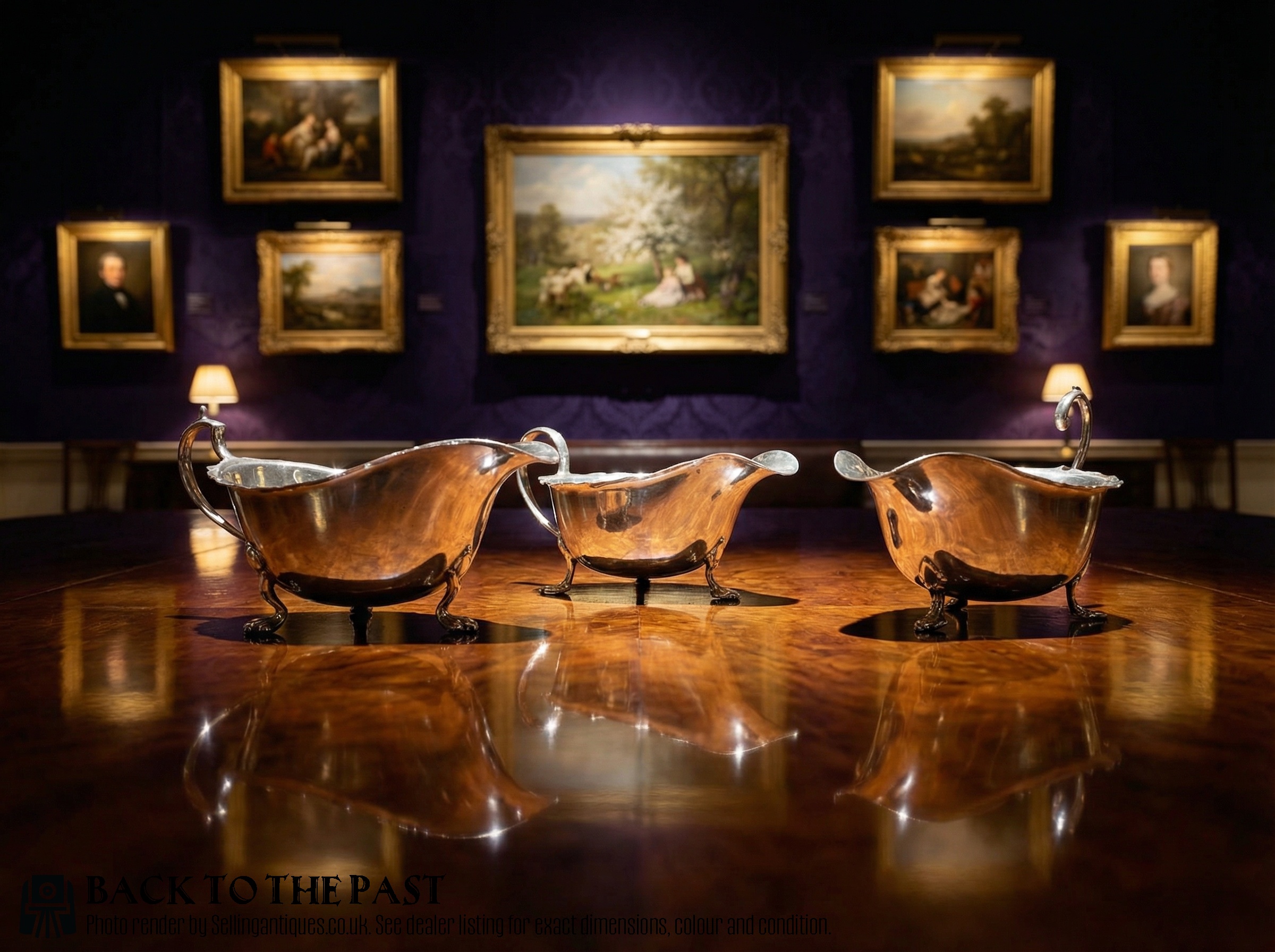
Christofle Gallia·Padley Parkin And Staniforth·Mappin And Webb
The Silver Plated Gravy Boat Glossary
- Old Sheffield Plate
- A method of fusing a thin sheet of sterling silver to a copper core before shaping. This technique creates a distinctive edge where the underlying copper subtly shows through.
- Argyll
- A vessel featuring a central compartment for hot water to keep gravies warm during long meals. It functions essentially as a gravy warmer.
- Sauciere
- The French term for a sauce boat or gravy boat. These pieces often exhibit distinct continental Rococo or Art Nouveau stylistic flourishes.
- Electroplated Nickel Silver
- Abbreviated as EPNS, this describes base metal plated via an electrical current in a silver bath. It became the dominant manufacturing method in the Victorian period.
- Spoon Warmer
- A specialised vessel shaped like a gravy boat designed to hold hot water and warm silver spoons before service. They appear in Victorian table settings.
Silver Plated Gravy Boat: Frequently Asked Questions
How do I keep a silver plated gravy boat clean?
Wash the vessel gently in warm soapy water using a soft cloth, avoiding abrasive pads that damage the plating.
Dry thoroughly immediately afterwards with a soft linen towel to prevent water spots and tarnishing.
Can I use an antique gravy boat for daily dining?
These pieces were built for dining tables and handle warm gravies and sauces comfortably during meals.
Take care to avoid acidic foods sitting in the vessel for extended periods to protect the silver surface.
What is the difference between a sauce boat and an Argyll?
A standard sauce boat is an open vessel designed for immediate pouring at the table.
An Argyll incorporates a heated jacket or core to maintain gravy temperature throughout a formal meal.
How can I tell Old Sheffield Plate from electroplate?
Old Sheffield Plate reveals thin lines of copper beneath worn silver edges, particularly around rims and high points.
Electroplated pieces show a uniform silver layer over a greyish nickel silver base when the plating wears thin.