



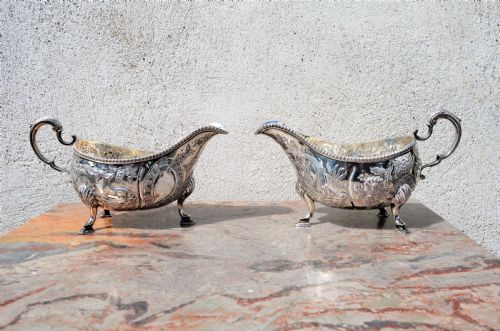

Pair Silver Gravy Boats
These pair silver gravy boats bring dining tables from the eighteenth, nineteenth, and twentieth centuries into active service.
Pair Silver Gravy Boats
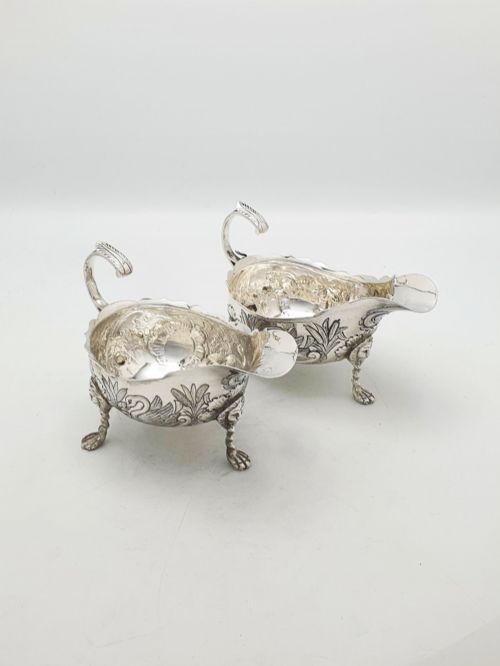
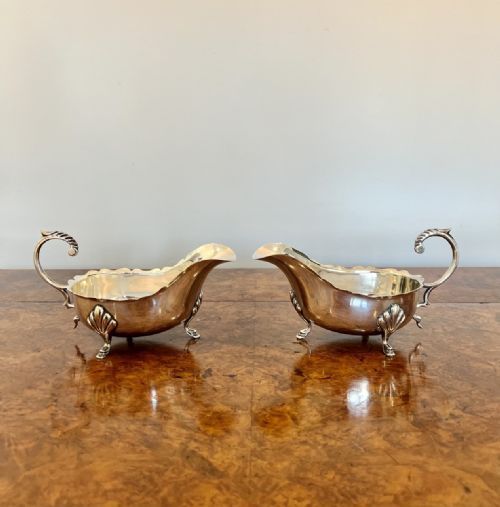
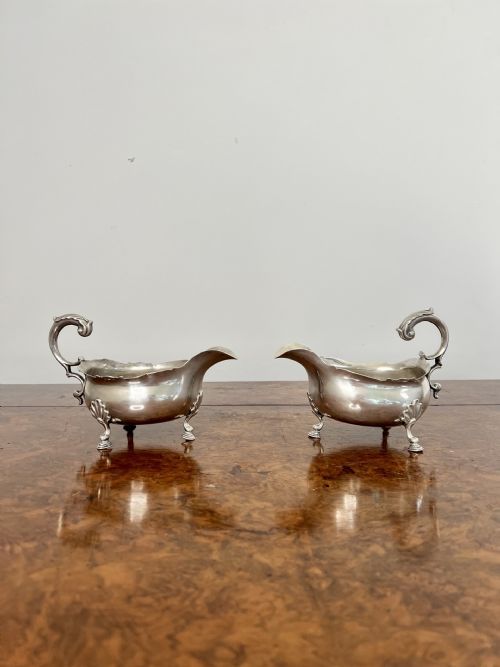
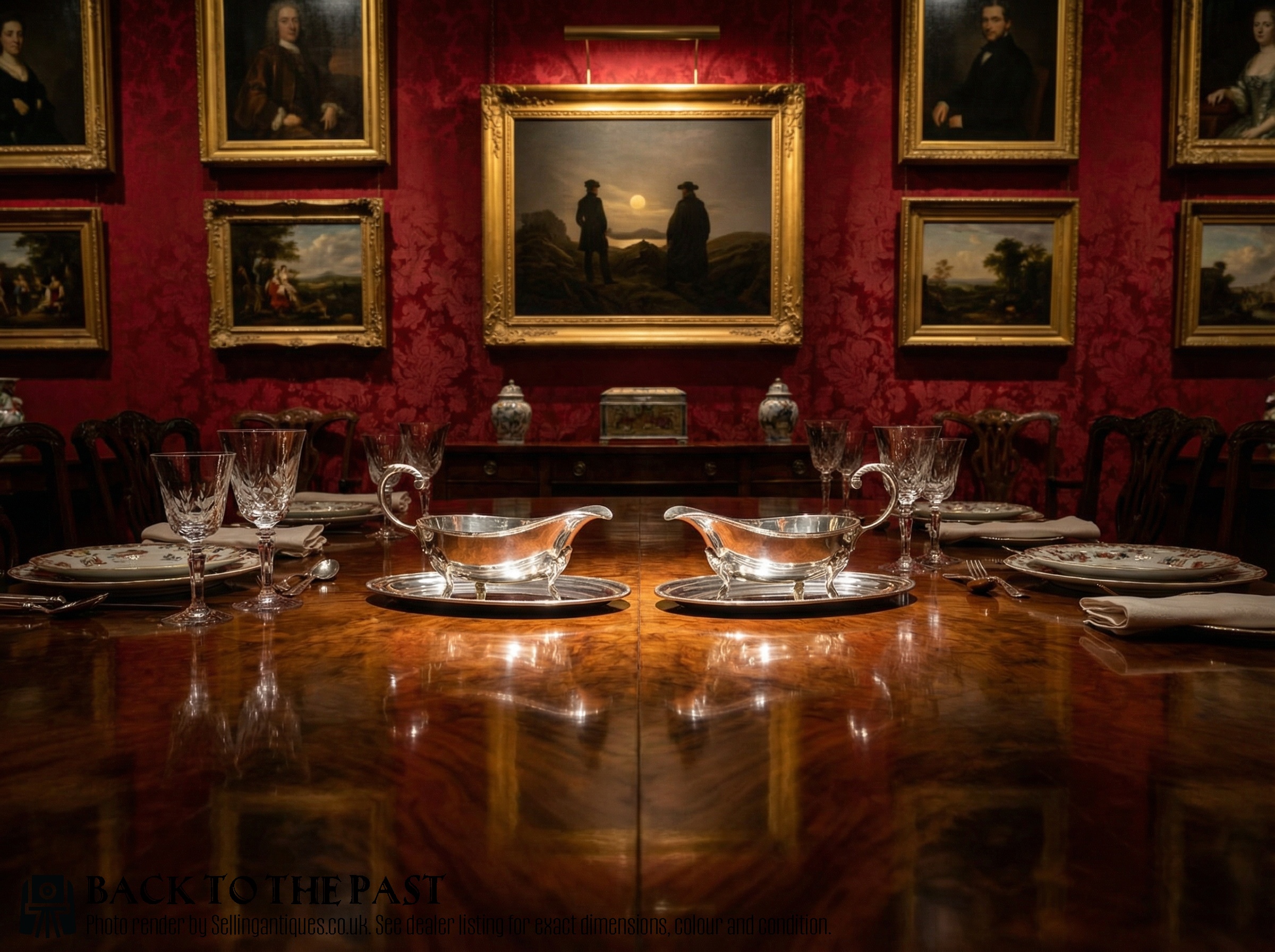
A search for pair silver gravy boats reveals twin vessels designed for pouring sauces and gravies at the formal dining table. These pieces emerge in sterling silver, silver plate, and Old Sheffield Plate across periods spanning from George III through the mid-twentieth century.
The versions most commonly met on this page include sterling silver examples from Victorian and Edwardian workshops alongside silver plated sauce boats from the late nineteenth and early twentieth centuries. Makers created them with pedestal bases, scroll handles, and occasionally matched stands or lidded forms.
Forms range from plain Georgian bodies to heavily engraved Edwardian designs and ornate Victorian sleigh shapes. Buyers encounter both Irish and English silver alongside unmarked pieces intended for everyday dining.

How they were made
Silversmiths hammered sterling silver into shape or cast bodies and handles separately before soldering them together. Surface decoration often involved hand engraving, chased borders, and applied beaded edges.
Plated alternatives utilised copper or nickel silver as a base metal. Old Sheffield Plate fused a thin layer of silver to a copper core, whilst later pieces relied on electroplated nickel silver.
Several nineteenth-century models take the whimsical shape of tiny sleighs, ready to glide across the dining table.
What varies in quality
The thickness of the metal and the crispness of the chased or engraved detail separate standard production from superior output. Substantial gauge sterling silver maintains structural integrity at the rim and handle junctions.
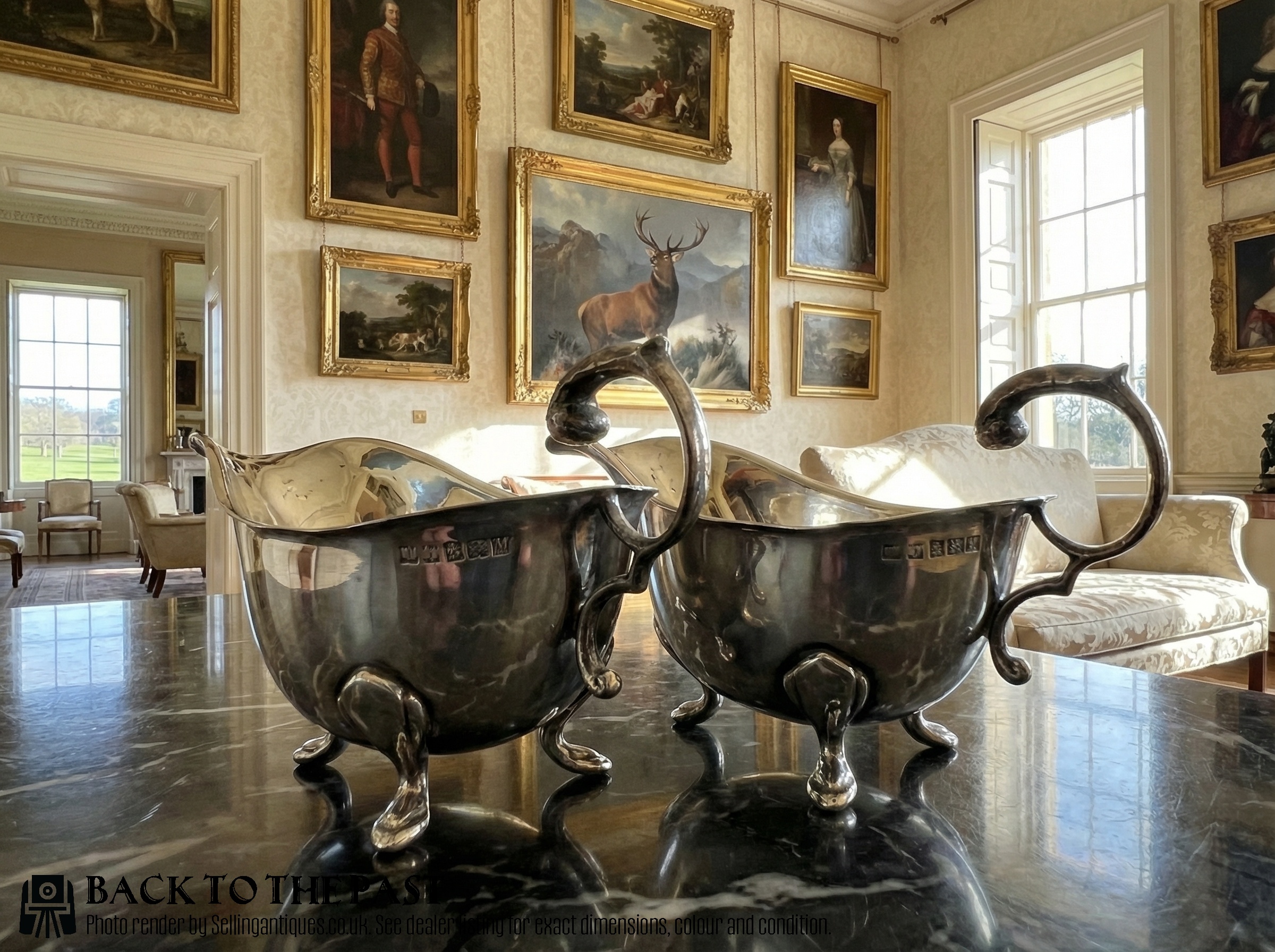
Makers' marks provide a clear indicator of origin and workshop standard. Pieces bearing clear hallmarks from established silversmiths command greater interest than unmarked silver plate.
William Grundy·William Comyns·Mappin & Webb·Asprey
The Pair Silver Gravy Boats Glossary
- Old Sheffield Plate
- A method of fusing silver to a copper base by heat and pressure before rolling it into sheets. This technique predates electroplating and leaves a characteristic edge where the copper shows.
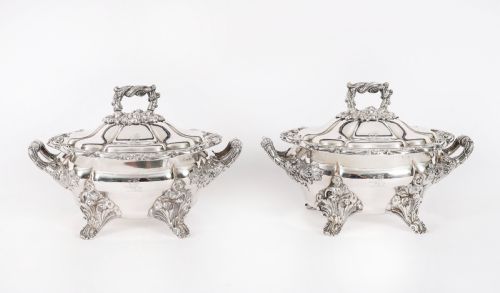
- Sauce Tureen
- A covered vessel designed to keep sauces warm at the table. These often sit on fixed or separate matching stands.
- Sterling Silver
- An alloy consisting of pure silver and other metals, usually copper, standardised at a specific purity level. British pieces typically carry clear hallmarks indicating this standard.
- Silver-Gilt
- Silver that has been coated with a thin layer of gold on the interior or exterior surface. This treatment protected the metal from aggressive food acids.
- Pedestal Base
- A raised foot supporting the body of the vessel above the table surface. This form appears frequently on Georgian designs.
Pair Silver Gravy Boats: Frequently Asked Questions
How do I clean antique silver?
Use a soft cloth and a dedicated silver polish designed to remove tarnish gently without wearing away the surface layer.
Avoid abrasive pastes or dips that strip the patina built up over generations of use.
Are these suitable for daily use?
Sterling silver and heavy plate endure regular dining use provided they receive proper hand washing after each meal.
Harsh detergents and dishwashers cause pitting and damage the finish of older metals.
How do I date a pair?
Look for hallmarks on sterling pieces, which record the assay office, date letter, and maker's mark.
Plated items rely on style, weight, and secondary retailer marks to indicate their period of manufacture.
What is the difference between a gravy boat and a sauce tureen?
Gravy boats feature an open pouring spout and an attached handle for direct service at the table.
Tureens include a fitted lid to retain heat and frequently incorporate a matching underplate.