


Pair of Pitchers
A pair of pitchers brings symmetrical balance and historical craftsmanship to a room, offering matching vessels shaped for display or serving.
Pair of Pitchers
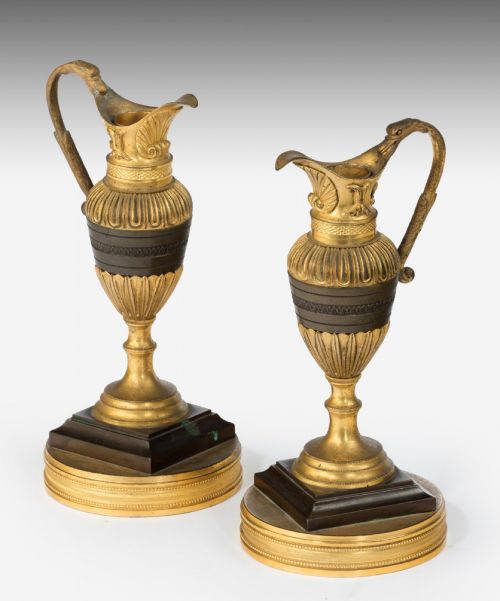
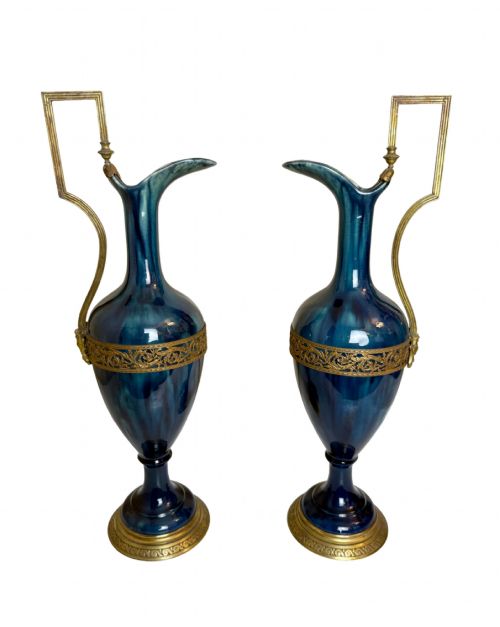
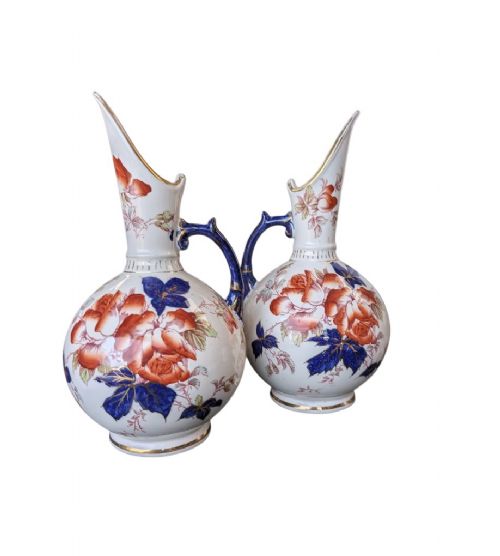
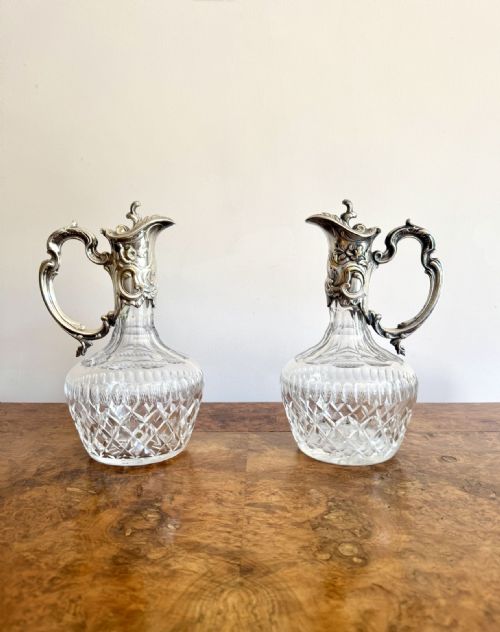
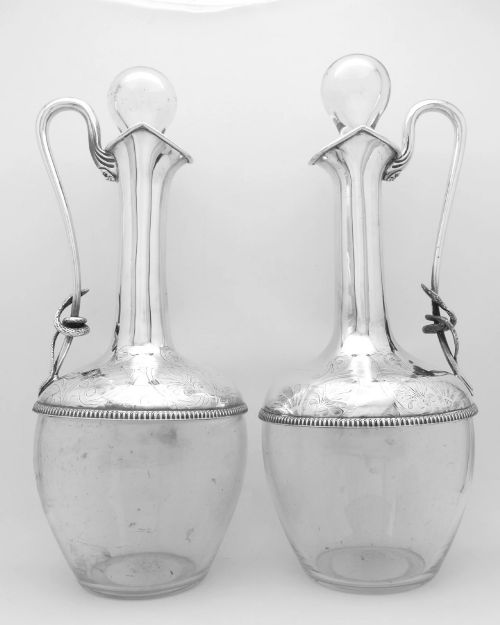
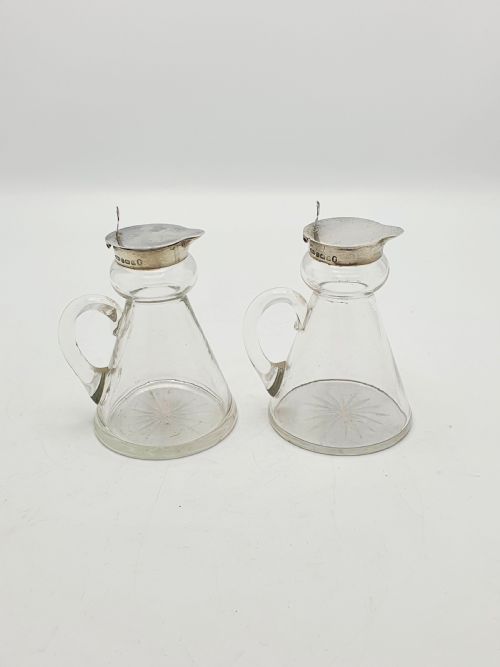
When searching for a pair of pitchers, buyers encounter a diverse selection of matching dual vessels designed for decorative or utilitarian purposes. The listings frequently present these matching sets in forms such as ewers, claret jugs, cream jugs, and traditional pouring vessels.
How They Were Made
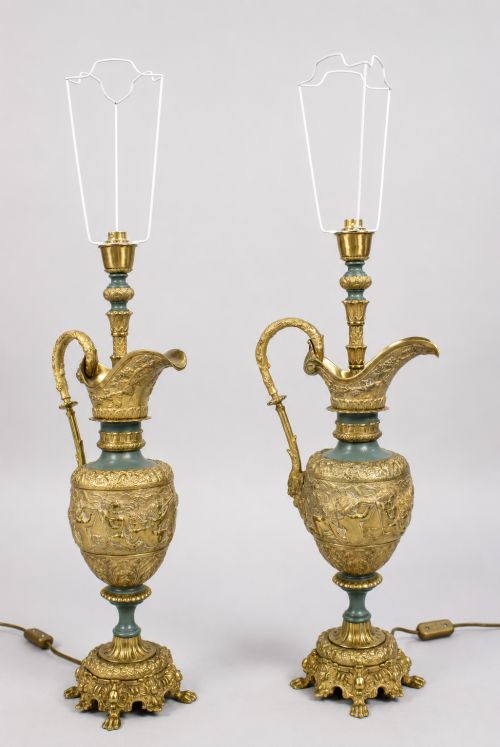
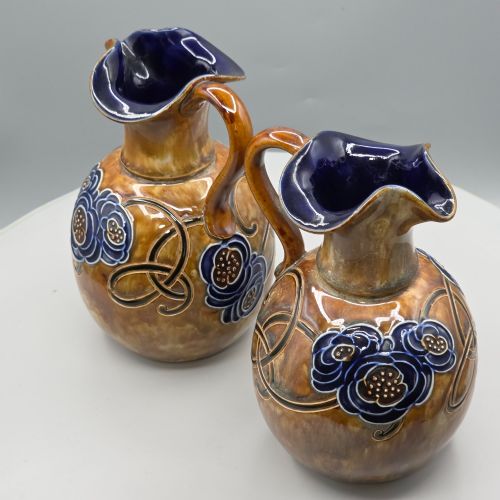
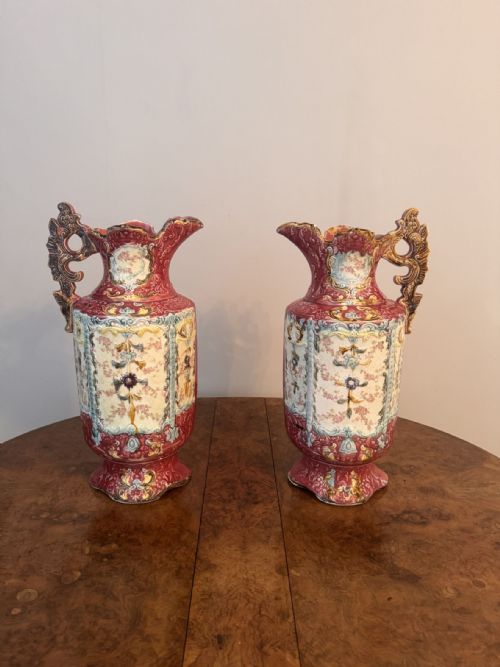
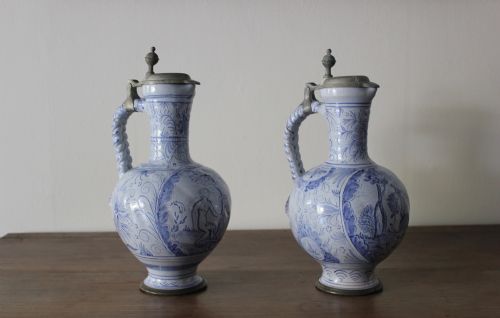
Maker workshops utilised a wide array of media, casting metals like bronze, brass, and gilt metal into elaborate ewer forms, while silversmiths fashioned solid sterling silver and silver-plated mounts. Ceramic variations rely on earthenware, porcelain, ironstone, and pottery bodies finished with tin-glaze, enamel, or hand-painted decoration.
Glass production combined crystal bodies with cut star patterns, engraved floral motifs, and applied handles. Artisans frequently combined these materials, mounting glass and ceramic vessels with cast bronze or silver trim.
The object forms span functional claret jugs, earthenware puzzle jugs, and grand Grand Tour display urns.
What Varies in Quality
Quality in these matching sets rests upon the crispness of the casting in metalwork and the precision of the hand-painting or surface carving on ceramic and glass examples. Superior items display meticulous detail in handles, spouts, and mounts, whereas simpler iterations rely on standard factory production without individualised ornamentation.
The integration of mixed media also dictates standard; pieces combining solid silver mounts, ormolu trim, or intricate crystal cutting sit at a higher tier than plain earthenware vessels.
Royal Doulton·Royal Worcester·Royal Crown Derby·Doulton Burslem·Doulton Lambeth
The Pair of Pitchers Glossary
- Ewer
- A large jug with a wide spout and a decorative handle, historically used for water or wine but frequently collected as ornamental art. These vessels form a significant portion of nineteenth-century decorative metalwork.
- Claret Jug
- A specialised container designed for serving red wine at the dining table, typically featuring a glass or crystal body fitted with a silver or plated metal mount and hinged lid. Edwardian and Victorian examples often incorporate star-cut crystal.
- Ormolu
- Gilt bronze ornamentation applied to furniture, clocks, and decorative vessels during the eighteenth and nineteenth centuries. This technique involves creating a finely ground gold-mercury amalgam applied to a bronze base.
- Toby Jug
- A pottery jug modelled in the figure of a stout, jovial man usually wearing a eighteenth-century cocked hat and holding a mug of beer or a pipe. Staffordshire potteries produced many variations of these popular drinking vessels.
- Copper Lustre
- A type of pottery glaze incorporating metallic copper oxides that produce a reflective, iridescent sheen. This technique was widely used on nineteenth-century cream jugs and decorative pitchers.
Pair of Pitchers: Frequently Asked Questions
How were antique claret jugs used?
Claret jugs were utilised in formal dining settings to decant and serve red wine, particularly claret, directly from the bottle to the glass.
The hinged metal lid allowed hosts to pour cleanly while keeping the contents covered between servings.
How do I date nineteenth-century ceramic jugs?
Dating these ceramic items involves examining the potter's marks, glaze characteristics, and the stylistic influence of the period, such as Victorian revivalism or early Arts and Crafts simplicity.
Base stamps and impressed registry marks often provide specific decade indicators or exact production years.
Where should I display a pair of decorative ewers?
Decorative ewers suit prominent flat surfaces such as sideboards, mantelpieces, or dedicated display cabinets where their symmetrical form can be appreciated.
Because many nineteenth-century examples were created purely for visual impact during the Grand Tour era, they function best as focal points in a room.