



Pair of Howard Chairs
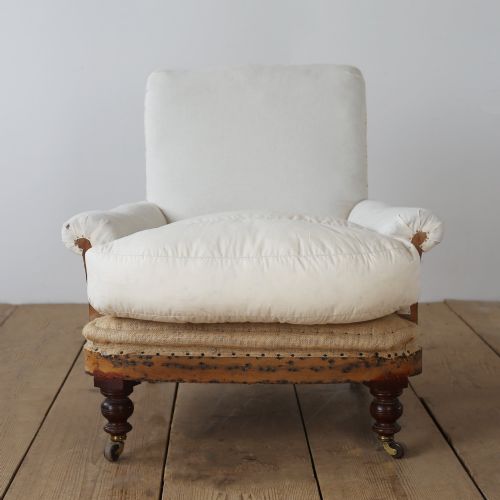
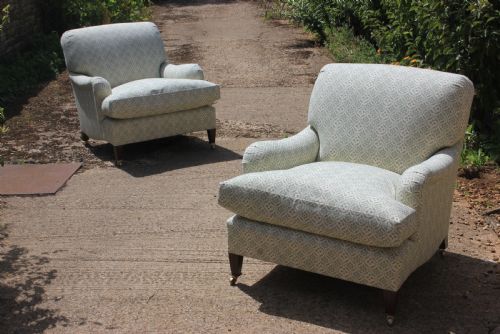
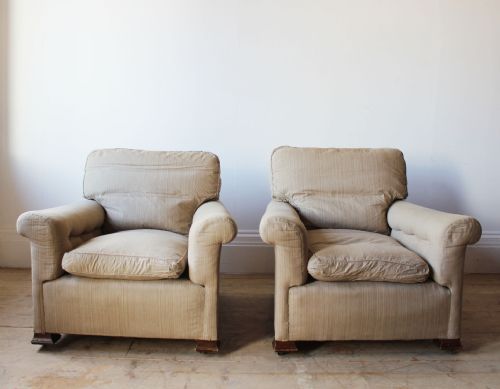
A pair of howard chairs brings distinct English country house comfort to a room through deep seats and generous proportions.
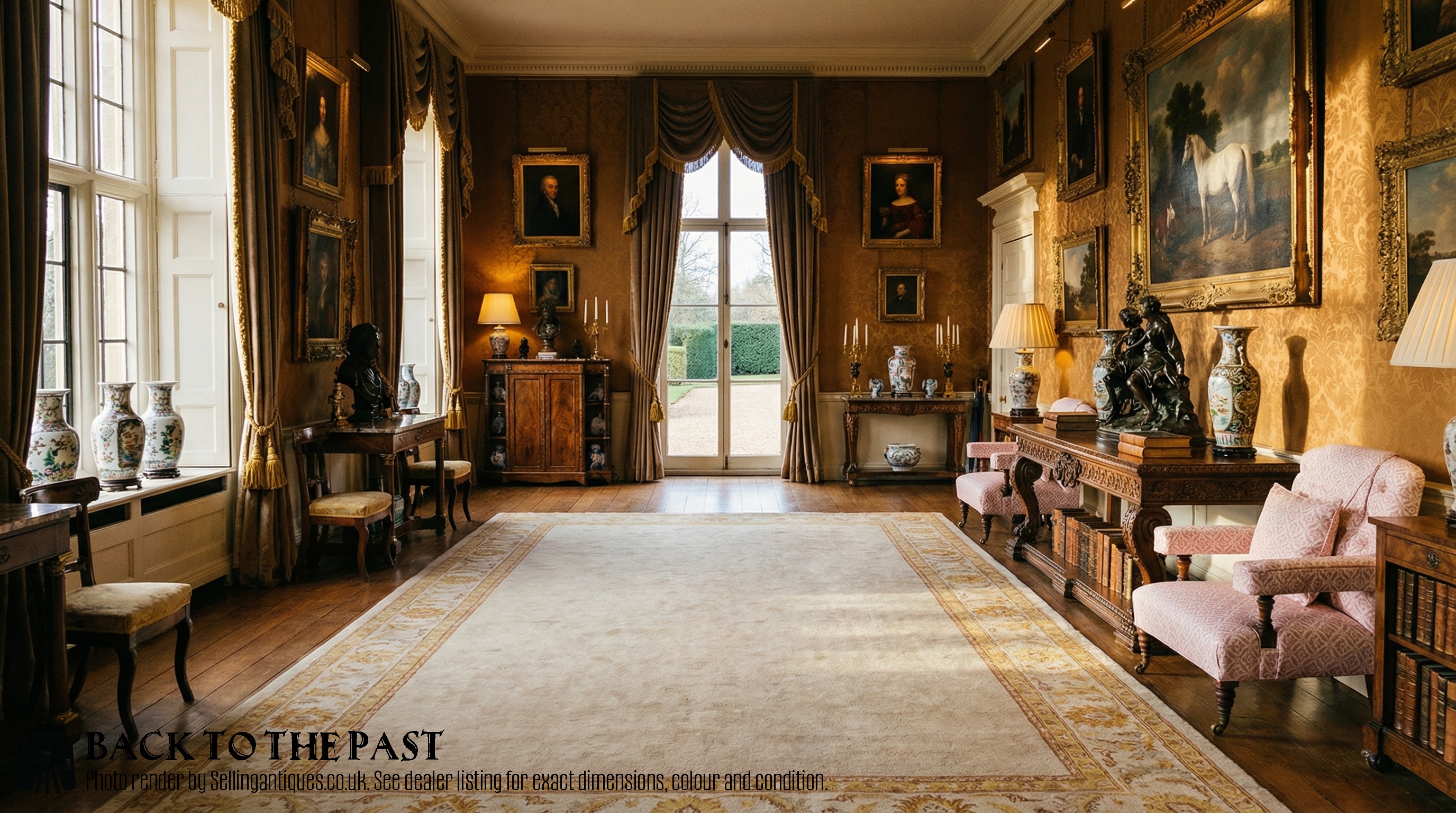
Pair of Howard Chairs
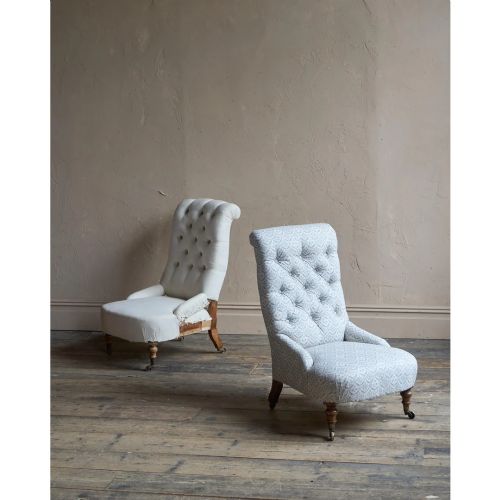
When you search for a pair of howard chairs, you encounter seating originating primarily from the nineteenth century alongside later interpretations. The forms on this page include standard armchairs, deep-seated slipper chairs, bedroom chairs, and specific model shapes such as the Bridgewater, Grafton, Ingleby, Ivor, Willoughby, and Ennismore.
The aesthetic bridges formal Victorian and Edwardian drawing-room elegance with relaxed English country house informality. These seats frequently appear either as stamped originals by the maker or as pieces produced in the distinctive style associated with the workshop.
Materials and construction
Frames rely upon sturdy timbers including walnut, oak, hardwood, and general wood structures to support the substantial internal stuffing. Turned legs frequently terminate in brass castors that allow easy movement across heavy carpets.
Upholstery traditionally employs materials such as cotton upholstery, calico, ticking, leather, pink velvet, and general fabric coverings. Deep buttoning and careful springing create the characteristic resilience of the seat.
Listings feature 19th-century pieces, Edwardian examples, and items dated later than 1960 alongside Victorian style variations.
Assessing quality in the range
The distinction between standard examples and the finest pieces often rests upon the presence of original maker stamps and untouched structural frames. Genuine workshop production exhibits superior timber joinery and precise stuffing density compared to later adaptations.
The integrity of the original covering materials, from traditional ticking to worn leather, influences the character of the seating. Matching pairs that retain their original castors and synchronised wear patterns hold greater fidelity to their period origins.
Howard and Sons·Maple and Co
The Pair of Howard Chairs Glossary
- Ticking
- A tightly woven cotton or linen fabric traditionally used as a hardwearing mattress or upholstery cover. It appears frequently in striped patterns on country house seating.
- Castor
- A small wheel fitted to the base of furniture legs to permit rolling. These often incorporate brass fixings on nineteenth-century armchairs.
- Slipper chair
- A low-set upholstered chair traditionally placed in bedrooms for ease of dressing. These pieces feature deep seats and lack high armrests.
- Bridgewater
- A specific armchair model name associated with comfortable upholstered seating. It defines a recognised proportion within the maker's repertoire.
- Deep-buttoning
- An upholstery technique where buttons are pulled through the padding at regular intervals to create a diamond pattern. This method secures the internal filling.
Pair of Howard Chairs: Frequently Asked Questions
How do I identify a genuine pair?
Look for maker stamps on the castors or timber frames alongside traditional construction methods like serpentine springs and horsehair stuffing.
Original pieces also display specific model proportions and maker labels that distinguish them from later style interpretations.
Where were these chairs used?
These seats traditionally occupied country house drawing rooms, libraries, and bedrooms where comfort took precedence over formal posture.
Today they function as primary seating in living spaces or as decorative accent chairs in studies and master bedrooms.
How should I care for vintage ticking?
Vacuum the fabric regularly with a soft brush attachment to remove dust accumulation from the tight weave without damaging the cotton.
Avoid direct sunlight to prevent fading and professional cleaning is recommended for deep stains on original upholstery.
What defines the style?
The style centres on low, deep-seated proportions designed for lounging rather than upright sitting, paired with generous armrests.
Turned wooden legs on brass castors complete the characteristic profile found across nineteenth-century English seating.