

Pair of Gold Mirrors
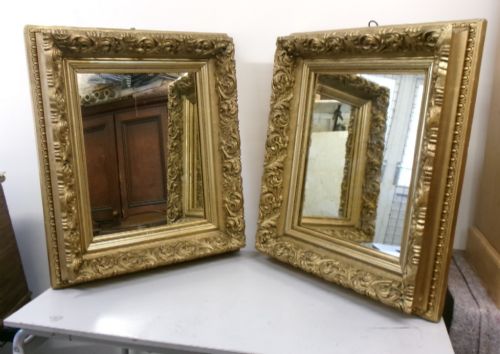
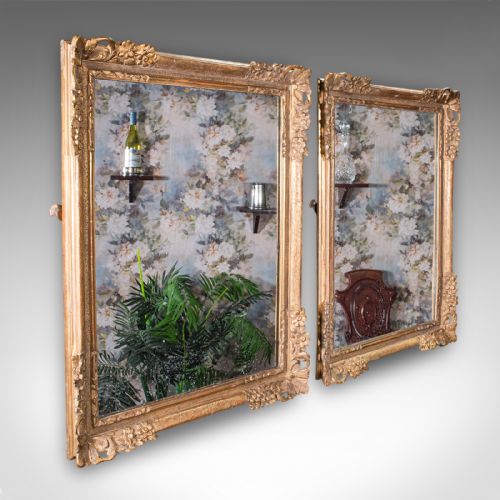
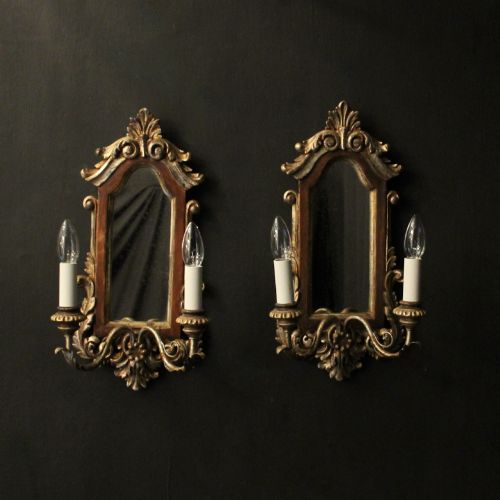
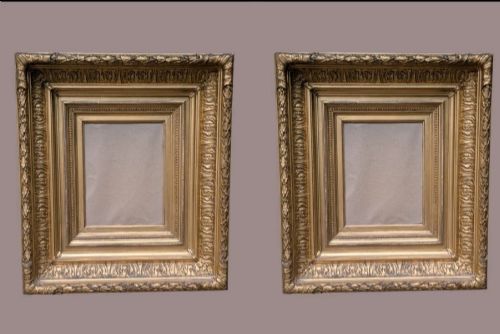
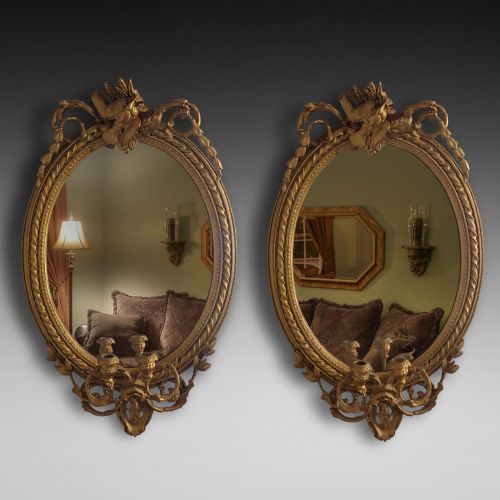
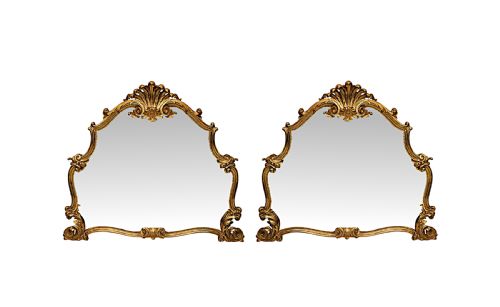
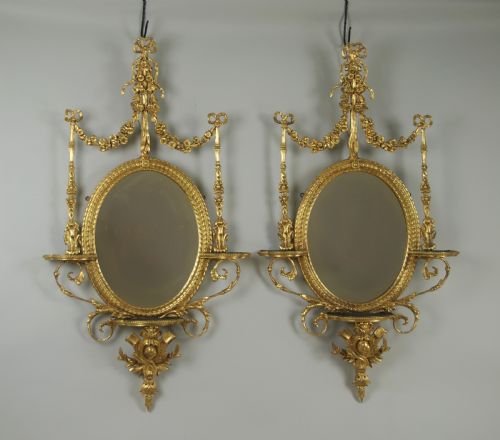
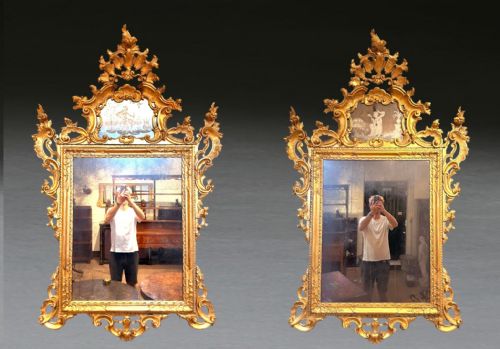
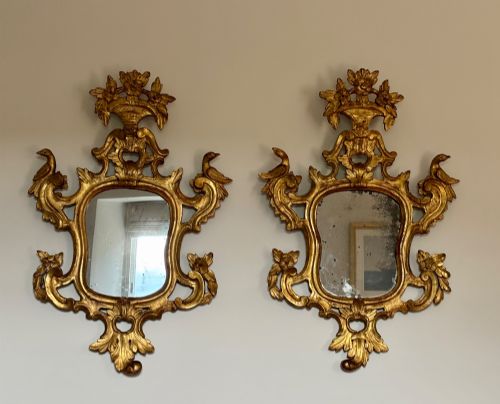
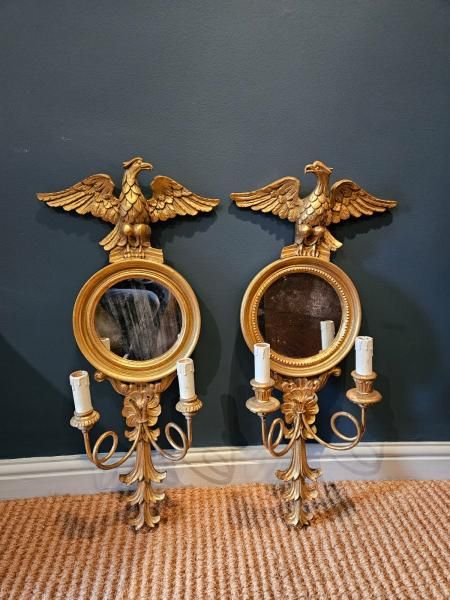
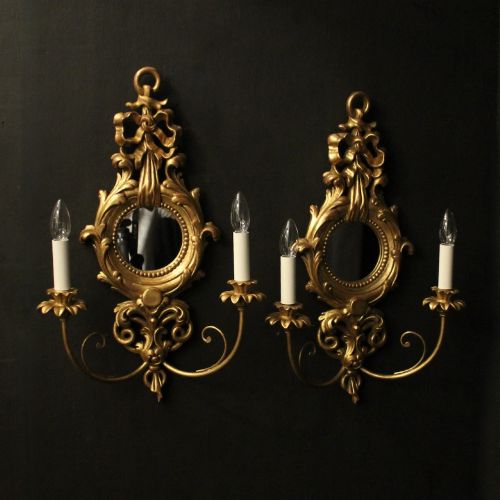
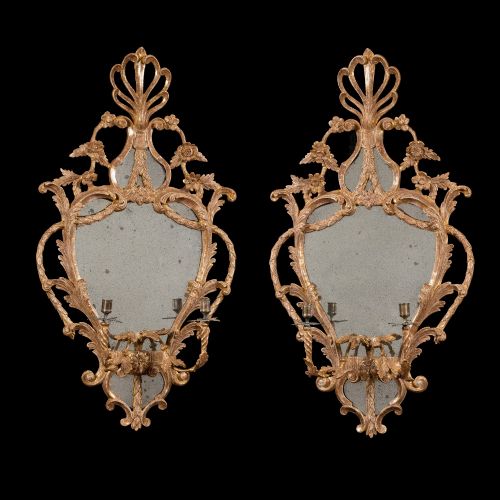
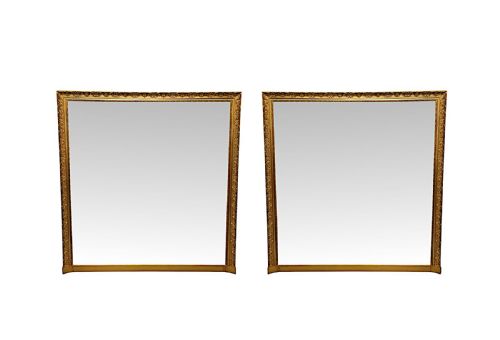
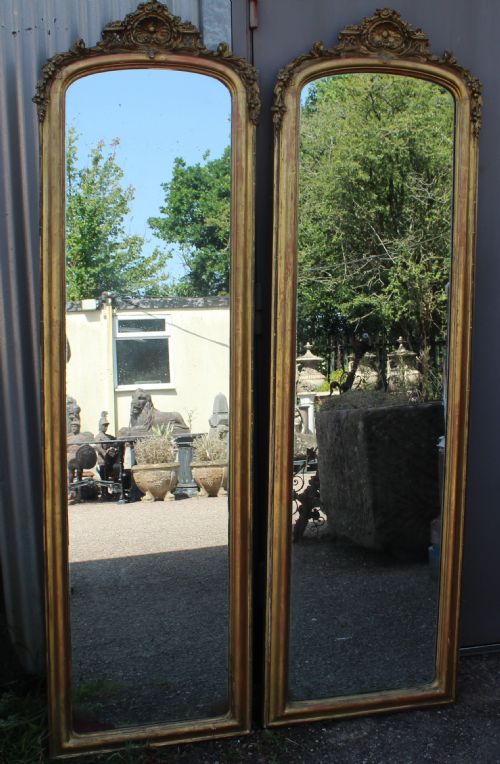
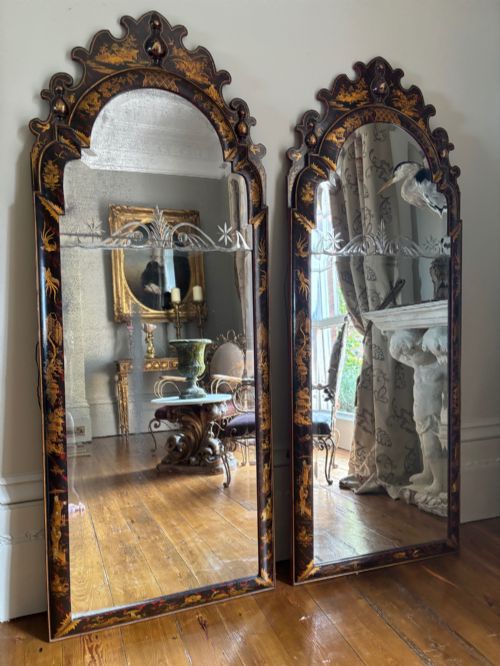
A pair of gold mirrors brings symmetry and warm reflection to a room, ranging from grand overmantels to intimate girandoles.
Pair of Gold Mirrors
When seeking a pair of gold mirrors, buyers encounter an array of wall-hung forms including pier glasses, overmantels, and girandoles designed to flank a fireplace or window. These pieces serve to amplify natural light and create a sense of expanded space within a drawing room or hallway. The selection spans centuries of design, reflecting shifts from formal Georgian symmetry to exuberant Victorian and French Rococo ornamentation.
The most common examples on this page date from the nineteenth century, drawing heavily on Regency, Victorian, and revived historical styles. Pieces range from compact oval wall mirrors fitted with display brackets to large, architectural overmantels designed for grand chimney breasts. Regional variations appear too, from English parcel-gilt walnut frames to Italian and French giltwood creations incorporating elaborate carved motifs.
How They Were Made
Traditional construction relies on carved timber frames fashioned from softwoods or hardwoods, which provide the structural integrity required for heavy glass plates. Craftsmen applied layers of gesso to the timber substrate, smoothing the surface meticulously before applying delicate sheets of gold leaf or gilt paint. Composition ornamentation, a moulded mixture of whiting, resin, and glue, was frequently pressed into moulds and applied to the wooden frames to achieve intricate relief details.
Mirror glass in these pieces was produced through various historical methods, resulting in subtle imperfections, foxing, or bevelled edges that distinguish older plates from modern float glass. Girandoles and wall sconces incorporated brass or gilt-metal candle arms secured directly to the wooden or gessoed structure, combining illumination with reflective display. Joinery techniques varied by period, utilising traditional mitred and pinned corners strengthened by blocks to support the considerable weight of the frame.
Some nineteenth-century girandoles still carry the faint, smoky aroma of beeswax candles burned by eighteenth-century revellers.
What Varies in Quality
The distinction between ordinary and exceptional examples lies primarily in the depth, crispness, and hand-carved execution of the frame's ornamentation. Superior pieces exhibit deeply undercut foliage, scrolls, or figures carved directly into the wood rather than relying on heavy, moulded composition relief. The quality of the gilding itself, whether burnished gold leaf or painted surfaces, dictates how well the frame catches light and ages over time.
Proportion and matching also determine the standing of a pair, as pieces originally conceived together display uniform shrinkage, identical carving hands, and matching glass plates. The integrity of the original backing boards, mercury or early silvered mirror plates, and structural joinery further elevate the standing of antique mirrors within a collection.
Strahan of Dublin
The Pair of Gold Mirrors Glossary
- Girandole
- A mirrored wall sconce featuring integrated candle arms designed to multiply the flickering light of candles within a room. These fixtures often showcase ornate carved frames in Rococo or Neoclassical styles.
- Pier glass
- A tall, narrow mirror specifically designed to hang on the wall space or pier between two windows. They were frequently paired with matching console tables below.
- Gesso
- A plaster-like mixture applied to wooden frames as a smooth base for gilding or painting. Its build-up allows for sharp, detailed relief moulding.
- Giltwood
- Timber that has been coated with a thin layer of gold leaf, gold powder, or leaf metal. It provides a warm, enduring metallic sheen.
- Overmantel mirror
- A wide horizontal mirror built to fit the architectural space directly above a fireplace mantelpiece. They often feature elaborate pediments and substantial proportions.
Pair of Gold Mirrors: Frequently Asked Questions
How do I hang heavy giltwood mirrors safely?
Heavy antique mirrors require robust wall fixings anchored directly into masonry or substantial timber studs to bear the significant weight safely. Professional mirror hangers often utilise heavy-duty steel brackets or mirror plates screwed securely into the back frame stiles.
Positioning the pair at eye level or balanced symmetrically above furniture ensures the weight distribution remains secure while achieving the intended decorative impact in the room.
Are these mirrors suitable for damp rooms like bathrooms?
Giltwood and gesso frames are sensitive to moisture and humidity fluctuations, which can cause the gesso to swell, crack, and the gold leaf to lift from the wood. Placing them in damp environments risks permanent damage to the historic surface finishes and the silvering on the glass.
Dry living rooms, hallways, and bedrooms provide the stable climate required to preserve antique gilt surfaces and original mirror plates over decades.
How can I tell a Regency mirror from a Victorian one?
Regency mirrors frequently exhibit classical restraint, incorporating architectural elements like ball-stud cornices, reeded columns, and motifs inspired by ancient Greece and Rome. The glass plates and framing techniques of this era reflect early nineteenth-century cabinet-making standards.
Victorian pieces tend towards heavier, more exuberant ornamentation, reviving Rococo and Renaissance styles with deep, complex carvings and applied composition relief work that fills the frame with dense foliage and scrollwork.